
Oysters are one of the most prized shellfish in the world, enjoyed raw, grilled, baked, fried, and steamed in countless seafood dishes. Known for their briny flavor and delicate texture, oysters vary greatly in size depending on species, age, and growing environment. Some oysters are tiny and sweet, while others grow large enough for grilling and stuffing. Understanding an oyster size chart helps seafood buyers, restaurant owners, and home cooks choose the right oysters for different recipes and serving styles.
Why Oyster Size Matters
Oyster size affects flavor, texture, serving style, and cooking methods. Smaller oysters are usually more delicate and easier to eat raw, while larger oysters provide meatier texture for grilling and baked dishes.
Understanding oyster sizes also helps buyers estimate serving portions and identify premium shellfish. Oyster farms and seafood markets often sort oysters into size grades for restaurants and retail sales.
Different oyster sizes may also vary in salinity and firmness depending on water conditions and age.
How Oyster Sizes Are Measured
Oysters are usually categorized by shell length and market grading systems rather than weight alone.
Oyster Size Chart
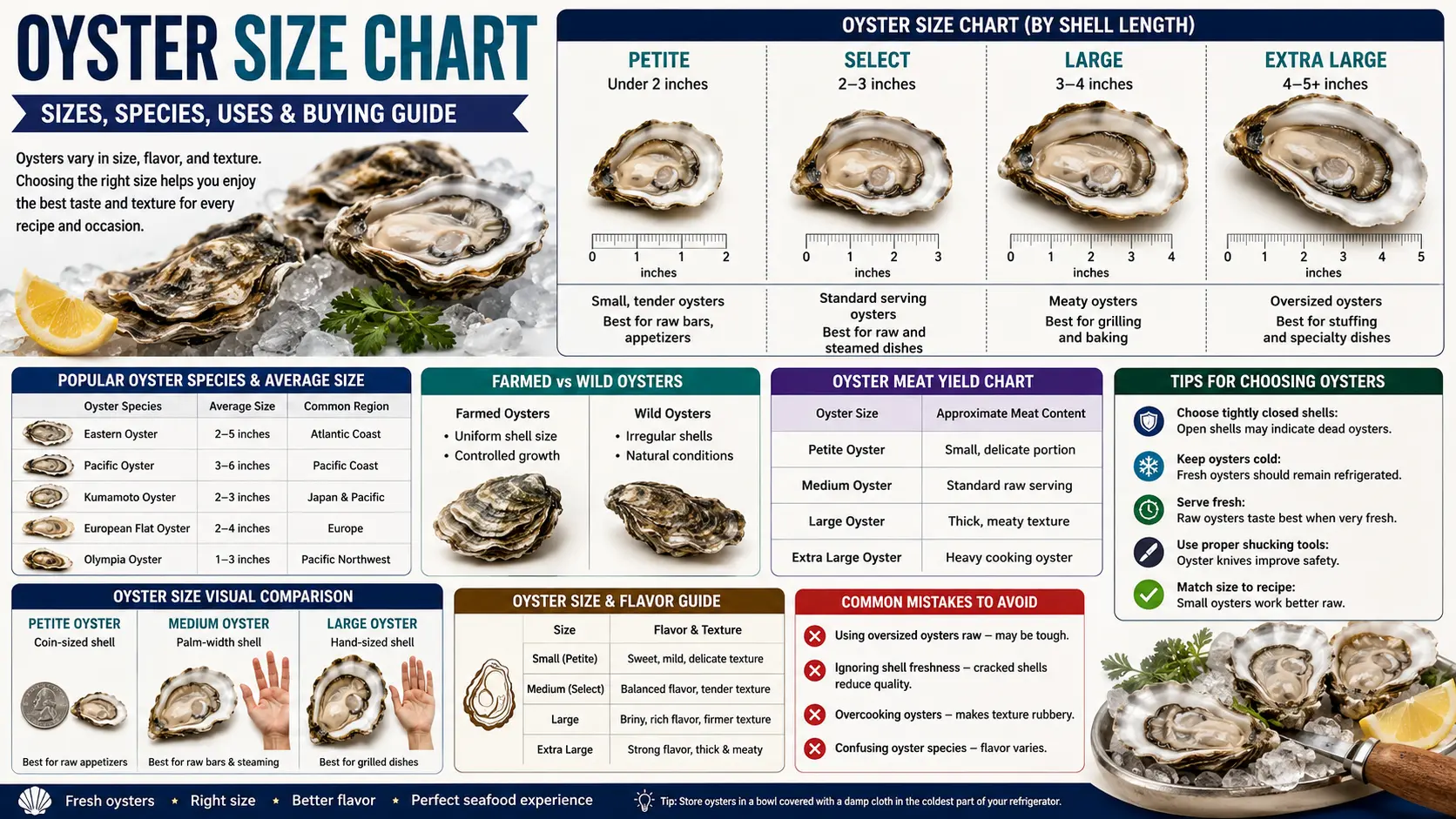
| Oyster Size Grade | Approximate Shell Length | Common Description | Best Use |
|---|---|---|---|
| Petite | Under 2 inches | Small tender oysters | Raw bars, appetizers |
| Select | 2–3 inches | Standard serving oysters | Raw and steamed dishes |
| Large | 3–4 inches | Meaty oysters | Grilling and baking |
| Extra Large | 4–5+ inches | Oversized oysters | Stuffing and specialty dishes |
Actual sizes vary depending on oyster species and farming methods.
Common Oyster Species And Sizes
Different oyster species naturally grow to different sizes.
Popular Oyster Species Chart
| Oyster Species | Average Size | Common Region |
|---|---|---|
| Eastern Oyster | 2–5 inches | Atlantic Coast |
| Pacific Oyster | 3–6 inches | Pacific Coast |
| Kumamoto Oyster | 2–3 inches | Japan and Pacific regions |
| European Flat Oyster | 2–4 inches | Europe |
| Olympia Oyster | 1–3 inches | Pacific Northwest |
Pacific oysters are often among the largest commonly farmed oyster species.
Choosing The Right Oyster Size
The best oyster size depends on how the oysters will be served. Here are some common recommendations:
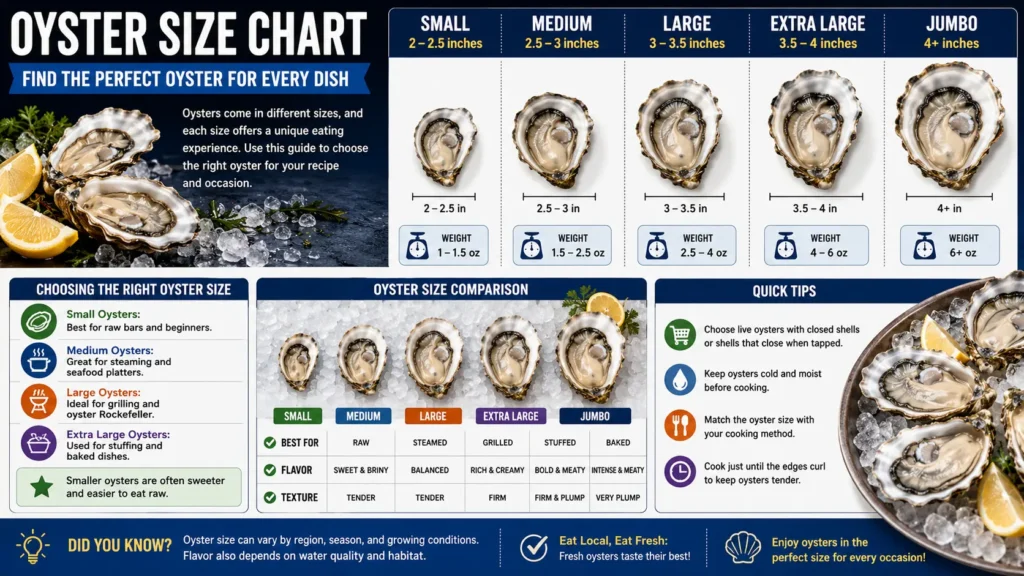
- Small Oysters: Best for raw bars and beginners.
- Medium Oysters: Great for steaming and seafood platters.
- Large Oysters: Ideal for grilling and oyster Rockefeller.
- Extra Large Oysters: Used for stuffing and baked dishes.
Smaller oysters are often sweeter and easier to eat raw.
Oyster Size Comparison: Farmed Vs. Wild Oysters
Farmed and wild oysters may differ in shape and size consistency.
Farmed vs Wild Oysters
| Oyster Type | Appearance | Growth Pattern |
|---|---|---|
| Farmed Oysters | Uniform shell size | Controlled growth |
| Wild Oysters | Irregular shells | Natural conditions |
Farmed oysters are often more consistent in size and shape.
Oyster Size And Meat Yield
Larger oysters contain more meat but may become firmer with age.
Oyster Meat Yield Chart
| Oyster Size | Approximate Meat Content |
|---|---|
| Petite Oyster | Small delicate portion |
| Medium Oyster | Standard raw serving |
| Large Oyster | Thick meaty texture |
| Extra Large | Heavy cooking oyster |
Texture changes depending on both size and water conditions.
Visual Guide: Oyster Sizes
Visual comparisons help make oyster sizes easier to understand.
Oyster Size Visual Chart
| Oyster Size | Visual Comparison | Typical Use |
|---|---|---|
| Petite Oyster | Coin-sized shell | Raw appetizers |
| Medium Oyster | Palm-width shell | Raw bars and steaming |
| Large Oyster | Hand-sized shell | Grilled oyster dishes |
Tips For Choosing Oysters
- Choose tightly closed shells: Open shells may indicate dead oysters.
- Keep oysters cold: Fresh oysters should remain refrigerated.
- Serve fresh: Raw oysters taste best when very fresh.
- Use proper shucking tools: Oyster knives improve safety.
- Match size to recipe: Small oysters work better raw.
Proper storage improves both flavor and food safety.
Common Mistakes When Buying Oysters
- Using oversized oysters raw: Large oysters may feel tougher.
- Ignoring shell freshness: Cracked shells reduce quality.
- Overcooking oysters: Makes texture rubbery.
- Confusing oyster species: Different species vary greatly in flavor.
Understanding oyster sizes improves seafood selection and preparation.
How Oyster Size Affects Flavor
Small oysters are often sweeter and more delicate, while larger oysters develop stronger briny flavor and firmer texture.
Water salinity, temperature, and oyster species also influence taste significantly.
Some seafood lovers prefer tiny buttery oysters, while others enjoy large grilled oysters with toppings.
The Popularity Of Oysters
Oysters have been eaten for thousands of years and remain a major seafood delicacy worldwide. Raw oyster bars are especially popular in coastal cities, while grilled oysters are famous in Southern and Asian cuisines.
Modern oyster farming has also become important for sustainable seafood production and coastal ecosystems.
Frequently Asked Questions
What Is The Best Oyster Size For Raw Eating?
Small to medium oysters are usually best for raw serving.
Are Larger Oysters Tougher?
Yes, very large oysters may develop firmer texture.
Which Oyster Species Grows Largest?
Pacific oysters are among the largest commonly farmed oysters.
How Do You Know If Oysters Are Fresh?
Fresh oysters should have tightly closed shells and a clean ocean smell.
Can Large Oysters Be Eaten Raw?
Yes, but many people prefer them cooked because of their stronger texture.
Oyster size charts may seem simple, but they are extremely useful for seafood shopping, restaurant ordering, and meal preparation. Whether you enjoy tiny raw oysters or giant grilled oysters, understanding oyster sizes helps you choose the perfect shellfish for every occasion.
