

Lobsters are one of the most luxurious and recognizable seafood choices in the world. Known for their sweet meat, large claws, and impressive appearance, lobsters are popular in restaurants, seafood markets, and coastal cuisines. But lobster sizes can vary greatly depending on species, age, and region. Some lobsters are small enough for individual meals, while giant lobsters can weigh more than 20 pounds. Understanding a lobster size chart helps seafood buyers, home cooks, and seafood lovers choose the right lobster for different recipes and serving needs.
Why Lobster Size Matters
Lobster size affects meat yield, cooking time, texture, and price. Smaller lobsters are often more tender, while larger lobsters provide more meat for sharing and specialty dishes.
Understanding lobster sizes also helps buyers estimate serving portions and cooking methods. Large lobsters require longer cooking times, while smaller lobsters cook much faster.
For seafood restaurants and markets, lobster sizing is important because pricing is usually based on weight.
Standard Lobster Sizes And Weights
Lobsters are commonly categorized by weight rather than exact length. Here are the most common lobster size categories.
Lobster Size Chart
| Lobster Size Name | Approximate Weight | Approximate Length | Best Use |
|---|---|---|---|
| Chick Lobster | 1–1.25 lbs | 8–10 inches | Individual servings |
| Quarter Lobster | 1.25–1.5 lbs | 10–12 inches | Standard lobster dinners |
| Select Lobster | 1.5–2 lbs | 12–14 inches | Larger seafood platters |
| Jumbo Lobster | 2–4 lbs | 14–18 inches | Sharing meals |
| Extra Jumbo | 5–10+ lbs | 18–24+ inches | Specialty seafood dishes |
Actual lobster size varies depending on species and habitat.
Choosing The Right Lobster Size
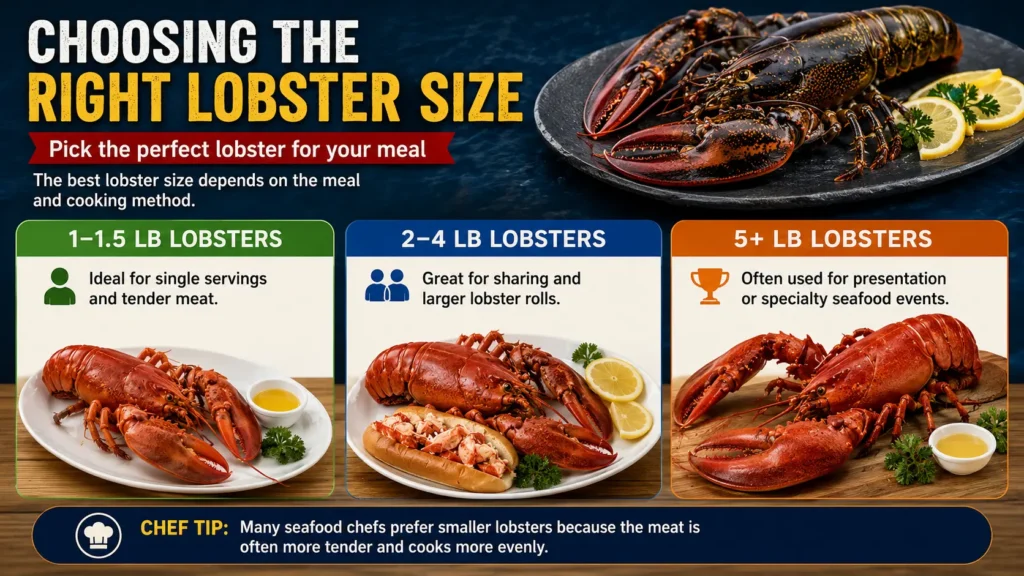
The best lobster size depends on the meal and cooking method. Here are some common recommendations:
- 1–1.5 lb Lobsters: Ideal for single servings and tender meat.
- 2–4 lb Lobsters: Great for sharing and larger lobster rolls.
- 5+ lb Lobsters: Often used for presentation or specialty seafood events.
Many seafood chefs prefer smaller lobsters because the meat is often more tender and cooks more evenly.
Lobster Size Comparison: Hard-Shell Vs. Soft-Shell Lobsters
Lobster shell type also affects meat yield and texture.
Hard-Shell vs Soft-Shell Lobsters
| Lobster Type | Meat Yield | Shell Texture |
|---|---|---|
| Hard-Shell | More meat | Thick, firm shell |
| Soft-Shell | Less meat | Softer shell after molt |
Hard-shell lobsters usually contain more meat and are preferred for shipping.
Lobster Size And Meat Yield
Larger lobsters provide more total meat, but smaller lobsters may offer slightly more tender texture.
Lobster Meat Yield Chart
| Lobster Weight | Approximate Meat Yield |
|---|---|
| 1 lb | 20–25% meat |
| 2 lbs | 0.5 lbs meat |
| 5 lbs | 1.25 lbs meat |
| 10 lbs | 2.5+ lbs meat |
Claw meat and tail meat differ slightly in texture and flavor.
Visual Guide: Lobster Sizes
Visual comparisons help make lobster sizes easier to understand.
Lobster Size Visual Chart
| Lobster Size | Visual Comparison | Typical Use |
|---|---|---|
| 1 lb Lobster | Dinner plate length | Individual meal |
| 2 lb Lobster | Forearm length | Seafood platter |
| 5 lb Lobster | Small child arm length | Sharing or display |
| 10+ lb Lobster | Small dog size | Giant specialty lobster |
Tips For Choosing Lobsters
- Check for active movement: Live lobsters should be lively and responsive.
- Choose hard-shell lobsters for more meat: Better value overall.
- Cook lobsters soon after purchase: Freshness greatly affects flavor.
- Use proper pot size: Large lobsters require spacious cooking pots.
- Avoid overcooking: Lobster meat becomes tough quickly.
Proper handling improves both texture and flavor.
Common Mistakes When Buying Lobsters
- Assuming bigger is always better: Very large lobsters may have tougher meat.
- Ignoring shell type: Soft-shell lobsters yield less meat.
- Overcooking: One of the most common lobster mistakes.
- Buying weak or inactive lobsters: Freshness is critical.
Understanding lobster sizing helps improve seafood quality and meal planning.
How Lobster Size Affects Cooking
Smaller lobsters cook more evenly and remain tender, while large lobsters require careful timing to avoid tough meat.
Lobster tails, claws, and knuckles also cook differently depending on size.
Large lobsters are often split or steamed in sections for more even cooking.
The Popularity Of Lobster
Lobsters have become symbols of luxury seafood dining worldwide. Coastal regions like Maine and Atlantic Canada are especially famous for lobster fishing industries.
Today, lobster is commonly served steamed, grilled, boiled, or used in dishes like lobster rolls, pasta, and bisque.
Frequently Asked Questions
What Is The Best Lobster Size For Eating?
Many chefs prefer lobsters around 1–2 pounds for tenderness and flavor.
Are Bigger Lobsters Tougher?
Very large lobsters may develop slightly firmer meat.
How Much Meat Is In A 2-Pound Lobster?
A 2-pound lobster typically yields about half a pound of meat.
What Is A Hard-Shell Lobster?
A hard-shell lobster has a fully developed shell and usually contains more meat.
How Long Should Lobster Be Cooked?
Cooking time depends on weight, but most lobsters cook within 8–20 minutes.
Lobster size charts may seem simple, but they are extremely useful for seafood shopping, cooking, and meal planning. Whether you’re preparing small dinner lobsters or giant seafood platters, understanding lobster sizes helps you choose the perfect lobster for every occasion.
Meta Description:
Explore a complete lobster size chart with lobster weights, meat yields, shell types, cooking times, and seafood serving tips.
