
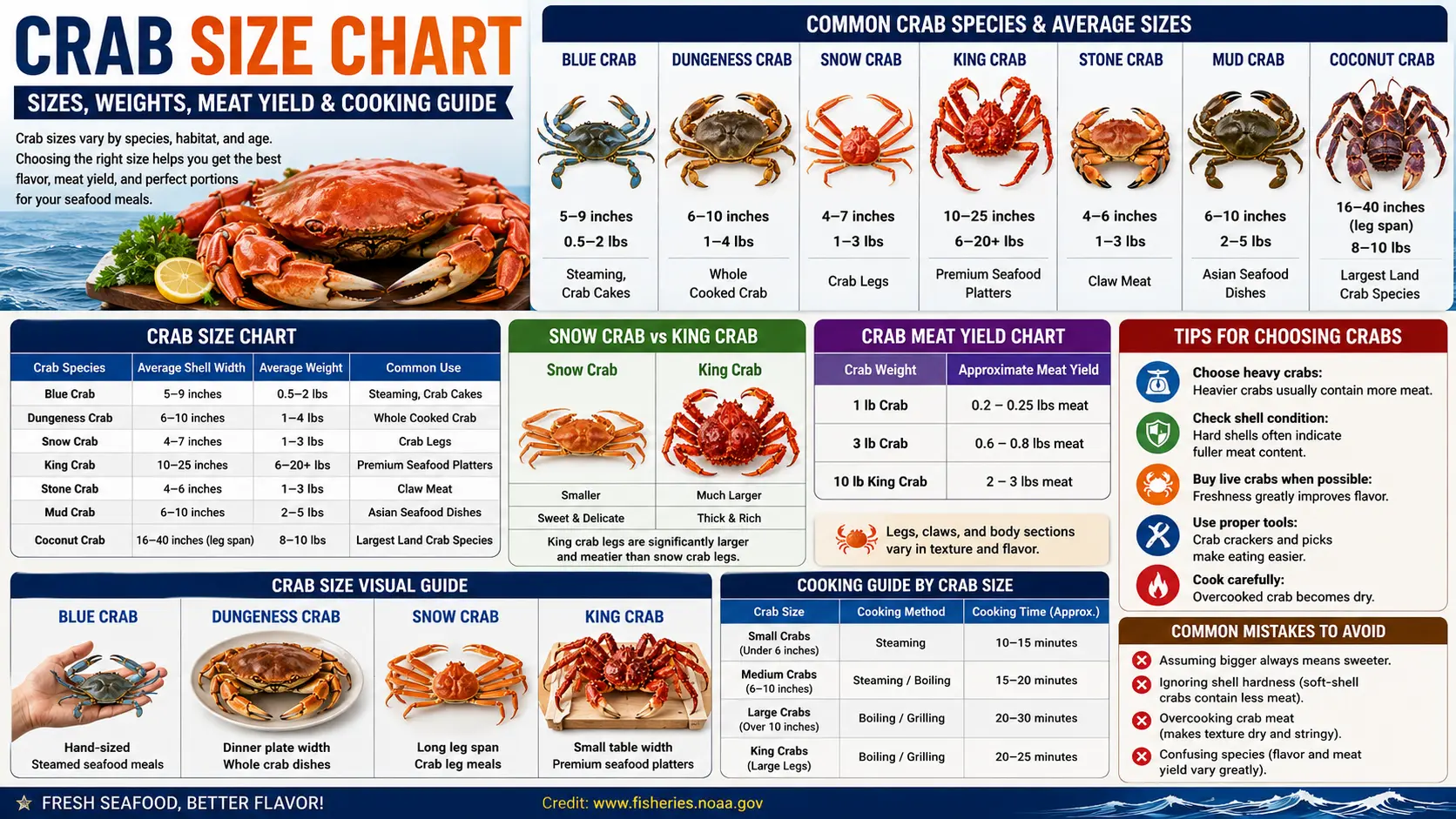
Crabs are one of the most popular seafood choices in the world. From sweet snow crab legs to massive king crabs, these shellfish are prized for their delicate meat and rich flavor. But crab sizes can vary greatly depending on species, habitat, and age. Some crabs are small enough to fit in your hand, while others can stretch several feet across with their legs extended. Understanding a crab size chart helps seafood buyers, home cooks, anglers, and seafood lovers compare crab sizes, weights, and serving portions more accurately.
Why Crab Size Matters
Crab size affects meat yield, cooking time, flavor, and serving style. Smaller crabs are often sweeter and more delicate, while larger crabs provide thicker leg meat and larger body sections.
Understanding crab sizes also helps seafood buyers estimate portions and choose the right crab species for recipes. Different crab types vary significantly in shell thickness and meat quantity.
For fisheries, crab size regulations are important because only mature crabs above certain sizes may legally be harvested.
Common Crab Species And Sizes
There are many crab species harvested worldwide. Here are some of the most popular edible crab species and their average sizes.
Crab Size Chart
| Crab Species | Average Shell Width | Average Weight | Common Use |
|---|---|---|---|
| Blue Crab | 5–9 inches | 0.5–2 lbs | Steaming, crab cakes |
| Dungeness Crab | 6–10 inches | 1–4 lbs | Whole cooked crab |
| Snow Crab | 4–7 inches | 1–3 lbs | Crab legs |
| King Crab | 10–25 inches | 6–20+ lbs | Premium seafood platters |
| Stone Crab | 4–6 inches | 1–3 lbs | Claw meat |
| Mud Crab | 6–10 inches | 2–5 lbs | Asian seafood dishes |
| Coconut Crab | 16–40 inches leg span | 8–10 lbs | Largest land crab species |
Actual crab size varies depending on region, species, and habitat quality.
Choosing The Best Crab Size
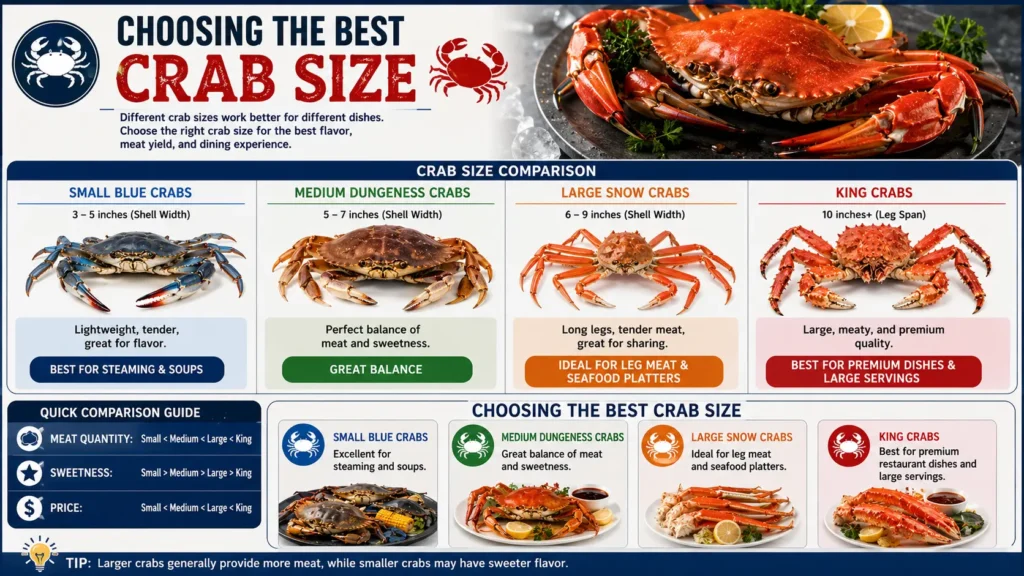
Different crab sizes work better for different dishes. Here are some common recommendations:
- Small Blue Crabs: Excellent for steaming and soups.
- Medium Dungeness Crabs: Great balance of meat and sweetness.
- Large Snow Crabs: Ideal for leg meat and seafood platters.
- King Crabs: Best for premium restaurant dishes and large servings.
Larger crabs generally provide more meat, while smaller crabs may have sweeter flavor.
Crab Size Comparison: Snow Crab Vs. King Crab
Snow crab and king crab are among the most popular crab species, but they differ greatly in size and texture.
Snow Crab vs King Crab
| Species | Typical Size | Meat Texture |
|---|---|---|
| Snow Crab | Smaller | Sweet and delicate |
| King Crab | Much larger | Thick and rich |
King crab legs are significantly larger and meatier than snow crab legs.
Crab Size And Meat Yield
Larger crabs produce more usable meat.
Crab Meat Yield Chart
| Crab Weight | Approximate Meat Yield |
|---|---|
| 1 lb Crab | 0.2–0.25 lbs meat |
| 3 lb Crab | 0.6–0.8 lbs meat |
| 10 lb King Crab | 2–3 lbs meat |
Legs, claws, and body sections vary in texture and flavor.
Visual Guide: Crab Sizes
Visual comparisons help make crab sizes easier to understand.
Crab Size Visual Chart
| Crab Species | Visual Comparison | Typical Use |
|---|---|---|
| Blue Crab | Hand-sized | Steamed seafood meals |
| Dungeness Crab | Dinner plate width | Whole crab dishes |
| King Crab | Small table width | Premium seafood platters |
Tips For Choosing Crabs
- Choose heavy crabs: Heavier crabs usually contain more meat.
- Check shell condition: Hard shells often indicate fuller meat content.
- Buy live crabs when possible: Freshness greatly improves flavor.
- Use proper tools: Crab crackers and picks make eating easier.
- Cook carefully: Overcooked crab becomes dry.
Proper selection improves both texture and seafood quality.
Common Mistakes When Buying Crabs
- Assuming bigger always means sweeter: Smaller crabs may taste more delicate.
- Ignoring shell hardness: Soft-shell crabs contain less meat.
- Overcooking crab meat: Makes texture dry and stringy.
- Confusing species: Different crabs vary greatly in flavor and meat yield.
Understanding crab sizes helps improve cooking and seafood selection.
How Crab Size Affects Cooking
Small crabs cook quickly and are often steamed whole, while giant king crab legs are usually boiled or grilled separately.
Larger crabs provide thicker leg meat that holds up well in seafood platters and premium dishes.
Different crab species also vary in sweetness, salinity, and texture.
The Popularity Of Crab Seafood
Crabs have been important seafood sources for coastal cultures for centuries. Today, crab dishes are popular worldwide, ranging from Maryland blue crabs to Alaskan king crab feasts.
Commercial crab fisheries are major industries in North America, Asia, and Europe.
Frequently Asked Questions
What Is The Largest Crab Species?
The Japanese spider crab has the largest leg span, while king crabs are among the largest edible crabs.
Which Crab Has The Most Meat?
King crabs provide some of the thickest and largest meat portions.
Are Snow Crabs Smaller Than King Crabs?
Yes, snow crabs are much smaller and more delicate.
What Is The Best Crab For Crab Cakes?
Blue crabs are especially popular for crab cakes.
How Do You Know If A Crab Is Fresh?
Fresh live crabs should be active and heavy for their size.
Crab size charts may seem simple, but they are extremely useful for seafood shopping, cooking, and meal planning. Whether you’re preparing blue crabs, snow crabs, or giant king crabs, understanding crab sizes helps you choose the perfect seafood for every occasion.
Meta Description:
Explore a complete crab size chart with blue crab, king crab, snow crab, and Dungeness crab sizes, weights, meat yields, and seafood tips.
