
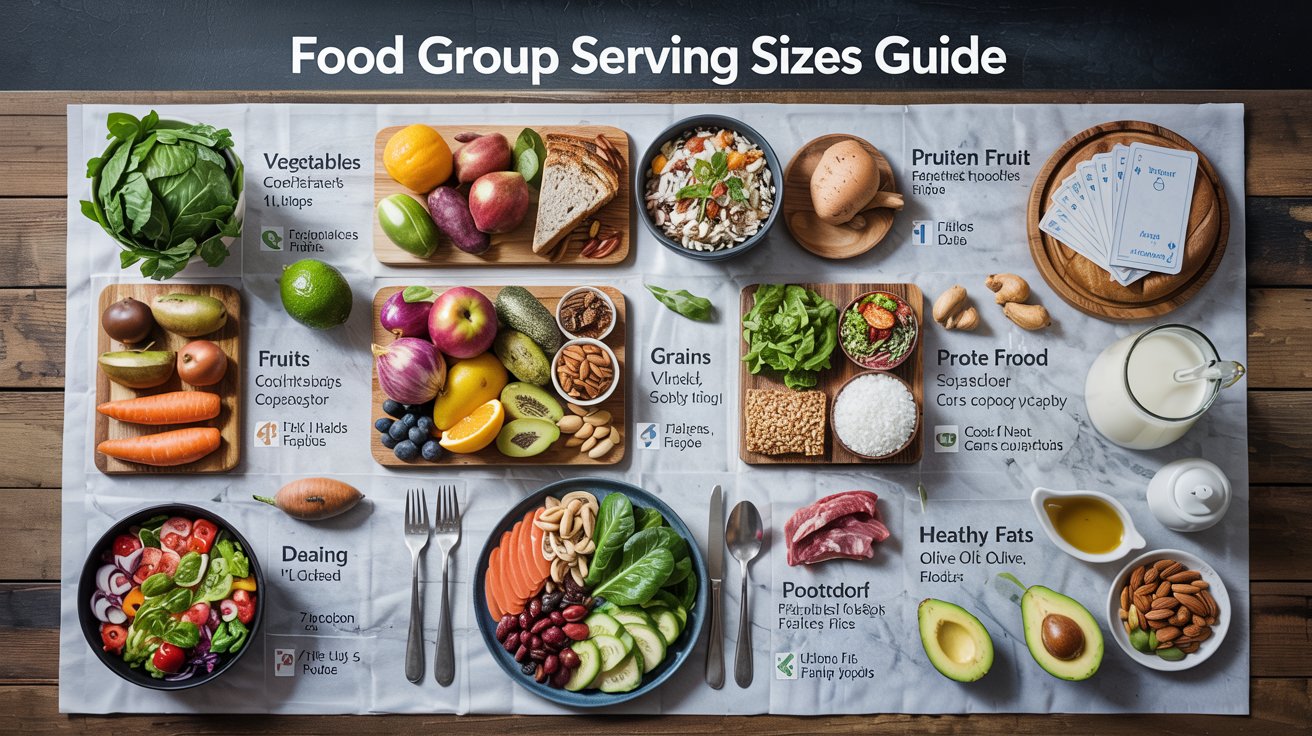
Understanding food group serving sizes is one of the easiest ways to build balanced and healthy meals. Many people eat too much of certain foods while not getting enough of others simply because they don’t know what a proper serving looks like. Learning the correct serving sizes for each food group helps with nutrition, portion control, and meal planning. Whether you’re trying to eat healthier, manage weight, or create balanced family meals, knowing these serving guidelines can make everyday eating much simpler.
Why Food Group Serving Sizes Matter
Serving sizes are important because they help your body get the right balance of nutrients. Eating too little from one food group may lead to nutrient deficiencies, while overeating another group can increase calories, sugar, or fat intake.
Balanced portions also improve energy levels and support overall health. For example, vegetables provide fiber and vitamins, proteins support muscles, and grains supply energy. Understanding serving sizes makes it easier to create meals that are both satisfying and nutritious.
For families, serving guides help simplify grocery shopping and meal prep. For people monitoring calories or macronutrients, proper portions are especially valuable.
Standard Food Group Serving Sizes
Different food groups have different recommended serving sizes. Here’s a general guide based on common nutrition recommendations.
Food Group Serving Size Chart
| Food Group | Standard Serving Size | Example Foods |
|---|---|---|
| Vegetables | 1 cup raw or 1/2 cup cooked | Broccoli, carrots, spinach |
| Fruits | 1 medium fruit or 1/2 cup chopped | Apple, banana, berries |
| Grains | 1 slice bread or 1/2 cup cooked rice/pasta | Rice, oats, bread |
| Protein Foods | 85–100g cooked meat or 1 egg | Chicken, fish, beans |
| Dairy | 1 cup milk or yogurt | Milk, cheese, yogurt |
| Healthy Fats | 1 tablespoon | Olive oil, nuts, avocado |
These portions may vary depending on age, activity level, and dietary needs, but they provide a solid starting point.
Choosing The Right Portion Sizes
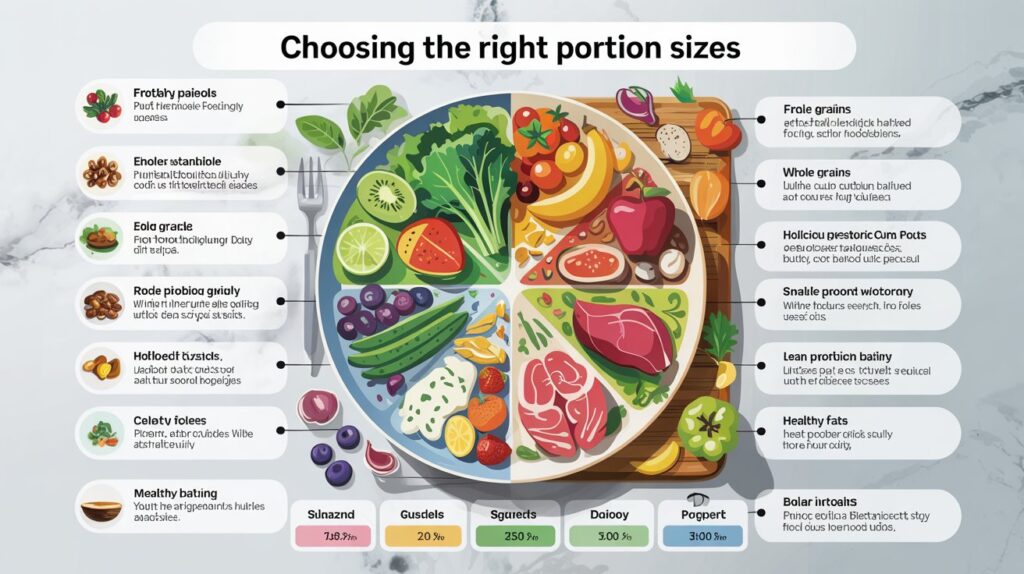
The best portion size depends on your health goals and activity level. Here are some common guidelines:
- Vegetables: Fill about half your plate with vegetables for balanced meals.
- Fruits: Great as snacks or dessert alternatives.
- Grains: Choose whole grains whenever possible for extra fiber.
- Protein: Moderate portions help support muscles without excess calories.
- Dairy: Important for calcium and bone health.
- Healthy Fats: Small portions are enough because fats are calorie-dense.
Balancing all food groups helps create healthier eating habits over time.
Food Group Serving Size Comparison
Not all foods within a group have the same calorie density. Here’s a simple comparison:
Food Group Portion Comparison
| Food Type | Typical Serving | Calories (Approx.) |
|---|---|---|
| Leafy Vegetables | 1 cup | 15–25 |
| Fruits | 1 medium piece | 60–100 |
| Whole Grains | 1/2 cup cooked | 80–120 |
| Lean Protein | 85g | 120–180 |
| Dairy | 1 cup | 90–150 |
Understanding these differences helps with meal balance and calorie control.
Food Group Serving Sizes And Nutrition
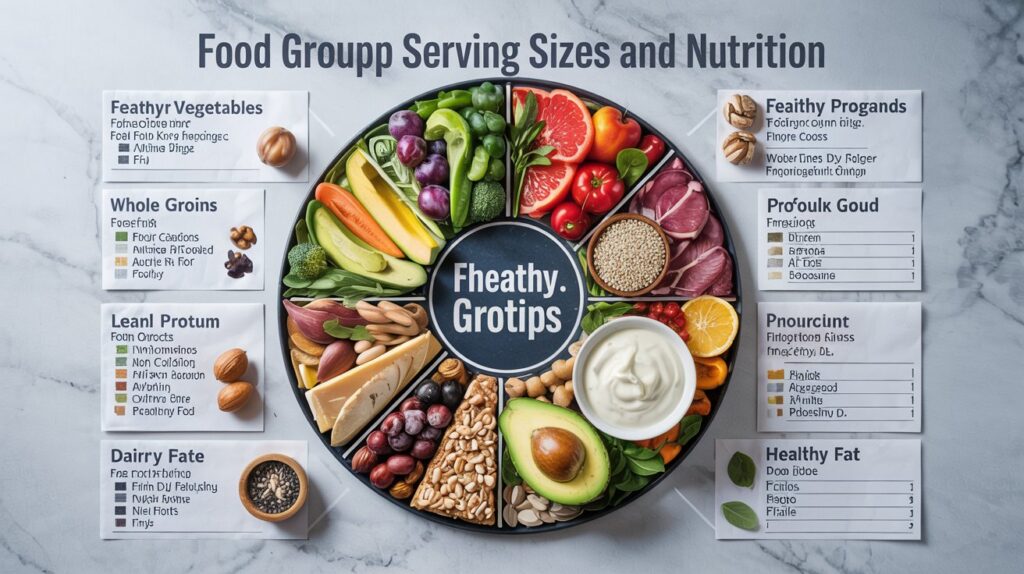
Every food group contributes important nutrients:
- Vegetables: Fiber, vitamins, antioxidants
- Fruits: Natural sugars, vitamin C, potassium
- Grains: Carbohydrates and energy
- Protein Foods: Protein, iron, amino acids
- Dairy: Calcium and vitamin D
- Healthy Fats: Essential fatty acids and brain support
Eating balanced portions from all groups supports overall wellness and long-term health.
Visual Guide: Food Group Serving Sizes
Sometimes it’s easier to estimate portions visually rather than measuring everything.
Portion Size Visual Guide
| Food Group | Visual Comparison |
|---|---|
| Vegetables | Size of a baseball |
| Fruit | Size of a tennis ball |
| Grains | Half a cup fits in one hand |
| Protein | Size of a deck of cards |
| Cheese | Size of 4 dice |
| Healthy Fats | Tip of your thumb |
These visual cues make portion control easier when dining out or preparing meals quickly.
Tips For Managing Serving Sizes
- Use smaller plates: Helps control portions naturally.
- Read food labels: Packaging often contains multiple servings.
- Measure occasionally: Measuring portions helps train your eyes.
- Fill up on vegetables: They’re low in calories but high in volume.
- Balance your plate: Include multiple food groups in every meal.
Simple habits can improve portion awareness without strict dieting.
Common Mistakes With Serving Sizes
- Oversized grain portions: Rice and pasta servings are often larger than recommended.
- Ignoring hidden calories: Sauces and dressings add extra calories quickly.
- Too little vegetables: Many meals lack enough vegetables.
- Underestimating snacks: Small snacks can add up throughout the day.
Understanding portions helps avoid these common nutrition mistakes.
How Food Group Serving Sizes Affect Health
Balanced serving sizes help maintain healthy energy levels and support weight management. Too many processed grains or fats can increase calorie intake, while not enough protein or vegetables may leave meals less satisfying.
Consistent portions also help stabilize blood sugar and improve digestion. Even small changes in serving sizes can lead to healthier eating patterns over time.
The Evolution Of Serving Size Guidelines
Serving size recommendations have changed over the years as nutrition research improved. Modern guidelines focus more on balance, whole foods, and realistic portions rather than strict calorie counting alone.
Today, many health experts encourage flexible eating patterns that emphasize portion awareness and nutrient quality.
Frequently Asked Questions
What Is A Standard Food Serving Size?
A serving size depends on the food group, but common examples include 1 cup of vegetables, 1 medium fruit, or 85g of protein.
How Many Food Group Servings Should I Eat Daily?
Needs vary by age and activity level, but most adults should eat multiple servings from every major food group each day.
Are Portion Sizes The Same As Serving Sizes?
Not always. A portion is how much you choose to eat, while a serving size is a recommended amount.
Why Are Serving Sizes Important?
Serving sizes help with balanced nutrition, calorie control, and healthier meal planning.
Can I Estimate Serving Sizes Without Measuring?
Yes, visual comparisons like a deck of cards or baseball can help estimate portions easily.
Food group serving sizes may seem complicated at first, but they are one of the most useful tools for healthier eating. By understanding proper portions for each food group, you can create balanced meals, improve nutrition, and enjoy food without unnecessary overeating.
