
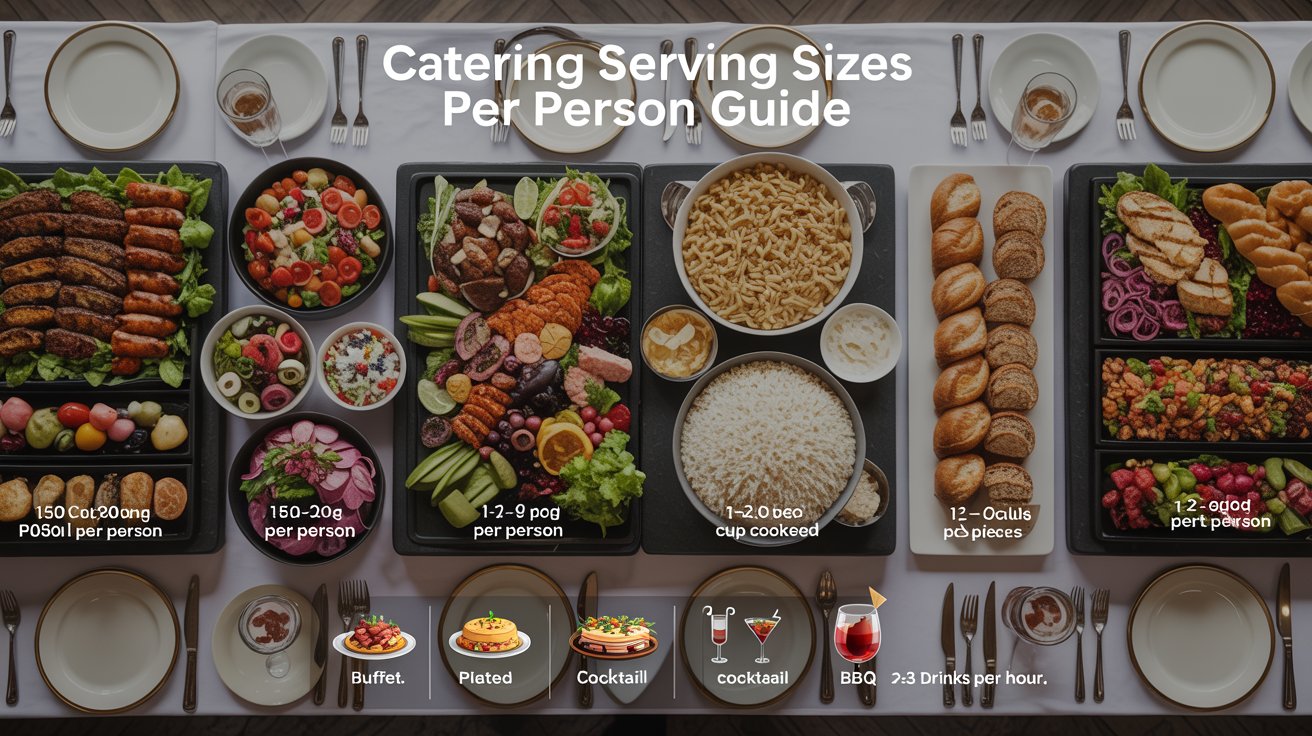
Planning food for an event can feel overwhelming—too little food leaves guests hungry, while too much leads to waste. Whether you’re organizing a wedding, party, or corporate event, understanding catering serving sizes per person helps you plan the perfect amount. Let’s break down how much food you actually need so every guest is satisfied.
Why Catering Serving Sizes Matter
Catering is all about balance. You want enough food for everyone without overspending or wasting leftovers.
Proper portion planning helps:
- Ensure every guest is served
- Control food costs
- Reduce waste
- Keep the event running smoothly
The right serving sizes depend on the type of event, time of day, and menu style.
Standard Catering Serving Sizes Per Person
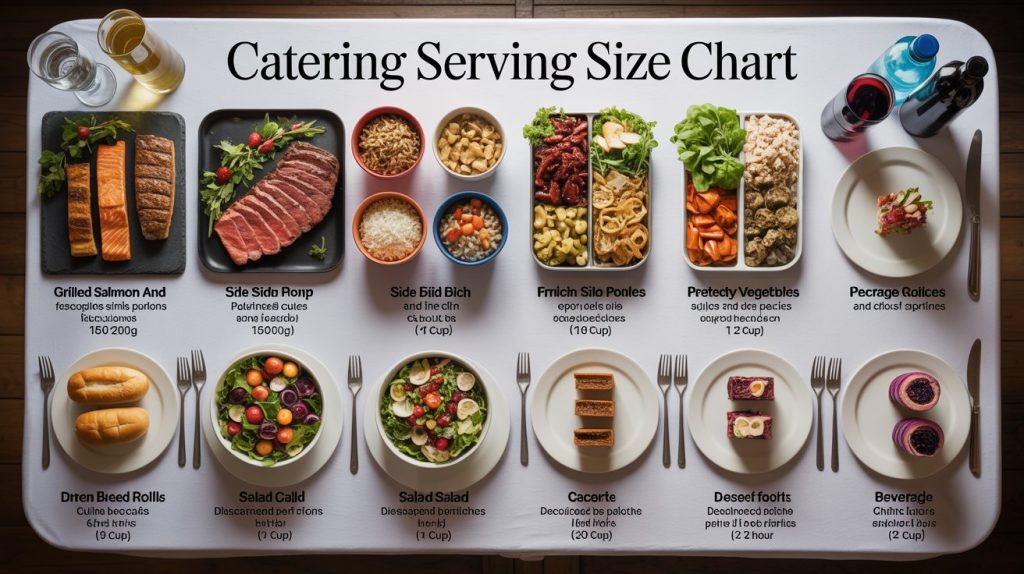
Here’s a general guideline for common food categories:
Catering Serving Size Chart
| Food Type | Serving Size Per Person | Notes |
|---|---|---|
| Meat/Protein | 150–200g (5–7 oz) | Main dish portion |
| Side Dishes | 1/2–1 cup each | 2–3 sides recommended |
| Rice/Pasta | 1/2–1 cup cooked | Depends on meal style |
| Vegetables | 1/2–1 cup | Mix of cooked or salad |
| Bread/Rolls | 1–2 pieces | Optional depending on menu |
| Salad | 1 cup | Starter or side |
| Dessert | 1–2 servings | Cake or small sweets |
| Beverages | 2–3 drinks per hour | Includes water, soft drinks |
These portions can vary depending on appetite and event type.
Catering Serving Sizes By Event Type
Different events require different portion planning:
Buffet Style
- Guests serve themselves
- Plan larger portions (about 10–20% extra)
- Offer variety but control quantities
Plated Meals
- Pre-portioned servings
- More controlled and consistent
- Standard serving sizes work well
Cocktail / Finger Food Events
- 6–8 pieces per person (light event)
- 10–15 pieces per person (full meal replacement)
BBQ or Casual Events
- Larger protein portions
- Fewer formal sides
- More relaxed serving sizes
Choosing The Right Portion Amount
Consider these factors when planning:
- Event duration: Longer events require more food
- Time of day: Dinner needs more than lunch or snacks
- Guest profile: Adults vs kids, appetite levels
- Menu variety: More options = slightly smaller portions
Adjust serving sizes based on your specific event needs.
Catering Serving Sizes And Food Balance
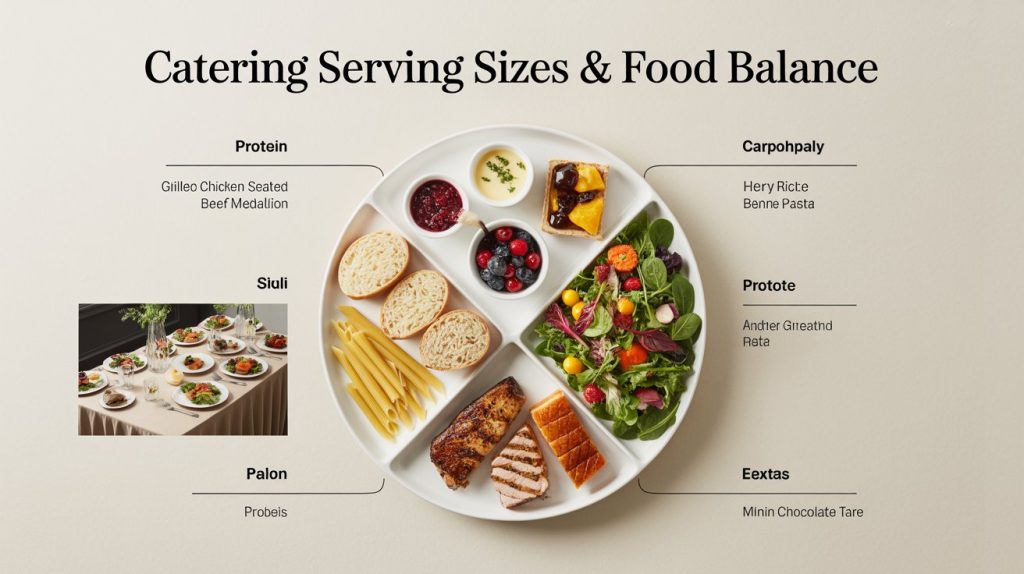
A balanced catering plate typically includes:
- Protein: Main dish (chicken, beef, fish)
- Carbohydrates: Rice, pasta, or bread
- Vegetables: Salad or cooked sides
- Extras: Sauces, dips, desserts
Balancing these ensures guests feel satisfied without overloading one category.
Visual Guide: Catering Serving Sizes
Here’s a quick reference:
| Food Category | Portion Per Person | Tip |
|---|---|---|
| Protein | Palm-sized (150–200g) | Main focus of meal |
| Sides | 1/2–1 cup each | Offer variety |
| Desserts | 1–2 pieces | Keep portions small |
| Drinks | 2–3 per hour | Always include water |
Tips For Planning Catering Portions
- Add 10–15% extra food: For safety
- Offer variety: Reduces overconsumption of one item
- Consider dietary needs: Vegetarian, vegan, allergies
- Use portion control for buffets: Avoid waste
- Work with caterers: They can guide exact quantities
Good planning ensures a smooth and successful event.
Common Mistakes In Catering Portions
- Underestimating food needs: Guests may go hungry
- Overordering: Leads to unnecessary costs
- Ignoring event type: Not adjusting portions accordingly
- Too many heavy dishes: Guests eat less overall
- Forgetting beverages: Essential for all events
Avoiding these mistakes helps create a better experience.
How Serving Sizes Affect Events
The amount of food you serve directly impacts guest satisfaction. Well-planned portions make guests feel cared for, while poor planning can affect the overall event experience.
Proper serving sizes also help with:
- Budget control
- Food presentation
- Event flow
The Importance Of Planning Ahead
Catering success comes from preparation. Estimating serving sizes early allows you to organize food, manage costs, and avoid last-minute stress.
Whether it’s a small gathering or a large celebration, planning portions correctly is key to a successful event.
Frequently Asked Questions
How Much Food Do I Need Per Person For Catering?
Typically 150–200g of protein plus sides and extras per person.
How Many Appetizers Per Person?
6–8 for light events, 10–15 if replacing a full meal.
Should I Order Extra Food?
Yes, about 10–15% extra is recommended.
How Many Drinks Per Person?
Around 2–3 drinks per hour.
Is Buffet Or Plated Better For Portion Control?
Plated meals offer better portion control, while buffets require extra planning.
Catering serving sizes per person may seem complicated, but with the right guidelines, you can plan confidently. By understanding portions and adjusting for your event, you can ensure every guest enjoys a satisfying and well-balanced meal.
