
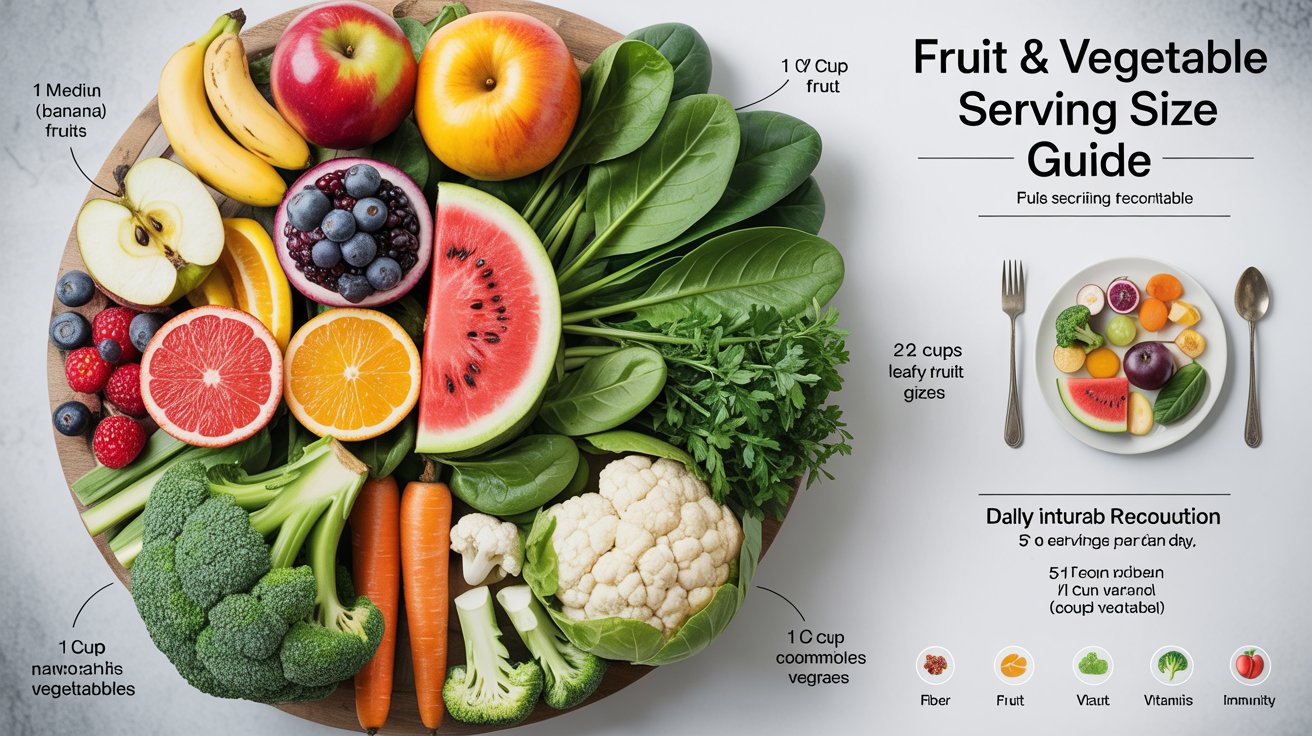
Fruits and vegetables are the foundation of a healthy diet—packed with vitamins, fiber, and essential nutrients. But how much is one serving? Understanding fruit and vegetable serving sizes helps you meet daily recommendations without confusion.
Why Fruit and Vegetable Serving Sizes Matter
Eating enough fruits and vegetables supports overall health, but portion awareness helps you:
- Meet daily nutrition goals
- Balance meals properly
- Avoid overeating or under-eating
- Track fiber and vitamin intake
Most guidelines recommend at least 5 servings per day.
Standard Fruit and Vegetable Serving Size Chart
Serving sizes are usually measured by cups, pieces, or grams.
Fruit and Vegetable Serving Size Chart
| Food Type | Serving Size Example | Calories (Approx.) |
|---|---|---|
| Fresh Fruit | 1 medium fruit (apple, banana) | 60–100 kcal |
| Cut Fruit | 1 cup | 50–80 kcal |
| Leafy Vegetables | 2 cups raw | 10–20 kcal |
| Other Vegetables | 1 cup raw or 1/2 cup cooked | 20–50 kcal |
| Cooked Vegetables | 1/2 cup | 20–60 kcal |
| Juice | 1/2 cup | 50–70 kcal |
These are general guidelines for most fruits and vegetables.
Common Fruit Serving Sizes
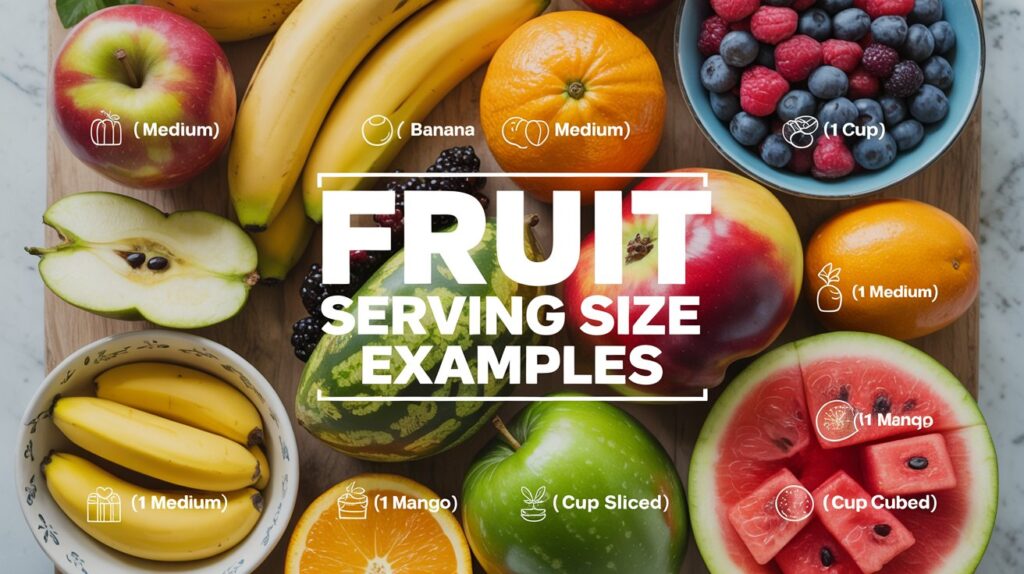
Here are typical portions for fruits:
Fruit Serving Examples
| Fruit | Serving Size |
|---|---|
| Apple | 1 medium |
| Banana | 1 medium |
| Orange | 1 medium |
| Berries | 1 cup |
| Mango | 1 cup sliced |
| Watermelon | 1 cup cubed |
Whole fruits are usually one serving each.
Common Vegetable Serving Sizes
Vegetables vary depending on type:
Vegetable Serving Examples
| Vegetable | Serving Size |
|---|---|
| Broccoli | 1 cup raw / 1/2 cup cooked |
| Carrots | 1 cup raw |
| Spinach | 2 cups raw |
| Cauliflower | 1 cup |
| Green Beans | 1/2 cup cooked |
| Peas | 1/2 cup cooked |
Leafy greens require larger volumes due to their light weight.
How Many Servings Do You Need Daily?
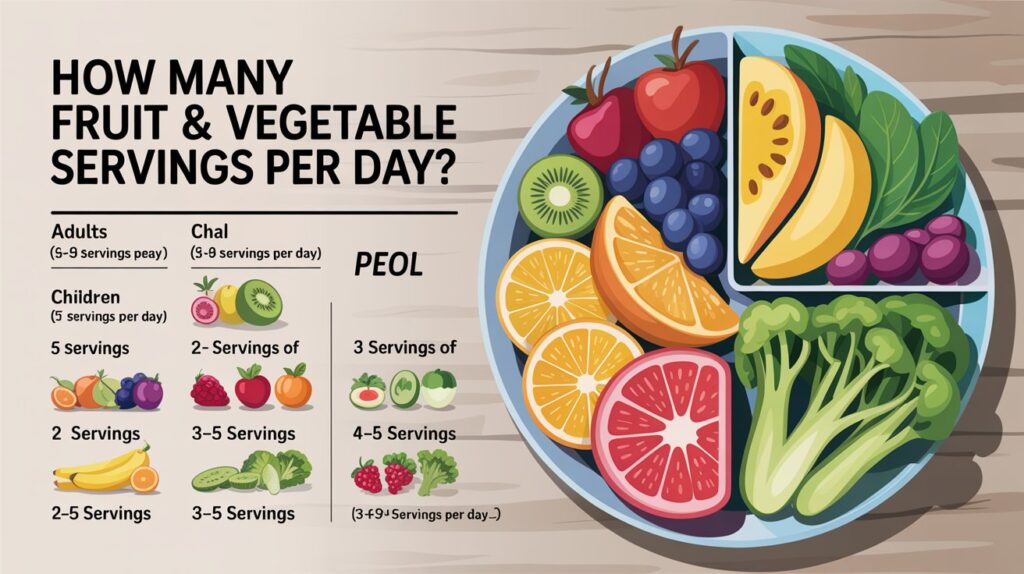
General recommendations:
- Adults: 5–9 servings per day
- Children: 3–5 servings per day
A simple goal:
- 2 servings of fruit
- 3–5 servings of vegetables
Tips For Meeting Daily Servings
- Add fruit to breakfast: Smoothies, oatmeal
- Include vegetables in every meal
- Snack on fruits and veggies
- Use frozen options: Just as nutritious
- Fill half your plate with vegetables
Small changes can increase your intake easily.
Common Mistakes With Serving Sizes
- Counting juice as whole fruit: Less fiber
- Underestimating leafy greens: Need larger volume
- Skipping vegetables at meals
- Overeating fruit juices: High in sugar
Balance is key for optimal nutrition.
How Serving Sizes Affect Your Health
Eating the right amount of fruits and vegetables can:
- Improve digestion
- Boost immunity
- Support heart health
- Help with weight management
They are essential for long-term wellness.
Fruits vs Vegetables: Portion Differences
| Category | Portion Style | Key Difference |
|---|---|---|
| Fruits | Whole or 1 cup | Higher natural sugars |
| Vegetables | Larger volume | Lower calories, more fiber |
Vegetables can usually be eaten in larger amounts.
Frequently Asked Questions
What Counts As One Serving Of Fruit?
One medium fruit or 1 cup of cut fruit.
What Counts As One Serving Of Vegetables?
1 cup raw or 1/2 cup cooked vegetables.
Can I Eat Unlimited Vegetables?
Most vegetables can be eaten in large amounts due to low calories.
Is Fruit Juice A Serving?
Yes, but limit to 1/2 cup due to lower fiber.
How Can I Eat More Vegetables Daily?
Add them to every meal and snack.
Fruit and vegetable serving sizes may seem simple, but they play a big role in your health. By understanding proper portions, you can easily meet your daily goals and enjoy a balanced, nutritious diet every day.
