
Eating healthy isn’t just about choosing the right foods—it’s also about eating the right amounts. Even nutritious foods can lead to overeating if portions aren’t controlled. Understanding healthy serving sizes helps you build balanced meals, manage calories, and support long-term wellness. Let’s explore how much you should actually eat and how to portion your meals the smart way.
Why Healthy Serving Sizes Matter
Portion control plays a key role in maintaining a healthy lifestyle. Eating too much—even of healthy foods—can lead to excess calorie intake, while eating too little may leave you lacking essential nutrients.
Proper serving sizes help:
- Maintain a healthy weight
- Balance nutrients (carbs, protein, fats)
- Prevent overeating
- Improve digestion and energy levels
By learning correct portions, you can enjoy your favorite foods without guilt or imbalance.
Standard Healthy Serving Sizes By Food Group
Different food groups have different recommended serving sizes. Here’s a general guide:
Healthy Serving Size Chart
| Food Group | Serving Size | Examples |
|---|---|---|
| Vegetables | 1 cup raw / 1/2 cup cooked | Leafy greens, broccoli, carrots |
| Fruits | 1 medium piece / 1 cup | Apple, banana, berries |
| Grains | 1/2 cup cooked | Rice, pasta, oats |
| Protein | 75–100g cooked | Chicken, fish, tofu |
| Dairy | 1 cup (240 ml) | Milk, yogurt |
| Healthy Fats | 1–2 tablespoons | Olive oil, nuts, seeds |
These are general recommendations and may vary based on individual needs.
Choosing The Right Serving Sizes
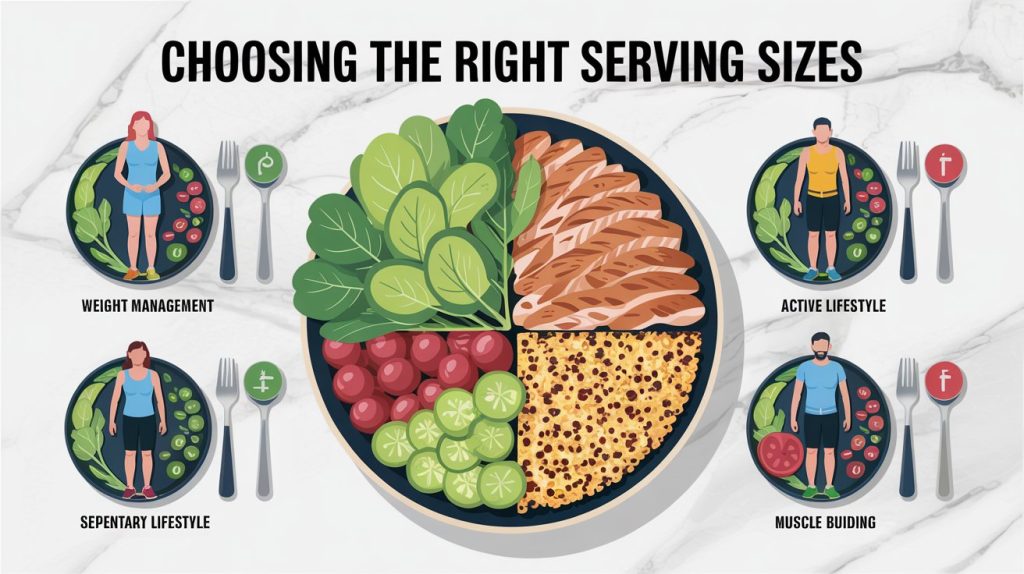
The right portion depends on your lifestyle, activity level, and health goals:
- Weight management: Focus on controlled portions and balanced meals
- Active lifestyle: Slightly larger portions for energy needs
- Sedentary lifestyle: Smaller portions to avoid excess calories
- Muscle building: Higher protein portions
A simple rule is to aim for a balanced plate rather than focusing on one food group.
The Balanced Plate Method
One of the easiest ways to manage portions is the plate method:
- Half plate: Vegetables and fruits
- One-quarter: Protein
- One-quarter: Whole grains
This approach ensures you get a good mix of nutrients without overthinking measurements.
Healthy Serving Sizes And Nutrition
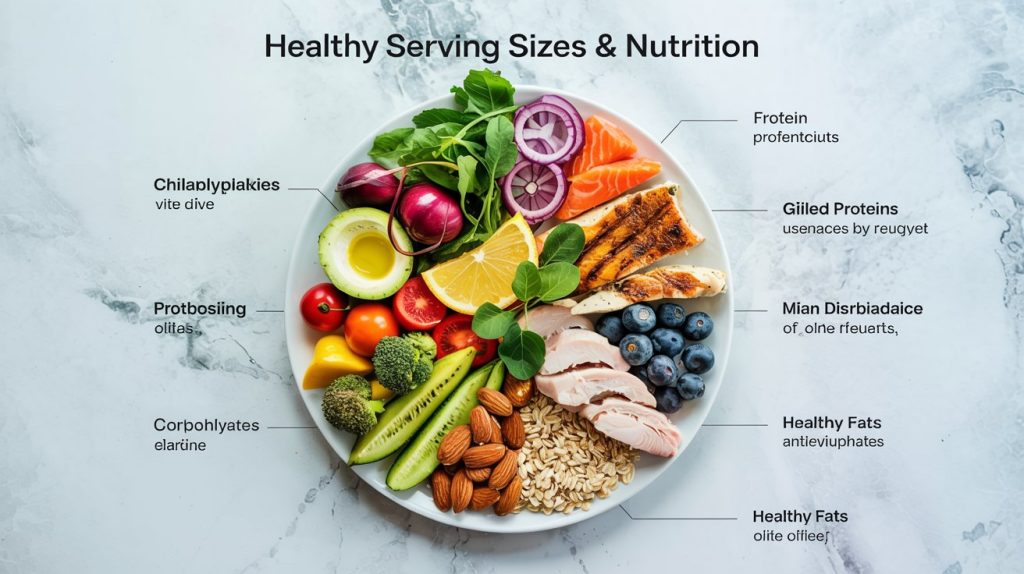
Each food group contributes different nutrients:
- Vegetables & fruits: Vitamins, minerals, fiber
- Proteins: Muscle repair and growth
- Grains: Energy (carbohydrates)
- Fats: Brain health and hormone support
Eating the right portions from each group helps your body function properly.
Visual Guide: Healthy Serving Sizes
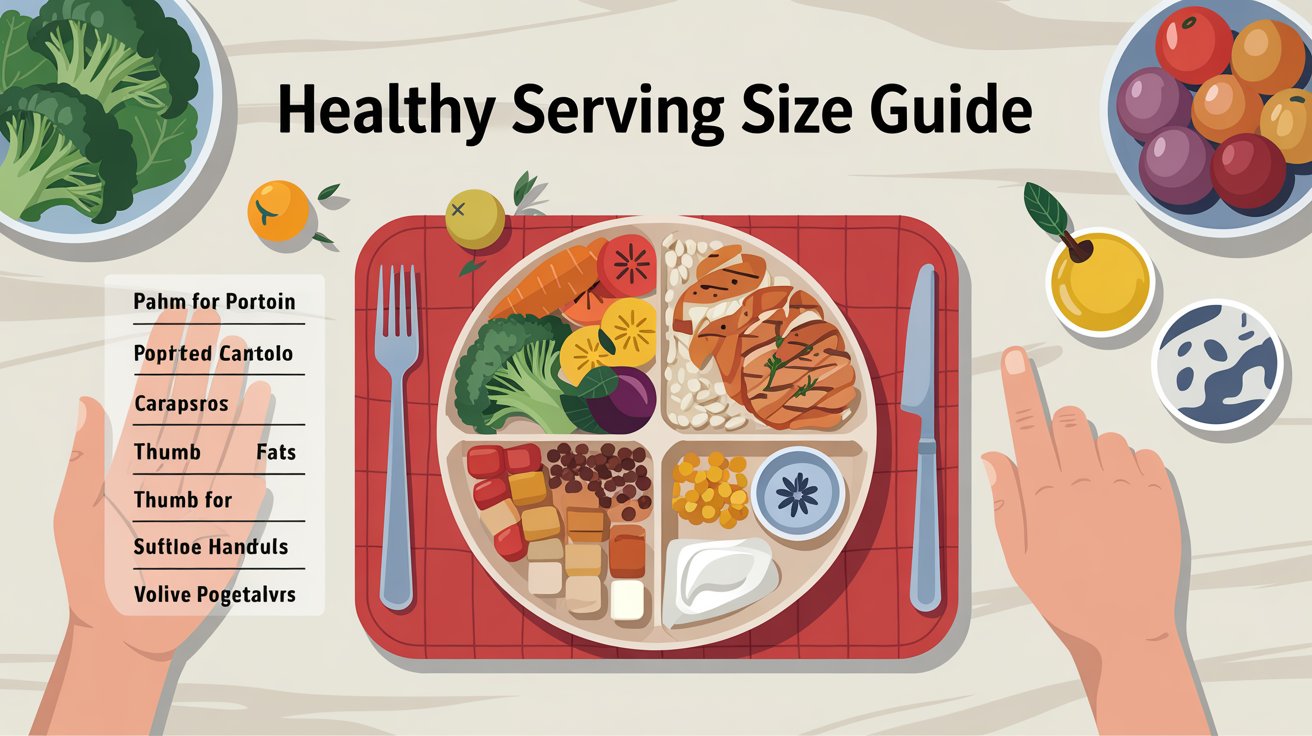
Here’s a simple way to estimate portions using your hand:
| Food Type | Portion Size Guide |
|---|---|
| Protein | Palm of your hand |
| Carbs | Cupped hand |
| Fats | Thumb |
| Vegetables | Two handfuls |
This method is easy to use anywhere without measuring tools.
Tips For Controlling Serving Sizes
- Use smaller plates: Helps reduce overeating
- Read food labels: Understand recommended portions
- Avoid eating straight from packages: Portion your food first
- Eat slowly: Gives your body time to feel full
- Plan meals ahead: Prevents oversized servings
Small habits can make a big difference over time.
Common Mistakes With Serving Sizes
- Oversized portions: Especially with calorie-dense foods
- Ignoring liquid calories: Drinks can add up quickly
- Skipping meals: Leads to overeating later
- Not measuring servings: Results in inconsistent intake
Being aware of these mistakes helps you stay on track.
How Serving Sizes Affect Your Health
Consistently eating proper portions supports:
- Weight control
- Better digestion
- Stable blood sugar levels
- Improved energy
On the other hand, oversized portions can lead to weight gain and health issues over time.
Healthy Serving Sizes In Different Diets
Serving sizes may vary depending on dietary preferences:
- Low-carb diets: Smaller portions of grains
- Plant-based diets: Larger portions of vegetables and legumes
- High-protein diets: Increased protein servings
- Balanced diets: Even distribution of all food groups
Adjust portions based on your personal goals.
Frequently Asked Questions
What Is A Healthy Serving Size?
It’s the recommended amount of a specific food that supports balanced nutrition and calorie control.
How Can I Measure Portions Without Tools?
You can use your hand (palm, thumb, cupped hand) as a guide.
Are Serving Sizes The Same For Everyone?
No, they vary based on age, activity level, and health goals.
Can I Eat More Healthy Food Without Limits?
Even healthy foods should be eaten in moderation to avoid excess calories.
How Do I Control Portion Sizes When Eating Out?
Share meals, choose smaller portions, or save half for later.
Healthy serving sizes may seem like a small detail, but they are one of the most important factors in maintaining a balanced diet. By understanding and applying proper portions, you can enjoy your meals, improve your health, and build sustainable eating habits for life.
