
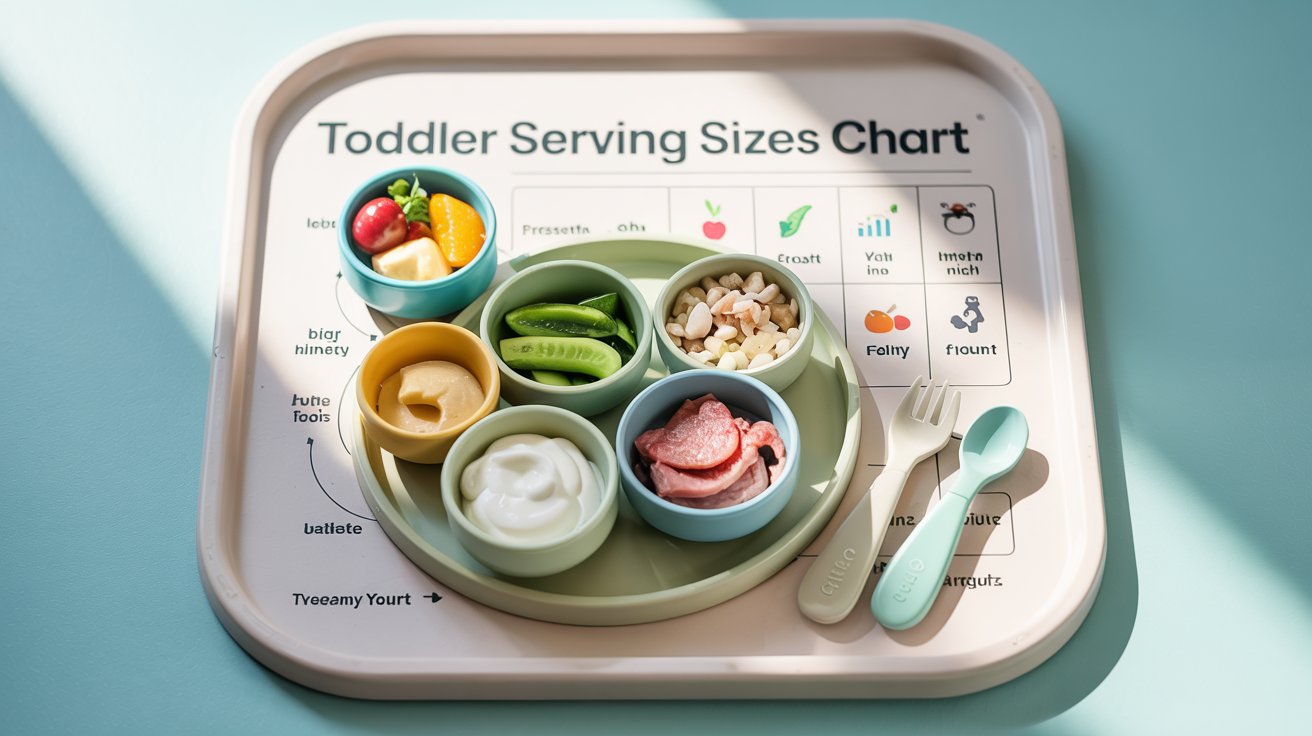
Feeding toddlers can feel tricky—they eat less than adults but need plenty of nutrients for rapid growth and development. Their appetites can also vary from day to day. Understanding toddler serving sizes helps you provide balanced meals without overfeeding or underfeeding.
Why Toddler Serving Sizes Matter
Toddlers (ages 1–3) have small stomachs but high nutritional needs.
Knowing the right serving sizes helps you:
- Support healthy growth and development
- Avoid food waste and overeating
- Build healthy eating habits early
Portions should be small but nutrient-dense.
Standard Toddler Serving Sizes
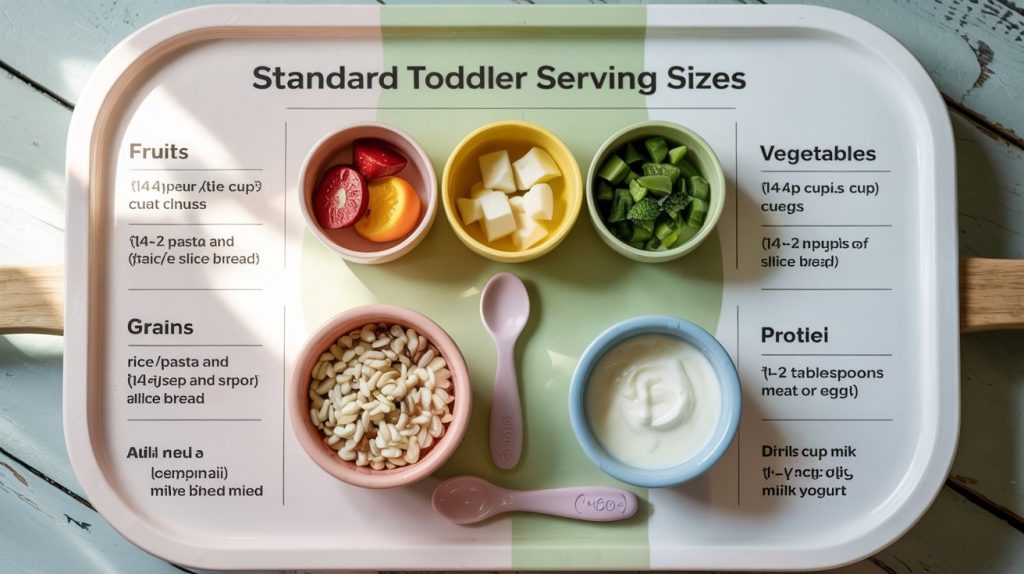
Toddler portions are much smaller than adult portions.
Toddler Serving Size Chart
| Food Group | Serving Size (Per Meal) | Daily Total (Approx.) |
|---|---|---|
| Fruits | ¼–½ cup | 1 cup |
| Vegetables | ¼–½ cup | 1 cup |
| Grains | ¼–½ slice bread or 2–4 tbsp | 3 servings |
| Protein | 1–2 tbsp | 2 servings |
| Dairy | ½ cup milk or yogurt | 2 cups |
👉 Start small—toddlers can always ask for more.
What Counts As One Toddler Serving?
Different foods equal one serving for toddlers.
Toddler Portion Examples
| Food | 1 Serving Size |
|---|---|
| Cooked Rice | 2–4 tablespoons |
| Pasta | 2–4 tablespoons |
| Bread | ¼–½ slice |
| Fruit | ¼–½ cup |
| Vegetables | ¼–½ cup |
| Meat | 1–2 tablespoons |
| Eggs | ½–1 egg |
Small portions help prevent overwhelm.
Toddler Serving Size and Nutrition
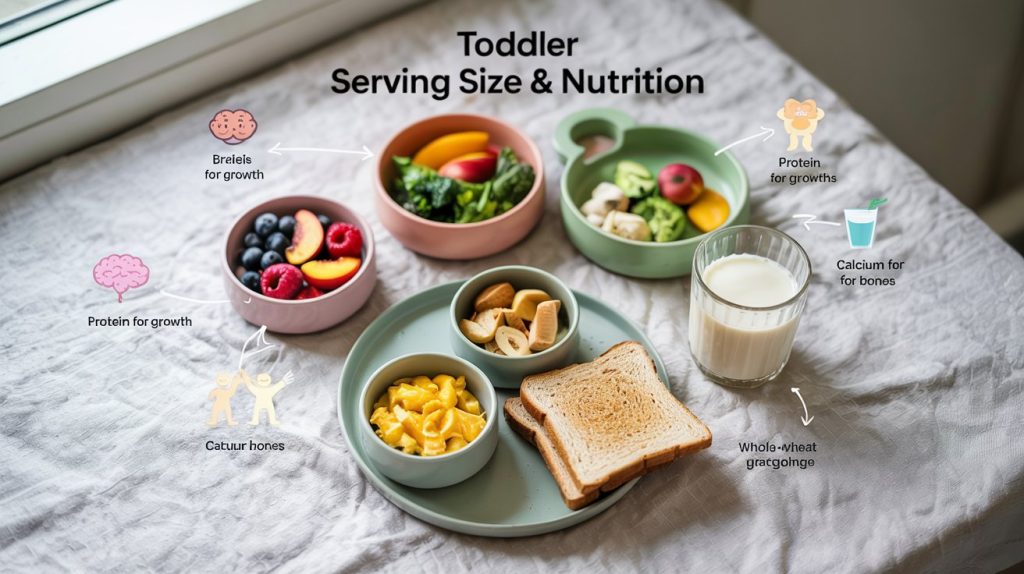
Toddlers need:
- Protein for growth
- Healthy fats for brain development
- Calcium for bones
- Iron for development
Balanced portions ensure they get all essential nutrients.
Visual Guide: Toddler Portions
Here’s a simple way to estimate toddler serving sizes:
| Portion Size | Visual Comparison | Best Use |
|---|---|---|
| 1 tbsp | Thumb tip | Protein, purees |
| ¼ cup | Small handful | Fruits, veggies |
| ½ cup | Small bowl | Meals |
Visual cues help parents serve appropriate amounts.
Tips For Feeding Toddlers
- Start with small portions: Toddlers can ask for more
- Offer variety: Different foods support nutrition
- Follow hunger cues: Don’t force eating
- Keep meals simple: Easy-to-eat foods work best
- Include snacks: 2–3 healthy snacks daily
Consistency helps build healthy habits.
Common Mistakes With Toddler Portions
- Serving adult-sized portions: Too much food
- Forcing children to eat: Can create negative habits
- Too many snacks: Reduces appetite for meals
- Not offering variety: Limits nutrients
Balance and patience are key.
How Toddler Serving Sizes Affect Growth
Proper portion sizes support:
- Healthy weight gain
- Brain development
- Energy for play and learning
Too little or too much can affect growth and eating habits.
The Importance Of Routine
Toddlers thrive on routine. Regular meals and snacks help regulate appetite and create healthy eating patterns.
Frequently Asked Questions
How Much Should a Toddler Eat Per Meal?
About ¼–½ cup per food group, depending on appetite.
How Many Meals Should Toddlers Have?
3 meals and 2–3 snacks per day.
Can Toddlers Eat the Same Food as Adults?
Yes, in smaller portions and appropriate textures.
What If My Toddler Refuses Food?
Offer variety and avoid forcing—appetite varies.
How Do I Measure Without Tools?
Use small spoons and bowls as guides.
Toddler serving sizes may seem small, but they play a big role in growth and development. By understanding toddler serving sizes, you can provide balanced meals that support your child’s health while building positive eating habits.
