
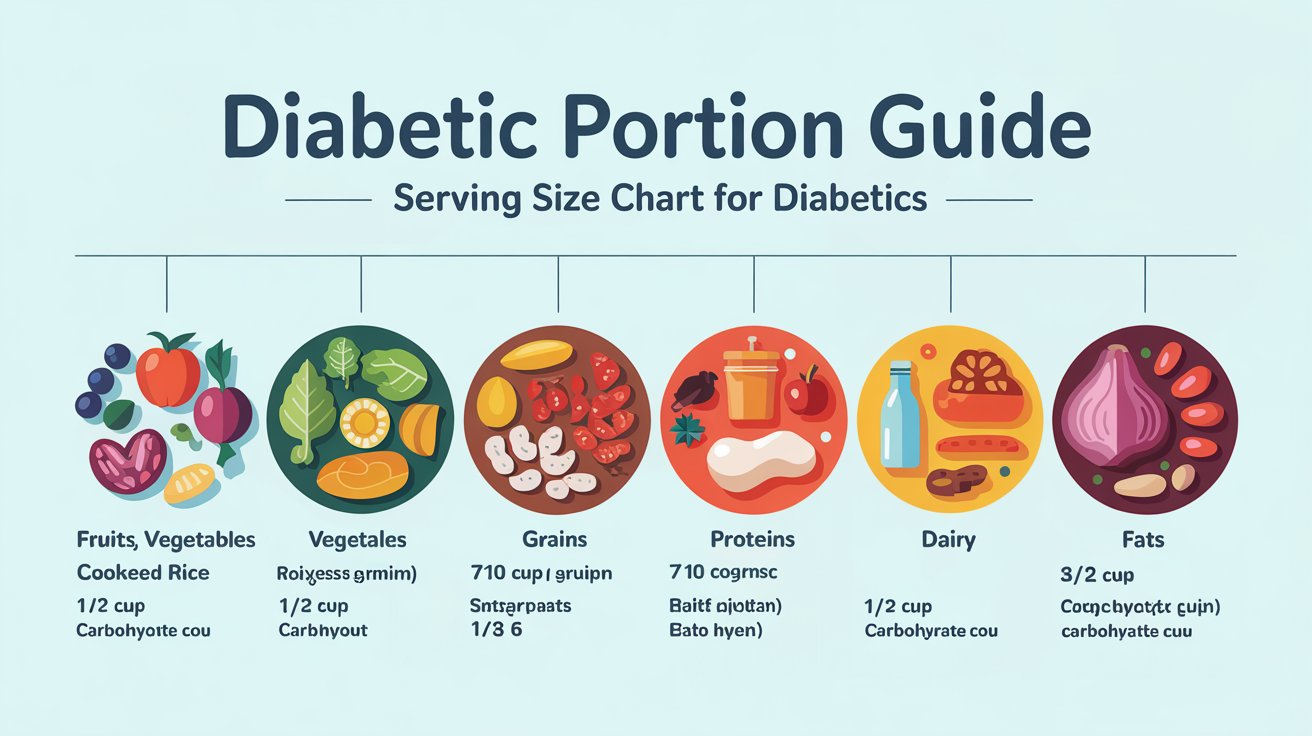
Managing diabetes isn’t just about avoiding sugar—it’s about controlling portions and balancing nutrients. The right serving sizes help regulate blood sugar levels, prevent spikes, and maintain overall health. Understanding a serving size chart for diabetics makes it easier to plan meals and stay consistent.
Why Serving Size Matters for Diabetics
For people with diabetes, portion size directly affects blood glucose levels—especially carbohydrates.
Knowing the right serving sizes helps you:
- Control blood sugar levels
- Manage carbohydrate intake
- Maintain a healthy weight
- Prevent energy spikes and crashes
Consistency in portions is key to better control.
Diabetic Serving Size Chart (Plate Method)
A simple and effective way to plan meals is the diabetes plate method.
Diabetic Portion Size Chart
| Food Group | Portion Size | Example |
|---|---|---|
| Vegetables | ½ plate (non-starchy) | Spinach, broccoli, cucumber |
| Protein | ¼ plate | Chicken, fish, tofu |
| Carbohydrates | ¼ plate | Brown rice, whole grains |
| Healthy Fats | Small amount | Nuts, olive oil |
👉 Focus on non-starchy vegetables to keep blood sugar stable.
Carbohydrate Serving Sizes for Diabetics
Carbs have the biggest impact on blood sugar.
Carb Serving Guide
| Food Type | 1 Serving (Approx. 15g carbs) |
|---|---|
| Bread | 1 slice |
| Rice/Pasta | ⅓–½ cup cooked |
| Fruit | 1 small fruit or ½ cup |
| Milk | 1 cup |
| Beans | ½ cup |
👉 Many meal plans allow 2–4 carb servings per meal, depending on individual needs.
Protein and Fat Serving Sizes
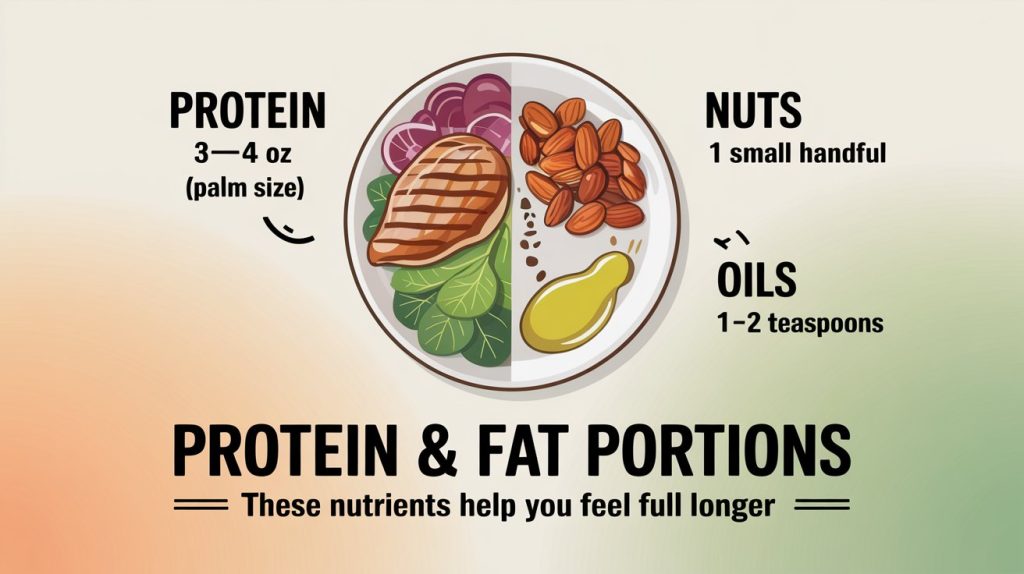
Protein and healthy fats help stabilize blood sugar.
Protein & Fat Portions
| Food Type | Serving Size |
|---|---|
| Protein | 3–4 oz (palm size) |
| Nuts | 1 small handful |
| Oils | 1–2 teaspoons |
These nutrients help you feel full longer.
Diabetic Serving Size and Nutrition
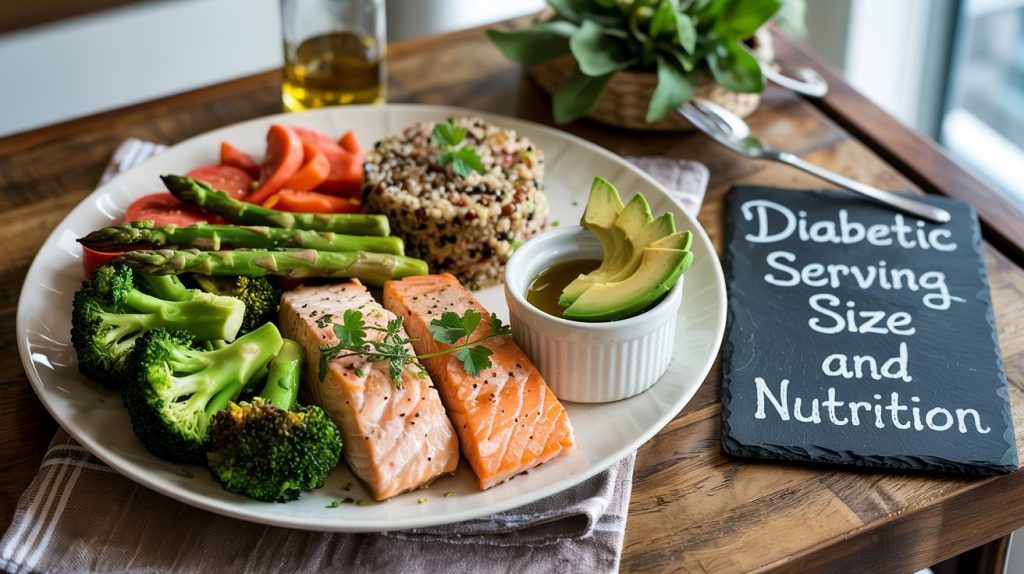
A balanced diabetic plate includes:
- Fiber-rich vegetables
- Lean protein
- Controlled carbohydrates
- Healthy fats
Fiber slows sugar absorption and improves control.
Visual Guide: Diabetic Portion Sizes
Here’s a simple way to estimate portions:
| Food Type | Visual Comparison | Best Use |
|---|---|---|
| Protein | Palm of hand | Meals |
| Carbs | Cupped hand | Controlled portions |
| Fats | Thumb | Oils, nuts |
| Vegetables | Two handfuls | Fill half plate |
Visual cues make portion control easier.
Tips for Managing Portions with Diabetes
- Eat consistent portions daily: Helps stabilize blood sugar
- Choose whole grains: Slower digestion
- Increase fiber intake: Supports control
- Avoid sugary drinks: Prevent spikes
- Monitor blood sugar: Adjust portions as needed
Small changes can improve long-term control.
Common Mistakes with Diabetic Portions
- Overeating carbs: Causes blood sugar spikes
- Skipping meals: Leads to unstable levels
- Ignoring portion sizes: Even healthy foods can affect glucose
- Drinking calories: Juice and soda add sugar quickly
Awareness helps maintain balance.
How Portion Size Affects Blood Sugar
The amount of food—especially carbs—directly impacts blood sugar levels. Controlled portions help maintain steady glucose and prevent sudden spikes.
Balanced meals support overall health.
The Importance of Consistency
Eating similar portion sizes at regular times each day helps keep blood sugar stable. Routine is an important part of diabetes management.
Frequently Asked Questions
What Is the Best Portion Method for Diabetics?
The plate method: half vegetables, quarter protein, quarter carbs.
How Many Carbs Should I Eat Per Meal?
Usually 30–60g, depending on your plan.
Can Diabetics Eat Fruit?
Yes, in controlled portions.
Is Portion Control Enough to Manage Diabetes?
It’s a key part, along with diet and lifestyle.
How Do I Measure Portions Without Tools?
Use hand-based visual guides.
Serving sizes for diabetics may seem simple, but they are essential for managing blood sugar and overall health. By following a serving size chart for diabetics, you can make smarter food choices and maintain better control every day.
