
Protein is an important nutrient that helps support muscles, tissues, enzymes, and many other functions in the body. Including protein-rich foods in meals can also make meals more filling and satisfying. From chicken and fish to eggs, Greek yogurt, beans, lentils, tofu, and cottage cheese, there are many ways to build a high-protein meal.
Understanding the high protein meals chart makes it easier to compare different foods, estimate protein intake, and create balanced meals for breakfast, lunch, dinner, or snacks.
Why High Protein Meals Matter
Protein is found in both animal and plant foods. Animal-based foods such as chicken, fish, eggs, and dairy are often concentrated sources of protein, while beans, lentils, tofu, nuts, and seeds provide plant-based options.
A high-protein meal does not have to be complicated. Combining a protein source with vegetables, whole grains, or other nutrient-rich foods can create a filling and balanced meal.
The amount of protein you need depends on factors such as age, body size, activity level, and individual health goals.
Standard High Protein Meals Chart
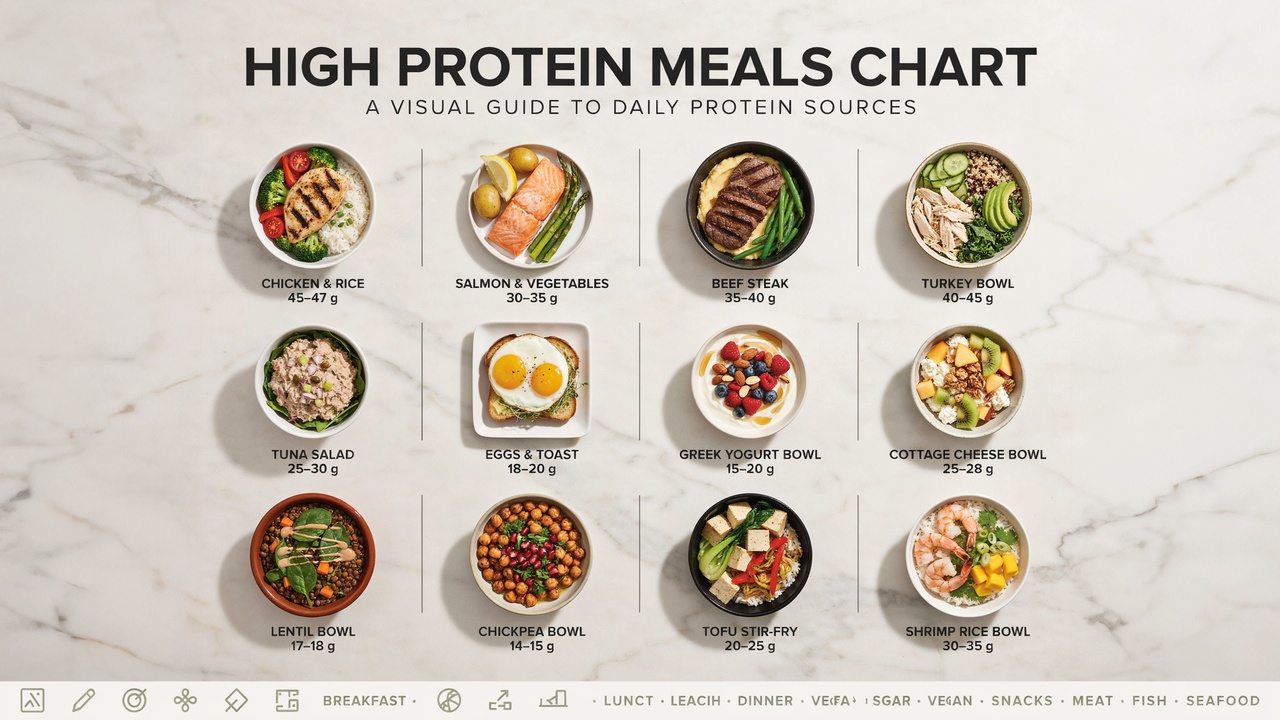
Here are some popular meal ideas with approximate protein amounts.
High Protein Meals Chart
| Meal | Main Protein Source | Typical Serving | Protein (Approx.) |
|---|---|---|---|
| Grilled Chicken & Rice | Chicken breast | 150 g chicken | 45–47 g |
| Salmon & Vegetables | Salmon | 150 g | 30–35 g |
| Beef Steak & Vegetables | Beef | 150 g | 35–40 g |
| Turkey Bowl | Turkey breast | 150 g | 40–45 g |
| Tuna Salad | Tuna | 1 can | 25–30 g |
| Egg & Toast | Eggs | 3 eggs | 18–20 g |
| Greek Yogurt Bowl | Greek yogurt | 1 cup | 15–20 g |
| Cottage Cheese Bowl | Cottage cheese | 1 cup | 25–28 g |
| Lentil Bowl | Cooked lentils | 1 cup | 17–18 g |
| Chickpea Bowl | Cooked chickpeas | 1 cup | 14–15 g |
| Tofu Stir-Fry | Firm tofu | 200 g | 20–25 g |
| Shrimp Rice Bowl | Shrimp | 150 g | 30–35 g |
Protein values vary by brand, preparation method, recipe, and serving size.
Choosing The Right High Protein Meal
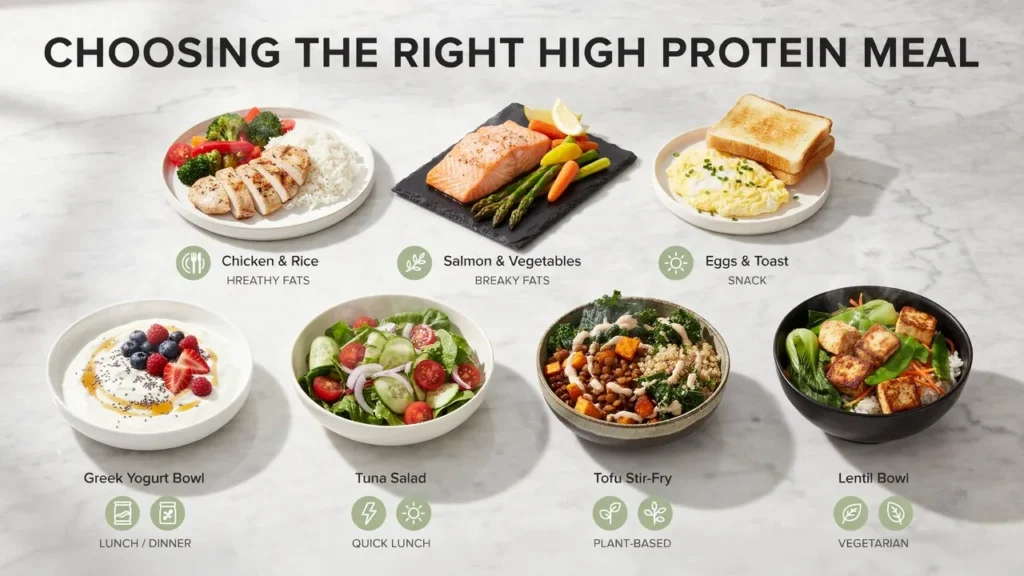
The best high-protein meal depends on your taste, dietary preferences, and meal time.
Chicken & Rice: A simple and versatile option that works well for lunch or dinner.
Salmon & Vegetables: A protein-rich meal that combines fish with vegetables and healthy fats.
Eggs & Toast: An easy breakfast option that requires minimal preparation.
Greek Yogurt Bowl: Great for breakfast or snacks and easy to combine with fruit and seeds.
Tuna Salad: A convenient option when you want a quick protein-rich lunch.
Lentil Bowl: A plant-based option that provides protein along with fiber and carbohydrates.
Tofu Stir-Fry: A flexible vegetarian meal that can be combined with vegetables and rice.
High Protein Breakfast Chart
Breakfast can be an easy place to add protein to your daily meals.
| Breakfast | Main Protein Source | Protein (Approx.) |
|---|---|---|
| 3 Eggs & Toast | Eggs | 18–20 g |
| Greek Yogurt & Berries | Greek yogurt | 15–20 g |
| Cottage Cheese & Fruit | Cottage cheese | 25–28 g |
| Egg & Turkey Sandwich | Eggs, turkey | 25–30 g |
| Protein Oatmeal | Milk, yogurt, oats | 20–30 g |
| Scrambled Eggs & Cheese | Eggs, cheese | 20–25 g |
| Greek Yogurt & Nuts | Yogurt, nuts | 20–25 g |
| Egg & Bean Breakfast Bowl | Eggs, beans | 20–25 g |
Adding eggs, dairy, beans, or lean meat can make a breakfast more protein-rich.
High Protein Lunch Chart
| Lunch | Main Protein | Protein (Approx.) |
|---|---|---|
| Grilled Chicken Bowl | Chicken | 40–45 g |
| Tuna Salad | Tuna | 25–30 g |
| Turkey Sandwich | Turkey | 25–35 g |
| Chicken Wrap | Chicken | 30–40 g |
| Beef Rice Bowl | Beef | 30–40 g |
| Lentil Bowl | Lentils | 17–20 g |
| Chickpea Salad | Chickpeas | 14–18 g |
| Tofu Stir-Fry | Tofu | 20–25 g |
Adding vegetables and whole grains can make these meals more balanced and filling.
High Protein Dinner Chart
Dinner can combine a substantial protein source with vegetables and a carbohydrate such as rice, potatoes, or whole grains.
| Dinner | Protein Source | Protein (Approx.) |
|---|---|---|
| Grilled Chicken & Rice | Chicken | 40–47 g |
| Salmon & Potatoes | Salmon | 30–35 g |
| Steak & Vegetables | Beef | 35–40 g |
| Turkey & Sweet Potato | Turkey | 40–45 g |
| Shrimp Pasta | Shrimp | 30–35 g |
| Chicken Stir-Fry | Chicken | 35–45 g |
| Tofu & Vegetable Bowl | Tofu | 20–25 g |
| Lentil Curry & Rice | Lentils | 17–20 g |
Exact amounts depend on the ingredients and portion sizes.
High Protein Food Chart
Many individual foods can be used to build protein-rich meals.
| Food | Typical Serving | Protein (Approx.) |
|---|---|---|
| Chicken Breast | 100 g cooked | 30–31 g |
| Turkey Breast | 100 g cooked | 29–30 g |
| Salmon | 100 g cooked | 22–25 g |
| Tuna | 100 g | 23–26 g |
| Shrimp | 100 g cooked | 20–24 g |
| Lean Beef | 100 g cooked | 26–30 g |
| Eggs | 2 large | 12–13 g |
| Greek Yogurt | 1 cup | 15–20 g |
| Cottage Cheese | 1 cup | 25–28 g |
| Tofu | 100 g | 10–13 g |
| Lentils | 1 cup cooked | 17–18 g |
| Chickpeas | 1 cup cooked | 14–15 g |
| Black Beans | 1 cup cooked | 15 g |
| Pumpkin Seeds | 28 g | 8–9 g |
| Peanut Butter | 2 tbsp | 7–8 g |
Values can differ between food varieties and brands.
High Protein Meat Chart
Meat can provide a concentrated source of protein.
| Meat | Serving | Protein (Approx.) |
|---|---|---|
| Chicken Breast | 100 g | 30–31 g |
| Turkey Breast | 100 g | 29–30 g |
| Lean Beef | 100 g | 26–30 g |
| Pork Tenderloin | 100 g | 26–29 g |
| Lean Ground Beef | 100 g | 25–27 g |
| Lamb | 100 g | 25–28 g |
Choosing leaner cuts can help increase protein while reducing the amount of fat in a meal.
High Protein Fish & Seafood Chart
Fish and seafood can be excellent sources of protein.
| Seafood | Serving | Protein (Approx.) |
|---|---|---|
| Tuna | 100 g | 23–26 g |
| Salmon | 100 g | 22–25 g |
| Shrimp | 100 g | 20–24 g |
| Cod | 100 g | 23–25 g |
| Sardines | 100 g | 24–25 g |
| Tilapia | 100 g | 25–26 g |
| Mackerel | 100 g | 20–24 g |
Seafood also varies considerably in fat content, so the nutritional profile is not determined by protein alone.
High Protein Vegetarian Meal Chart
You do not need meat to create protein-rich meals.
| Meal | Main Protein | Protein (Approx.) |
|---|---|---|
| Lentil Curry & Rice | Lentils | 17–20 g |
| Tofu Stir-Fry | Tofu | 20–25 g |
| Chickpea Bowl | Chickpeas | 14–18 g |
| Greek Yogurt Bowl | Greek yogurt | 15–20 g |
| Cottage Cheese Bowl | Cottage cheese | 25–28 g |
| Bean Burrito Bowl | Beans | 15–20 g |
| Egg & Vegetable Bowl | Eggs | 18–25 g |
| Tempeh Stir-Fry | Tempeh | 30–35 g |
Vegetarian diets can provide plenty of protein when meals include a variety of legumes, soy foods, dairy, eggs, nuts, and seeds.
High Protein Vegan Meal Chart
Plant-based eaters have many options for building protein-rich meals.
| Vegan Meal | Main Protein Source | Protein (Approx.) |
|---|---|---|
| Lentil Bowl | Lentils | 17–18 g |
| Chickpea Curry | Chickpeas | 14–15 g |
| Tofu Stir-Fry | Tofu | 20–25 g |
| Tempeh Bowl | Tempeh | 30–35 g |
| Black Bean Burrito | Black beans | 15–20 g |
| Edamame Bowl | Edamame | 17–19 g |
| Seitan Bowl | Seitan | 20–25 g |
| Peanut Noodle Bowl | Peanut butter, noodles | 15–20 g |
Protein content varies according to the recipe and portion size.
High Protein Snack Chart
Protein-rich snacks can help make meals more satisfying between main meals.
| Snack | Serving | Protein (Approx.) |
|---|---|---|
| Greek Yogurt | 1 cup | 15–20 g |
| Cottage Cheese | ½ cup | 12–14 g |
| Hard-Boiled Eggs | 2 eggs | 12–13 g |
| Edamame | 1 cup | 17–19 g |
| Roasted Chickpeas | 1 cup | 14–15 g |
| Pumpkin Seeds | 28 g | 8–9 g |
| Peanut Butter | 2 tbsp | 7–8 g |
| Cheese | 28 g | 6–8 g |
High Protein Food Pairing Chart
Combining different foods can create balanced meals with multiple nutrients.
| Protein Food | Good Pairings |
|---|---|
| Chicken | Rice, vegetables, potatoes |
| Salmon | Potatoes, vegetables, quinoa |
| Eggs | Toast, avocado, vegetables |
| Greek Yogurt | Berries, oats, nuts |
| Tuna | Salad, whole-grain bread |
| Lentils | Rice, vegetables |
| Chickpeas | Quinoa, salad, vegetables |
| Tofu | Rice, noodles, stir-fried vegetables |
| Cottage Cheese | Fruit, oats, whole-grain toast |
| Beans | Rice, corn, vegetables |
Pairing protein with vegetables and whole grains can create more complete and satisfying meals.
High Protein Meal Prep Chart
Meal preparation can make it easier to eat protein-rich meals throughout the week.
| Meal Prep Food | Storage-Friendly Pairings |
|---|---|
| Grilled Chicken | Rice & broccoli |
| Turkey | Sweet potato & vegetables |
| Salmon | Rice & roasted vegetables |
| Lean Beef | Potatoes & green beans |
| Lentils | Rice & mixed vegetables |
| Chickpeas | Quinoa & salad |
| Tofu | Rice & stir-fried vegetables |
| Eggs | Toast & vegetables |
Prepare ingredients in batches and portion them into individual meals for convenience.
High Protein Meal Calories Chart
Protein amount and calorie content are not the same thing. Some protein-rich foods also contain significant amounts of fat or carbohydrates.
| Food | Protein | General Calorie Profile |
|---|---|---|
| Chicken Breast | High | Relatively lean |
| Tuna | High | Relatively lean |
| Salmon | High | Higher due to healthy fats |
| Eggs | Moderate | Moderate |
| Greek Yogurt | Moderate-high | Varies by fat content |
| Cottage Cheese | High | Varies by fat content |
| Lentils | Moderate | Also rich in carbohydrates |
| Nuts | Moderate | Calorie-dense |
| Peanut Butter | Moderate | Calorie-dense |
| Tofu | Moderate | Moderate |
A high-protein meal should still be considered as part of the overall nutritional balance of the diet.
High Protein Meal Serving Size Chart
Serving size can have a major effect on total protein intake.
| Protein Food | Typical Meal Portion |
|---|---|
| Chicken | 120–170 g |
| Turkey | 120–170 g |
| Beef | 120–170 g |
| Fish | 120–170 g |
| Shrimp | 120–170 g |
| Tofu | 150–200 g |
| Lentils | 1–1½ cups |
| Chickpeas | 1 cup |
| Greek Yogurt | 1 cup |
| Cottage Cheese | 1 cup |
| Eggs | 2–4 eggs |
These are general portions rather than universal serving recommendations.
High Protein Meal Flavor Chart
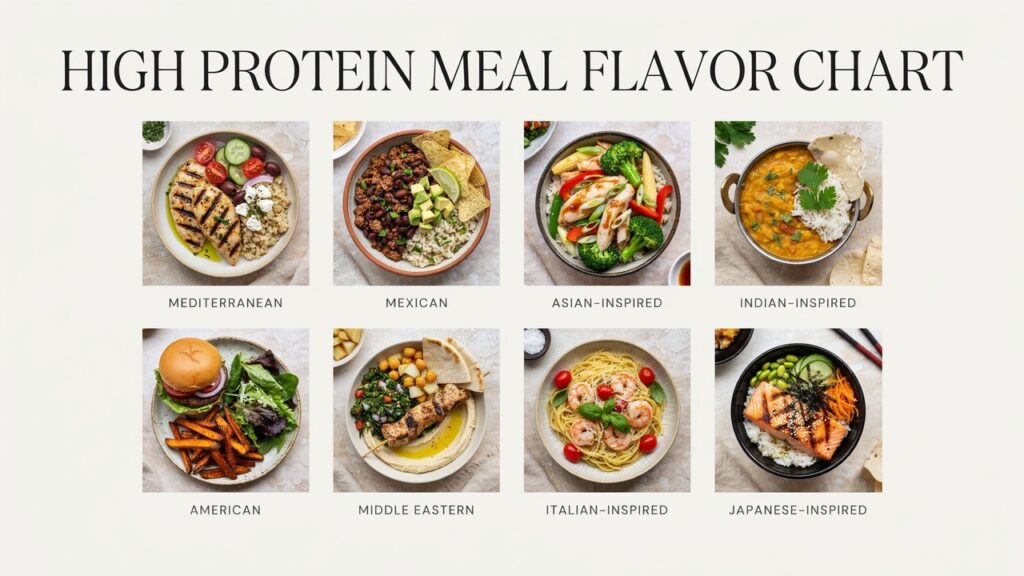
Protein-rich meals can be prepared in many different styles.
| Flavor Style | Example Meal |
|---|---|
| Mediterranean | Chicken, quinoa & vegetables |
| Mexican | Beef & bean bowl |
| Asian-Inspired | Chicken stir-fry |
| Indian-Inspired | Lentil curry |
| American | Turkey burger & salad |
| Middle Eastern | Chicken & hummus bowl |
| Italian-Inspired | Shrimp pasta |
| Japanese-Inspired | Salmon rice bowl |
Using different herbs, spices, sauces, and cooking methods can keep high-protein meals interesting.
Common Mistakes When Choosing High Protein Meals
Focusing only on protein: A balanced meal should also include vegetables, carbohydrates, healthy fats, and other nutrients as appropriate.
Ignoring portion sizes: Even protein-rich foods contribute calories, and portions can vary greatly.
Choosing highly processed foods every time: Some processed foods are convenient, but whole or minimally processed protein sources can provide additional nutrients.
Eating the same protein every day: Rotating chicken, fish, eggs, legumes, tofu, dairy, and other foods can provide greater variety.
Forgetting plant proteins: Beans, lentils, tofu, tempeh, and other plant foods can contribute substantial amounts of protein.
Assuming more protein is always better: Individual protein needs vary, and extremely high intake is not automatically beneficial for everyone.
Tips For Building A High Protein Meal
Start with a protein source: Choose chicken, fish, eggs, dairy, tofu, beans, or another protein-rich food.
Add vegetables: Vegetables provide fiber, vitamins, minerals, and volume.
Include a suitable carbohydrate: Rice, potatoes, oats, quinoa, whole-grain bread, or other grains can complement the meal.
Add healthy fats: Nuts, seeds, avocado, olive oil, or fatty fish can contribute useful fats.
Vary your protein sources: Rotate between animal and plant proteins to keep meals interesting.
Check labels: Packaged foods can vary significantly in protein content, so nutrition labels are useful for comparison.
Frequently Asked Questions
What Is Considered A High Protein Meal?
A high-protein meal generally contains a substantial amount of protein relative to the meal’s total calories and portion size. There is no single universal protein amount that defines every high-protein meal.
Which Meal Has The Most Protein?
Meals containing larger portions of chicken, turkey, lean beef, fish, seafood, or high-protein dairy can provide 30–50 grams or more of protein depending on the recipe.
What Is A Good High Protein Breakfast?
Good options include eggs, Greek yogurt, cottage cheese, protein-rich oatmeal, and egg sandwiches.
What Is A Good High Protein Lunch?
A chicken bowl, tuna salad, turkey sandwich, beef bowl, lentil bowl, or tofu stir-fry can make a protein-rich lunch.
What Is A Good High Protein Dinner?
Popular choices include grilled chicken with rice and vegetables, salmon with potatoes, lean beef with vegetables, shrimp pasta, or tofu stir-fry.
Are Beans High In Protein?
Yes. Beans provide plant-based protein along with carbohydrates and fiber. For example, one cup of cooked black beans provides around 15 grams of protein.
Are Eggs A Good Source Of Protein?
Yes. Two large eggs provide roughly 12–13 grams of protein, although the exact amount varies slightly by egg size.
Is Greek Yogurt High In Protein?
Many Greek yogurts contain around 15–20 grams of protein per cup, but the amount varies considerably between products.
Can Vegetarians Eat High Protein Meals?
Yes. Vegetarian meals can include eggs, Greek yogurt, cottage cheese, tofu, tempeh, lentils, beans, chickpeas, nuts, and seeds.
Can Vegans Eat High Protein Meals?
Yes. Vegan protein sources include tofu, tempeh, lentils, beans, chickpeas, edamame, seitan, nuts, and seeds.
How Much Protein Should A Meal Have?
There is no single amount that is appropriate for everyone. Protein needs depend on factors such as body size, age, activity level, and individual goals.
High-protein meals can be simple, versatile, and satisfying. From grilled chicken and salmon to eggs, Greek yogurt, lentils, tofu, beans, and seafood, there are plenty of options for different diets and tastes. Understanding the high protein meals chart helps you compare protein sources, serving sizes, meal ideas, and food pairings so you can create balanced meals that fit your needs.
