
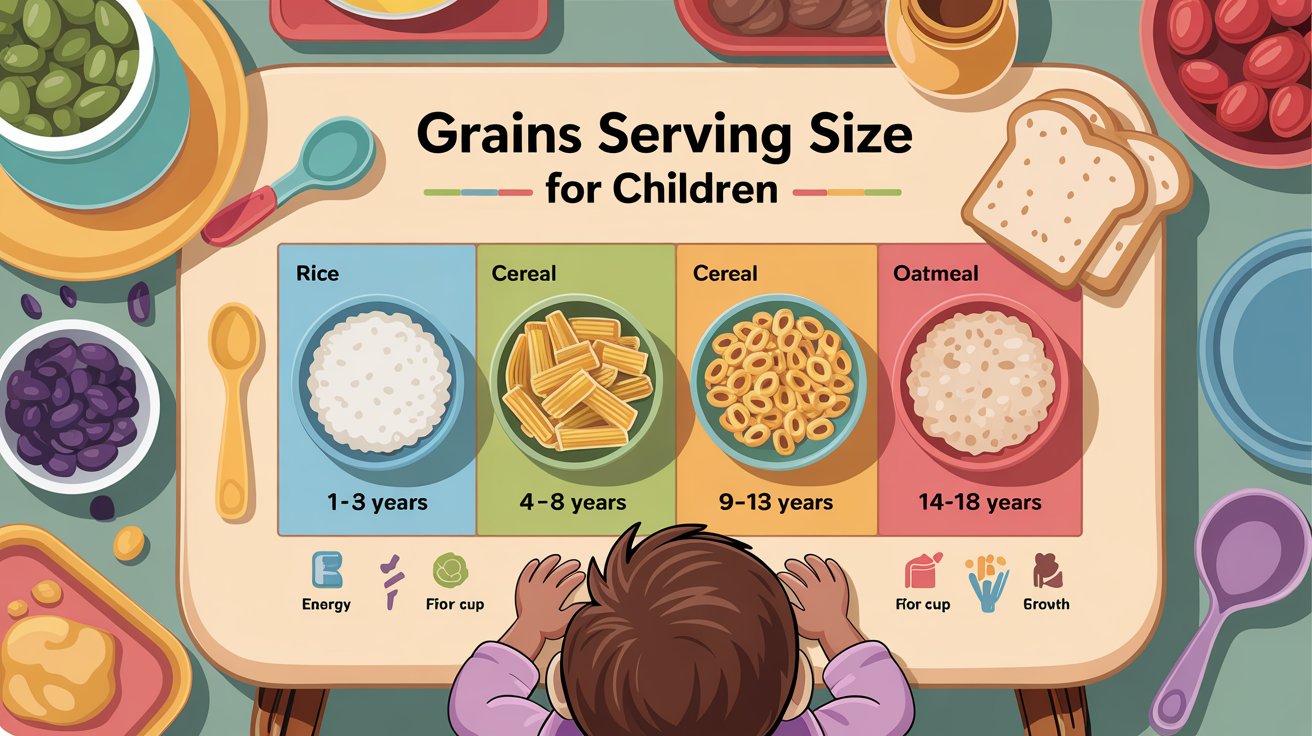
Grains are an important part of a child’s diet, providing energy, fiber, and essential nutrients for growth. Foods like rice, bread, pasta, and cereals help fuel active kids—but portion sizes should match their age and needs. Understanding grains serving size for children helps parents build balanced meals and support healthy development.
Why Grain Serving Size Matters for Children
Children need enough energy to grow, but too many grains—especially refined ones—can lead to excess calories.
Knowing the right serving size helps you:
- Provide steady energy for growth and activity
- Balance grains with protein, fruits, and vegetables
- Avoid overeating refined carbohydrates
Choosing the right portions is key to healthy eating habits.
Grain Serving Sizes by Age
Children’s portion sizes increase as they grow.
Grains Serving Size Chart for Children
| Age Group | Serving Size (Per Serving) | Daily Servings |
|---|---|---|
| 1–3 years | ¼–½ slice bread or 2–3 tbsp rice/pasta | 3 servings |
| 4–8 years | ½ slice bread or ¼ cup rice/pasta | 4–5 servings |
| 9–13 years | 1 slice bread or ½ cup rice/pasta | 5–6 servings |
| 14–18 years | 1–2 slices bread or ½–1 cup grains | 6–8 servings |
👉 Portions grow with age and activity level.
What Counts As One Grain Serving?
Different grain foods equal one serving.
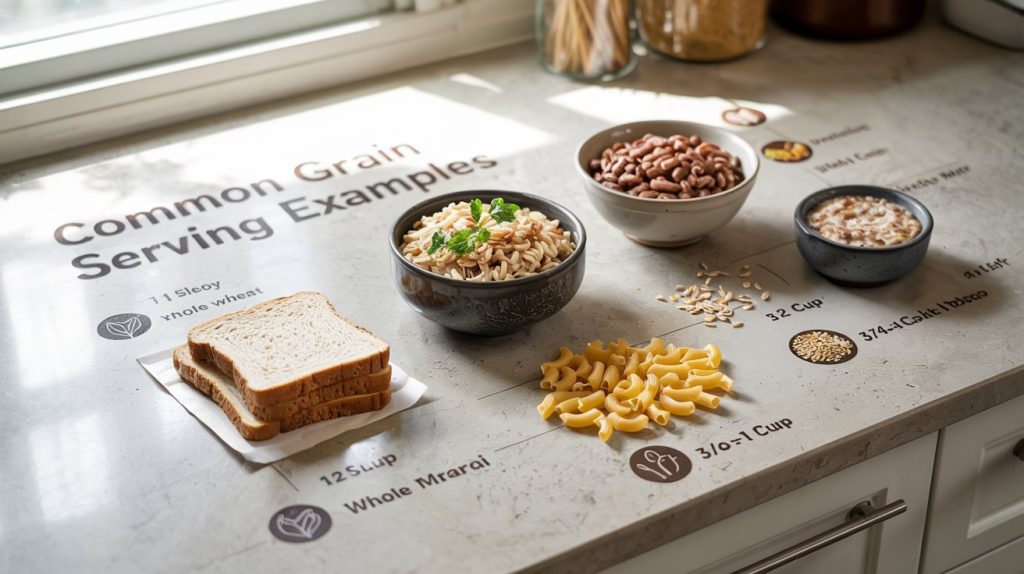
Common Grain Serving Examples
| Food | 1 Serving Size |
|---|---|
| Bread | 1 slice |
| Cooked Rice | ½ cup |
| Cooked Pasta | ½ cup |
| Breakfast Cereal | ¾–1 cup |
| Oatmeal | ½ cup cooked |
Whole grains are the healthiest option.
Whole Grains vs Refined Grains
Not all grains are equal.
Grain Type Comparison
| Type | Examples | Benefits |
|---|---|---|
| Whole Grains | Brown rice, oats | More fiber and nutrients |
| Refined Grains | White bread, pasta | Less fiber |
👉 At least half of grains should be whole grains.
Grain Serving Size and Nutrition
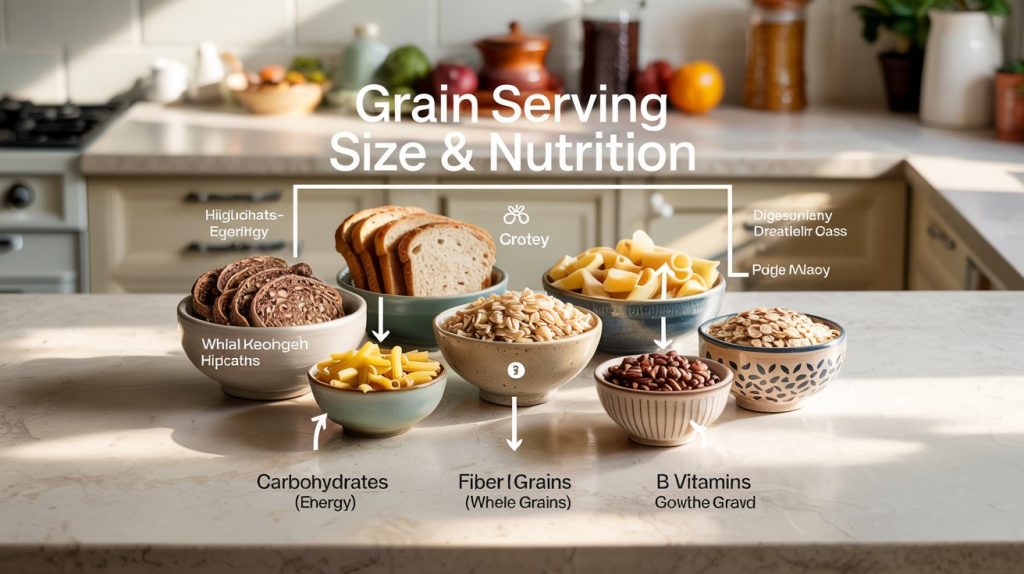
Grains provide:
- Carbohydrates (energy)
- Fiber (especially whole grains)
- B vitamins
Proper portions help maintain energy levels and support growth.
Visual Guide: Grain Serving Size for Kids
Here’s a simple way to estimate portions:
| Serving Size | Visual Comparison | Best Use |
|---|---|---|
| ½ cup | Small bowl | Rice or pasta |
| 1 slice | Hand-sized bread | Sandwich |
| ¼ cup | Small scoop | Toddlers |
Visual cues make portioning easier for parents.
Tips For Serving Grains to Children
- Choose whole grains: Better nutrition
- Adjust portions by age: Younger kids need less
- Combine with protein: مثل eggs or chicken
- Add vegetables: Balance the meal
- Limit sugary cereals: Reduce added sugar
Balanced meals help children thrive.
Common Mistakes With Grain Portions
- Serving too many refined grains: Low nutrition
- Oversized portions: Leads to excess calories
- Ignoring balance: Too many carbs, not enough protein
- Relying on processed foods: Less healthy
Being mindful helps create healthier habits.
How Grain Serving Size Affects Growth
The right grain portions provide steady energy for learning, play, and development. Too little can reduce energy, while too much can unbalance the diet.
Balance with other food groups is essential.
The Importance Of Grains in a Child’s Diet
Grains are a key energy source for growing children. Including the right types and portions supports healthy development and long-term eating habits.
Frequently Asked Questions
How Many Grain Servings Do Children Need Daily?
Between 3–8 servings depending on age.
What Is One Serving of Rice for Kids?
About ½ cup cooked.
Are Whole Grains Better for Children?
Yes, they provide more fiber and nutrients.
Can Kids Eat Grains Every Day?
Yes, as part of a balanced diet.
How Do I Measure Without Tools?
Use small bowls or hand-sized portions as a guide.
Grain serving sizes for children may seem small, but they play a big role in growth and energy. By understanding the grains serving size chart, you can provide balanced meals that support your child’s health and development.
