
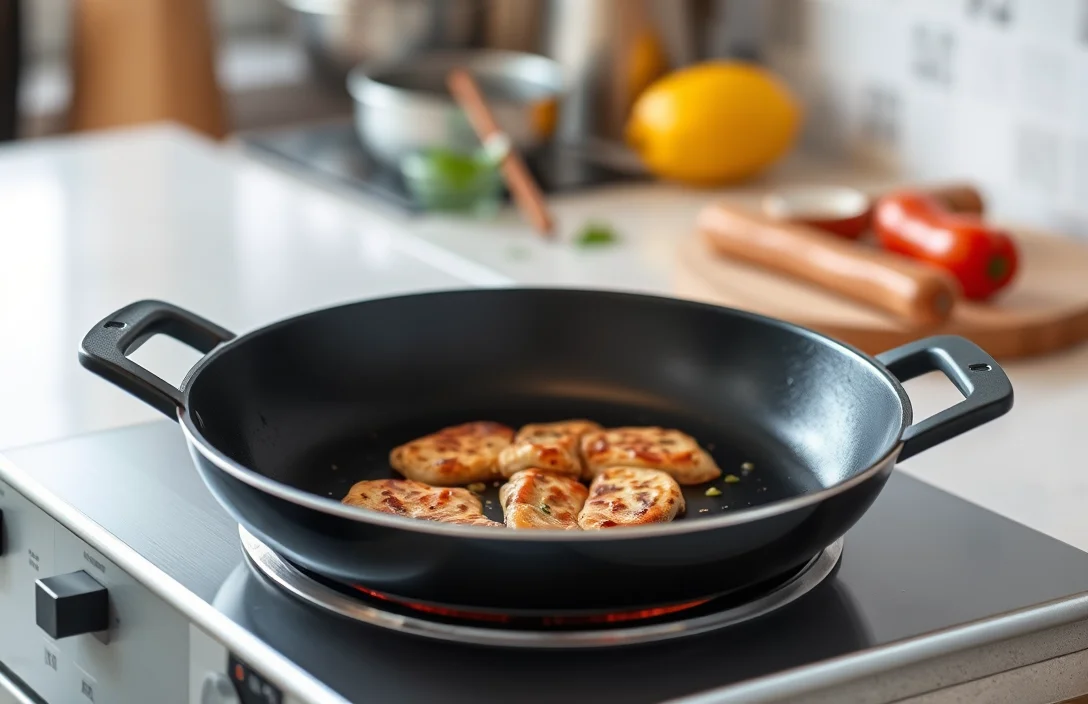
Studies show that electric skillets cook food 25% faster than traditional frying pans, making them an appealing choice for busy kitchens. Understanding the differences between these cooking tools can save both time and effort, enhancing your culinary experience significantly.
Electric skillets provide consistent heat and temperature control, while frying pans offer versatility and portability. Knowing their key differences helps you choose the right tool for your cooking needs.
Electric Skillet Features and Benefits
Electric skillets offer versatility unmatched by traditional frying pans. Equipped with a built-in heating element, these appliances allow for precise temperature control, making it easier to achieve perfect cooking results. Unlike stovetop frying pans, electric skillets can maintain consistent heat, reducing the risk of burning food.
Temperature settings vary widely, enabling users to cook everything from pancakes to stir-fries. Most models include features like:
- Adjustable temperature controls for various recipes.
- Non-stick surfaces for easy cleaning.
- Large cooking capacity, ideal for family meals.
- Removable power cords for safe storage.
Cooking surfaces also come in various materials, including stainless steel and ceramic, catering to different preferences. These features make electric skillets not just a cooking tool, but also an essential kitchen companion for anyone looking to save time and effort while cooking.
Various Frying Pan Types and Uses
Cast iron pans excel at heat retention, making them ideal for searing meats and baking. Their durable nature allows for high-temperature cooking, which can enhance flavors and create a perfect crust. Seasoning them properly develops a natural non-stick surface over time, making cleanup easier and improving flavor with each use.
Non-stick frying pans are popular for low-fat cooking. Their smooth surface prevents food from sticking, allowing for easy flipping and serving. These pans are excellent for preparing delicate items like eggs or pancakes, where you want to minimize breakage and maximize presentation.
Stainless steel frying pans are versatile and perfect for browning meats. They offer a robust cooking surface that withstands high temperatures, making them suitable for deglazing and creating sauces. Many cooks prefer them for sautéing vegetables, as they do not react with acidic ingredients.
Wok-style pans provide a unique shape for stir-frying. Their high, sloped sides ensure quick, even cooking, making them ideal for fast-paced meals. Using a wok allows for tossing food easily and achieving that coveted wok hei flavor, which is crucial in Asian cuisines.
Electric frying pans offer convenience for larger meals. They provide consistent heat and are great for cooking multiple items simultaneously. Ideal for entertaining, these appliances allow for cooking at the table, making them a favorite for family gatherings or potlucks.
Comparison of Cooking Surface Materials
Material choice significantly impacts cooking performance and durability. Electric skillets often feature non-stick surfaces, making them easy to clean and ideal for low-fat cooking. Common coatings like Teflon or ceramic reduce the need for oil, enhancing health-conscious meal preparation. In contrast, many frying pans are made from stainless steel, cast iron, or aluminum, which can provide superior heat retention and browning capabilities.
Stainless steel offers excellent durability and resistance to scratching, ideal for searing meats. Cast iron, while heavier, excels at heat distribution and can be used in both stovetop and oven applications. Aluminum skillets are lightweight and heat up quickly, but they may require a non-stick coating for best results. Each material brings unique benefits, influencing your cooking style and preferences.
Non-stick surfaces on electric skillets simplify cleanup, but they may wear over time. Using metal utensils can scratch these coatings, reducing effectiveness. Conversely, frying pans made of stainless steel or cast iron can last for decades with proper care, making them a practical investment. Selecting the right material depends on your cooking habits and desired outcomes.
Heat Distribution and Cooking Efficiency
Heat distribution significantly influences cooking performance. Electric skillets typically offer even heat across the surface, allowing for consistent cooking temperatures. This uniformity helps prevent hot spots that can cause unevenly cooked food. Frying pans, depending on material and stove type, may experience varied heat distribution, leading to potential cooking inconsistencies.
- Electric skillets often feature built-in heating elements. These elements ensure that the entire cooking surface reaches the desired temperature quickly and uniformly.
- Frying pans require careful attention to heat sources. Gas and electric stoves can create uneven heating, affecting cooking results. Moving the pan around the burner can help mitigate hot spots.
- Material choice impacts heat retention. Non-stick coatings in skillets allow for less oil and quicker cooking, while stainless steel pans may require more oil to prevent sticking.
- Size matters in heat distribution. Larger skillets can accommodate more food without overcrowding, which allows for better heat circulation compared to smaller frying pans.
In conclusion, focusing on heat distribution helps in selecting the right cooking tool. Electric skillets excel in even heating, while frying pans demand more attention to heat sources and materials.
Cleaning Ease and Maintenance Differences
Electric skillets typically require more attention during cleaning due to their electrical components. Most models are not dishwasher safe, necessitating hand washing. Warm, soapy water and a non-abrasive sponge are ideal for maintaining the non-stick surface and ensuring longevity. Always remember to unplug the skillet before cleaning.
Frying pans, on the other hand, are often simpler to clean. Stainless steel and cast iron options can be placed in the dishwasher, although hand washing is recommended for longevity. Non-stick frying pans should be wiped down with a soft cloth to avoid damaging the coating. Regular seasoning of cast iron pans helps maintain their non-stick properties.
Maintenance schedules vary between the two tools. Electric skillets need occasional inspection for cord wear and electrical issues, ensuring safe operation. Frying pans benefit from consistent care, such as avoiding metal utensils on non-stick surfaces and maintaining proper seasoning for cast iron.
| Feature | Electric Skillet | Frying Pan |
|---|---|---|
| Cleaning Method | Hand wash, not dishwasher safe | Often dishwasher safe, but hand wash recommended |
| Maintenance | Inspect for cord wear | Regular seasoning for cast iron |
Versatility in Cooking Techniques
Electric skillets excel in versatility, enabling a range of cooking methods. From frying to simmering, these tools can handle various tasks. Their temperature controls facilitate precise cooking, making them ideal for recipes requiring specific heat levels.
Frying pans, on the other hand, offer distinct advantages for quick searing and browning. The flat surface allows for easy flipping and stirring, essential for many classic recipes. They also heat up rapidly, which is advantageous for fast-paced cooking.
Grilling becomes simpler with electric skillets, which can often double as grills. This multifunctionality allows users to prepare everything from pancakes to grilled vegetables without needing multiple appliances. The consistent heat distribution minimizes hot spots, improving overall cooking results.
Stir-frying stands out as another area where both options shine. While skillets provide a spacious surface for tossing ingredients, frying pans can achieve high temperatures quickly, which is crucial for achieving that perfect stir-fry texture. Cooking efficiently becomes easier with both tools, depending on personal preferences.
Ultimately, versatility is key in deciding between these two tools. Consider your cooking style and the types of meals you typically prepare. Each option has unique strengths that can complement your culinary endeavors.
Energy Efficiency and Cost Considerations
Electric skillets generally consume more energy than traditional frying pans. Most models operate between 1200-1800 watts, resulting in a higher electricity bill during frequent use. In contrast, frying pans rely on stovetop heat, which is typically more efficient for quick cooking tasks and reduces overall energy costs over time.
Price ranges vary significantly based on features. Basic frying pans can be found for as low as $20, while high-quality models may reach $100. Electric skillets typically start around $30 and can exceed $150 for advanced options. Assessing your budget and cooking needs will guide you in selecting the most cost-effective choice.
Long-term expenses also involve maintenance and replacement costs. Frying pans tend to last longer with proper care, while electric skillets may require replacement due to electrical malfunctions. Investing in quality materials for either tool can minimize future costs and enhance durability.
Environmental impact is another consideration. Using electricity for cooking contributes to carbon emissions, especially if powered by non-renewable sources. Frying pans, when used efficiently, can be the greener option if paired with energy-saving stovetops. Balancing efficiency, cost, and environmental factors will ultimately lead to a more informed decision.
Quick Summary
- Electric skillets provide consistent temperature control, making them ideal for cooking at specific heat levels.
- Frying pans are typically more versatile and can be used on a variety of heat sources, including stovetops and open flames.
- Electric skillets often come with non-stick surfaces, which can make cooking and cleaning easier.
- Frying pans are generally lighter and easier to handle, especially for flipping and tossing food.
- Electric skillets usually have a larger cooking surface, suitable for preparing meals for multiple people.
- Frying pans allow for more direct control over cooking techniques such as searing and sautéing.
- Electric skillets can be more energy-efficient for certain cooking tasks compared to using a stovetop.
Frequently Asked Questions
What is the main difference between an electric skillet and a frying pan?
An electric skillet is an appliance that heats up using electricity, while a frying pan is typically used on a stovetop. Electric skillets often have temperature controls and can be used for various cooking methods, whereas frying pans rely on the heat from the burner.
Can I use an electric skillet for the same dishes I would make in a frying pan?
Yes, you can use an electric skillet for many of the same dishes as a frying pan, including stir-fries, pancakes, and eggs. The main difference is that an electric skillet can maintain a consistent temperature, which can enhance cooking results.
Are electric skillets more energy-efficient than frying pans?
Electric skillets can be more energy-efficient because they are designed to heat quickly and maintain temperature without needing to heat an entire burner on the stove. However, the overall efficiency can depend on the specific models and how they are used.
Which is better for outdoor cooking: an electric skillet or a frying pan?
A frying pan is generally better for outdoor cooking, especially if you are using a portable gas stove or campfire. Electric skillets require a power source, making them less practical for outdoor settings without access to electricity.
What are the cleaning and maintenance differences between an electric skillet and a frying pan?
Electric skillets often have non-stick surfaces that are easier to clean, but you must be cautious with the electrical components. Frying pans, especially those made of stainless steel or cast iron, may require more effort to clean and maintain, particularly if they develop seasoning or stuck-on food.
