
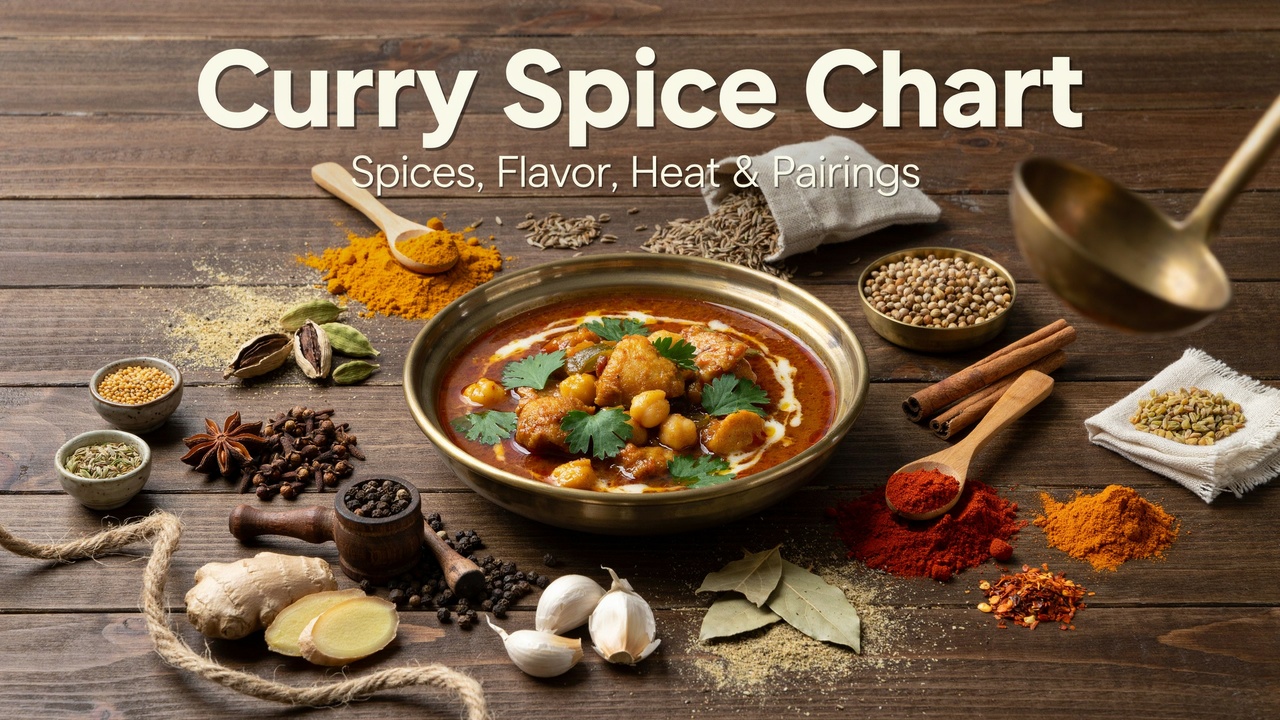
Curry is not made with one single spice. Instead, it is a flavorful combination of spices that can vary widely depending on the cuisine, region, and recipe. From warm cumin and earthy turmeric to spicy chili and aromatic cardamom, each spice adds something different to a curry. Understanding the curry spice chart makes it easier to choose the right spices, balance flavors, and create delicious curry dishes at home.
Why Curry Spices Matter
The spices used in curry determine much of its aroma, color, heat, and overall flavor. Some spices provide warmth and earthiness, while others add sweetness, citrus-like notes, smokiness, or heat.
The amount of each spice also matters. A small amount of cardamom can add a powerful aroma, while turmeric mainly contributes color and earthy flavor. Chili powder can increase heat quickly, so it is usually adjusted according to personal preference.
Understanding individual spices helps home cooks build better curry blends instead of relying on a single pre-made seasoning.
Standard Curry Spice Chart
Here are some of the most common spices used in curry dishes.
Curry Spice Chart
| Spice | Flavor Profile | Heat Level | Main Contribution |
|---|---|---|---|
| Turmeric | Earthy, slightly bitter | Very Low | Color & earthiness |
| Cumin | Warm, earthy, nutty | Very Low | Depth |
| Coriander | Citrus-like, earthy | Very Low | Balance |
| Cardamom | Sweet, floral | Very Low | Aroma |
| Cinnamon | Sweet, woody | Very Low | Warmth |
| Cloves | Strong, warm | Very Low | Intense aroma |
| Black Pepper | Sharp, earthy | Medium | Peppery heat |
| Chili Powder | Spicy, smoky | Medium-high | Heat & color |
| Cayenne | Hot, fruity | High | Strong heat |
| Fenugreek | Bitter, nutty | Low | Savory depth |
| Mustard Seeds | Sharp, nutty | Medium | Pungent flavor |
| Fennel Seeds | Sweet, anise-like | Very Low | Sweet aroma |
| Ginger | Warm, fresh, spicy | Low | Brightness |
| Garlic | Savory, pungent | Very Low | Richness |
| Bay Leaf | Herbal, woody | Very Low | Background aroma |
Flavor and heat can vary depending on the variety, freshness, and amount used.
Choosing The Right Curry Spices
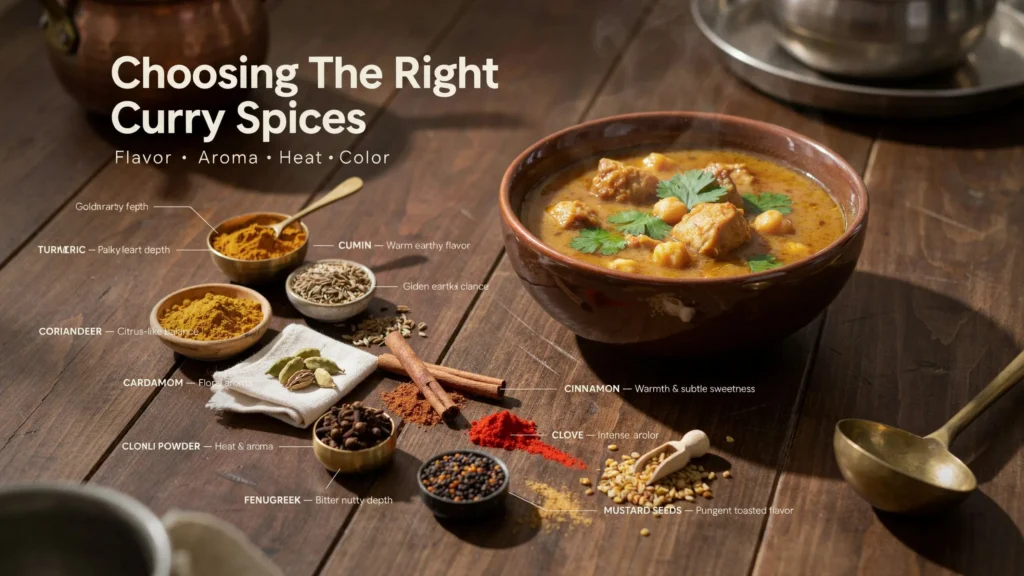
The best combination depends on the type of curry you are preparing.
Turmeric: Excellent for adding golden color and earthy depth.
Cumin: Useful when you want a warm, savory, earthy flavor.
Coriander: Adds a lighter citrus-like character and helps balance stronger spices.
Cardamom: Works especially well in aromatic and creamy curries.
Cinnamon: Adds subtle sweetness and warmth.
Cloves: Best used in small amounts because their flavor is strong.
Chili Powder: Useful when you want noticeable heat and color.
Fenugreek: Adds a distinctive slightly bitter and nutty flavor.
Mustard Seeds: Excellent for South Asian dishes that need a pungent, toasted flavor.
Curry Spice Flavor Chart
Different spices create different flavor characteristics.
| Flavor | Best Spices |
|---|---|
| Earthy | Turmeric, cumin |
| Citrus-like | Coriander |
| Sweet | Cinnamon, fennel |
| Floral | Cardamom |
| Warm | Cinnamon, cloves |
| Smoky | Chili powder |
| Peppery | Black pepper |
| Nutty | Cumin, mustard |
| Bitter | Fenugreek |
| Fresh & Spicy | Ginger |
| Savory | Garlic |
| Herbal | Bay leaf |
Combining several flavor groups creates a more complex curry.
Curry Spice Heat Level Chart
Not every curry spice is hot. Many are used primarily for aroma and flavor.
| Spice | Approximate Heat |
|---|---|
| Turmeric | None |
| Cumin | None |
| Coriander | None |
| Cardamom | None |
| Cinnamon | None |
| Cloves | None |
| Fennel | None |
| Fenugreek | None |
| Bay Leaf | None |
| Ginger | Mild |
| Black Pepper | Mild-medium |
| Mustard Seeds | Mild-medium |
| Chili Powder | Medium-high |
| Cayenne | High |
Heat depends heavily on the specific chili variety and quantity used.
Curry Spice Color Chart
Spices can dramatically affect the appearance of curry.
| Spice | Typical Color | Effect On Curry |
|---|---|---|
| Turmeric | Bright yellow | Golden color |
| Chili Powder | Red | Red-orange color |
| Paprika | Red | Warm red color |
| Coriander | Green-brown | Earthy tone |
| Cumin | Brown | Darker appearance |
| Black Pepper | Black | Dark specks |
| Saffron | Golden-orange | Rich golden color |
Turmeric is one of the most recognizable spices for creating the classic golden appearance of many curry dishes.
Indian Curry Spice Chart
Indian cuisine uses a wide range of spice combinations.
| Spice | Common Curry Uses | Flavor |
|---|---|---|
| Turmeric | Vegetable, chicken, lentil curries | Earthy |
| Cumin | Meat, vegetable curries | Warm & nutty |
| Coriander | Most curry styles | Earthy & citrusy |
| Cardamom | Creamy & meat curries | Floral |
| Cloves | Meat curries | Warm & intense |
| Cinnamon | Meat & rice dishes | Sweet & woody |
| Fenugreek | Rich curries | Nutty & slightly bitter |
| Mustard Seeds | Vegetable curries | Sharp & nutty |
| Black Cardamom | Rich meat curries | Smoky |
| Bay Leaf | Saucy curries | Herbal |
Indian curry recipes vary greatly by region, so the exact spice combination can be very different from one dish to another.
Curry Spice Chart For Chicken
Chicken works well with both mild and strongly aromatic spices.
| Spice | Chicken Curry Role |
|---|---|
| Turmeric | Color & earthiness |
| Cumin | Warm depth |
| Coriander | Balance |
| Black Pepper | Peppery heat |
| Chili | Heat |
| Cardamom | Aroma |
| Cinnamon | Warm sweetness |
| Cloves | Rich aroma |
| Ginger | Fresh spicy note |
| Garlic | Savory depth |
A combination of cumin, coriander, turmeric, ginger, garlic, and chili creates a versatile base for many chicken curry styles.
Curry Spice Chart For Beef
Beef can handle stronger and warmer spices.
| Spice | Flavor Contribution |
|---|---|
| Cumin | Earthy |
| Coriander | Warm & citrusy |
| Black Pepper | Peppery |
| Cinnamon | Warm |
| Cloves | Strong aroma |
| Cardamom | Floral |
| Bay Leaf | Herbal |
| Chili | Heat |
| Ginger | Spicy freshness |
| Garlic | Savory richness |
Rich beef curries often benefit from aromatic whole spices as well as ground spices.
Curry Spice Chart For Fish
Fish usually works best with spices that enhance rather than overpower its natural flavor.
| Spice | Best Role |
|---|---|
| Turmeric | Color & earthiness |
| Cumin | Warm flavor |
| Coriander | Light citrus character |
| Mustard Seeds | Pungency |
| Black Pepper | Mild heat |
| Chili | Heat |
| Ginger | Freshness |
| Garlic | Savory flavor |
| Fenugreek | Depth |
Mustard, turmeric, chili, ginger, and garlic are particularly useful in many South Asian fish curry styles.
Curry Spice Chart For Vegetables

Vegetable curries can use both mild and bold spices.
| Vegetable Curry Style | Useful Spices |
|---|---|
| Potato Curry | Cumin, turmeric, chili |
| Cauliflower Curry | Turmeric, cumin, coriander |
| Spinach Curry | Cumin, garlic, chili |
| Pea Curry | Cumin, coriander, garam masala |
| Eggplant Curry | Mustard, cumin, turmeric |
| Mixed Vegetable Curry | Coriander, cumin, turmeric |
| Chickpea Curry | Cumin, coriander, chili |
Vegetables often absorb spices well, making them excellent for strongly seasoned curry dishes.
Whole Curry Spices Vs Ground Spices
Curry recipes can use spices in both whole and ground forms.
| Whole Spice | Ground Version | Main Difference |
|---|---|---|
| Cumin Seeds | Ground Cumin | Toasty aroma vs deeper powder flavor |
| Coriander Seeds | Ground Coriander | Fresh toasted notes vs smooth flavor |
| Cardamom Pods | Cardamom Powder | Strong aroma vs convenient blending |
| Cinnamon Stick | Ground Cinnamon | Subtle infusion vs direct flavor |
| Cloves | Ground Cloves | Whole-spice infusion vs concentrated flavor |
| Black Peppercorns | Ground Pepper | Fresh bite vs evenly distributed heat |
Whole spices are often fried or toasted in oil at the beginning of cooking, while ground spices can be added later to build the main curry flavor.
Curry Spice Blend Chart
A curry blend usually combines several spices rather than relying on one ingredient.
| Blend Style | Common Spices |
|---|---|
| Basic Curry Blend | Turmeric, cumin, coriander, chili |
| Warm Curry Blend | Cumin, coriander, cinnamon, cloves |
| Aromatic Blend | Cardamom, cinnamon, cloves, bay leaf |
| Spicy Blend | Chili, black pepper, cumin |
| Mild Curry Blend | Turmeric, coriander, cumin |
| Rich Meat Curry Blend | Cumin, coriander, cardamom, cinnamon, cloves |
| Vegetable Curry Blend | Turmeric, cumin, coriander, mustard |
Recipes vary, so there is no single universal curry spice blend.
Curry Spice Pairing Chart
Certain spices naturally work well together.
| Spice | Pairs Well With |
|---|---|
| Turmeric | Cumin, coriander, ginger |
| Cumin | Coriander, chili, turmeric |
| Coriander | Cumin, turmeric, chili |
| Cardamom | Cinnamon, cloves |
| Cinnamon | Cardamom, cloves |
| Cloves | Cinnamon, cardamom |
| Chili | Cumin, coriander, garlic |
| Fenugreek | Coriander, cumin |
| Mustard Seeds | Turmeric, chili |
| Ginger | Garlic, turmeric, cumin |
| Garlic | Ginger, chili, cumin |
These combinations can help create a balanced curry spice profile.
Mild Curry Spice Chart
For a mild curry, focus on aromatic spices rather than large amounts of hot chili.
| Spice | Suggested Role |
|---|---|
| Turmeric | Base |
| Coriander | Main flavor |
| Cumin | Warmth |
| Cinnamon | Sweet aroma |
| Cardamom | Floral aroma |
| Fennel | Sweetness |
| Ginger | Gentle heat |
| Black Pepper | Light spice |
You can reduce or omit cayenne and hot chili when preparing a mild curry.
Spicy Curry Spice Chart
For a hotter curry, chili-based spices can be increased while maintaining aromatic balance.
| Spice | Purpose |
|---|---|
| Cayenne | Strong heat |
| Chili Powder | Heat & color |
| Black Pepper | Peppery heat |
| Cumin | Earthy balance |
| Coriander | Flavor balance |
| Ginger | Fresh heat |
| Garlic | Savory depth |
| Mustard Seeds | Pungent character |
Adding too much chili can overpower the other spices, so increasing heat gradually is usually better.
Curry Spice Measurement Guide
There is no universal measurement for curry spices because recipes vary, but a basic blend can be adjusted by taste.
| Spice | General Amount In A Small Curry |
|---|---|
| Turmeric | ½–1 tsp |
| Cumin | ½–1 tsp |
| Coriander | 1–2 tsp |
| Chili Powder | ¼–1 tsp |
| Black Pepper | ¼–½ tsp |
| Garam Masala | ½–1 tsp |
| Ginger | 1–2 tsp fresh |
| Garlic | 1–2 cloves |
These are general cooking starting points rather than fixed nutritional or culinary standards.
How To Toast Curry Spices
Toasting whole spices can make their aroma stronger.
Heat the pan: Use medium heat.
Add whole spices: Cumin seeds, mustard seeds, cardamom, cloves, or other whole spices can be added.
Toast briefly: Cook until fragrant without burning.
Add oil or other ingredients: Continue building the curry base.
Burnt spices can become bitter, so careful heat control is important.
Common Mistakes When Using Curry Spices
Using too much chili: Heat can overpower the other flavors.
Adding all spices at the same time: Whole and ground spices can benefit from different stages of cooking.
Burning ground spices: They can quickly become bitter.
Using old spices: Spices lose aroma and flavor over time.
Skipping balance: A curry usually benefits from a combination of earthy, aromatic, spicy, and savory flavors.
Using too many strong spices: Cloves, cardamom, and fenugreek can become overpowering when used excessively.
Tips For Making Better Curry
Toast whole spices: This can release their aromatic oils.
Use fresh spices: Freshly ground spices generally provide stronger aroma.
Build layers of flavor: Add ingredients at different cooking stages.
Balance heat: Add chili gradually.
Combine complementary spices: Cumin and coriander make a versatile foundation.
Use turmeric carefully: It provides excellent color but can become bitter in excessive amounts.
Finish with aromatic spices: Some blends, such as garam masala, are often added toward the end for a stronger aroma.
The History Behind Curry Spices
Curry spices have been used for centuries across South Asia and later spread through global trade and migration. Different regions developed their own combinations based on local ingredients, climate, culture, and cooking traditions.
There is no single spice combination that defines every curry. Indian, Bangladeshi, Pakistani, Sri Lankan, Thai, Malaysian, Caribbean, and other curry traditions can use very different ingredients and techniques.
This diversity is one reason curry has become one of the world’s most adaptable and recognizable styles of cooking.
Frequently Asked Questions
What Are The Main Spices Used In Curry?
Common curry spices include turmeric, cumin, coriander, chili, black pepper, cardamom, cinnamon, cloves, fenugreek, mustard seeds, ginger, and garlic.
What Spice Makes Curry Yellow?
Turmeric is primarily responsible for the bright yellow or golden color found in many curry dishes.
Which Curry Spice Adds Heat?
Chili powder, cayenne pepper, and hot chili peppers are common sources of heat. Black pepper and mustard seeds can also contribute some pungency.
What Are The Best Spices For Chicken Curry?
A versatile combination includes turmeric, cumin, coriander, chili, ginger, garlic, and black pepper, with aromatic spices such as cardamom or cinnamon depending on the recipe.
What Spices Are Good For Beef Curry?
Beef curry pairs well with cumin, coriander, black pepper, cinnamon, cloves, cardamom, ginger, garlic, and chili.
What Is The Difference Between Curry Powder And Curry Spices?
Curry powder is a prepared blend containing multiple spices, while curry spices refers to the individual spices used to build a curry.
Is Curry Powder Spicy?
Not necessarily. Some curry powders are mild, while others contain more chili and can be quite hot.
Which Curry Spices Are Sweet?
Cinnamon, fennel, and cardamom can provide sweet or naturally aromatic notes without necessarily making the curry taste sugary.
How Do I Make Curry Less Spicy?
Reduce hot chili or cayenne and increase milder ingredients and aromatic spices. Adding more of the curry’s main ingredients can also dilute the overall heat.
How Long Do Curry Spices Last?
Ground spices generally lose their strongest aroma faster than whole spices. Store them in a cool, dry, dark place and replace them when their aroma and flavor become noticeably weak.
Curry is all about balance between spice, aroma, heat, color, and depth. From earthy turmeric and cumin to aromatic cardamom and cinnamon and fiery chili and cayenne, each spice plays a different role. Understanding the curry spice chart helps you choose complementary spices and create flavorful curry dishes for chicken, beef, fish, vegetables, and many other foods.
