
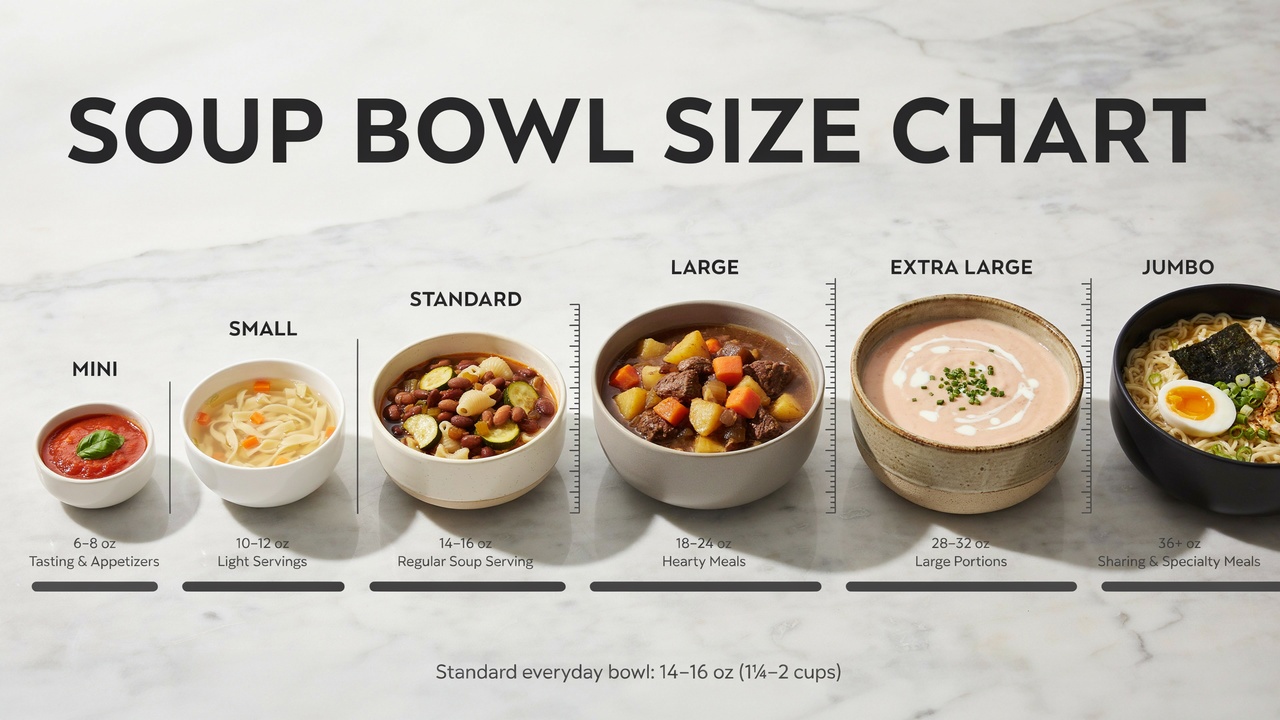
Soup bowls come in many different sizes, from small bowls designed for appetizers to large bowls intended for hearty meals. Choosing the right bowl size helps control portions, improve presentation, and make it easier to serve soup for family dinners, restaurants, parties, and special occasions.
Standard Soup Bowl Size Chart
| Soup Bowl Size | Capacity | Approx. Volume | Best For |
|---|---|---|---|
| Mini | 6–8 oz | ¾–1 cup | Tasting & appetizers |
| Small | 10–12 oz | 1¼–1½ cups | Light servings |
| Standard | 14–16 oz | 1¾–2 cups | Regular soup serving |
| Large | 18–24 oz | 2¼–3 cups | Hearty meals |
| Extra Large | 28–32 oz | 3½–4 cups | Large portions |
| Jumbo | 36+ oz | 4½+ cups | Sharing & specialty meals |
Soup Bowl Capacity Chart
| Bowl Capacity | Cups | Milliliters |
|---|---|---|
| 6 oz | ¾ cup | 177 ml |
| 8 oz | 1 cup | 237 ml |
| 10 oz | 1¼ cups | 296 ml |
| 12 oz | 1½ cups | 355 ml |
| 16 oz | 2 cups | 473 ml |
| 20 oz | 2½ cups | 591 ml |
| 24 oz | 3 cups | 710 ml |
| 32 oz | 4 cups | 946 ml |
| 40 oz | 5 cups | 1.18 L |
Note: Bowl capacity is the maximum amount the bowl can hold. A comfortable serving is usually somewhat below the rim.
Soup Serving Size Chart
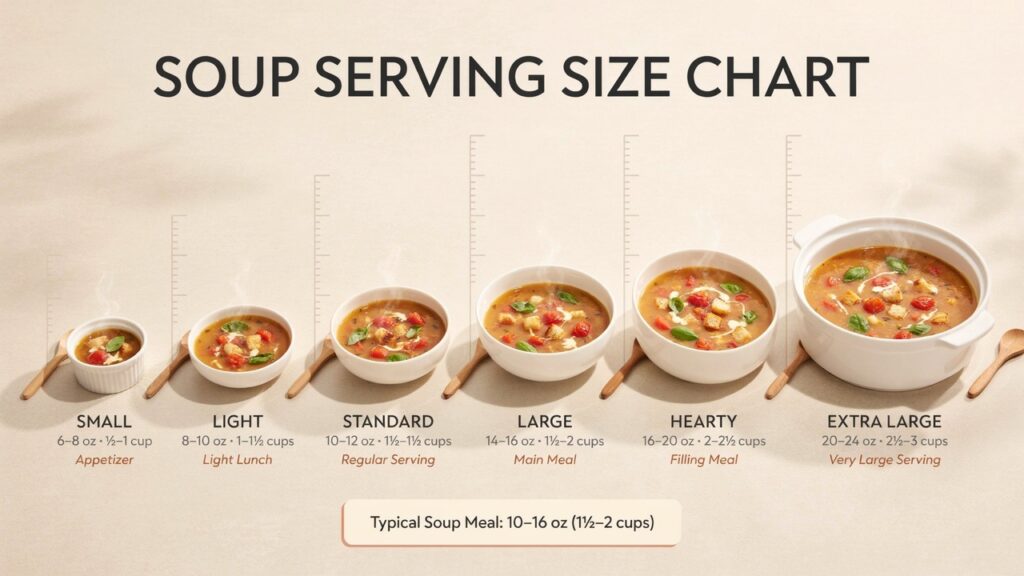
| Serving Type | Soup Amount | Best For |
|---|---|---|
| Small | 6–8 oz | Appetizer |
| Light | 8–10 oz | Light lunch |
| Standard | 10–12 oz | Regular serving |
| Large | 14–16 oz | Main meal |
| Hearty | 16–20 oz | Filling meal |
| Extra Large | 20–24 oz | Very large serving |
For a typical soup meal, 10–16 oz (1¼–2 cups) is a practical serving range.
Soup Bowl Size by Meal
| Meal | Recommended Bowl |
|---|---|
| Appetizer | 6–10 oz |
| Side Soup | 8–12 oz |
| Lunch | 12–16 oz |
| Dinner | 14–20 oz |
| Hearty Soup Meal | 16–24 oz |
| Sharing | 28–40+ oz |
Soup Bowl Diameter Chart
Bowl diameter also affects how much soup the bowl appears to contain.
| Bowl Type | Approx. Diameter |
|---|---|
| Mini | 4–5 in |
| Small | 5–6 in |
| Standard | 6–7 in |
| Large | 7–8 in |
| Extra Large | 8–10 in |
A wider, shallower bowl can make the same amount of soup look like a larger serving.
Soup Bowl Depth Chart
| Bowl Type | Approx. Depth |
|---|---|
| Shallow | 1.5–2 in |
| Standard | 2–2.5 in |
| Deep | 2.5–3.5 in |
| Extra Deep | 3.5+ in |
Deep bowls are particularly useful for chunky soups, stews, and noodle soups.
Soup Bowl Size by Soup Type
| Soup Type | Recommended Bowl |
|---|---|
| Broth Soup | 10–16 oz |
| Tomato Soup | 10–16 oz |
| Chicken Noodle Soup | 14–20 oz |
| Vegetable Soup | 12–18 oz |
| Lentil Soup | 14–20 oz |
| Chili | 16–24 oz |
| Clam Chowder | 12–16 oz |
| Ramen | 24–40 oz |
| Pho | 24–40 oz |
Chunky and noodle-based soups often require larger bowls because they contain substantial solid ingredients.
Soup Bowl Size for Restaurants
Restaurants commonly use different bowl capacities depending on whether soup is an appetizer or main course.
| Restaurant Portion | Bowl Capacity |
|---|---|
| Small Cup | 6–8 oz |
| Cup of Soup | 8–10 oz |
| Small Bowl | 10–12 oz |
| Regular Bowl | 12–16 oz |
| Large Bowl | 16–20 oz |
| Specialty Bowl | 20–32+ oz |
A bowl does not always need to be filled to its maximum capacity.
Soup Bowl Size for Kids
Children generally need smaller portions.
| Serving | Recommended Bowl |
|---|---|
| Toddler | 4–6 oz |
| Young Child | 6–8 oz |
| Older Child | 8–10 oz |
| Teenager | 10–14 oz |
| Adult | 12–16 oz |
A smaller bowl can also help prevent excessive portions and make the food easier for children to handle.
Soup Bowl Size for Parties
For a soup buffet, 8–12 oz bowls work well for smaller servings, while 12–16 oz bowls are better for a full serving.
| Guests | Soup Needed at 10 oz Each | Soup Needed at 12 oz Each |
|---|---|---|
| 5 | 50 oz | 60 oz |
| 10 | 100 oz | 120 oz |
| 20 | 200 oz | 240 oz |
| 25 | 250 oz | 300 oz |
| 50 | 500 oz | 600 oz |
| 100 | 1,000 oz | 1,200 oz |
This equals approximately 0.78 cup per 10 oz serving and 1.5 cups per 12 oz serving, depending on the exact conversion.
Soup Bowl Size for Different Portions
| Portion | Bowl Capacity |
|---|---|
| ½ cup | 6–8 oz bowl |
| 1 cup | 8–12 oz bowl |
| 1½ cups | 12–16 oz bowl |
| 2 cups | 16–20 oz bowl |
| 2½ cups | 20–24 oz bowl |
| 3 cups | 24–32 oz bowl |
For comfortable serving and presentation, choose a bowl with a little extra capacity.
Soup Bowl Weight Chart
The bowl itself can vary considerably depending on whether it is ceramic, porcelain, glass, or another material.
| Bowl Type | Approx. Empty Weight |
|---|---|
| Small Ceramic | 250–400 g |
| Standard Ceramic | 400–650 g |
| Large Ceramic | 550–900 g |
| Porcelain | 300–600 g |
| Stoneware | 500–900+ g |
Actual weight depends on the bowl’s thickness and construction.
Soup Bowl Material Comparison
| Material | Advantages | Best For |
|---|---|---|
| Ceramic | Durable & versatile | Everyday meals |
| Porcelain | Lightweight & elegant | Dining |
| Stoneware | Heavy & sturdy | Rustic serving |
| Glass | Modern appearance | Presentation |
| Stainless Steel | Durable | Outdoor use |
Ceramic and porcelain are among the most common choices for everyday soup bowls.
Soup Bowl vs Soup Plate
| Feature | Soup Bowl | Soup Plate |
|---|---|---|
| Depth | Deeper | Shallower |
| Capacity | Usually higher | Moderate |
| Best For | Chunky soups | Light soups |
| Handling | Easy for liquids | Better presentation |
| Noodle Soup | Excellent | Less suitable |
Deep bowls are generally more practical for soups containing noodles, meat, vegetables, or other large ingredients.
Soup Bowl Size for Meal Prep
For meal-prep soups, containers holding approximately 16–24 oz are useful for many adult meals.
| Meal Size | Container Capacity |
|---|---|
| Light | 12–16 oz |
| Standard | 16–20 oz |
| Large | 20–24 oz |
| Extra Large | 24–32 oz |
Leave some space at the top if the soup will be transported or frozen.
How Much Soup Fits in a Bowl?
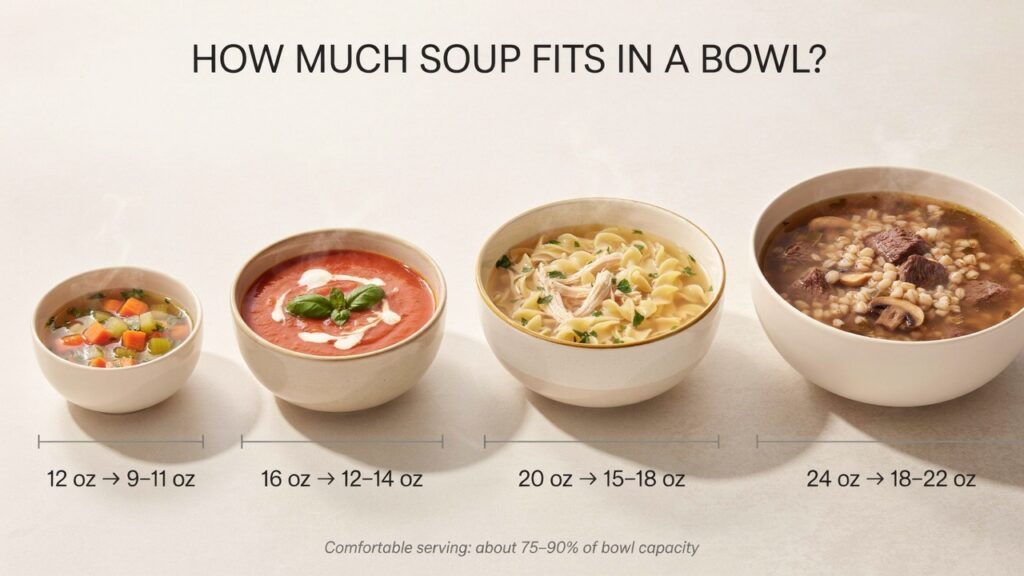
A bowl’s labeled capacity is usually measured when filled close to the top. In actual use, you may fill it to around 75–90% of its maximum capacity to reduce spills.
For example:
- 12 oz bowl → comfortable serving around 9–11 oz
- 16 oz bowl → around 12–14 oz
- 20 oz bowl → around 15–18 oz
- 24 oz bowl → around 18–22 oz
Soup Bowl Size for Different Occasions
| Occasion | Ideal Bowl |
|---|---|
| Formal Dinner | 10–14 oz |
| Family Dinner | 12–16 oz |
| Casual Lunch | 14–18 oz |
| BBQ Side | 8–12 oz |
| Soup Bar | 8–16 oz |
| Ramen Night | 24–40 oz |
| Party Tasting | 4–8 oz |
Common Soup Bowl Size Mistakes
1. Choosing a Bowl That Is Too Large
A large bowl can make normal servings look smaller and encourage oversized portions.
2. Filling the Bowl to the Rim
This increases the chance of spills, especially with hot soup.
3. Using Shallow Bowls for Chunky Soup
Large ingredients can make shallow bowls difficult to use.
4. Ignoring Bowl Shape
Two bowls with the same capacity can look very different because of their width and depth.
5. Confusing Bowl Capacity With Serving Size
A 24-ounce bowl does not mean you need to serve 24 ounces of soup.
Tips for Choosing the Right Soup Bowl
Choose 6–8 oz: for appetizers and tastings.
Choose 10–12 oz: for light servings.
Choose 14–16 oz: for standard adult portions.
Choose 18–24 oz: for hearty meals.
Choose 28+ oz: for ramen, pho, chili, or sharing.
For everyday family meals, a 14–16 oz bowl is a versatile choice.
Frequently Asked Questions
What Is the Standard Soup Bowl Size?
A common soup bowl holds approximately 14–16 ounces, or around 1¾–2 cups.
How Big Is a 16-Ounce Soup Bowl?
A 16-ounce bowl holds approximately 2 cups, although the comfortable serving amount may be slightly less.
How Many Ounces of Soup Are in a Serving?
A typical serving is around 10–16 ounces, depending on whether the soup is an appetizer, side, or main meal.
What Size Bowl Is Best for Soup?
For everyday use, a 14–16 ounce bowl provides a versatile size for most soups.
What Size Bowl Is Best for Ramen?
A larger bowl around 24–40 ounces is usually more practical because ramen contains noodles, broth, meat, vegetables, and toppings.
How Many Cups Are in a 24-Ounce Soup Bowl?
A 24-ounce bowl has a maximum capacity of approximately 3 cups.
What Size Bowl Is Best for Kids?
A 6–10 ounce bowl works well for many children’s portions, depending on age and appetite.
How Much Soup Should I Make for 10 People?
For a standard 12-ounce serving, plan approximately 120 ounces, or 7½ quarts, of soup. Add extra if soup is the main dish or if you want leftovers.
Final Soup Bowl Size Guide
The most versatile soup bowl size for everyday meals is approximately 14–16 ounces, providing around 1¾–2 cups of capacity. Smaller 6–12 ounce bowls work well for appetizers and light servings, while 18–24 ounce bowls are better for hearty meals.
For specialty dishes such as ramen and pho, larger 24–40 ounce bowls provide enough space for broth, noodles, protein, and toppings.
When choosing a soup bowl, consider capacity, diameter, depth, portion size, soup type, and occasion. The right bowl makes serving easier while also improving presentation and portion control.
