
Pork chops are a versatile cut of pork that can be grilled, pan-seared, baked, broiled, or cooked on the barbecue. Their size varies depending on the cut, whether they are bone-in or boneless, and how much they have been trimmed.
Understanding the pork chop size chart helps you choose the right portion, estimate cooking time, calculate calories and protein, and plan meals for families or gatherings.
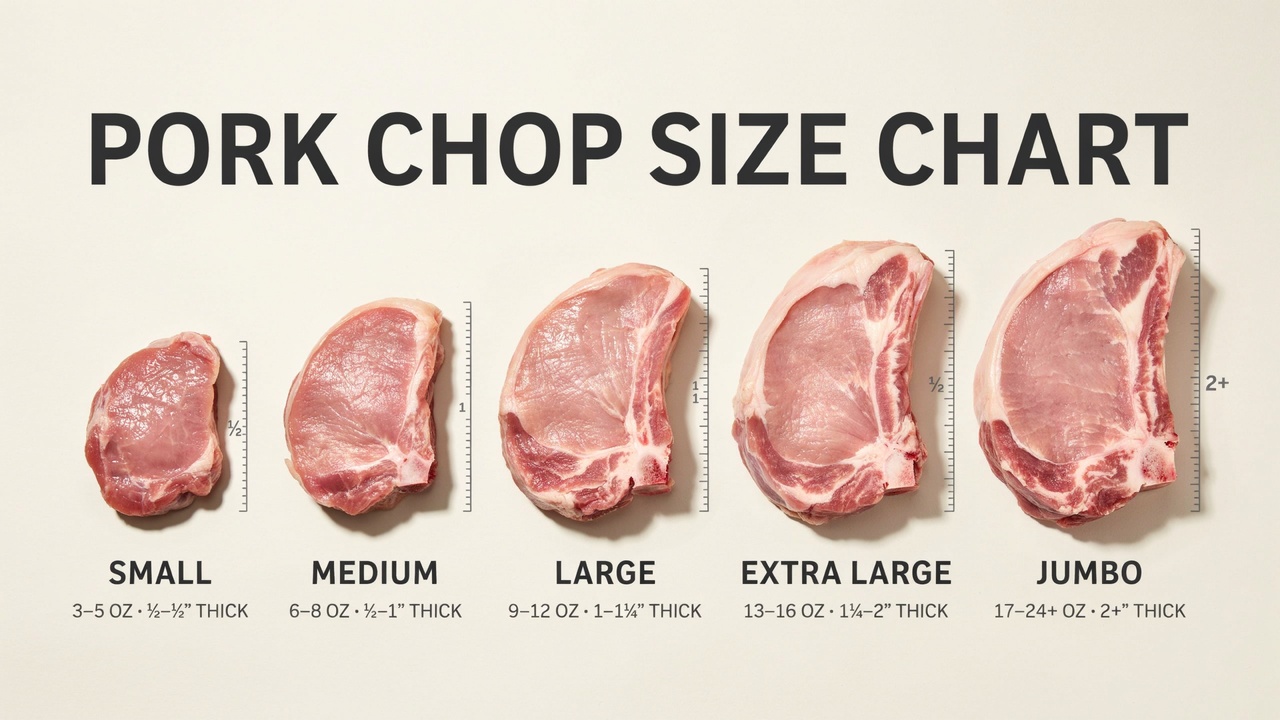
Standard Pork Chop Size Chart
| Pork Chop Size | Raw Weight | Thickness | Approx. Cooked Weight | Best For |
|---|---|---|---|---|
| Small | 3–5 oz | ½–¾ in | 2.5–4 oz | Light meals |
| Medium | 6–8 oz | ¾–1 in | 4.5–6 oz | Standard serving |
| Large | 9–12 oz | 1–1¼ in | 6.5–9 oz | Hearty meals |
| Extra Large | 13–16 oz | 1¼–2 in | 9–12 oz | Large portions |
| Jumbo | 17–24+ oz | 2+ in | 12–18+ oz | Sharing |
*Actual size varies by cut, bone size, trimming, and butcher.
Pork Chop Weight Chart
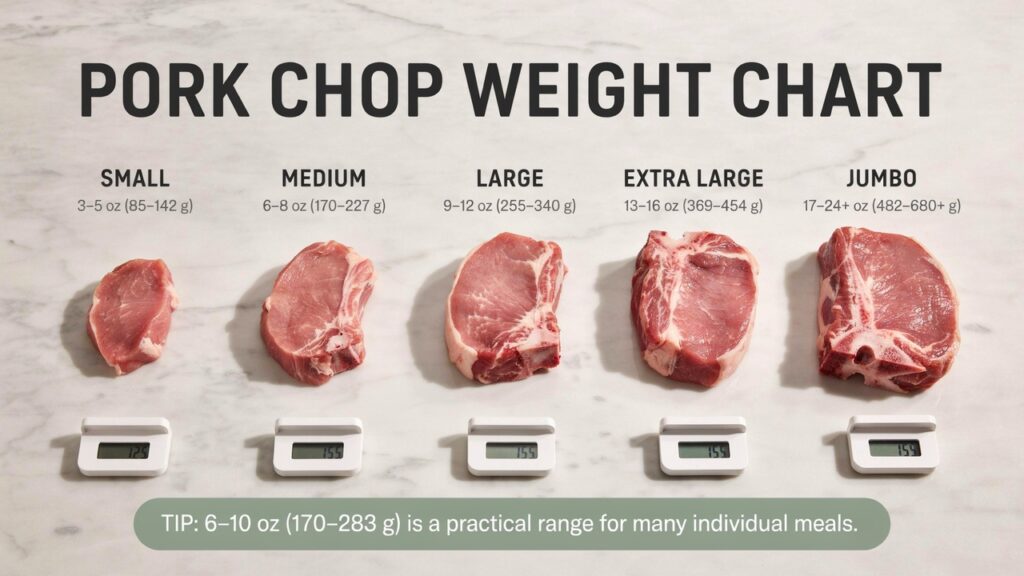
| Size | Weight | Approx. Grams |
|---|---|---|
| Small | 3–5 oz | 85–142 g |
| Medium | 6–8 oz | 170–227 g |
| Large | 9–12 oz | 255–340 g |
| Extra Large | 13–16 oz | 369–454 g |
| Jumbo | 17–24+ oz | 482–680+ g |
A 6–10 oz raw pork chop is a practical range for many individual meals.
Pork Chop Thickness Chart
Thickness can have a major effect on cooking time.
| Thickness | Best Cooking Method |
|---|---|
| ½ inch | Quick pan-searing |
| ¾ inch | Pan-searing or grilling |
| 1 inch | Grilling or baking |
| 1¼ inch | Grill or cast iron |
| 1½ inch | Reverse sear or oven finish |
| 2+ inches | Slow oven cooking + searing |
Thicker chops generally retain more moisture and are easier to cook evenly.
Pork Chop Serving Size Chart
| Meal Type | Recommended Raw Pork |
|---|---|
| Light Portion | 4–5 oz |
| Standard Portion | 5–7 oz |
| Hearty Portion | 7–9 oz |
| Large Portion | 9–12 oz |
| Very Large Portion | 12–16 oz |
For many adults, 5–8 ounces raw is a practical starting point.
Bone-In vs Boneless Pork Chop
| Feature | Bone-In | Boneless |
|---|---|---|
| Weight | Higher | Lower |
| Edible Meat | Lower percentage | Higher percentage |
| Flavor | Rich | Mild |
| Cooking | Often longer | Often faster |
| Presentation | Excellent | Simple |
| Meal Prep | Good | Excellent |
A bone-in chop may weigh more but provide less edible meat than a similarly sized boneless chop.
Boneless Pork Chop Size Chart
| Size | Raw Weight | Best For |
|---|---|---|
| Small | 3–5 oz | Light meal |
| Medium | 5–7 oz | Standard meal |
| Large | 8–10 oz | Hearty meal |
| Extra Large | 11–14 oz | Large appetite |
Boneless chops are particularly convenient for portion control and meal prep.
Bone-In Pork Chop Size Chart
| Size | Raw Weight | Typical Use |
|---|---|---|
| Small | 4–6 oz | Light serving |
| Medium | 6–9 oz | Regular dinner |
| Large | 10–14 oz | Hearty dinner |
| Extra Large | 15–20+ oz | Large portion/sharing |
The bone can account for a significant portion of the total raw weight.
Pork Chop Calories by Size
Calories depend on the cut, visible fat, bone, and cooking method.
| Raw Pork Chop | Approx. Calories* |
|---|---|
| 4 oz | 180–260 |
| 6 oz | 270–390 |
| 8 oz | 360–520 |
| 10 oz | 450–650 |
| 12 oz | 540–780 |
| 16 oz | 720–1,040 |
*Approximate ranges. Breaded, fried, butter-finished, or heavily sauced chops can contain significantly more calories.
Pork Chop Protein Chart
Pork chops are a good source of protein.
| Cooked Meat | Approx. Protein |
|---|---|
| 3 oz | 20–24 g |
| 4 oz | 27–32 g |
| 5 oz | 34–40 g |
| 6 oz | 40–48 g |
| 8 oz | 54–64 g |
| 10 oz | 67–80 g |
Actual protein varies depending on the specific cut and trimming.
Pork Chop Fat Level
Different pork chops can have noticeably different amounts of fat.
| Type | Typical Fat Level |
|---|---|
| Center-Cut Loin Chop | Moderate |
| Boneless Loin Chop | Lower–moderate |
| Rib Chop | Moderate–higher |
| Shoulder Chop | Higher |
| Well-Trimmed Chop | Lower |
If you’re looking for a leaner option, choose a well-trimmed loin or center-cut chop.
Pork Chop Cooking Time Chart
Cooking time depends heavily on thickness.
| Thickness | Approx. Cooking Time |
|---|---|
| ½ inch | 3–5 min per side |
| ¾ inch | 4–6 min per side |
| 1 inch | 5–7 min per side |
| 1¼ inch | 6–8 min per side + finishing |
| 1½ inch | 8–12 min total + finishing |
| 2 inch | Longer, controlled cooking |
These are general estimates. Internal temperature should be used to determine when the pork is properly cooked.
Pork Chop Safe Temperature
Whole cuts of pork are generally cooked to a minimum internal temperature of 145°F (63°C), followed by a short rest.
Check the temperature in the thickest part of the chop with a food thermometer.
Pork Chop Doneness Guide
| Result | Approx. Internal Temperature |
|---|---|
| Juicy / Slightly Pink | 145°F / 63°C |
| Medium | 150–155°F / 66–68°C |
| Well Done | 160°F+ / 71°C+ |
A slight pink color does not necessarily mean pork is unsafe when the appropriate internal temperature has been reached.
Pork Chop Size and Cooking Method
| Chop Size | Recommended Method |
|---|---|
| Small | Pan-sear |
| Medium | Pan-sear or grill |
| Large | Grill or oven |
| Extra Large | Reverse sear |
| Very Thick | Oven + sear |
For thick chops, a lower-temperature cooking stage followed by a quick high-heat sear can help achieve an evenly cooked center.
Pork Chop vs Pork Tenderloin
| Feature | Pork Chop | Pork Tenderloin |
|---|---|---|
| Shape | Flat steak | Long cylindrical cut |
| Bone | Sometimes | Usually boneless |
| Flavor | Rich | Mild |
| Cooking | Grill, pan, oven | Roast, grill |
| Portioning | Individual | Slice into portions |
Pork chops are convenient when you want individually portioned pieces.
Pork Chop vs Steak
| Feature | Pork Chop | Beef Steak |
|---|---|---|
| Meat | Pork | Beef |
| Flavor | Mild–savory | Strong beef flavor |
| Typical Size | 5–12 oz | 6–16 oz |
| Cooking | Grill/pan/oven | Grill/pan |
| Safe Temperature | 145°F minimum | Varies by cut/preference |
Both work well with grilled vegetables, potatoes, salads, and sauces.
Pork Chop Meal Size Guide
| Meal | Pork Chop | Suggested Sides |
|---|---|---|
| Light Dinner | 4–5 oz | Salad + vegetables |
| Standard Dinner | 5–7 oz | Potato + vegetables |
| Hearty Dinner | 7–9 oz | Potato + vegetables + salad |
| Large Meal | 9–12 oz | Multiple sides |
| Sharing | 16+ oz | Family-style sides |
Pork Chop Party Size Chart
If pork chops are the primary protein, plan approximately 6–10 oz raw meat per adult, depending on appetite and side dishes.
| Guests | Raw Pork Needed |
|---|---|
| 5 | 2–3 lb |
| 10 | 4–6¼ lb |
| 15 | 5.6–9.4 lb |
| 20 | 7.5–12.5 lb |
| 25 | 9.4–15.6 lb |
| 50 | 18.8–31.3 lb |
For bone-in chops, plan toward the higher end because part of the weight comes from the bone.
Pork Chop for Kids
| Serving | Approx. Raw Pork |
|---|---|
| Young Child | 2–3 oz |
| Older Child | 3–4 oz |
| Teenager | 4–6 oz |
| Adult | 5–8 oz |
Cut cooked pork into small pieces for younger children.
Pork Chop Side Dish Chart
Popular side dishes include:
- Mashed potatoes
- Roasted potatoes
- Rice
- Applesauce
- Green beans
- Broccoli
- Corn
- Coleslaw
- Mac and cheese
- Garden salad
- Roasted carrots
The richer the sides, the smaller the pork portion may need to be.
Pork Chop Size for Meal Prep
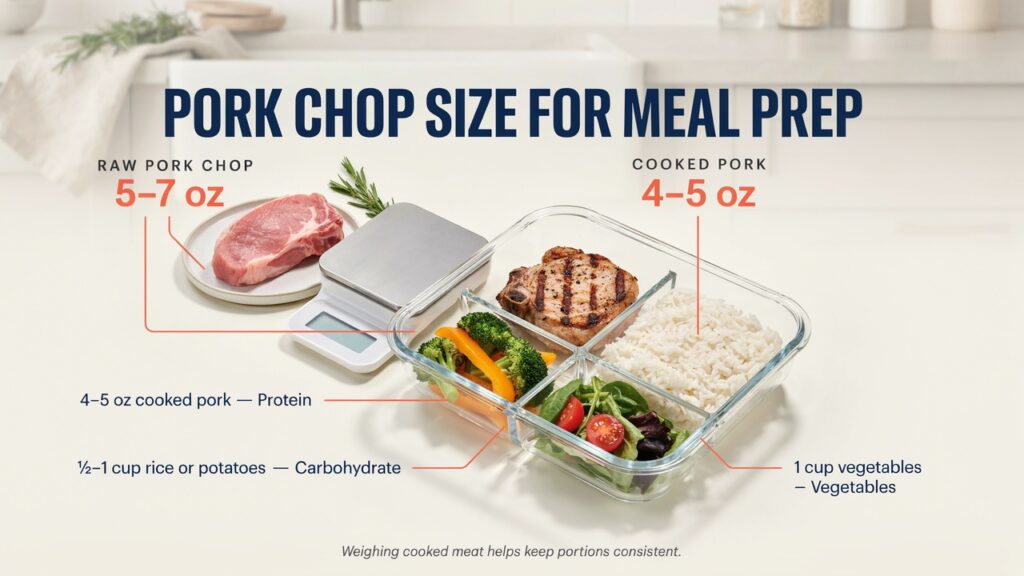
For meal prep, a 5–7 oz raw boneless pork chop is a convenient size for many meals.
A balanced container could include:
- 4–5 oz cooked pork
- ½–1 cup rice or potatoes
- 1 cup vegetables
- Salad or fruit
Weighing the cooked meat can help keep portions consistent.
Pork Chop Weight After Cooking
Pork loses water and some fat during cooking.
| Raw Weight | Approx. Cooked Weight |
|---|---|
| 4 oz | 3–3.3 oz |
| 6 oz | 4.5–5 oz |
| 8 oz | 6–6.5 oz |
| 10 oz | 7.5–8.5 oz |
| 12 oz | 9–10 oz |
| 16 oz | 12–13.5 oz |
Actual cooking loss varies according to thickness, cooking method, and final temperature.
How to Choose the Right Pork Chop Size
Choose 3–5 oz: for light meals or children.
Choose 5–7 oz: for a standard adult meal.
Choose 7–10 oz: for a hearty dinner.
Choose 10–14 oz: for large portions.
Choose 16+ oz: for very large portions or sharing.
Common Pork Chop Size Mistakes
1. Ignoring the Bone
Bone-in chops weigh more than their edible meat.
2. Cooking by Time Alone
Thickness and starting temperature can change cooking time significantly.
3. Choosing Very Thin Chops for Long Cooking
Thin chops can become dry quickly.
4. Forgetting Carryover Cooking
The internal temperature can continue to rise after removing the chop from heat.
5. Comparing Different Cuts Directly
A rib chop and a lean center-cut chop can have different fat levels even at the same weight.
Frequently Asked Questions
What Is a Standard Pork Chop Size?
A common pork chop weighs approximately 5–8 ounces raw and is around ¾–1¼ inches thick.
How Many Ounces of Pork Chop Should One Person Eat?
Approximately 5–8 ounces raw is a practical range for many adults.
How Big Is a 1-Pound Pork Chop?
A 1-pound chop weighs 16 ounces and is a very large individual portion or a good size for sharing.
How Many Calories Are in an 8-Ounce Pork Chop?
An 8-ounce pork chop may contain roughly 360–520 calories, depending on the cut and fat content.
How Much Protein Is in a Pork Chop?
A 6-ounce cooked portion can provide approximately 40–48 grams of protein, depending on the cut.
Are Boneless Pork Chops Smaller Than Bone-In?
Not necessarily, but boneless chops generally provide a greater percentage of edible meat because they don’t include the weight of the bone.
What Is the Best Thickness for Pork Chops?
Around 1–1½ inches is a versatile thickness for grilling, pan-searing, and oven finishing.
What Temperature Should Pork Chops Reach?
Whole-cut pork chops should generally reach 145°F (63°C) internally, followed by a short rest.
How Much Pork Chop Do I Need for 10 People?
For pork as the main protein, approximately 4–6¼ pounds of raw pork is a useful starting range, with more needed for large appetites or bone-in chops.
Final Pork Chop Size Guide
A typical pork chop weighs around 5–8 ounces raw and is approximately ¾–1¼ inches thick. Small chops around 3–5 ounces are suitable for lighter meals, while large 9–12 ounce chops provide a hearty serving. Chops weighing 16 ounces or more are generally very large and may be suitable for sharing.
For meal planning, 5–8 ounces of raw pork per adult is a practical starting point. Bone-in chops require additional weight because some of the total weight comes from the bone.
Whether you’re grilling, pan-searing, baking, meal prepping, or preparing pork for a large gathering, the pork chop size chart makes it easier to estimate weight, thickness, portions, calories, protein, and cooking requirements.
