
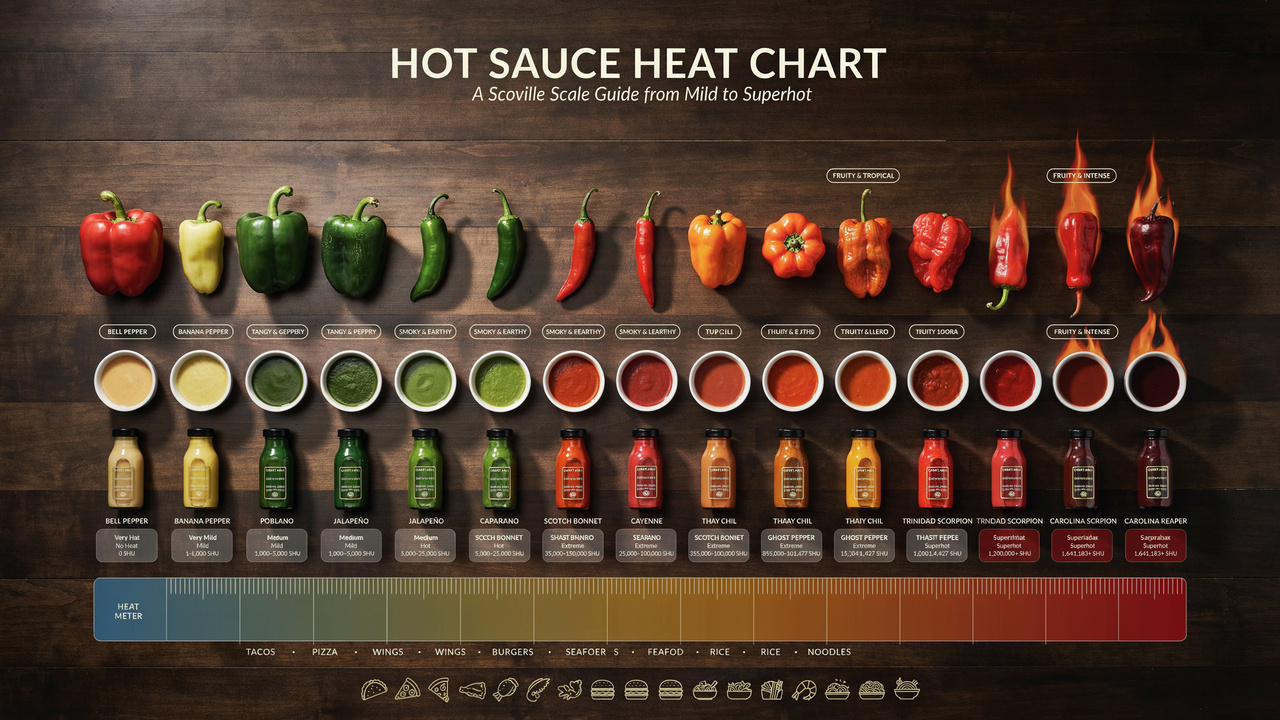
Hot sauce can turn an ordinary meal into something bold, spicy, and flavorful. But not every hot sauce has the same level of heat. Some are mild enough for everyday meals, while others can deliver an intense burn from extremely hot chili peppers. Understanding the hot sauce heat chart helps you compare sauces, peppers, Scoville ratings, and heat levels so you can choose the right sauce for your taste.
Why Hot Sauce Heat Matters
The heat of a hot sauce mainly comes from capsaicin, the compound responsible for the burning sensation created by chili peppers. Different peppers contain different amounts of capsaicin, which means their heat levels can vary dramatically.
Heat is commonly measured using the Scoville Heat Unit (SHU) scale. A sauce made with mild peppers may have only a few hundred SHU, while sauces containing superhot peppers can reach hundreds of thousands or even millions of SHU.
However, the final heat of a hot sauce also depends on the recipe. Vinegar, fruit, vegetables, sugar, and other ingredients can dilute the pepper’s heat.
Standard Hot Sauce Heat Chart
Here are approximate heat ranges for common hot sauce styles.
Hot Sauce Heat Chart
| Hot Sauce Type | Approx. Heat Level | Scoville Range |
|---|---|---|
| Mild Pepper Sauce | Very Mild | 100–1,000 SHU |
| Jalapeño Sauce | Mild | 1,000–5,000 SHU |
| Tabasco-Style Sauce | Mild-Medium | 2,500–5,000 SHU |
| Serrano Sauce | Medium | 5,000–15,000 SHU |
| Cayenne Sauce | Medium-Hot | 15,000–50,000 SHU |
| Thai Chili Sauce | Hot | 20,000–100,000 SHU |
| Habanero Sauce | Very Hot | 100,000–350,000 SHU |
| Scotch Bonnet Sauce | Very Hot | 100,000–350,000 SHU |
| Ghost Pepper Sauce | Extreme | 800,000–1,000,000+ SHU |
| Carolina Reaper Sauce | Superhot | 1,000,000–2,200,000+ SHU |
Actual sauce heat can be significantly different from the raw pepper’s Scoville rating because sauces are diluted and blended with other ingredients.
Chili Pepper Heat Chart
The pepper used in a sauce is one of the biggest factors affecting its potential heat.
| Chili Pepper | Approx. Scoville Heat Units | Heat Level |
|---|---|---|
| Bell Pepper | 0 SHU | No Heat |
| Banana Pepper | 0–500 SHU | Very Mild |
| Poblano | 1,000–1,500 SHU | Mild |
| Jalapeño | 2,500–8,000 SHU | Mild-Medium |
| Serrano | 10,000–25,000 SHU | Medium-Hot |
| Cayenne | 30,000–50,000 SHU | Hot |
| Thai Chili | 50,000–100,000 SHU | Very Hot |
| Habanero | 100,000–350,000 SHU | Very Hot |
| Scotch Bonnet | 100,000–350,000 SHU | Very Hot |
| Ghost Pepper | 800,000–1,000,000+ SHU | Extreme |
| Trinidad Scorpion | Up to 2,000,000+ SHU | Superhot |
| Carolina Reaper | Up to 2,200,000+ SHU | Superhot |
Scoville ranges vary by pepper variety, growing conditions, and testing method.
Hot Sauce Heat Level Chart
A simple heat scale makes it easier to understand what each level feels like.
| Heat Level | Scoville Range | General Experience |
|---|---|---|
| No Heat | 0 | No noticeable burn |
| Very Mild | 1–1,000 | Gentle warmth |
| Mild | 1,000–5,000 | Light burn |
| Medium | 5,000–25,000 | Noticeable heat |
| Hot | 25,000–100,000 | Strong burn |
| Very Hot | 100,000–350,000 | Intense heat |
| Extreme | 350,000–1,000,000 | Powerful burn |
| Superhot | 1,000,000+ | Extremely intense |
There is no single universal standard for labeling commercial hot sauces as mild, medium, hot, or extreme.
Popular Hot Sauce Heat Comparison
Many well-known hot sauces use different peppers and recipes.
| Sauce Style | Main Pepper | Approx. Heat |
|---|---|---|
| Green Jalapeño Sauce | Jalapeño | Mild |
| Louisiana-Style Sauce | Cayenne | Mild-Medium |
| Tabasco-Style Sauce | Tabasco Pepper | Mild-Medium |
| Sriracha | Red Chili | Mild-Medium |
| Serrano Sauce | Serrano | Medium |
| Cayenne Sauce | Cayenne | Medium-Hot |
| Habanero Sauce | Habanero | Very Hot |
| Scotch Bonnet Sauce | Scotch Bonnet | Very Hot |
| Ghost Pepper Sauce | Ghost Pepper | Extreme |
| Reaper Sauce | Carolina Reaper | Superhot |
The exact heat of commercial products varies by brand and formulation.
Hot Sauce Flavor Chart
Heat isn’t the only thing that makes a hot sauce enjoyable. Different peppers can create different flavors.
| Pepper | Flavor Profile | Typical Sauce Style |
|---|---|---|
| Jalapeño | Fresh, grassy | Green sauces |
| Serrano | Bright, crisp | Fresh chili sauces |
| Cayenne | Sharp, peppery | Vinegar sauces |
| Habanero | Fruity, tropical | Fruit-based sauces |
| Scotch Bonnet | Fruity, sweet | Caribbean-style sauces |
| Chipotle | Smoky, earthy | Smoky sauces |
| Ghost Pepper | Fruity, intense | Superhot sauces |
| Carolina Reaper | Fruity, sharp | Extreme sauces |
A sauce with more heat is not necessarily more flavorful. Many cooks choose peppers based on both heat and flavor.
Hot Sauce Ingredients Chart
| Ingredient | Main Purpose |
|---|---|
| Chili Peppers | Provides heat and flavor |
| Vinegar | Adds acidity and tang |
| Salt | Enhances flavor |
| Garlic | Adds savory flavor |
| Onion | Adds sweetness and depth |
| Lime Juice | Adds acidity and freshness |
| Sugar | Balances heat |
| Fruit | Adds sweetness and complexity |
| Tomatoes | Adds body and mild acidity |
| Herbs | Adds freshness |
| Spices | Adds aroma and flavor |
The balance of these ingredients can dramatically change how a sauce tastes.
Hot Sauce Heat Vs Flavor Chart
| Sauce Style | Heat | Typical Flavor |
|---|---|---|
| Jalapeño Sauce | Mild | Fresh & grassy |
| Garlic Chili Sauce | Mild-Medium | Savory & garlicky |
| Cayenne Sauce | Medium | Tangy & peppery |
| Chipotle Sauce | Medium | Smoky & earthy |
| Habanero Sauce | Very Hot | Fruity & tropical |
| Scotch Bonnet Sauce | Very Hot | Fruity & sweet |
| Ghost Pepper Sauce | Extreme | Fruity & intense |
| Reaper Sauce | Superhot | Fruity & extremely hot |
Hot Sauce Pairing Chart
Different sauces work particularly well with different foods.
| Food | Recommended Heat Level | Good Sauce Style |
|---|---|---|
| Eggs | Mild-Medium | Jalapeño or cayenne |
| Tacos | Mild-Hot | Jalapeño, serrano, or habanero |
| Burritos | Medium-Hot | Cayenne or chipotle |
| Pizza | Medium-Hot | Cayenne or chili sauce |
| Chicken Wings | Medium-Very Hot | Cayenne or habanero |
| Burgers | Mild-Hot | Jalapeño or smoky sauce |
| Seafood | Mild-Medium | Lime or jalapeño sauce |
| Rice | Mild-Hot | Chili-garlic sauce |
| Noodles | Medium-Hot | Chili sauce |
| Grilled Meat | Medium-Very Hot | Smoky or habanero sauce |
The best pairing depends on the flavor of the dish as well as your preferred heat level.
Hot Sauce Serving Chart
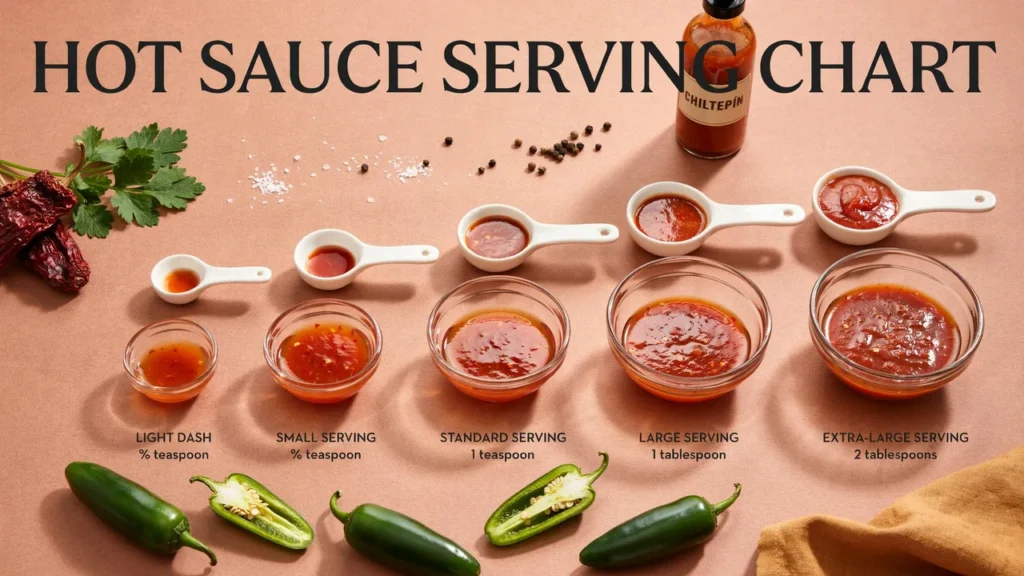
A small amount of hot sauce can add significant heat.
| Serving | Approximate Amount |
|---|---|
| Light Dash | ¼ teaspoon |
| Small Serving | ½ teaspoon |
| Standard Serving | 1 teaspoon |
| Large Serving | 1 tablespoon |
| Extra-Large Serving | 2 tablespoons |
Serving sizes vary by sauce, recipe, and personal preference.
Hot Sauce Heat By Pepper Family
| Pepper Family | Typical Heat | Common Uses |
|---|---|---|
| Jalapeño | Mild-Medium | Green sauces |
| Serrano | Medium-Hot | Fresh sauces |
| Cayenne | Medium-Hot | Vinegar sauces |
| Habanero | Very Hot | Fruit sauces |
| Scotch Bonnet | Very Hot | Caribbean sauces |
| Capsicum Chinense Superhots | Extreme-Superhot | Challenge sauces |
Some pepper varieties within the same family can have very different heat levels.
Mild Hot Sauce Chart
If you prefer flavor without a strong burn, these pepper styles are good starting points.
| Pepper | Approx. SHU |
|---|---|
| Banana Pepper | 0–500 |
| Poblano | 1,000–1,500 |
| Jalapeño | 2,500–8,000 |
| Mild Green Chili | Variable |
| Mild Red Chili | Variable |
Mild sauces can still provide plenty of flavor through garlic, herbs, vinegar, fruit, or spices.
Medium Hot Sauce Chart
Medium sauces provide noticeable heat without reaching the extreme levels of superhot peppers.
| Pepper | Approx. SHU |
|---|---|
| Jalapeño | 2,500–8,000 |
| Serrano | 10,000–25,000 |
| Cayenne | 30,000–50,000 |
| Some Thai Chilies | 50,000–100,000 |
These sauces are often versatile enough for tacos, eggs, sandwiches, rice, and grilled foods.
Very Hot Sauce Chart
Very hot sauces are generally made with peppers such as habanero or Scotch bonnet.
| Pepper | Approx. SHU |
|---|---|
| Habanero | 100,000–350,000 |
| Scotch Bonnet | 100,000–350,000 |
| Some Superhot Varieties | 350,000+ |
These sauces can add both significant heat and fruity or tropical flavors.
Extreme Hot Sauce Chart
Extreme sauces are usually made with superhot chili peppers.
| Pepper | Approx. SHU |
|---|---|
| Ghost Pepper | 800,000–1,000,000+ |
| Trinidad Scorpion | Up to 2,000,000+ |
| Carolina Reaper | Up to 2,200,000+ |
These sauces are intended for people who specifically enjoy very intense heat.
Hot Sauce Comparison: Fresh Vs Fermented
Hot sauces can also differ based on how they are made.
| Style | Flavor | Texture |
|---|---|---|
| Fresh Sauce | Bright & fresh | Thin or chunky |
| Fermented Sauce | Tangy & complex | Usually smooth |
| Vinegar Sauce | Sharp & acidic | Thin |
| Roasted Sauce | Smoky & rich | Smooth or chunky |
| Fruit Sauce | Sweet & fruity | Smooth or thick |
| Creamy Chili Sauce | Rich & savory | Thick |
Fermentation can add acidity and complexity to the final sauce.
How Hot Sauce Changes With Ingredients
A sauce made from the same pepper can taste completely different depending on what is added.
Vinegar creates a sharp and tangy flavor.
Fruit can balance heat with sweetness.
Garlic adds savory depth.
Sugar can soften the perception of heat.
Smoked peppers create an earthy, smoky flavor.
Citrus adds brightness and acidity.
This is why comparing peppers alone does not always predict how a finished hot sauce will taste.
Common Mistakes When Choosing Hot Sauce
Choosing only by Scoville rating: Heat is important, but flavor matters too.
Assuming all sauces made with the same pepper are equally hot: Recipes can use very different amounts of chili.
Using too much at once: Start with a small amount and add more gradually.
Ignoring acidity: Very acidic sauces may taste sharper than thick, fermented sauces.
Overlooking food pairing: An extremely hot sauce can overpower delicate foods.
Not checking the ingredient list: Garlic, fruit, sugar, smoke, and spices can dramatically affect the final flavor.
Tips For Choosing The Right Hot Sauce
Start mild if you’re new to spicy foods: Jalapeño-based sauces are often a good introduction.
Choose medium heat for everyday use: Cayenne and serrano sauces can work with many meals.
Try fruit with very hot peppers: Mango, pineapple, or other fruits can balance habanero-style heat.
Match the sauce to the food: Smoky sauces work well with grilled foods, while bright sauces can complement seafood and fresh dishes.
Use a small amount first: You can always add more, but removing heat from a dish is much harder.
The History Behind Hot Sauce
Hot sauces have roots in ancient chili-pepper traditions of the Americas. Chili peppers were cultivated and used by Indigenous peoples long before the arrival of Europeans.
Over time, chili peppers spread around the world and became central to cuisines in many different countries. Vinegar-based pepper sauces later became especially popular in parts of the United States and the Caribbean, while fermented and chili-garlic sauces developed distinctive traditions in other regions.
Today, hot sauce comes in countless styles, from simple vinegar-and-pepper sauces to complex fermented sauces made with fruits, vegetables, spices, and superhot peppers.
Frequently Asked Questions
What Is The Scoville Scale?
The Scoville scale measures the heat level of chili peppers and spicy products in Scoville Heat Units (SHU). Higher numbers generally indicate greater capsaicin content and stronger perceived heat.
What Is The Hottest Pepper In The Hot Sauce Chart?
The Carolina Reaper is commonly associated with extremely high Scoville ratings, with reported values reaching over 2 million SHU. Actual heat varies by individual pepper and testing conditions.
What Is A Good Hot Sauce For Beginners?
Mild jalapeño-based sauces, banana-pepper sauces, and many mild cayenne sauces can be good starting points for people who are new to spicy foods.
Is Sriracha Very Hot?
Sriracha is generally considered mild to medium-hot compared with sauces made from habanero, ghost pepper, or Carolina Reaper peppers.
Which Pepper Is Hotter, Jalapeño Or Habanero?
A habanero is substantially hotter than a jalapeño. Jalapeños generally range from about 2,500–8,000 SHU, while habaneros can range from about 100,000–350,000 SHU.
What Is The Difference Between Hot Sauce And Chili Sauce?
Hot sauce is usually a liquid or semi-liquid condiment made primarily from chili peppers, often with vinegar or other acidic ingredients. Chili sauce can be thicker and may contain additional ingredients such as garlic, sugar, tomatoes, or other vegetables.
Does Cooking Make Hot Sauce Less Spicy?
Cooking can change the flavor and aroma of chili peppers, but it does not necessarily make a sauce dramatically less hot. The final heat depends on the ingredients, cooking method, and concentration of capsaicin.
How Can You Reduce The Heat Of A Hot Sauce?
You can dilute a sauce by mixing it with ingredients such as vinegar, tomato, fruit, yogurt, or other suitable ingredients, depending on the recipe.
What Is The Best Hot Sauce For Tacos?
Jalapeño, serrano, cayenne, chipotle, and habanero sauces can all work well with tacos. The best choice depends on whether you prefer fresh, smoky, tangy, fruity, mild, or very hot flavors.
Hot sauce offers much more than simple heat. From mild jalapeño sauces and medium cayenne blends to fruity habanero sauces and extreme ghost pepper or Carolina Reaper sauces, there is a wide range of flavors and heat levels to explore. Understanding the hot sauce heat chart makes it easier to compare Scoville ratings, chili peppers, flavors, serving sizes, and food pairings so you can find the perfect level of spice for every meal.
