
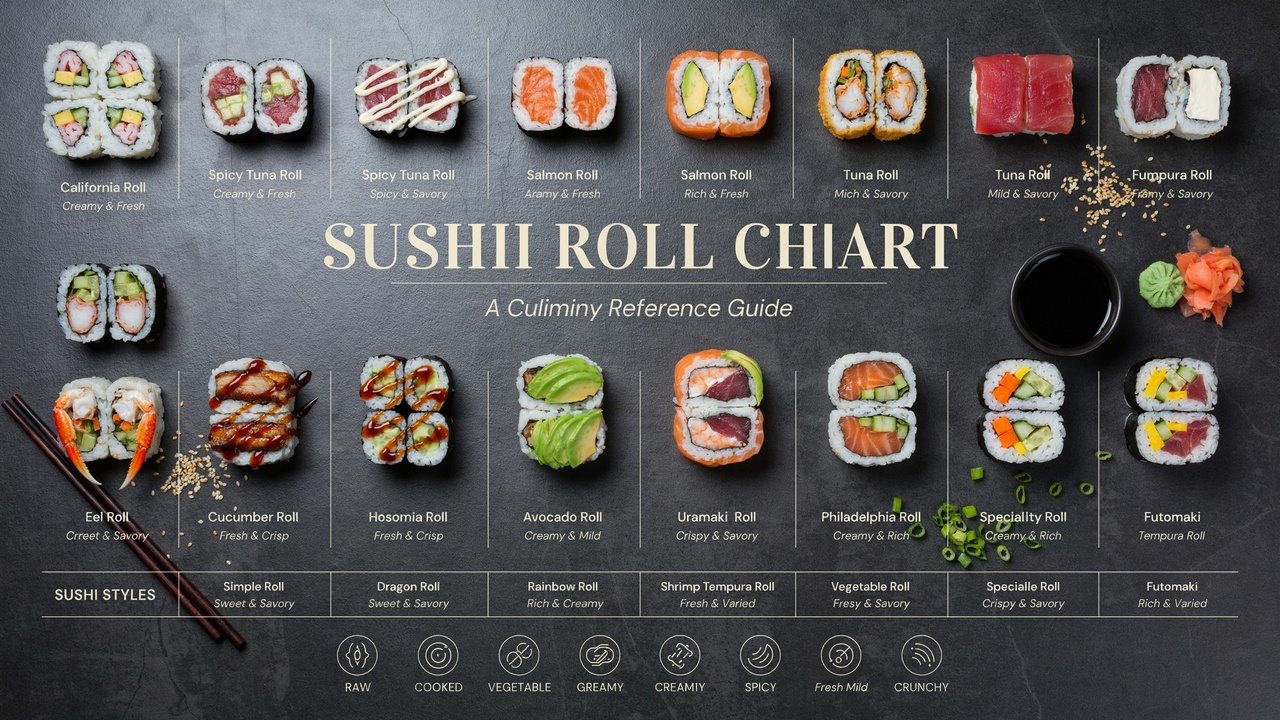
Sushi rolls are one of the most popular ways to enjoy Japanese cuisine. From simple cucumber rolls to California rolls, spicy tuna rolls, salmon rolls, and colorful specialty rolls, there are many varieties to choose from. But what is inside each roll, and how do their flavors and textures differ? Understanding the sushi roll chart makes it easier to compare popular sushi rolls and choose the right one for your taste.
Why Sushi Roll Types Matter
Sushi rolls can differ greatly in their ingredients, preparation, texture, and flavor. Some rolls are light and refreshing, while others are creamy, spicy, crunchy, or rich.
Traditional rolls often use simple combinations of rice, nori, seafood, and vegetables. Modern specialty rolls may include sauces, tempura, avocado, cream cheese, spicy mayonnaise, and crunchy toppings.
The type of roll you choose can also depend on whether you prefer raw seafood, cooked seafood, vegetables, or a combination of ingredients.
Standard Sushi Roll Chart
Sushi rolls come in many styles, but several varieties are especially popular.
Sushi Roll Chart
| Sushi Roll | Main Ingredients | Flavor Profile | Best For |
|---|---|---|---|
| California Roll | Crab, avocado, cucumber | Creamy & fresh | Beginners |
| Spicy Tuna Roll | Tuna, spicy mayo | Spicy & savory | Spice lovers |
| Salmon Roll | Salmon, rice, nori | Rich & fresh | Seafood lovers |
| Tuna Roll | Tuna, rice, nori | Mild & savory | Classic choice |
| Cucumber Roll | Cucumber, rice, nori | Fresh & crisp | Vegetarians |
| Avocado Roll | Avocado, rice, nori | Creamy & mild | Vegetarians |
| Shrimp Tempura Roll | Tempura shrimp, vegetables | Crispy & savory | Cooked seafood fans |
| Philadelphia Roll | Salmon, cream cheese, cucumber | Creamy & rich | Mild flavors |
| Eel Roll | Eel, cucumber, sauce | Sweet & savory | Rich flavors |
| Dragon Roll | Eel/shrimp, avocado | Rich & creamy | Specialty roll fans |
| Rainbow Roll | Various seafood, avocado | Fresh & varied | Variety lovers |
| Vegetable Roll | Mixed vegetables | Fresh & mild | Vegetarian diners |
| Spider Roll | Soft-shell crab, vegetables | Crispy & savory | Specialty rolls |
| Futomaki | Multiple fillings | Rich & varied | Large rolls |
Ingredients and preparation can vary between sushi restaurants.
Choosing The Right Sushi Roll
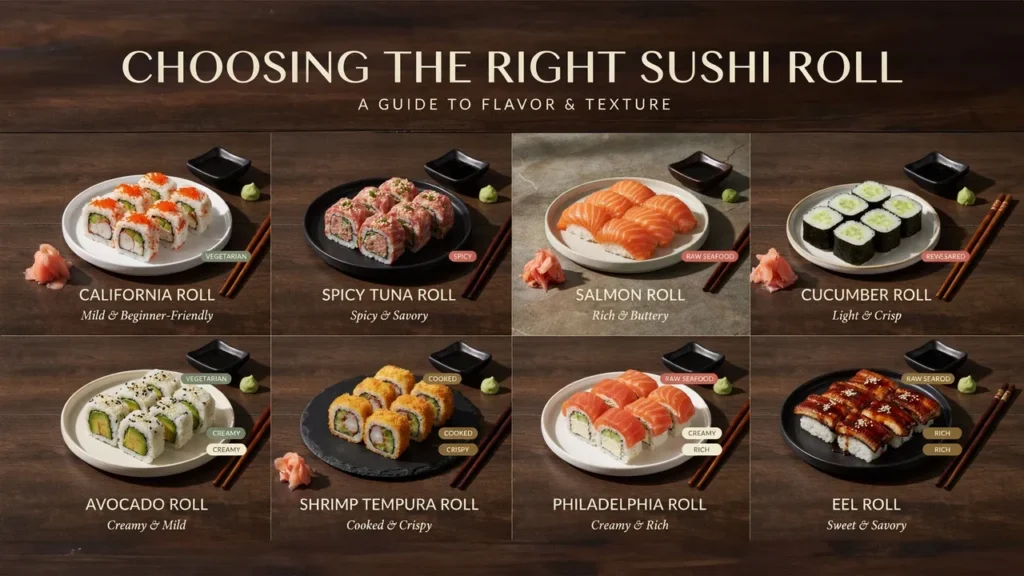
The best sushi roll depends on your preferred flavor and texture.
California Roll: A mild and approachable option for beginners.
Spicy Tuna Roll: A good choice if you enjoy tuna and spicy flavors.
Salmon Roll: Ideal for people who enjoy rich, buttery seafood.
Cucumber Roll: Light, crisp, and refreshing.
Avocado Roll: Creamy and mild with no seafood.
Shrimp Tempura Roll: Great if you prefer cooked seafood and crispy textures.
Philadelphia Roll: Creamy and rich because of the combination of salmon and cream cheese.
Eel Roll: Excellent if you enjoy sweet and savory flavors.
Sushi Roll Ingredients Chart
Most sushi rolls are built from a few basic ingredients.
| Ingredient | Role In Sushi Roll | Flavor/Texture |
|---|---|---|
| Sushi Rice | Base | Soft & slightly sticky |
| Nori | Outer layer | Savory & crisp |
| Salmon | Filling | Rich & buttery |
| Tuna | Filling | Mild & meaty |
| Crab | Filling | Sweet & delicate |
| Shrimp | Filling | Mild & firm |
| Eel | Filling | Rich & sweet |
| Avocado | Filling | Creamy |
| Cucumber | Filling | Crisp & refreshing |
| Cream Cheese | Filling | Creamy & rich |
| Carrot | Filling | Crunchy & sweet |
| Sesame Seeds | Topping | Nutty & crunchy |
| Spicy Mayo | Sauce | Creamy & spicy |
| Eel Sauce | Sauce | Sweet & savory |
Traditional Vs Specialty Sushi Rolls
Sushi rolls can generally be divided into simpler traditional-style rolls and more elaborate specialty rolls.
| Type | Characteristics | Examples |
|---|---|---|
| Simple Roll | Few ingredients | Tuna, cucumber |
| Hosomaki | Thin roll | Cucumber, tuna |
| Futomaki | Thick roll with multiple fillings | Vegetable, mixed fillings |
| Uramaki | Rice on outside | California roll |
| Specialty Roll | Multiple toppings & sauces | Dragon, rainbow |
| Tempura Roll | Fried ingredient | Shrimp tempura roll |
The exact names and styles can vary depending on the restaurant and region.
Sushi Roll Chart For Beginners
If you’re trying sushi for the first time, mild flavors and cooked ingredients can be easier starting points.
| Sushi Roll | Seafood | Raw or Cooked | Flavor Level |
|---|---|---|---|
| Cucumber Roll | None | Cooked/Vegetable | Very Mild |
| Avocado Roll | None | Vegetable | Very Mild |
| California Roll | Crab | Usually Cooked | Mild |
| Shrimp Tempura Roll | Shrimp | Cooked | Mild |
| Chicken Teriyaki Roll | Chicken | Cooked | Mild |
| Salmon Roll | Salmon | Usually Raw | Moderate |
| Tuna Roll | Tuna | Usually Raw | Moderate |
| Spicy Tuna Roll | Tuna | Usually Raw | Spicy |
| Eel Roll | Eel | Cooked | Rich |
| Rainbow Roll | Mixed seafood | Mixed | Moderate |
Preparation varies, so check with the restaurant if you need to know whether a particular filling is raw or cooked.
Raw Vs Cooked Sushi Rolls
Not all sushi rolls contain raw seafood.
Sushi Preparation Chart
| Sushi Roll Type | Typical Seafood | Preparation |
|---|---|---|
| Tuna Roll | Tuna | Raw |
| Salmon Roll | Salmon | Raw |
| Spicy Tuna Roll | Tuna | Raw |
| California Roll | Imitation crab | Usually cooked |
| Shrimp Tempura Roll | Shrimp | Cooked |
| Eel Roll | Eel | Cooked |
| Soft-Shell Crab Roll | Crab | Cooked |
| Vegetable Roll | None | Vegetable |
| Chicken Roll | Chicken | Cooked |
Restaurants can use different ingredients, so the menu description is the best guide for a specific roll.
Sushi Roll Flavor Chart
Different ingredients create very different flavor profiles.
| Flavor | Popular Sushi Rolls |
|---|---|
| Mild | Cucumber, avocado, California |
| Fresh | Salmon, cucumber, rainbow |
| Creamy | Philadelphia, avocado, California |
| Spicy | Spicy tuna, spicy salmon |
| Sweet & Savory | Eel, teriyaki chicken |
| Rich | Eel, salmon, Philadelphia |
| Crunchy | Tempura, crunchy specialty rolls |
| Tangy | Rolls with pickled vegetables or citrus sauces |
Sushi Roll Texture Chart
Texture is an important part of the sushi experience.
| Texture | Common Ingredients |
|---|---|
| Soft | Sushi rice, avocado |
| Creamy | Avocado, cream cheese |
| Crisp | Cucumber, carrots |
| Crunchy | Tempura flakes, fried toppings |
| Firm | Tuna, salmon |
| Chewy | Eel, certain seafood |
| Crispy | Tempura shrimp, fried fillings |
Combining soft rice with crunchy vegetables or crispy tempura creates more textural variety.
Popular Sushi Roll Pairings
Some ingredients naturally work well together.
| Main Ingredient | Best Pairings |
|---|---|
| Salmon | Avocado, cucumber, cream cheese |
| Tuna | Spicy mayo, cucumber, avocado |
| Crab | Avocado, cucumber |
| Shrimp | Tempura, avocado, cucumber |
| Eel | Cucumber, avocado, eel sauce |
| Avocado | Cucumber, salmon, crab |
| Cucumber | Tuna, salmon, crab |
| Cream Cheese | Salmon, cucumber |
| Tempura Shrimp | Avocado, spicy mayo |
| Vegetable | Carrot, cucumber, avocado |
Sushi Roll Topping Chart
Specialty rolls often include toppings that add extra flavor and texture.
| Topping | Flavor | Best With |
|---|---|---|
| Sesame Seeds | Nutty | California, tuna |
| Green Onion | Fresh & sharp | Spicy rolls |
| Spicy Mayo | Creamy & spicy | Tuna, salmon |
| Eel Sauce | Sweet & savory | Eel, tempura |
| Tobiko | Salty & briny | Specialty rolls |
| Masago | Mildly salty | California rolls |
| Tempura Flakes | Crunchy | Spicy rolls |
| Avocado | Creamy | Salmon, crab |
| Jalapeño | Spicy & fresh | Tuna, salmon |
| Pickled Ginger | Sweet & tangy | Many sushi rolls |
Sushi Roll Sauce Chart
Sauces can significantly change the flavor of a roll.
| Sauce | Flavor | Best Sushi Rolls |
|---|---|---|
| Soy Sauce | Salty & umami | Most sushi |
| Spicy Mayo | Creamy & spicy | Tuna, salmon |
| Eel Sauce | Sweet & savory | Eel, tempura |
| Ponzu | Citrus & savory | Seafood rolls |
| Teriyaki Sauce | Sweet & savory | Chicken rolls |
| Wasabi | Sharp & spicy | Tuna, salmon |
| Sesame Sauce | Nutty | Vegetable rolls |
A small amount of sauce is often enough because many sushi rolls already contain seasoned ingredients.
Sushi Roll Size Chart
Sushi roll sizes can vary by style.
| Roll Type | Typical Size | Number of Pieces |
|---|---|---|
| Hosomaki | Thin | 6–8 |
| Standard Roll | Medium | 6–8 |
| Futomaki | Thick | 4–8 |
| Uramaki | Medium | 6–8 |
| Specialty Roll | Large | 6–10 |
| Hand Roll | Cone-shaped | 1 |
Piece counts vary by restaurant and how the roll is cut.
Sushi Roll Serving Guide
The amount of sushi needed depends on the roll size and what else you’re eating.
| Meal Type | Approximate Amount |
|---|---|
| Light Snack | 3–4 pieces |
| Small Meal | 6–8 pieces |
| Regular Meal | 8–12 pieces |
| Large Meal | 12–16 pieces |
| Sharing | 16+ pieces |
These are general serving suggestions rather than strict portions.
Vegetarian Sushi Roll Chart
Vegetarian sushi can be simple and flavorful.
| Vegetarian Roll | Main Ingredients | Flavor |
|---|---|---|
| Cucumber Roll | Cucumber | Crisp & fresh |
| Avocado Roll | Avocado | Creamy & mild |
| Vegetable Roll | Mixed vegetables | Fresh & crunchy |
| Asparagus Roll | Asparagus | Earthy & crisp |
| Sweet Potato Roll | Sweet potato | Sweet & creamy |
| Pickled Vegetable Roll | Pickled vegetables | Tangy |
| Mango Roll | Mango, avocado | Sweet & creamy |
Some restaurant sauces may contain fish-based ingredients, so ingredients should be checked if following a strict vegetarian diet.
Sushi Rolls For Seafood Lovers
Seafood lovers have many choices.
Salmon Roll: Mild, rich, and buttery.
Tuna Roll: Clean and savory with a firm texture.
Spicy Tuna Roll: Tuna combined with spicy sauce.
Shrimp Tempura Roll: Cooked shrimp with a crispy coating.
Eel Roll: Rich, soft eel with a sweet savory sauce.
Rainbow Roll: Multiple seafood toppings for a variety of flavors.
Sushi Rolls For People Who Don’t Like Raw Fish
You don’t need to eat raw seafood to enjoy sushi.
| Roll | Main Filling | Why It Works |
|---|---|---|
| California Roll | Cooked/imitation crab | Mild flavor |
| Shrimp Tempura Roll | Cooked shrimp | Crispy texture |
| Eel Roll | Cooked eel | Sweet & savory |
| Chicken Roll | Cooked chicken | Familiar flavor |
| Vegetable Roll | Vegetables | No seafood |
| Sweet Potato Roll | Sweet potato | Sweet & soft |
| Avocado Roll | Avocado | Creamy & mild |
These can be useful starting points for people who are new to sushi.
How To Choose Sushi Rolls
Start with simple ingredients: Fewer ingredients make it easier to understand individual flavors.
Consider raw seafood: Choose cooked rolls if you don’t enjoy raw fish.
Think about texture: Tempura provides crunch, while avocado and cream cheese provide creaminess.
Choose your spice level: Spicy tuna and spicy salmon can add significant heat.
Balance rich rolls: Pair creamy or fried rolls with lighter cucumber or vegetable rolls.
Try different styles: A combination of simple and specialty rolls can provide more variety.
Common Mistakes When Choosing Sushi Rolls
Ordering too many heavy rolls: Several fried or creamy rolls can feel very rich together.
Ignoring spice levels: Spicy sauces can be stronger than expected.
Assuming every California roll is identical: Ingredients and sauces can vary between restaurants.
Using too much soy sauce: Sushi is already seasoned, and excessive soy sauce can overpower delicate flavors.
Confusing roll types: Hosomaki, uramaki, futomaki, and specialty rolls can differ in size and structure.
Ignoring allergies or dietary restrictions: Always check ingredients when necessary, especially with sauces and imitation seafood.
Tips For Serving Sushi Rolls
Serve fresh: Sushi rolls are generally best soon after preparation.
Use appropriate portions: Cut rolls into manageable pieces.
Add dipping sauces separately: This lets each person control the amount.
Serve pickled ginger: It can provide a refreshing contrast between different flavors.
Add wasabi carefully: Its strong flavor can easily overpower delicate fish.
Combine different textures: Mix creamy, crunchy, fresh, and savory rolls for variety.
The History Behind Sushi Rolls
Sushi developed from older food-preservation traditions in Asia and eventually evolved into the forms associated with Japanese cuisine today. Rolled sushi became an important style, with maki using seaweed and rice to hold fillings together.
As sushi spread internationally, restaurants began developing new combinations suited to local tastes. Rolls such as the California roll helped introduce sushi to diners who were unfamiliar with raw seafood.
Today, sushi rolls range from simple traditional combinations to elaborate specialty creations featuring cooked seafood, vegetables, sauces, and modern toppings.
Frequently Asked Questions
What Is The Most Popular Sushi Roll?
The California roll is one of the most widely recognized sushi rolls, while spicy tuna, salmon, shrimp tempura, and specialty rolls are also very popular.
What Is The Best Sushi Roll For Beginners?
California rolls, cucumber rolls, avocado rolls, and shrimp tempura rolls are generally approachable choices for beginners.
Which Sushi Rolls Are Cooked?
Common cooked options include California rolls, shrimp tempura rolls, eel rolls, soft-shell crab rolls, and many chicken or vegetable rolls.
Which Sushi Rolls Contain Raw Fish?
Common examples include tuna rolls, salmon rolls, spicy tuna rolls, spicy salmon rolls, and some rainbow rolls.
What Is A California Roll Made Of?
A California roll commonly contains imitation crab or crab, avocado, and cucumber, usually with sushi rice and nori.
What Is A Spicy Tuna Roll?
A spicy tuna roll typically combines tuna with a spicy sauce such as spicy mayonnaise, along with sushi rice and nori.
What Is A Dragon Roll?
A dragon roll is generally a specialty sushi roll featuring ingredients such as eel or shrimp, avocado, cucumber, and sweet savory sauce, although recipes vary.
What Is A Rainbow Roll?
A rainbow roll is a specialty roll commonly topped with several types of seafood and avocado, creating a colorful appearance and variety of flavors.
How Many Pieces Are In A Sushi Roll?
Many standard sushi rolls are cut into 6–8 pieces, although the number varies depending on the roll style and restaurant.
What Should I Eat With Sushi?
Popular accompaniments include soy sauce, wasabi, pickled ginger, miso soup, edamame, and Japanese-style salads.
Sushi rolls offer an enormous variety of flavors, textures, and ingredients. From simple cucumber and avocado rolls to California, spicy tuna, salmon, shrimp tempura, dragon, and rainbow rolls, there is a style for almost every preference. Understanding the sushi roll chart makes it easier to compare ingredients, choose raw or cooked options, explore different textures, and find the perfect sushi roll for your next meal.
