
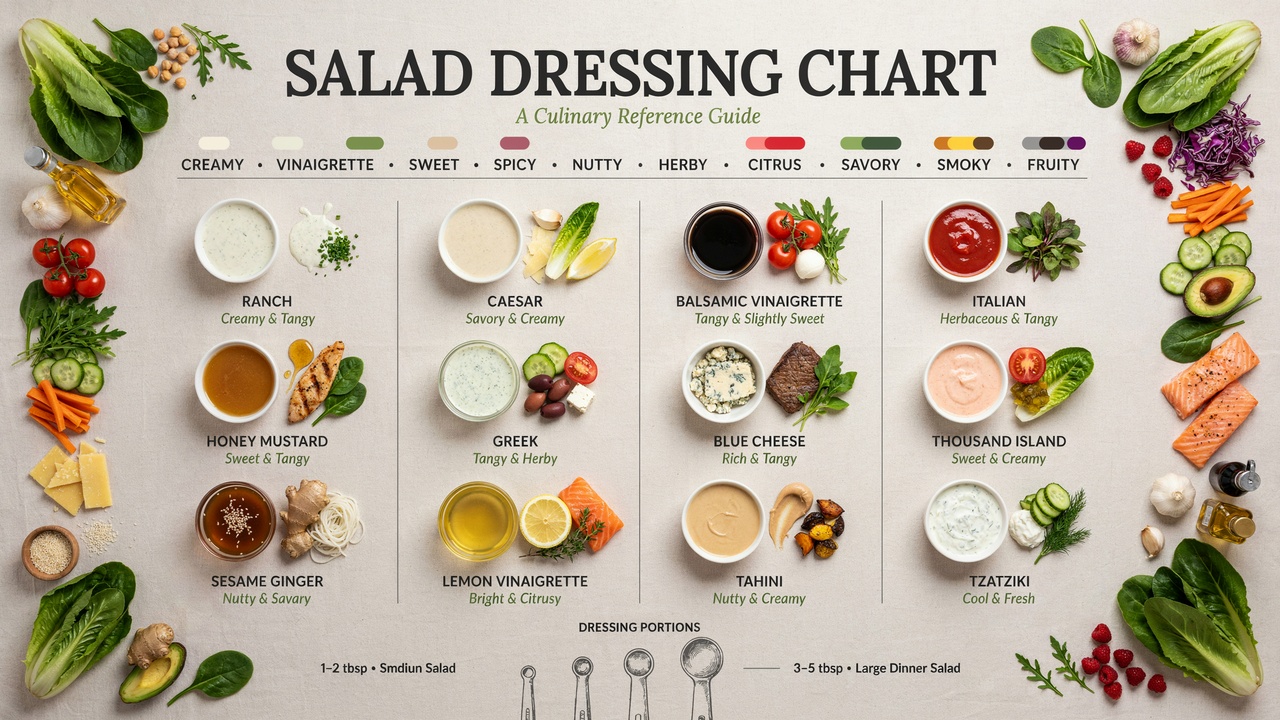
Salad dressing can completely change the flavor of a salad. A simple bowl of lettuce and vegetables can become creamy, tangy, sweet, spicy, or refreshing depending on the dressing you choose. From classic ranch and Caesar to balsamic vinaigrette, honey mustard, Italian, and Greek dressing, each variety has its own flavor profile and best pairings. Understanding the salad dressing chart makes it easier to choose the right dressing for vegetables, proteins, fruits, pasta salads, and different types of greens.
Why Salad Dressing Matters
Dressing does more than add flavor. It can provide moisture, richness, acidity, sweetness, and texture to a salad.
A creamy dressing can make a vegetable salad richer, while a vinaigrette can add brightness and acidity. Sweet dressings work particularly well with bitter greens or fruit-based salads, while spicy dressings can add extra flavor to grilled chicken or hearty vegetables.
The amount of dressing also matters. Too little can leave a salad dry, while too much can overwhelm the vegetables and make delicate greens wilt quickly.
Standard Salad Dressing Chart
There are many varieties of salad dressing, but several are especially popular.
Salad Dressing Chart
| Dressing | Main Flavor | Texture | Best Salad Pairings |
|---|---|---|---|
| Ranch | Creamy & tangy | Thick | Chicken, lettuce, vegetables |
| Caesar | Savory & creamy | Thick | Romaine, Parmesan, croutons |
| Balsamic Vinaigrette | Tangy & slightly sweet | Thin | Greens, tomato, cheese |
| Italian | Herbaceous & tangy | Thin | Mixed greens, pasta salad |
| Honey Mustard | Sweet & tangy | Creamy | Chicken, spinach, fruit |
| Greek | Tangy & herby | Medium | Cucumber, tomato, feta |
| Blue Cheese | Rich & tangy | Thick | Wedge salad, steak |
| Thousand Island | Sweet & creamy | Thick | Lettuce, tomato, eggs |
| French | Sweet & tangy | Creamy | Garden salads |
| Sesame Ginger | Nutty & savory | Thin | Cabbage, chicken, noodles |
| Lemon Vinaigrette | Bright & citrusy | Thin | Greens, seafood |
| Tahini | Nutty & creamy | Thick | Chickpeas, vegetables |
The exact flavor and consistency can vary depending on the recipe and ingredients.
Choosing The Right Salad Dressing
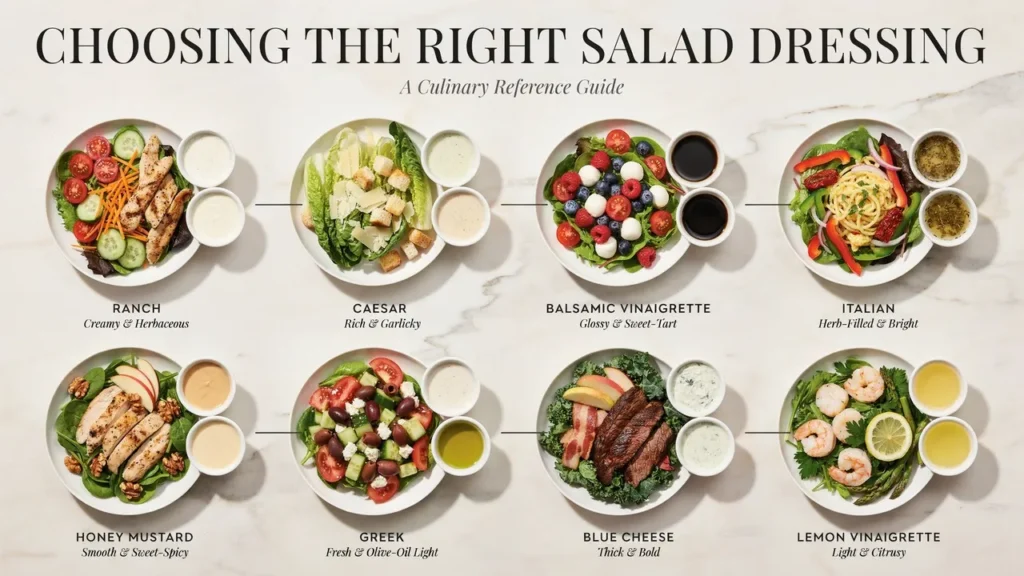
The best dressing depends on the ingredients in your salad.
Ranch: Great for creamy salads, chicken salads, vegetable platters, and hearty greens.
Caesar: A classic choice for romaine lettuce, Parmesan cheese, and croutons.
Balsamic Vinaigrette: Works especially well with leafy greens, tomatoes, mozzarella, and berries.
Italian: A versatile option for mixed greens, vegetables, pasta salads, and sandwiches.
Honey Mustard: Excellent with chicken, spinach, apples, and nuts.
Greek: Pairs beautifully with cucumber, tomato, olives, feta, and Mediterranean-style ingredients.
Blue Cheese: Best for bold salads featuring steak, bacon, apples, pears, or strong greens.
Lemon Vinaigrette: A light and refreshing option for greens, seafood, and fresh vegetables.
Creamy Salad Dressing Chart
Creamy dressings are thicker and often contain ingredients such as mayonnaise, yogurt, buttermilk, sour cream, tahini, or cheese.
| Creamy Dressing | Main Ingredients | Flavor | Best Pairings |
|---|---|---|---|
| Ranch | Buttermilk, herbs, mayonnaise | Tangy & herby | Chicken, vegetables |
| Caesar | Parmesan, egg, lemon, garlic | Savory & rich | Romaine |
| Blue Cheese | Blue cheese, cream base | Strong & tangy | Steak, greens |
| Thousand Island | Mayonnaise, relish, tomato | Sweet & creamy | Lettuce, eggs |
| Honey Mustard | Mustard, honey, creamy base | Sweet & tangy | Chicken, spinach |
| Tzatziki | Yogurt, cucumber, herbs | Cool & fresh | Cucumber, tomato |
| Tahini | Sesame paste, lemon | Nutty & tangy | Chickpeas, vegetables |
| Green Goddess | Herbs, creamy base | Fresh & herby | Greens, avocado |
Creamy dressings are generally best with sturdy greens and ingredients that can support their thicker texture.
Vinaigrette Dressing Chart
Vinaigrettes are usually made with oil, an acidic ingredient, and seasonings.
| Vinaigrette | Main Acid | Flavor | Best Pairings |
|---|---|---|---|
| Balsamic | Balsamic vinegar | Sweet & tangy | Tomato, greens |
| Italian | Vinegar | Herbaceous | Mixed greens |
| Red Wine | Red wine vinegar | Sharp & tangy | Greek salads |
| White Wine | White wine vinegar | Light & crisp | Greens, seafood |
| Apple Cider | Apple cider vinegar | Fruity & tangy | Apple, kale |
| Lemon | Lemon juice | Bright & fresh | Fish, greens |
| Champagne | Champagne vinegar | Mild & elegant | Delicate greens |
| Raspberry | Raspberry vinegar | Fruity & tart | Berries, spinach |
Vinaigrettes are especially useful when you want a lighter dressing that adds acidity without making the salad feel heavy.
Salad Dressing By Flavor
Choosing dressing by flavor profile can make pairing much easier.
| Flavor Style | Recommended Dressings |
|---|---|
| Creamy | Ranch, Caesar, blue cheese |
| Tangy | Italian, balsamic, lemon vinaigrette |
| Sweet | Honey mustard, French, raspberry |
| Spicy | Chipotle, jalapeño, spicy ranch |
| Nutty | Tahini, sesame ginger |
| Herby | Italian, Greek, green goddess |
| Citrus | Lemon, orange, lime vinaigrette |
| Savory | Caesar, miso, Parmesan dressing |
| Smoky | Chipotle, barbecue-style dressing |
| Fruity | Raspberry, citrus, apple cider |
A dressing’s flavor should complement the main ingredients rather than cover them completely.
Salad Dressing Pairing Chart
Different salad ingredients work better with certain dressings.
| Salad Ingredient | Best Dressings |
|---|---|
| Lettuce | Ranch, Italian, Caesar |
| Spinach | Balsamic, honey mustard |
| Kale | Lemon, tahini, Caesar |
| Arugula | Balsamic, lemon |
| Romaine | Caesar, ranch |
| Cucumber | Greek, lemon, dill |
| Tomato | Balsamic, Italian |
| Avocado | Lime, ranch, cilantro |
| Carrot | Sesame ginger, honey mustard |
| Cabbage | Sesame ginger, vinegar-based |
| Broccoli | Ranch, honey mustard |
| Beet | Balsamic, goat cheese vinaigrette |
| Apple | Honey mustard, balsamic |
| Pear | Blue cheese, balsamic |
| Strawberry | Balsamic, poppy seed |
| Corn | Lime, cilantro |
| Chickpeas | Tahini, lemon |
| Chicken | Ranch, Caesar, honey mustard |
| Salmon | Lemon, dill, yogurt-based |
| Steak | Blue cheese, balsamic |
Salad Dressing And Leafy Greens
Different greens have different flavors and textures.
Greens And Dressing Chart
| Green | Flavor | Best Dressing |
|---|---|---|
| Romaine | Mild & crisp | Caesar, ranch |
| Spinach | Mild & earthy | Balsamic, honey mustard |
| Arugula | Peppery | Lemon, balsamic |
| Kale | Earthy & hearty | Lemon, tahini |
| Iceberg | Mild & crunchy | Ranch, Thousand Island |
| Mixed Greens | Mild & varied | Italian, balsamic |
| Radicchio | Bitter & crisp | Balsamic, creamy |
| Butter Lettuce | Mild & delicate | Lemon vinaigrette |
Delicate greens generally benefit from lighter dressings, while sturdy greens can handle thicker or richer options.
Salad Dressing For Chicken Salads
Chicken is one of the easiest proteins to pair with salad dressing.
| Chicken Salad Style | Best Dressing | Additional Ingredients |
|---|---|---|
| Grilled Chicken | Ranch | Lettuce, tomato, corn |
| Caesar Chicken | Caesar | Romaine, Parmesan |
| Honey Mustard Chicken | Honey mustard | Apple, spinach |
| Mediterranean Chicken | Greek | Cucumber, tomato, feta |
| Spicy Chicken | Chipotle | Corn, avocado |
| Asian Chicken | Sesame ginger | Cabbage, carrot |
| Fresh Chicken | Lemon vinaigrette | Greens, cucumber |
Creamy dressings work well with grilled chicken, while citrus and vinaigrette-based dressings can provide a lighter contrast.
Salad Dressing For Fruit Salads
Fruit salads usually work best with light, sweet, or citrus-based dressings.
| Fruit | Best Dressing |
|---|---|
| Strawberry | Balsamic, poppy seed |
| Apple | Honey mustard, lemon |
| Pear | Balsamic, honey |
| Orange | Citrus vinaigrette |
| Peach | Honey lemon |
| Mango | Lime cilantro |
| Watermelon | Lime mint |
| Blueberry | Lemon honey |
| Raspberry | Raspberry vinaigrette |
| Pineapple | Lime dressing |
Fruit-based salads benefit from dressings that enhance sweetness without making the salad overly heavy.
Salad Dressing For Vegetable Salads
Vegetables can handle a wide range of dressing styles.
| Vegetable Salad | Best Dressing |
|---|---|
| Tomato & Cucumber | Greek, Italian |
| Broccoli Salad | Ranch, honey mustard |
| Carrot Salad | Sesame ginger |
| Cabbage Salad | Sesame, lime |
| Beet Salad | Balsamic |
| Avocado Salad | Lime vinaigrette |
| Corn Salad | Lime cilantro |
| Roasted Vegetables | Balsamic, tahini |
| Mixed Vegetables | Italian |
| Potato Salad | Mustard, ranch |
The dressing can also help balance vegetables that are bitter, earthy, sweet, or acidic.
Salad Dressing For Pasta Salads
Pasta salads often need a dressing that can coat both the pasta and other ingredients.
| Pasta Salad | Best Dressing |
|---|---|
| Italian Pasta Salad | Italian dressing |
| Mediterranean Pasta Salad | Greek dressing |
| Chicken Pasta Salad | Ranch |
| Vegetable Pasta Salad | Balsamic vinaigrette |
| Tuna Pasta Salad | Creamy dressing |
| Pesto Pasta Salad | Pesto-based dressing |
| Spicy Pasta Salad | Chipotle or chili dressing |
Oil-based dressings are particularly convenient for pasta salads because they coat the ingredients evenly.
Salad Dressing For Grain Bowls
Grain bowls often combine grains, vegetables, protein, and toppings.
| Grain Bowl | Best Dressing |
|---|---|
| Quinoa Bowl | Lemon tahini |
| Rice Bowl | Sesame ginger |
| Couscous Bowl | Greek dressing |
| Farro Bowl | Balsamic |
| Brown Rice Bowl | Lime cilantro |
| Chickpea Bowl | Tahini lemon |
| Mediterranean Bowl | Greek dressing |
Thicker dressings such as tahini can add richness to grain-based meals.
Salad Dressing Ingredients Chart
Most dressings are built from a few basic components.
| Ingredient | Purpose |
|---|---|
| Olive Oil | Fat & richness |
| Vinegar | Acidity |
| Lemon Juice | Fresh acidity |
| Mustard | Tang & emulsification |
| Honey | Sweetness |
| Garlic | Savory flavor |
| Herbs | Freshness |
| Mayonnaise | Creaminess |
| Yogurt | Creamy tang |
| Tahini | Nutty richness |
| Cheese | Savory depth |
| Spices | Heat & complexity |
Understanding these components makes it easier to create your own dressing at home.
Basic Vinaigrette Ratio
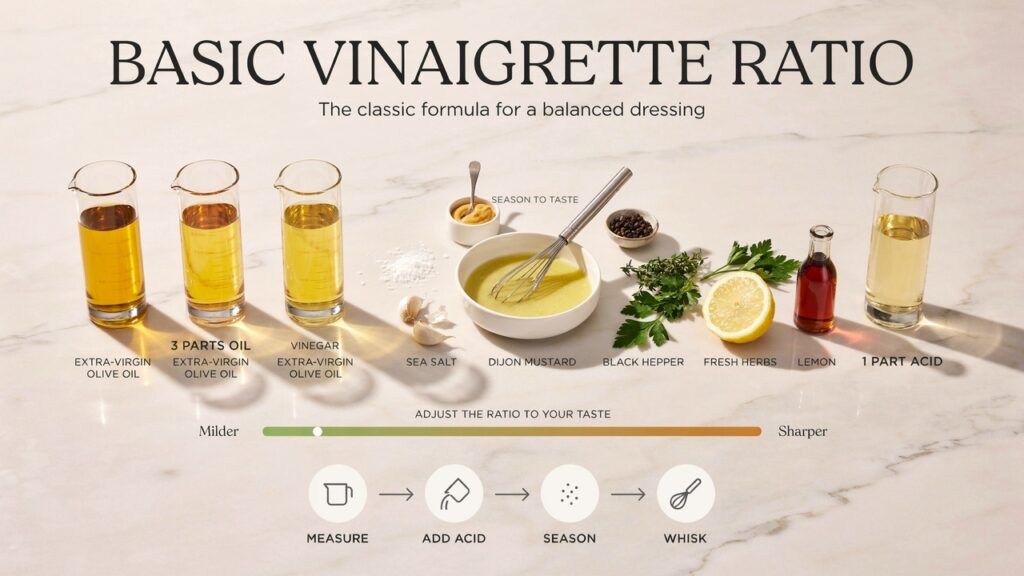
A traditional vinaigrette often uses a larger amount of oil than vinegar or another acidic ingredient.
A common starting point is:
3 parts oil + 1 part acid + seasonings
For example, you might combine olive oil with vinegar or lemon juice, then add mustard, salt, pepper, herbs, or other flavorings.
The ratio can be adjusted depending on how sharp or mild you prefer your dressing.
Salad Dressing Serving Size
The right amount of dressing depends on the amount and type of salad.
| Salad Size | Approx. Dressing Amount |
|---|---|
| Small Side Salad | 1–2 tbsp |
| Medium Salad | 2–3 tbsp |
| Large Salad | 3–4 tbsp |
| Large Dinner Salad | 3–5 tbsp |
| Pasta Salad | 3–5 tbsp per several cups |
| Grain Bowl | 2–4 tbsp |
Start with less dressing and add more gradually. This helps prevent the salad from becoming overly wet.
How To Dress A Salad Properly
Start with a clean, dry salad: Excess water can prevent dressing from coating the leaves properly.
Add a small amount: You can always add more.
Toss gently: Mix until the ingredients are lightly coated.
Taste before serving: Add more acidity, salt, or dressing if necessary.
Add delicate toppings last: Ingredients such as croutons and crispy nuts can become soggy if mixed too early.
Healthy Salad Dressing Choices
A dressing can contribute significant calories, sugar, sodium, or fat depending on the ingredients and serving size.
For a lighter option, consider:
- Lemon juice
- Vinegar-based vinaigrettes
- Plain yogurt-based dressings
- Herb vinaigrettes
- Light tahini dressing
- Homemade dressings with controlled ingredients
Portion size is important because even nutritious ingredients can contribute substantial calories when used in large amounts.
Homemade Salad Dressing Chart
Making dressing at home gives you more control over the flavor and ingredients.
| Dressing | Simple Base Ingredients |
|---|---|
| Lemon Vinaigrette | Olive oil, lemon, mustard |
| Balsamic Vinaigrette | Olive oil, balsamic vinegar |
| Honey Mustard | Mustard, honey, yogurt |
| Greek Dressing | Olive oil, lemon, herbs |
| Ranch-Style | Yogurt, herbs, garlic |
| Tahini Dressing | Tahini, lemon, water |
| Sesame Ginger | Sesame oil, soy sauce, ginger |
| Creamy Caesar | Parmesan, lemon, garlic, creamy base |
Homemade dressing can also be adjusted to make it sweeter, tangier, creamier, or spicier.
Common Mistakes When Choosing Salad Dressing
Using too much dressing: This can overwhelm the vegetables and make leafy greens soggy.
Choosing a heavy dressing for delicate greens: Light greens may work better with vinaigrettes.
Ignoring the main ingredient: A strong dressing can hide subtle flavors.
Adding dressing too early: Salads can become wilted if dressed too far in advance.
Not balancing flavors: Sweet, salty, sour, bitter, and savory flavors should work together.
Forgetting toppings: Croutons, nuts, cheese, and fruit can change which dressing works best.
Tips For Pairing Salad Dressings
Match intensity: Strong greens such as arugula can handle bold dressings.
Balance bitterness: Sweet or creamy dressings can soften bitter vegetables.
Use acidity: Lemon and vinegar can brighten rich salads.
Pair creamy with crunchy: Ranch or Caesar works well with crisp vegetables.
Pair sweet with salty: Honey mustard can work beautifully with feta, nuts, or grilled chicken.
Consider the protein: Chicken, fish, beef, and beans each have different flavor profiles.
The History Behind Salad Dressings
Salads have been enjoyed for centuries, and early versions were often seasoned with simple combinations of oil, vinegar, herbs, and salt.
As culinary traditions developed, different regions created distinctive dressings. Mediterranean cuisines popularized olive oil, vinegar, herbs, and lemon-based combinations, while American cuisine developed creamy dressings such as ranch, Thousand Island, and blue cheese.
Today, salad dressings range from simple two-ingredient vinaigrettes to elaborate creamy and flavored sauces.
Frequently Asked Questions
What Is The Most Popular Salad Dressing?
Ranch is one of the most popular salad dressings in the United States. Other widely used options include Italian, Caesar, balsamic, and honey mustard.
What Dressing Goes Best With Caesar Salad?
Caesar dressing is the classic choice for Caesar salad and pairs with romaine lettuce, Parmesan cheese, and croutons.
What Dressing Goes Best With Greek Salad?
Greek dressing, usually featuring olive oil, lemon or vinegar, herbs, and seasonings, pairs well with tomato, cucumber, olives, feta, and other Mediterranean ingredients.
What Dressing Goes Best With Spinach Salad?
Spinach pairs particularly well with balsamic vinaigrette, honey mustard, poppy seed, and warm bacon-style dressings.
What Dressing Goes Best With Chicken Salad?
Popular choices include ranch, Caesar, honey mustard, Greek dressing, and lemon vinaigrette.
What Dressing Goes Best With Fruit Salad?
Light options such as citrus dressing, honey lemon, poppy seed dressing, and mild balsamic vinaigrette can complement fruit.
How Much Salad Dressing Should I Use?
A small side salad may need around 1–2 tablespoons, while a larger salad may need around 3–5 tablespoons, depending on its size and ingredients.
What Is The Basic Vinaigrette Ratio?
A common starting point is 3 parts oil to 1 part vinegar or another acidic ingredient. You can adjust the ratio according to taste.
Should You Put Dressing On Salad Before Serving?
Yes, but it is generally best to dress the salad shortly before serving. This helps prevent delicate greens and crunchy toppings from becoming soggy.
What Dressing Is Best For A Low-Carb Salad?
Oil-and-vinegar vinaigrettes, ranch-style dressings without added sugar, and creamy dressings made with suitable ingredients can fit into many low-carb meal plans. Always check the nutrition label when precise carbohydrate intake matters.
The right dressing can turn an ordinary salad into a flavorful and satisfying meal. From creamy ranch and Caesar to bright lemon vinaigrette, balsamic, Greek, honey mustard, and sesame ginger, each dressing offers a different combination of flavor and texture. Understanding the salad dressing chart helps you choose the right dressing for leafy greens, vegetables, fruits, proteins, pasta salads, and grain bowls while keeping portions and flavor balance in mind.
