
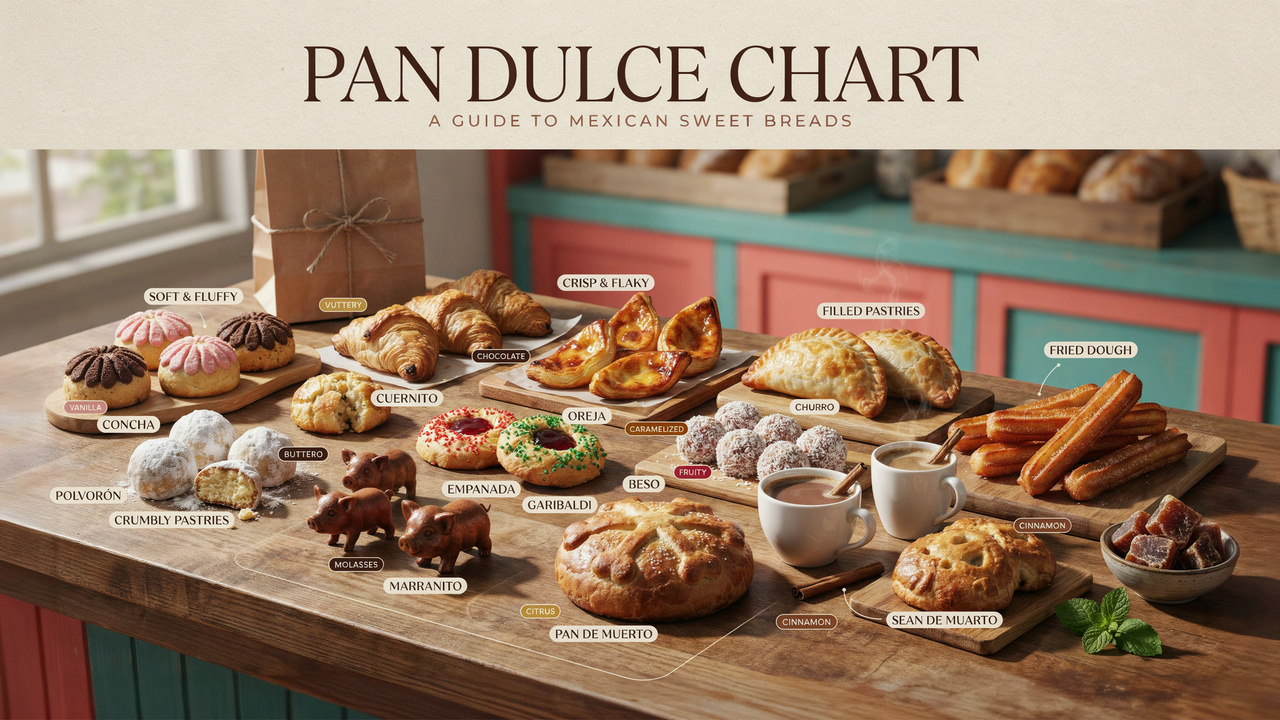
Pan dulce means “sweet bread” in Spanish and refers to a wide variety of sweet baked goods enjoyed throughout Mexico and other parts of Latin America. From colorful conchas and flaky cuernitos to soft empanadas and fruit-filled pastries, pan dulce comes in many shapes, textures, and flavors. Understanding the pan dulce chart makes it easier to compare different varieties and choose the right sweet bread for breakfast, snacks, celebrations, or coffee time.
Why Pan Dulce Variety Matters
Pan dulce is more than just a sweet snack. Different varieties can have completely different textures and flavors. Some are soft and fluffy, while others are crisp, flaky, crumbly, or filled with fruit, cream, or nuts.
Many pan dulce varieties are traditionally enjoyed with coffee, hot chocolate, milk, or other warm drinks. Their decorative shapes and colorful toppings also make them popular for family gatherings and celebrations.
Standard Pan Dulce Chart
Here are some popular varieties of Mexican sweet bread.
Pan Dulce Chart
| Pan Dulce | Main Ingredients | Texture | Flavor |
|---|---|---|---|
| Concha | Sweet dough, sugar topping | Soft & fluffy | Sweet & vanilla/chocolate |
| Cuernito | Sweet dough, butter | Soft & flaky | Buttery & sweet |
| Oreja | Puff pastry, sugar | Crisp & flaky | Caramelized & sweet |
| Empanada | Pastry, fruit filling | Flaky & tender | Fruity & sweet |
| Polvorón | Flour, sugar, butter | Crumbly | Buttery & sweet |
| Garibaldi | Sweet bread, sprinkles | Soft & moist | Sweet & fruity |
| Campechana | Puff pastry, sugar | Crisp & flaky | Caramelized |
| Beso | Sweet bread, jam, coconut | Soft & tender | Fruity & sweet |
| Churro | Fried dough, sugar | Crisp outside, soft inside | Sweet & cinnamon |
| Marranito | Molasses, spices | Soft & chewy | Spiced & caramel-like |
| Rebanada | Sweet bread, sugar topping | Soft & moist | Sweet & buttery |
| Pan de Muerto | Enriched dough, sugar | Soft & fluffy | Lightly sweet & aromatic |
Recipes and ingredients can vary between bakeries and regions.
Choosing The Right Pan Dulce
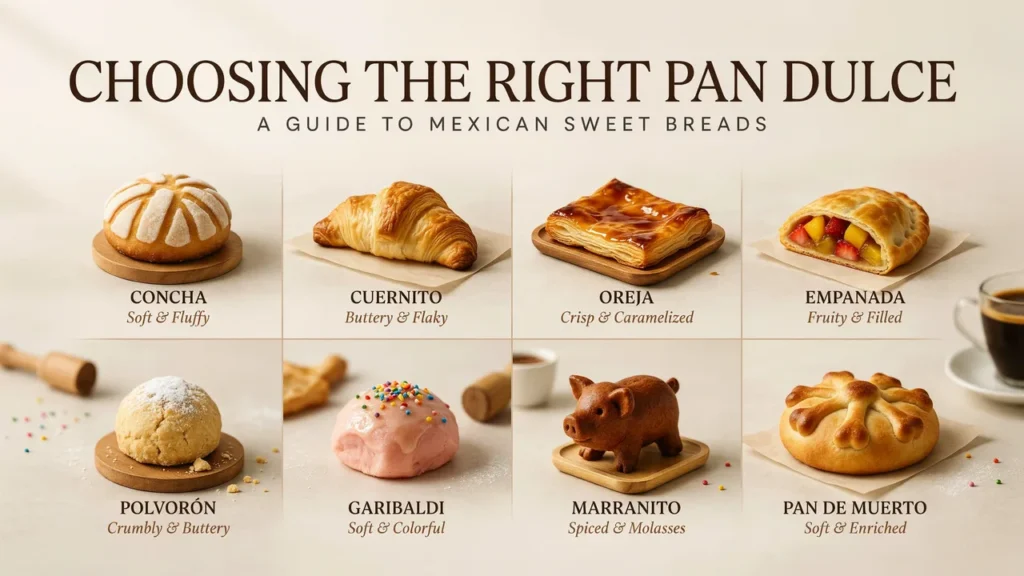
The best pan dulce depends on the texture and flavor you prefer.
Concha: A classic choice if you want a soft, fluffy bread with a sweet shell-like topping.
Cuernito: Great if you enjoy buttery pastries with a slightly flaky texture.
Oreja: Ideal for people who like crisp, caramelized puff pastry.
Empanada: A good choice when you want a sweet pastry filled with fruit or other fillings.
Polvorón: Perfect if you prefer a crumbly, buttery cookie-like pastry.
Garibaldi: A colorful option with a soft texture and sweet topping.
Marranito: Excellent for those who enjoy warm spices and molasses-like flavors.
Pan de Muerto: A traditional seasonal bread with a soft, enriched texture.
Pan Dulce Types Chart
Pan dulce can be grouped according to its texture and preparation.
| Type | Texture | Examples |
|---|---|---|
| Sweet Bread | Soft & fluffy | Concha, pan de muerto |
| Puff Pastry | Crisp & flaky | Oreja, campechana |
| Filled Pastry | Tender & filled | Empanada, beso |
| Fried Dough | Crisp & soft | Churro |
| Crumbly Pastry | Dry & buttery | Polvorón |
| Spiced Bread | Soft & chewy | Marranito |
| Glazed Bread | Soft & sweet | Garibaldi |
Pan Dulce Flavor Chart
| Flavor | Common Examples |
|---|---|
| Vanilla | Conchas |
| Chocolate | Chocolate conchas |
| Cinnamon | Churros, spiced breads |
| Fruit | Empanadas, besos |
| Coconut | Besos |
| Molasses | Marranitos |
| Caramelized Sugar | Orejas, campechanas |
| Butter | Cuernitos, polvorones |
| Citrus | Some seasonal sweet breads |
| Anise | Some traditional breads |
Different bakeries may use their own flavor combinations and fillings.
Concha Chart
Conchas are among the most recognizable types of pan dulce. Their name comes from the shell-like pattern on the sweet topping.
| Concha Type | Topping | Flavor |
|---|---|---|
| Vanilla Concha | Vanilla sugar shell | Sweet & creamy |
| Chocolate Concha | Chocolate shell | Rich & chocolatey |
| Strawberry Concha | Strawberry topping | Fruity & sweet |
| Coffee Concha | Coffee-flavored topping | Sweet & aromatic |
| Cinnamon Concha | Cinnamon topping | Warm & spiced |
| Colorful Concha | Colored sugar topping | Sweet & decorative |
The bread underneath the topping is generally soft and slightly sweet.
Pan Dulce Filling Chart
Many sweet breads are filled with fruit, cream, jam, or other sweet ingredients.
| Filling | Common Pairing |
|---|---|
| Strawberry Jam | Sweet bread, empanadas |
| Pineapple | Empanadas, pastries |
| Guava | Pastries, sweet rolls |
| Apple | Empanadas |
| Pumpkin | Seasonal pastries |
| Cream Cheese | Filled pastries |
| Custard | Sweet rolls |
| Chocolate | Sweet bread |
| Dulce de Leche | Pastries |
| Coconut | Filled sweet breads |
Fillings can vary by region and bakery.
Pan Dulce Texture Chart
Texture is one of the easiest ways to compare different varieties.
| Texture | Best Examples |
|---|---|
| Soft & Fluffy | Concha |
| Crisp & Flaky | Oreja |
| Crumbly | Polvorón |
| Soft & Chewy | Marranito |
| Tender & Filled | Empanada |
| Crisp Outside & Soft Inside | Churro |
| Moist & Soft | Garibaldi |
| Rich & Tender | Pan de Muerto |
Pan Dulce Breakfast Chart
Pan dulce is often enjoyed as part of breakfast or a morning snack.
| Pan Dulce | Common Drink Pairing |
|---|---|
| Concha | Coffee or hot chocolate |
| Cuernito | Coffee |
| Oreja | Café con leche |
| Empanada | Hot chocolate |
| Polvorón | Coffee or tea |
| Churro | Hot chocolate |
| Pan de Muerto | Hot chocolate or coffee |
| Marranito | Milk or coffee |
A sweet bread can be served alone or alongside fruit and other breakfast foods.
Pan Dulce Drink Pairing Chart
| Drink | Good Pan Dulce Pairings |
|---|---|
| Coffee | Concha, cuernito, polvorón |
| Café con Leche | Oreja, empanada |
| Hot Chocolate | Churro, concha |
| Mexican Hot Chocolate | Pan de muerto, churro |
| Milk | Marranito, concha |
| Tea | Polvorón, fruit empanada |
| Atole | Sweet breads, conchas |
Warm drinks can complement the sweetness and texture of pan dulce.
Pan Dulce Serving Chart
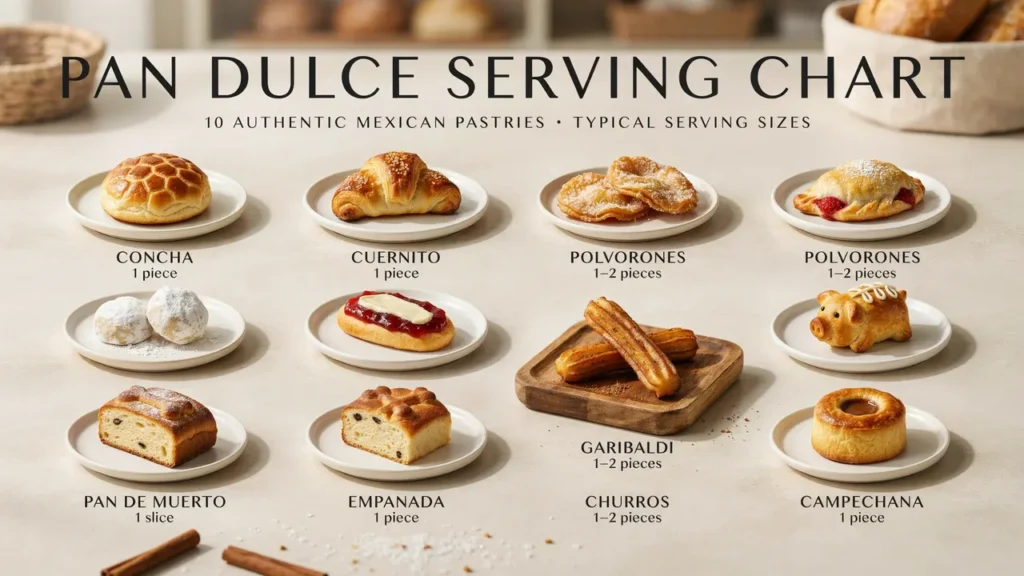
Serving size depends on the size and type of pastry.
| Pan Dulce | Typical Serving |
|---|---|
| Concha | 1 piece |
| Cuernito | 1 piece |
| Oreja | 1–2 pieces |
| Empanada | 1 piece |
| Polvorón | 1–2 pieces |
| Garibaldi | 1 piece |
| Churro | 1–2 pieces |
| Marranito | 1 piece |
| Pan de Muerto | 1 slice or small portion |
| Campechana | 1 piece |
Larger pastries may be shared, while smaller cookies and breads can be served in pairs.
Pan Dulce Size Chart
Sweet breads can differ considerably in size.
| Size | Approximate Weight | Serving Idea |
|---|---|---|
| Mini | 20–35 g | Snacks or dessert trays |
| Small | 35–55 g | Light snack |
| Medium | 55–85 g | Standard serving |
| Large | 85–120 g | Hearty snack |
| Extra Large | 120 g+ | Sharing |
Actual weight varies according to the recipe, filling, topping, and bakery.
Pan Dulce Shape Chart
Traditional bakeries often display sweet breads in many decorative forms.
| Shape | Common Examples |
|---|---|
| Shell | Concha |
| Crescent | Cuernito |
| Oval | Oreja |
| Round | Polvorón |
| Half-Moon | Empanada |
| Braided | Sweet breads |
| Spiral | Pastries |
| Stick | Churro |
| Animal Shape | Marranito |
| Decorative Loaf | Pan de Muerto |
The shape can be traditional, decorative, or specific to a bakery.
Pan Dulce Seasonal Chart
Some Mexican sweet breads are especially associated with particular celebrations.
| Season/Occasion | Traditional Bread |
|---|---|
| Day of the Dead | Pan de Muerto |
| Christmas | Seasonal sweet breads |
| Easter | Regional pastries |
| Weddings | Decorative pastries |
| Birthdays | Sweet breads and pastries |
| Everyday Breakfast | Conchas, cuernitos |
| Family Gatherings | Assorted pan dulce |
Pan dulce can be enjoyed throughout the year, while some varieties have strong seasonal associations.
Pan Dulce Ingredients Chart
| Ingredient | Purpose |
|---|---|
| Flour | Provides structure |
| Sugar | Adds sweetness |
| Butter | Adds richness |
| Eggs | Improves texture and structure |
| Milk | Adds moisture and richness |
| Yeast | Helps dough rise |
| Cinnamon | Adds warm spice |
| Vanilla | Adds aroma |
| Chocolate | Adds rich flavor |
| Fruit | Adds sweetness and acidity |
| Nuts | Adds crunch |
| Sugar Glaze | Adds sweetness and decoration |
The exact ingredients depend on the specific pastry.
Pan Dulce Cooking Method Chart
| Method | Description | Examples |
|---|---|---|
| Baking | Dry heat in an oven | Conchas |
| Frying | Dough cooked in hot oil | Churros |
| Puff Pastry Baking | Layered dough baked until crisp | Orejas |
| Filled Baking | Pastry baked with filling | Empanadas |
| Glazing | Sweet topping added after baking | Various pastries |
| Sugar Coating | Pastry coated with sugar | Churros |
Different techniques create the wide range of textures found in pan dulce.
Pan Dulce Vs Mexican Pastries
Pan dulce is a broad category that includes many different sweet breads and pastries.
| Category | Typical Characteristics |
|---|---|
| Sweet Bread | Yeasted, soft, fluffy |
| Pastry | Flaky, buttery, or crisp |
| Fried Sweet | Crisp exterior |
| Filled Pastry | Contains fruit, cream, or other fillings |
| Cookie-Like | Crumbly and buttery |
| Seasonal Bread | Connected to holidays or celebrations |
The terms can overlap, and individual bakeries may categorize pastries differently.
Popular Pan Dulce Chart
For a quick comparison, here are some of the best-known varieties.
| Rank | Pan Dulce | Main Feature |
|---|---|---|
| 1 | Concha | Shell-shaped sweet topping |
| 2 | Churro | Fried and cinnamon-sugar coated |
| 3 | Empanada | Filled pastry |
| 4 | Oreja | Caramelized puff pastry |
| 5 | Cuernito | Buttery crescent-shaped bread |
| 6 | Polvorón | Crumbly and buttery |
| 7 | Marranito | Molasses and spice |
| 8 | Garibaldi | Colorful sprinkles |
| 9 | Pan de Muerto | Traditional seasonal bread |
| 10 | Campechana | Crisp caramelized pastry |
Common Mistakes When Choosing Pan Dulce
Choosing only by appearance: Colorful toppings can be attractive, but texture and filling also make a big difference.
Ignoring sweetness: Some pastries are much sweeter than others.
Overlooking texture: A flaky pastry is very different from a soft concha.
Ordering too many large pastries: Pan dulce can be filling, especially when served with a sweet drink.
Not checking fillings: Filled pastries may contain fruit, dairy, nuts, or other ingredients that may not suit everyone.
Forgetting seasonal varieties: Some traditional breads are especially associated with particular celebrations.
Tips For Enjoying Pan Dulce
Pair sweet breads with warm drinks: Coffee and hot chocolate complement many varieties.
Try different textures: Compare soft conchas with crisp orejas or crumbly polvorones.
Explore fillings: Fruit-filled pastries provide a different experience from plain sweet breads.
Buy assorted varieties: An assortment makes it easier to discover your favorite.
Serve fresh: Many pan dulce varieties taste best when fresh from the bakery.
Share larger pastries: Large pieces can be cut into smaller portions for gatherings.
The History Behind Pan Dulce
Pan dulce developed through a combination of Mexican baking traditions and European influences introduced during the colonial period. Over time, local ingredients, techniques, and cultural traditions transformed these influences into distinctive Mexican breads and pastries.
Mexican bakeries, known as panaderías, became important places for everyday bread and sweet pastry. Today, pan dulce remains closely connected to family breakfasts, afternoon coffee, celebrations, holidays, and neighborhood bakery culture.
Frequently Asked Questions
What Is Pan Dulce?
Pan dulce literally means “sweet bread” in Spanish. It refers to a broad range of sweet breads and pastries commonly enjoyed in Mexico and other parts of Latin America.
What Is The Most Popular Pan Dulce?
Conchas are among the most recognizable and popular types of Mexican pan dulce.
What Is A Concha?
A concha is a soft, sweet bread topped with a patterned sugar shell. Common flavors include vanilla and chocolate.
What Is The Difference Between Pan Dulce And Pastry?
Pan dulce is a broad category that includes both sweet breads and pastries. Some are soft and yeasted, while others are flaky, crisp, filled, or fried.
What Do You Drink With Pan Dulce?
Popular choices include coffee, café con leche, Mexican hot chocolate, tea, milk, and atole.
Is Pan Dulce Served For Breakfast?
Yes. Pan dulce is commonly enjoyed for breakfast, snacks, afternoon coffee, and dessert.
What Is Pan de Muerto?
Pan de Muerto is a traditional Mexican sweet bread associated with Day of the Dead celebrations. It is generally soft, lightly sweet, and often flavored with citrus or aromatic ingredients.
What Is A Marranito?
A marranito is a traditional Mexican sweet bread shaped like a small pig and commonly flavored with piloncillo or molasses and warm spices.
What Is An Oreja?
An oreja is a thin, flaky puff pastry coated with sugar and baked until crisp and caramelized.
How Many Pan Dulce Should One Person Eat?
A typical serving is often one medium pastry, although smaller pieces may be enjoyed in pairs and larger pastries can be shared.
Pan dulce offers a delicious combination of soft breads, flaky pastries, fruity fillings, caramelized sugar, warm spices, and colorful toppings. From the classic concha and buttery cuernito to crisp orejas, filled empanadas, churros, polvorones, and seasonal pan de muerto, there is a variety for almost every preference. Understanding the pan dulce chart makes it easier to compare types, textures, flavors, sizes, ingredients, and traditional serving ideas.
