
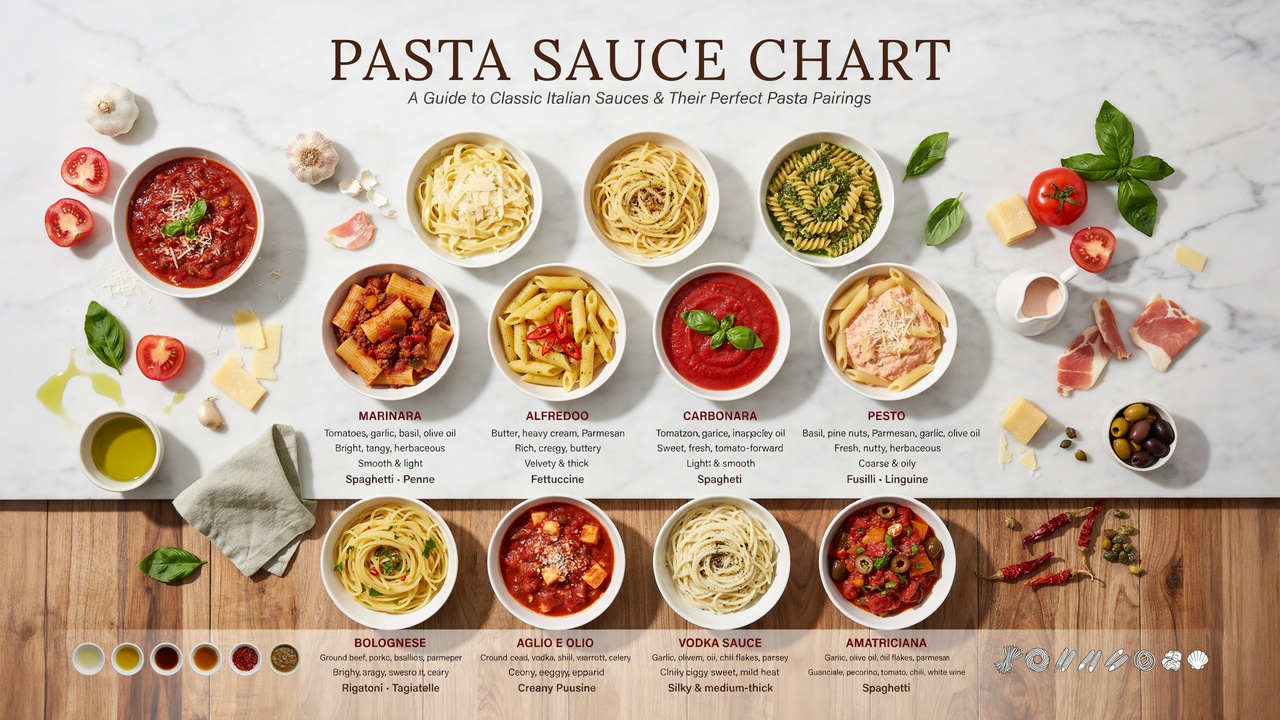
Pasta sauce is what brings a pasta dish together, adding flavor, moisture, richness, and texture. From classic tomato sauces and creamy Alfredo to pesto, carbonara, meat sauce, and spicy arrabbiata, each sauce works especially well with certain pasta shapes. Understanding the pasta sauce chart makes it easier to choose the right sauce for spaghetti, penne, ravioli, lasagna, and other pasta dishes.
Why Pasta Sauce Matters
The right sauce does more than add flavor. Its thickness and texture should work well with the shape of the pasta. Thin sauces can coat long, delicate noodles, while thick and chunky sauces are better suited to larger or ridged pasta shapes.
For example, smooth tomato sauce works beautifully with spaghetti, while chunky meat sauce can cling to rigatoni or penne. Creamy sauces are often paired with wider pasta because the larger surface area holds more sauce.
Standard Pasta Sauce Chart
Here are some of the most popular pasta sauces and their basic characteristics.
Pasta Sauce Chart
| Pasta Sauce | Main Ingredients | Flavor | Texture |
|---|---|---|---|
| Marinara | Tomatoes, garlic, herbs | Tangy & savory | Light |
| Alfredo | Butter, cream, Parmesan | Rich & creamy | Thick |
| Carbonara | Eggs, cheese, cured pork | Rich & savory | Creamy |
| Pesto | Basil, nuts, cheese, oil | Fresh & nutty | Thick |
| Bolognese | Meat, tomatoes, vegetables | Rich & savory | Thick |
| Arrabbiata | Tomatoes, chili, garlic | Spicy & tangy | Medium |
| Pomodoro | Tomatoes, olive oil | Fresh & savory | Light |
| Vodka Sauce | Tomatoes, cream, vodka | Creamy & tangy | Thick |
| Aglio e Olio | Garlic, olive oil, chili | Garlicky & spicy | Light |
| Amatriciana | Tomatoes, cured pork, cheese | Savory & tangy | Medium |
| Cacio e Pepe | Cheese, black pepper | Salty & peppery | Creamy |
| Puttanesca | Tomatoes, olives, capers | Salty & bold | Medium |
Recipes can vary significantly by region and cooking style.
Choosing The Right Pasta Sauce
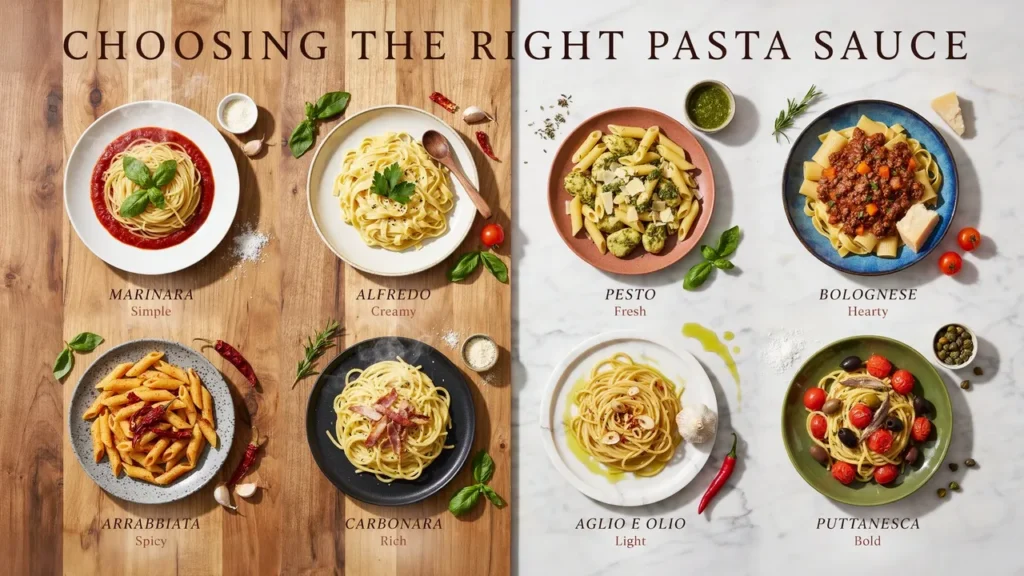
The best pasta sauce depends on the pasta shape, ingredients, and flavor you prefer.
Marinara: Great for simple spaghetti, penne, and baked pasta dishes.
Alfredo: Best when you want a rich and creamy pasta with a smooth texture.
Pesto: Excellent with short pasta, gnocchi, and stuffed pasta.
Bolognese: Ideal for hearty meals and broad or tubular pasta shapes.
Arrabbiata: A good choice if you enjoy spicy tomato flavors.
Carbonara: Works especially well with long pasta such as spaghetti or rigatoni.
Aglio e Olio: Perfect for a simple, light pasta meal with garlic and olive oil.
Puttanesca: Excellent when you want bold salty flavors from olives, capers, and anchovies.
Tomato-Based Pasta Sauce Chart
Tomato sauces are among the most versatile pasta sauces.
| Sauce | Main Ingredients | Flavor |
|---|---|---|
| Marinara | Tomatoes, garlic, herbs | Tangy & fresh |
| Pomodoro | Tomatoes, olive oil | Light & savory |
| Arrabbiata | Tomatoes, chili, garlic | Spicy |
| Bolognese | Tomatoes, meat, vegetables | Rich & meaty |
| Amatriciana | Tomatoes, pork, cheese | Savory & tangy |
| Puttanesca | Tomatoes, olives, capers | Salty & bold |
| Tomato Basil | Tomatoes, basil, olive oil | Fresh & aromatic |
| Vodka Sauce | Tomatoes, cream | Rich & tangy |
Tomato sauces can range from light and fresh to thick and hearty.
Creamy Pasta Sauce Chart
Cream-based sauces provide richness and a smooth mouthfeel.
| Sauce | Main Ingredients | Best Pasta |
|---|---|---|
| Alfredo | Cream, butter, Parmesan | Fettuccine |
| Vodka Sauce | Tomato, cream, vodka | Penne |
| Mushroom Cream | Mushrooms, cream | Tagliatelle |
| Garlic Cream | Cream, garlic, Parmesan | Linguine |
| Four Cheese | Mixed cheeses, cream | Rigatoni |
| Gorgonzola Sauce | Gorgonzola, cream | Gnocchi |
| Lemon Cream | Cream, lemon, Parmesan | Linguine |
Creamy sauces usually pair well with wider or ridged pasta that can hold their thicker texture.
Pasta Sauce And Pasta Pairing Chart
| Pasta Shape | Best Sauce Types |
|---|---|
| Spaghetti | Marinara, carbonara, aglio e olio |
| Fettuccine | Alfredo, mushroom cream |
| Linguine | Pesto, seafood sauce, garlic cream |
| Penne | Arrabbiata, vodka, pesto |
| Rigatoni | Bolognese, meat sauce, cheese sauce |
| Fusilli | Pesto, tomato sauce |
| Farfalle | Cream sauce, pesto, light tomato |
| Orecchiette | Sausage sauce, vegetables |
| Ravioli | Butter sauce, tomato, cream |
| Lasagna Sheets | Meat sauce, béchamel |
| Gnocchi | Tomato, pesto, cream |
| Bucatini | Amatriciana, carbonara |
| Angel Hair | Light tomato, garlic oil |
| Shells | Cheese sauce, meat sauce |
The general rule is simple: thin pasta works well with lighter sauces, while thick or textured pasta works well with heavier sauces.
Pasta Sauce Serving Size Chart
The amount of sauce needed depends on the pasta shape and how heavily coated you prefer your pasta.
| Pasta Amount | Sauce Amount |
|---|---|
| 2 oz dry pasta | ½–¾ cup |
| 4 oz dry pasta | ¾–1 cup |
| 8 oz dry pasta | 1½–2 cups |
| 12 oz dry pasta | 2–3 cups |
| 16 oz dry pasta | 3–4 cups |
These are general ranges and can vary depending on the sauce’s thickness and the recipe.
Pasta Sauce Thickness Chart
| Sauce Thickness | Examples | Best Pasta |
|---|---|---|
| Very Light | Aglio e Olio | Spaghetti |
| Light | Pomodoro | Angel Hair |
| Medium | Marinara | Penne, spaghetti |
| Thick | Bolognese | Rigatoni |
| Very Thick | Alfredo, cheese sauce | Fettuccine, rigatoni |
| Chunky | Meat or vegetable sauce | Shells, rigatoni |
Thicker sauces tend to cling better to pasta with ridges, grooves, or larger cavities.
Pesto Sauce Chart
Pesto can be made with different herbs, nuts, cheeses, and oils.
| Pesto Type | Main Ingredients | Flavor |
|---|---|---|
| Basil Pesto | Basil, pine nuts, Parmesan | Fresh & nutty |
| Sun-Dried Tomato Pesto | Tomatoes, nuts, cheese | Rich & tangy |
| Arugula Pesto | Arugula, nuts, cheese | Peppery |
| Parsley Pesto | Parsley, nuts, garlic | Fresh & herbal |
| Spinach Pesto | Spinach, nuts, cheese | Mild & earthy |
| Walnut Pesto | Walnuts, herbs, cheese | Rich & nutty |
Pesto is especially good with fusilli, penne, linguine, and other pasta shapes with plenty of surface area.
Meat Pasta Sauce Chart
Meat-based sauces create hearty and filling pasta dishes.
| Sauce | Main Meat | Flavor |
|---|---|---|
| Bolognese | Beef/veal/pork | Rich & savory |
| Sausage Sauce | Italian sausage | Rich & herby |
| Meat Marinara | Ground beef | Tomato-rich |
| Ragu | Beef, pork or other meats | Deep & hearty |
| Chicken Cream Sauce | Chicken | Mild & creamy |
| Seafood Sauce | Shrimp, clams, mussels | Savory & briny |
Meat sauces generally pair best with thicker pasta shapes that can support heavier ingredients.
Seafood Pasta Sauce Chart
Seafood sauces can be light, garlicky, creamy, or tomato-based.
| Sauce | Seafood | Flavor |
|---|---|---|
| Garlic Butter | Shrimp | Rich & garlicky |
| Marinara Seafood | Mixed seafood | Tangy & savory |
| Clam Sauce | Clams | Briny & savory |
| Lemon Butter | Shrimp/scallops | Fresh & rich |
| Puttanesca Seafood | Seafood | Salty & bold |
| Creamy Seafood | Shrimp, crab | Rich & creamy |
| Aglio e Olio Seafood | Shrimp, clams | Light & garlicky |
Linguine and spaghetti are particularly popular choices for seafood pasta.
Spicy Pasta Sauce Chart
If you enjoy heat, several sauces can add a spicy kick.
| Sauce | Main Source Of Heat | Spice Level |
|---|---|---|
| Arrabbiata | Red chili | Medium-high |
| Spicy Vodka Sauce | Chili flakes | Medium |
| Spicy Pesto | Fresh/red chili | Medium |
| Diavolo Sauce | Chili peppers | High |
| Spicy Marinara | Chili flakes | Medium |
| Calabrian Chili Sauce | Calabrian chilies | High |
Spice levels can be adjusted by changing the amount of chili used.
Cheese Pasta Sauce Chart
Cheese-based sauces can be simple or very rich.
| Cheese Sauce | Main Cheese | Flavor |
|---|---|---|
| Cacio e Pepe | Pecorino Romano | Salty & peppery |
| Alfredo | Parmesan | Rich & creamy |
| Four Cheese | Mixed cheeses | Rich & bold |
| Gorgonzola | Gorgonzola | Sharp & creamy |
| Cheddar Sauce | Cheddar | Rich & tangy |
| Ricotta Sauce | Ricotta | Mild & creamy |
Cheese sauces usually work best with pasta shapes that can hold thicker sauces.
Light Pasta Sauce Chart
For a lighter pasta dish, oil-, tomato-, and vegetable-based sauces are good options.
| Sauce | Main Base | Flavor |
|---|---|---|
| Aglio e Olio | Olive oil | Garlicky |
| Pomodoro | Tomato | Fresh |
| Lemon Olive Oil | Olive oil, lemon | Bright |
| Herb Oil | Olive oil, herbs | Fresh |
| Fresh Tomato | Tomato, herbs | Light & juicy |
| Vegetable Sauce | Vegetables, olive oil | Fresh & savory |
A lighter sauce does not necessarily mean a low-calorie meal because the total amount of oil, cheese, and other ingredients still matters.
Pasta Sauce Ingredient Chart
| Ingredient | Common Sauce Uses |
|---|---|
| Tomatoes | Marinara, pomodoro |
| Garlic | Almost every sauce style |
| Olive Oil | Aglio e olio, pesto |
| Butter | Alfredo, butter sauces |
| Parmesan | Alfredo, pesto, carbonara |
| Basil | Pesto, tomato sauces |
| Chili Flakes | Arrabbiata, spicy sauces |
| Cream | Alfredo, vodka sauce |
| Ground Beef | Bolognese |
| Sausage | Meat sauces |
| Mushrooms | Cream sauces |
| Olives | Puttanesca |
| Capers | Puttanesca, seafood sauces |
Pasta Sauce Flavor Chart
| Flavor Profile | Recommended Sauces |
|---|---|
| Fresh & Herbal | Pesto |
| Tangy & Tomato-Rich | Marinara |
| Rich & Creamy | Alfredo |
| Spicy & Tangy | Arrabbiata |
| Meaty & Hearty | Bolognese |
| Salty & Bold | Puttanesca |
| Garlicky & Light | Aglio e Olio |
| Peppery & Cheesy | Cacio e Pepe |
| Sweet & Creamy | Vodka Sauce |
| Savory & Rich | Mushroom Cream |
Pasta Sauce Pairing With Vegetables
Vegetables can complement almost every type of pasta sauce.
| Vegetable | Good Sauce Pairings |
|---|---|
| Spinach | Alfredo, pesto |
| Broccoli | Garlic cream, cheese sauce |
| Mushrooms | Alfredo, tomato sauce |
| Bell Peppers | Marinara, pesto |
| Zucchini | Tomato, garlic oil |
| Eggplant | Marinara |
| Asparagus | Lemon cream, pesto |
| Cherry Tomatoes | Pesto, olive oil |
| Peas | Cream sauce, carbonara |
| Kale | Pesto, garlic oil |
Vegetables add color, texture, and flavor while helping create a more balanced pasta meal.
Pasta Sauce Storage Chart
Storage depends on the ingredients and preparation method.
| Sauce Type | Refrigerator | General Storage Note |
|---|---|---|
| Tomato Sauce | 3–5 days | Store airtight |
| Meat Sauce | 3–4 days | Refrigerate promptly |
| Cream Sauce | 3–4 days | Reheat gently |
| Pesto | 3–5 days | Cover surface to reduce browning |
| Butter Sauce | 2–3 days | Best served fresh |
| Seafood Sauce | 1–3 days | Refrigerate promptly |
Storage times can vary, so follow safe food-handling practices and discard sauces that show signs of spoilage.
Common Mistakes When Choosing Pasta Sauce
Using too much sauce: Pasta should generally be coated rather than swimming in sauce.
Pairing heavy sauce with delicate pasta: Very thick sauces can overwhelm thin noodles.
Ignoring pasta texture: Ridged and hollow pasta can hold chunky sauces better.
Overcooking the sauce: Some sauces, especially cream-based ones, can become too thick or separate.
Forgetting pasta water: Starchy pasta water can help emulsify and loosen many sauces.
Adding cheese to every sauce: Some seafood-based sauces are traditionally served without certain cheeses.
Tips For Better Pasta Sauce
Match the sauce to the pasta: Consider the shape, thickness, and texture of the pasta.
Use pasta water: Reserve some before draining to help adjust sauce consistency.
Finish pasta in the sauce: Tossing cooked pasta with sauce can help the flavors combine.
Season gradually: Salt, herbs, cheese, and chili can be added according to taste.
Balance flavors: Tomato sauces benefit from proper acidity and seasoning, while creamy sauces often need salt and cheese for depth.
Use fresh ingredients when appropriate: Fresh basil, garlic, tomatoes, and herbs can make simple sauces taste brighter.
The History Behind Pasta Sauces
Pasta and sauces have developed together over centuries, with different regions of Italy creating distinctive combinations based on local ingredients and traditions.
Tomato-based sauces became particularly important after tomatoes were introduced to Europe from the Americas. Over time, regional Italian cooking developed famous sauces such as pesto from Liguria, ragù-style meat sauces from Emilia-Romagna, and arrabbiata from Rome.
Today, pasta sauces have expanded far beyond traditional Italian recipes, with creamy, spicy, seafood, vegetable, and fusion sauces enjoyed around the world.
Frequently Asked Questions
What Is The Most Popular Pasta Sauce?
Tomato-based sauces such as marinara are among the most widely used pasta sauces. Alfredo, pesto, carbonara, and meat sauces are also extremely popular.
What Sauce Goes Best With Spaghetti?
Spaghetti pairs well with marinara, carbonara, Bolognese, aglio e olio, and puttanesca.
What Sauce Goes Best With Fettuccine?
Alfredo is a classic choice for fettuccine because the wide noodles hold the rich creamy sauce well.
What Sauce Goes Best With Penne?
Penne works well with arrabbiata, vodka sauce, pesto, marinara, and meat sauces.
What Sauce Goes Best With Rigatoni?
Rigatoni is excellent with Bolognese, meat ragù, tomato sauce, and thick cheese sauces because its ridges and large shape hold substantial sauces.
How Much Sauce Do I Need For 1 Pound Of Pasta?
A general starting point is around 3–4 cups of sauce for 1 pound of dry pasta, although the ideal amount depends on the sauce and personal preference.
Is Alfredo Sauce The Same As Carbonara?
No. Alfredo is generally based on butter, cream, and Parmesan, while traditional carbonara uses ingredients such as eggs, hard cheese, and cured pork.
What Is The Difference Between Marinara And Pomodoro?
Both are tomato-based sauces, but marinara is typically more seasoned with ingredients such as garlic and herbs, while pomodoro is generally simpler and smoother.
What Is Pesto Made Of?
Traditional basil pesto commonly contains fresh basil, pine nuts, hard cheese, garlic, and olive oil.
Which Pasta Sauce Is Spicy?
Arrabbiata, spicy vodka sauce, and diavolo-style sauces are popular spicy options.
Can I Use The Same Sauce With Any Pasta?
You can, but some combinations work better than others. Thin sauces suit delicate pasta, while thick or chunky sauces work particularly well with ridged, hollow, or wide pasta shapes.
Pasta sauce can completely transform a simple bowl of noodles into a rich, flavorful meal. Understanding the pasta sauce chart helps you compare tomato, cream, pesto, meat, seafood, cheese, and spicy sauces while choosing the best pairing for each pasta shape. Whether you prefer a light garlic-and-oil sauce, classic marinara, creamy Alfredo, spicy arrabbiata, or hearty Bolognese, the right combination can make every pasta dish more satisfying.
