
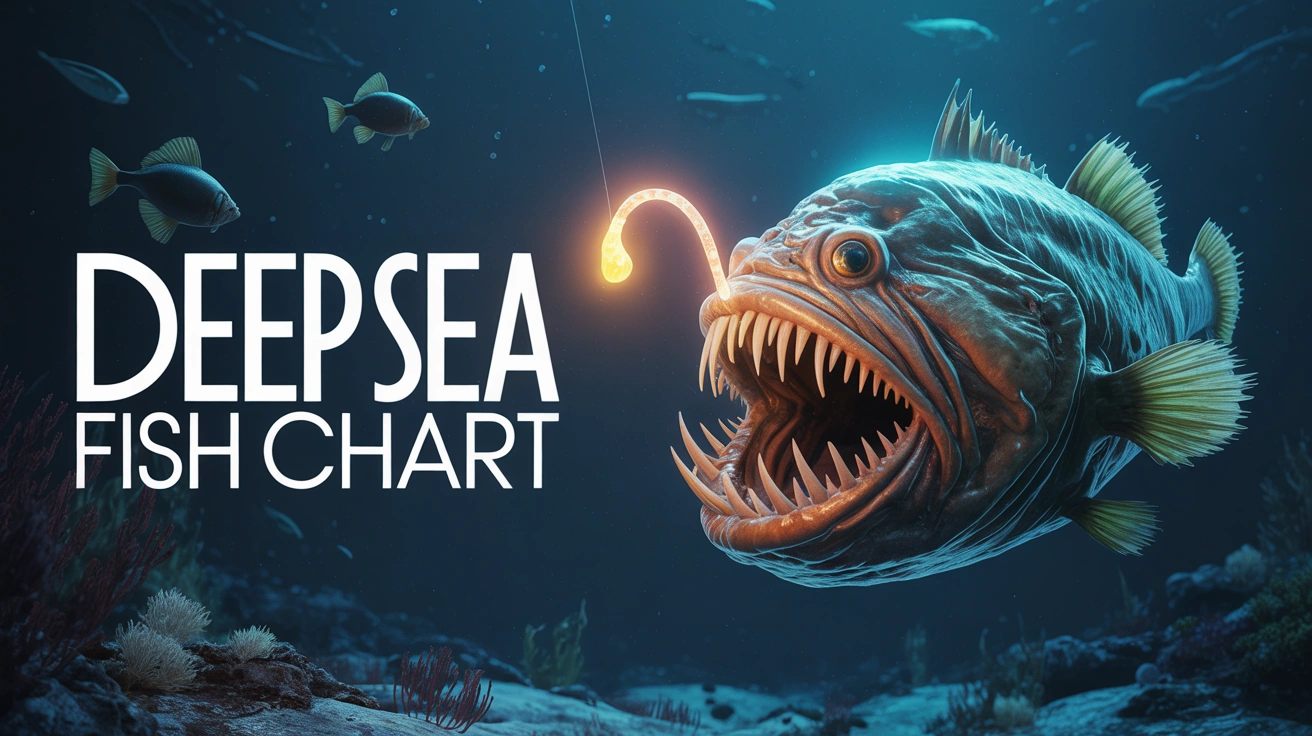
Deep sea fish are some of the strangest and most fascinating creatures in the ocean. Living thousands of feet below the surface, these fish survive in complete darkness, freezing temperatures, and crushing water pressure. Many deep sea species have glowing bodies, enormous mouths, and unusual shapes that look almost alien compared to shallow-water fish. Understanding a deep sea fish chart helps marine enthusiasts, students, and wildlife lovers compare species, habitats, and unique deep-ocean adaptations.
Why Deep Sea Fish Matter
Deep sea fish play important roles in ocean ecosystems and scientific research. These fish help balance marine food chains by feeding on smaller organisms and becoming prey for larger predators.
Scientists study deep sea fish to better understand ocean biology, pressure adaptation, and even medical and technological innovations. Many species also help researchers explore how life survives in extreme environments.
Because deep oceans remain largely unexplored, new deep sea fish species are still being discovered today.
Common Deep Sea Fish Species
There are thousands of fish species living in deep ocean waters. Here are some of the most famous and unusual deep sea fish species.
Deep Sea Fish Chart
| Deep Sea Fish Species | Average Size | Typical Ocean Depth | Notable Feature |
|---|---|---|---|
| Anglerfish | 4–40 inches | 1,000–6,000 feet | Bioluminescent lure |
| Gulper Eel | 2–6 feet | 1,600–10,000 feet | Giant expandable mouth |
| Fangtooth Fish | 6–18 inches | 600–6,500 feet | Oversized teeth |
| Viperfish | 12–24 inches | 800–5,000 feet | Needle-like fangs |
| Dragonfish | 6–16 inches | 700–5,000 feet | Glowing body organs |
| Blobfish | 10–15 inches | 2,000–4,000 feet | Soft jelly-like body |
| Oarfish | 15–36+ feet | 600–3,000 feet | Long ribbon-shaped body |
| Lanternfish | 2–12 inches | 650–3,300 feet | Bioluminescent light organs |
| Hatchetfish | 2–6 inches | 650–5,000 feet | Mirror-like silver body |
| Barreleye Fish | 4–8 inches | 2,000–2,600 feet | Transparent head |
Actual size varies depending on species and habitat conditions.
Why Deep Sea Fish Look So Strange
Deep sea fish evolved unusual body features to survive harsh ocean conditions. Since sunlight cannot reach deep waters, many species use bioluminescence to attract prey or communicate.
Other deep sea fish have:
- Large mouths for catching rare prey
- Expandable stomachs for large meals
- Oversized eyes for detecting faint light
- Transparent or dark-colored bodies for camouflage
These adaptations help fish survive where food is limited.
Deep Sea Fish Comparison: Small Vs. Giant Species
Deep sea fish range from tiny glowing fish to giant ribbon-like creatures.
Small vs Giant Deep Sea Fish
| Fish Type | Typical Size | Survival Strategy |
|---|---|---|
| Small Deep Fish | Under 12 inches | Camouflage and speed |
| Giant Deep Fish | 10–30+ feet | Energy-efficient movement |
Large deep-sea fish often move slowly to conserve energy.
Deep Sea Fish And Bioluminescence
Many deep sea fish can produce their own light through bioluminescence.
Common Bioluminescent Fish
| Fish Species | Light Function |
|---|---|
| Anglerfish | Attract prey |
| Lanternfish | Communication and camouflage |
| Dragonfish | Hunting and defense |
Bioluminescence is one of the most important survival tools in the deep ocean.
Visual Guide: Deep Sea Fish Sizes
Visual comparisons help make deep sea fish sizes easier to understand.
Deep Sea Fish Size Visual Chart
| Fish Species | Visual Comparison | Typical Habitat |
|---|---|---|
| Lanternfish | Finger-sized | Mid-depth ocean |
| Anglerfish | Football-sized | Deep ocean floor |
| Oarfish | Bus-length appearance | Deep pelagic waters |
Tips For Understanding Deep Sea Fish
- Most deep sea fish stay small: Food is limited in deep waters.
- Bioluminescence is common: Many species glow in darkness.
- Pressure affects body structure: Deep fish bodies are often softer.
- Some species migrate vertically: Fish move closer to the surface at night.
- Deep oceans remain unexplored: New species are still being discovered.
Understanding deep-sea habitats improves appreciation for marine biodiversity.
Common Mistakes About Deep Sea Fish
- Assuming all deep fish are giant: Most species are relatively small.
- Thinking blobfish naturally look melted: Pressure changes deform them at the surface.
- Confusing bioluminescence with reflection: Many fish produce their own light.
- Believing deep oceans are empty: Deep waters contain enormous biodiversity.
Deep ocean ecosystems are far more active than many people realize.
How Deep Sea Fish Survive Extreme Conditions
Deep sea fish survive under crushing water pressure and near-freezing temperatures by developing flexible bodies, slow metabolisms, and specialized organs.
Many species also conserve energy because food is scarce in deep ocean environments.
Some fish can survive at depths greater than 20,000 feet.
The Mystery Of The Deep Ocean
The deep sea is one of the least explored places on Earth. Scientists estimate that large portions of deep ocean ecosystems remain unknown.
Rare sightings of unusual fish like giant oarfish and glowing dragonfish continue to fascinate researchers and wildlife enthusiasts worldwide.
Frequently Asked Questions
What Is The Deepest Living Fish?
Some snailfish species live deeper than 20,000 feet below the surface.
Why Do Deep Sea Fish Glow?
Bioluminescence helps attract prey, communicate, and camouflage.
Are Deep Sea Fish Dangerous?
Most deep sea fish are harmless to humans.
What Is The Strangest Deep Sea Fish?
Many people consider the anglerfish or blobfish among the strangest.
Why Are Deep Sea Fish Rarely Seen?
They live far below the ocean surface in extreme environments.
Deep sea fish charts may seem simple, but they reveal the incredible diversity and mystery of life in the deep ocean. From glowing lanternfish to giant oarfish, understanding deep sea fish helps improve marine education and appreciation for Earth’s hidden underwater world.
Average sizes of popular deep sea fish
Comparison of average body lengths among common deep sea fish species.
| species | length |
|---|---|
| Anglerfish | 20 |
| Fangtooth Fish | 12 |
| Viperfish | 18 |
| Dragonfish | 12 |
| Blobfish | 12 |
| Lanternfish | 6 |
| Barreleye Fish | 6 |
