
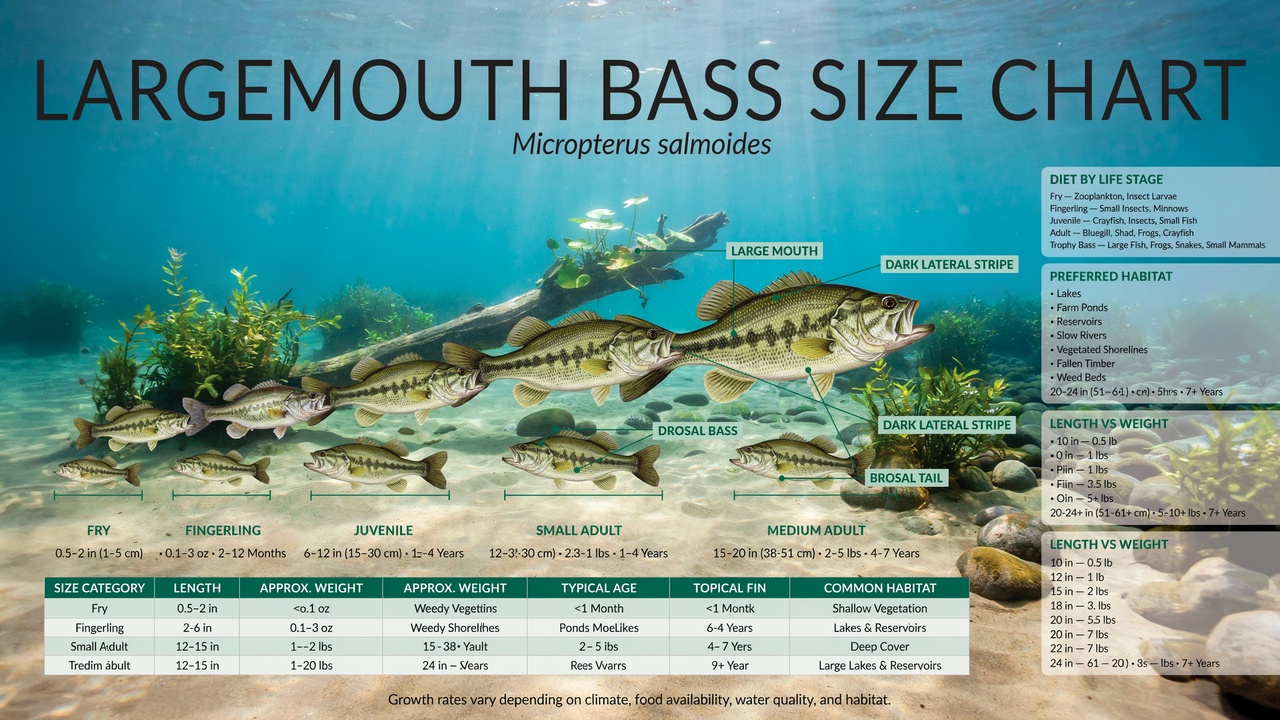
The largemouth bass (Micropterus salmoides) is one of North America’s most popular freshwater sport fish. Known for its large mouth, aggressive feeding behavior, and powerful fights, it inhabits lakes, ponds, reservoirs, and slow-moving rivers. A largemouth bass chart helps anglers, students, and fish enthusiasts compare size, weight, diet, habitat, and life stages.
Why Learn About Largemouth Bass?
Understanding largemouth bass helps you:
- Identify different size classes
- Estimate weight from length
- Learn feeding habits
- Improve fishing success
- Understand freshwater ecosystems
Largemouth Bass Size Chart
| Size Category | Length | Approx. Weight | Typical Age | Common Habitat |
|---|---|---|---|---|
| Fry | 0.5–2 in (1–5 cm) | Under 0.1 oz | Under 1 month | Shallow vegetation |
| Fingerling | 2–6 in (5–15 cm) | 0.1–3 oz | 2–12 months | Weedy shoreline |
| Juvenile | 6–12 in (15–30 cm) | 0.3–1 lb | 1–2 years | Ponds, lakes |
| Small Adult | 12–15 in (30–38 cm) | 1–2 lbs | 2–4 years | Lakes, reservoirs |
| Medium Adult | 15–20 in (38–51 cm) | 2–5 lbs | 4–7 years | Deep cover |
| Trophy Bass | 20–24+ in (51–61+ cm) | 5–10+ lbs | 7+ years | Large lakes and reservoirs |
Fish growth rates vary depending on climate, food availability, and habitat quality.
Largemouth Bass by Diet
| Life Stage | Primary Food |
|---|---|
| Fry | Zooplankton, insect larvae |
| Fingerling | Small insects, minnows |
| Juvenile | Crayfish, insects, small fish |
| Adult | Bluegill, shad, frogs, crayfish |
| Trophy Bass | Large fish, frogs, snakes, small mammals (occasionally) |
Largemouth bass are opportunistic predators and will eat almost anything they can swallow.
Preferred Habitat
| Habitat Type | Likelihood |
|---|---|
| Lakes | Excellent |
| Farm Ponds | Excellent |
| Reservoirs | Excellent |
| Slow Rivers | Good |
| Vegetated Shorelines | Excellent |
| Fallen Timber | Excellent |
| Weed Beds | Excellent |
Bass prefer warm, calm water with plenty of cover.
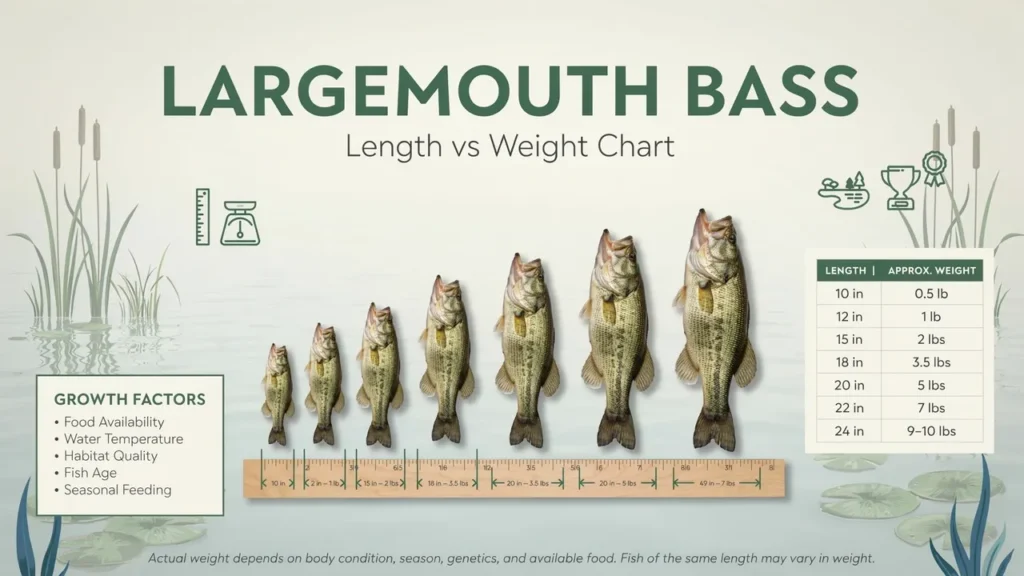
Average Length vs Weight
| Length | Approx. Weight |
|---|---|
| 10 in | 0.5 lb |
| 12 in | 1 lb |
| 15 in | 2 lbs |
| 18 in | 3.5 lbs |
| 20 in | 5 lbs |
| 22 in | 7 lbs |
| 24 in | 9–10 lbs |
Actual weight depends on body condition and seasonal feeding.
Tips for Identifying Largemouth Bass
- Large mouth extends beyond the rear edge of the eye.
- Dark horizontal stripe along the side.
- Olive-green body with lighter belly.
- Dorsal fin has a deep notch separating the spiny and soft portions.
- Broad, powerful tail for fast bursts of speed.
Frequently Asked Questions
How big do largemouth bass get?
Most adult largemouth bass measure 12–20 inches, while trophy fish can exceed 24 inches and weigh more than 10 pounds.
What do largemouth bass eat?
They feed on small fish, crayfish, frogs, insects, and other aquatic animals.
Where do largemouth bass live?
They are commonly found in freshwater lakes, ponds, reservoirs, and slow-moving rivers with vegetation, logs, or submerged structures.
What is considered a trophy largemouth bass?
In many areas, a 5-pound or larger largemouth bass is considered a trophy fish, though this benchmark can vary by region.
How long do largemouth bass live?
Largemouth bass can live 10–16 years, and in ideal conditions, some individuals may live even longer.
Conclusion
A largemouth bass chart provides a quick reference for comparing size, weight, diet, habitat, and growth stages. From tiny fry to trophy-sized adults, largemouth bass are among the most iconic freshwater game fish, prized for their strength, adaptability, and popularity with anglers.
