
Cashews are one of the most popular nuts in the world. They’re creamy, slightly sweet, and packed with nutrients, making them a favorite for snacks, trail mixes, desserts, and savory dishes. But because cashews are calorie-dense, portion size matters more than many people realize. A small handful can provide healthy fats and protein, while oversized portions may quickly increase calories. Understanding the proper serving size of cashews helps with nutrition, portion control, and balanced eating.
Why Cashew Serving Size Matters
Cashews contain healthy fats, protein, fiber, vitamins, and minerals. However, they are also energy-dense, meaning calories add up quickly even in small portions.
A proper serving size helps you enjoy the nutritional benefits without overeating. For people focused on weight management, heart health, or balanced snacking, understanding portion sizes is especially important.
Cashew serving size also matters in recipes because too many nuts can overpower flavor and texture in meals or desserts.
Standard Cashew Serving Sizes
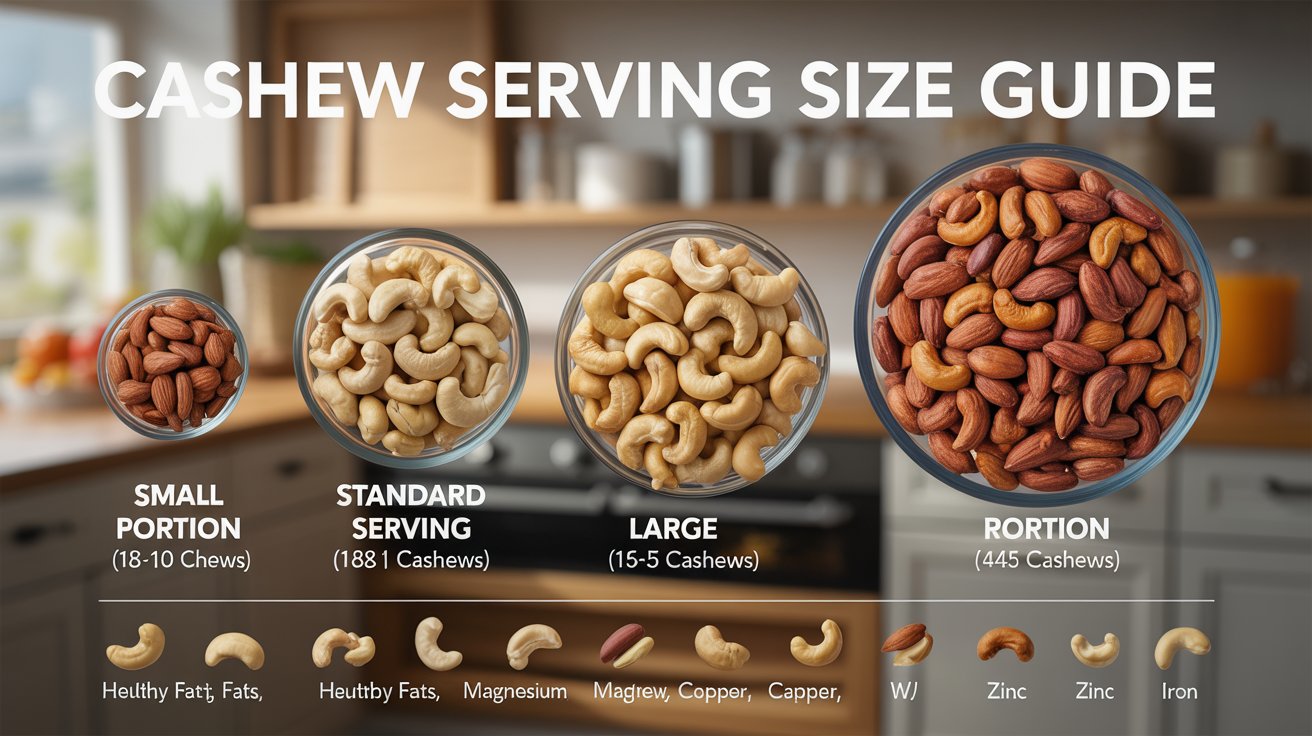
Cashews are usually measured by weight, handfuls, or number of nuts. Here are the most common serving sizes used in nutrition guides.
Cashew Serving Size Chart
| Serving Type | Weight (Approx.) | Number of Cashews | Calories (Approx.) |
|---|---|---|---|
| Small Portion | 15g | 8–10 cashews | 80–90 |
| Standard Serving | 28–30g | 16–18 cashews | 150–170 |
| Large Portion | 50–60g | 30–35 cashews | 280–350 |
| Recipe Portion | 75–100g | 45–60 cashews | 400–550 |
These values may vary slightly depending on roasting and seasoning.
Choosing The Right Cashew Portion
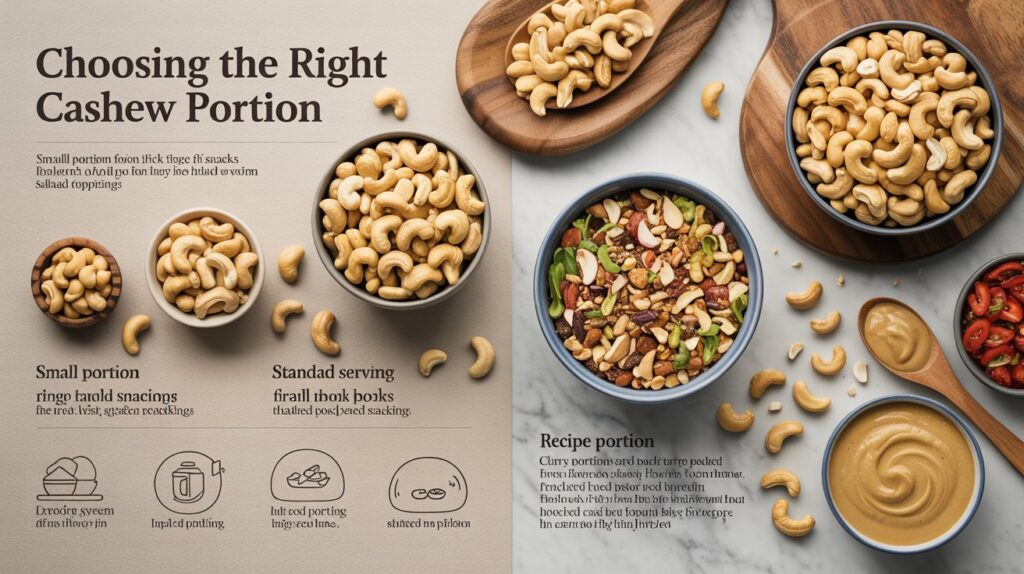
The best serving size depends on how you’re using cashews. Here are some common examples:
- Small Portion: Great for light snacks or salad toppings.
- Standard Serving: Ideal for healthy snacking and balanced nutrition.
- Large Portion: Common in trail mixes or larger snack bowls.
- Recipe Portion: Used in curries, desserts, and homemade cashew butter.
Because cashews are filling, moderate portions are usually enough to satisfy hunger.
Cashew Serving Size Comparison: Raw Vs. Roasted
Raw and roasted cashews differ slightly in flavor and nutrition.
Raw vs Roasted Cashews
| Type | Texture | Flavor | Calories |
|---|---|---|---|
| Raw Cashews | Softer | Mild, creamy | Slightly lower |
| Roasted Cashews | Crunchier | Richer, nuttier | Slightly higher |
Salted roasted cashews may also contain more sodium.
Cashews And Nutrition
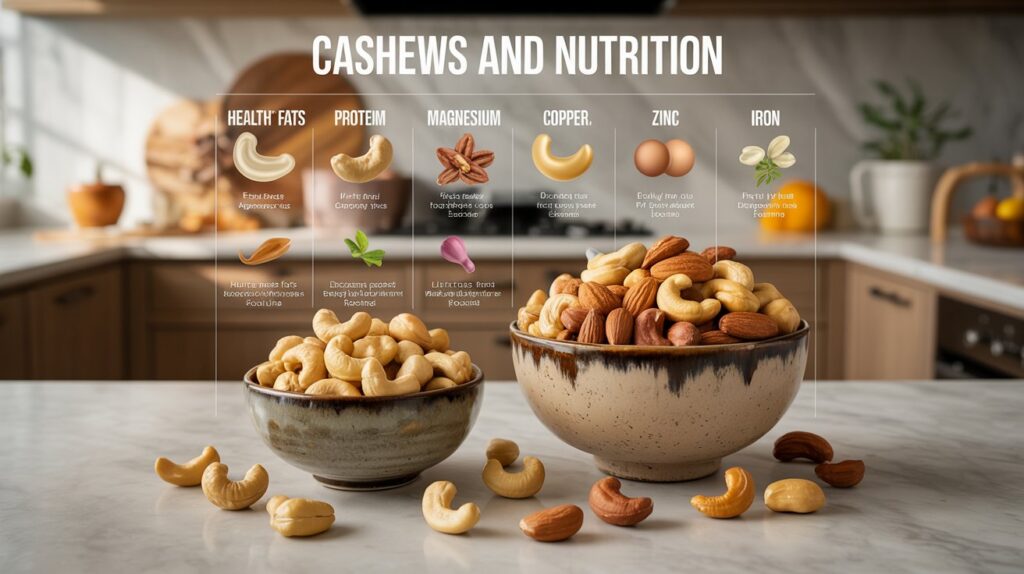
Cashews provide several important nutrients, including:
- Healthy fats
- Protein
- Magnesium
- Copper
- Zinc
- Iron
A standard 1-ounce serving usually contains around 150–170 calories, along with about 5g of protein and healthy unsaturated fats.
Cashews are also naturally cholesterol-free and can fit into many balanced diets.
Visual Guide: Cashew Serving Sizes
Visual comparisons make portions easier to estimate without measuring tools.
Cashew Portion Guide
| Serving Size | Best Use | Visual Comparison |
|---|---|---|
| 8–10 Cashews | Light snack | Small handful |
| 16–18 Cashews | Standard serving | Palm-sized portion |
| 30–35 Cashews | Large snack | Large handful |
| 45–60 Cashews | Recipe ingredient | Small bowl |
Tips For Measuring Cashew Portions
- Use small containers: Prevents mindless overeating.
- Count servings occasionally: Helps train portion awareness.
- Buy unsalted versions: Reduces sodium intake.
- Pair with fruit: Creates balanced snacks with fiber and natural sweetness.
- Store properly: Keep cashews in airtight containers for freshness.
Moderate portions help maximize nutrition while controlling calories.
Common Mistakes When Eating Cashews
- Eating directly from large bags: Makes portion control difficult.
- Ignoring calories: Nuts are healthy but calorie-dense.
- Choosing heavily salted cashews: Excess sodium may add up quickly.
- Overestimating healthy portions: Multiple handfuls can become very high in calories.
Understanding serving sizes helps create healthier snacking habits.
How Cashew Serving Size Affects Nutrition
Small portions of cashews provide healthy fats and protein without excessive calories. Larger portions, however, can quickly increase total fat and calorie intake.
Balanced portions make cashews a satisfying snack while supporting healthier eating patterns.
The History Of Cashews
Cashews originated in South America and later spread to Asia and Africa through trade. Today, countries like India and Vietnam are major producers of cashews worldwide.
Cashews became especially popular because of their creamy texture, mild flavor, and versatility in both sweet and savory recipes.
Frequently Asked Questions
What Is A Standard Serving Size Of Cashews?
A standard serving is about 28–30g, or 16–18 cashews.
How Many Calories Are In Cashews?
A standard serving usually contains around 150–170 calories.
Are Cashews Healthy?
Yes, cashews provide healthy fats, protein, vitamins, and minerals when eaten in moderation.
Are Roasted Cashews Different From Raw Cashews?
Roasted cashews are crunchier and may contain added salt or oil.
Can Cashews Be Part Of A Weight-Loss Diet?
Yes, moderate portions of cashews can fit into balanced diets because they are filling and nutrient-dense.
The serving size of cashews may seem like a small detail, but it can greatly affect nutrition, calorie intake, and snacking habits. Whether you enjoy cashews on their own or in recipes, understanding proper serving sizes helps you enjoy them in a healthier and more balanced way.
