
Dark chocolate is one of the most popular treats for people who want both flavor and potential health benefits. It’s rich, slightly bitter, and often considered a healthier alternative to milk chocolate because it contains more cocoa and less sugar. But even healthy treats need proper portion control. Understanding the right dark chocolate serving size helps you enjoy its flavor while managing calories, sugar, and fat intake. Whether you snack on chocolate squares or add dark chocolate to desserts, knowing proper serving sizes makes balanced eating easier.
Why Dark Chocolate Serving Size Matters
Dark chocolate contains antioxidants and minerals, but it’s still calorie-dense. Eating too much can quickly increase sugar, fat, and calorie intake. Portion size is important because dark chocolate is rich and satisfying in smaller amounts compared to many other sweets.
For people focused on heart health, weight management, or mindful eating, serving size helps balance enjoyment with nutrition. Small portions often provide enough flavor and satisfaction without overindulging.
Understanding standard serving sizes also makes it easier to compare nutrition labels between different chocolate brands and cocoa percentages.
Standard Dark Chocolate Serving Sizes
Dark chocolate is usually measured by weight, squares, or pieces. Here are the most common serving sizes used in nutrition guides.
Dark Chocolate Serving Size Chart
| Serving Type | Weight (Approx.) | Typical Amount | Calories (Approx.) |
|---|---|---|---|
| Small Portion | 10–15g | 1–2 small squares | 50–90 |
| Standard Serving | 28–30g | 1 ounce or 3–4 squares | 150–180 |
| Large Portion | 50–60g | Half a chocolate bar | 280–350 |
| Full Chocolate Bar | 90–120g | 1 bar | 500–700 |
Calories vary depending on cocoa percentage and added ingredients like nuts or caramel.
Choosing The Right Dark Chocolate Portion
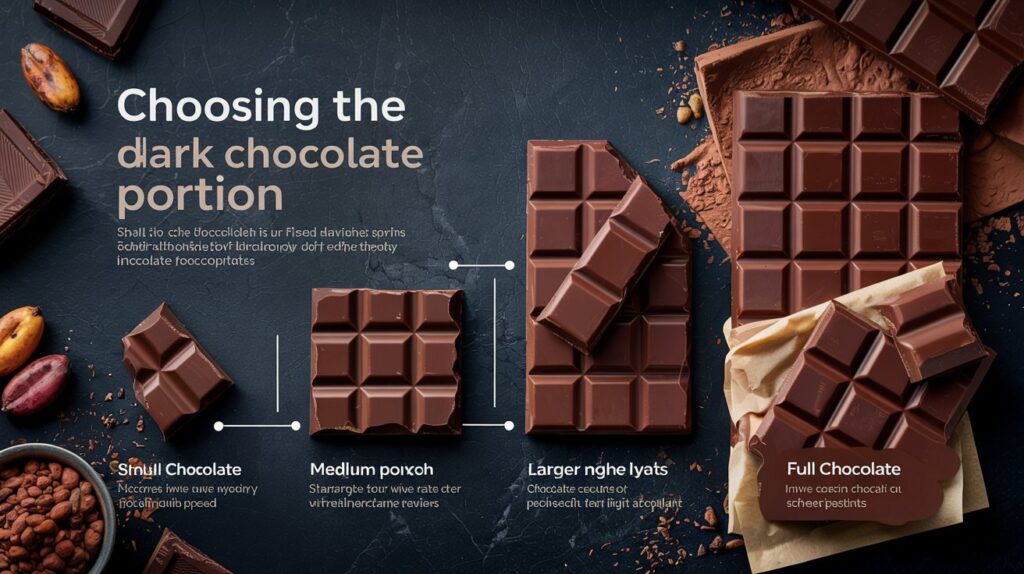
The best serving size depends on how you’re enjoying the chocolate. Here are some common examples:
- Small Portions: Perfect for satisfying sweet cravings.
- Standard Serving: Ideal for desserts or snacks.
- Larger Portions: Common during movie nights or special treats.
- Chocolate Bars: Often designed to be shared over multiple servings.
Because dark chocolate has a rich taste, smaller amounts are often enough to feel satisfying.
Dark Chocolate Serving Size Comparison: Dark Vs. Milk Chocolate
Dark chocolate and milk chocolate differ in sugar content, cocoa percentage, and serving satisfaction.
Dark vs Milk Chocolate Portions
| Chocolate Type | Typical Serving | Flavor Profile | Sugar Content |
|---|---|---|---|
| Dark Chocolate | 1 oz | Rich, slightly bitter | Lower |
| Milk Chocolate | 1 oz | Sweeter, creamier | Higher |
Dark chocolate usually contains more cocoa solids and less sugar than milk chocolate.
Dark Chocolate And Nutrition
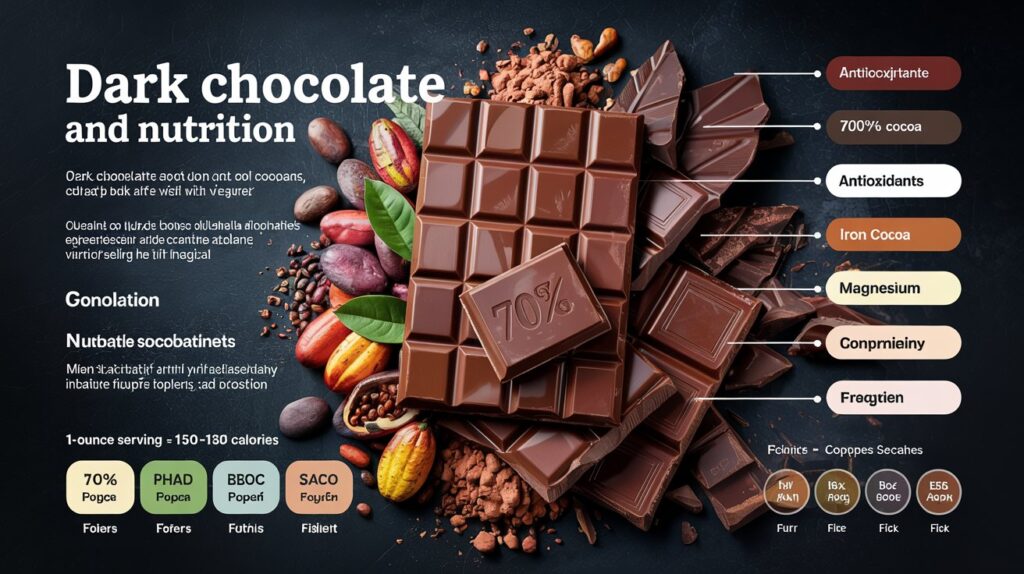
Dark chocolate provides several nutrients and compounds, including:
- Antioxidants
- Iron
- Magnesium
- Copper
- Fiber
A standard 1-ounce serving typically contains around 150–180 calories. Higher cocoa percentages usually contain less sugar but may taste more bitter.
Many nutrition experts recommend choosing dark chocolate with at least 70% cocoa for a better balance of flavor and antioxidants.
Visual Guide: Dark Chocolate Serving Sizes
Visual comparisons can help estimate portions more easily.
Dark Chocolate Portion Guide
| Serving Size | Best Use | Visual Comparison |
|---|---|---|
| 10–15g | Light snack | 1–2 small squares |
| 28–30g | Standard serving | Small matchbox size |
| 50–60g | Large dessert portion | Half a candy bar |
| 90–120g | Full chocolate bar | Smartphone length |
Tips For Managing Dark Chocolate Portions
- Break chocolate into pieces first: Helps avoid eating directly from large bars.
- Choose higher cocoa percentages: Richer flavor may feel satisfying faster.
- Pair with fruit or nuts: Creates a more balanced snack.
- Store properly: Keep chocolate cool and dry to maintain texture.
- Enjoy slowly: Eating slowly increases satisfaction with smaller portions.
Mindful eating often makes dark chocolate more enjoyable.
Common Mistakes When Eating Dark Chocolate
- Assuming it’s calorie-free because it’s “healthy”: Dark chocolate still contains significant calories and fat.
- Eating directly from the bar: Makes portion control harder.
- Ignoring serving sizes: Large portions add up quickly.
- Choosing heavily sweetened dark chocolate: Some products contain almost as much sugar as milk chocolate.
Understanding portions helps balance enjoyment and nutrition.
How Dark Chocolate Serving Size Affects Nutrition
Small portions of dark chocolate can fit easily into balanced diets, while oversized portions may quickly increase calories and sugar intake. Because dark chocolate is rich and flavorful, moderate amounts often provide enough satisfaction without needing large servings.
Balancing dark chocolate with nutritious foods helps maintain healthier eating habits overall.
The History Of Dark Chocolate
Dark chocolate has been enjoyed for centuries, dating back to ancient civilizations in Central and South America. Originally consumed as a bitter cocoa drink, chocolate evolved over time into solid bars and desserts.
Today, dark chocolate is especially popular for its bold flavor and perceived health benefits compared to sweeter chocolate varieties.
Frequently Asked Questions
What Is A Standard Serving Size Of Dark Chocolate?
A standard serving is about 28–30g, or 1 ounce.
How Many Calories Are In Dark Chocolate?
A standard serving usually contains around 150–180 calories depending on cocoa content.
Is Dark Chocolate Healthier Than Milk Chocolate?
Dark chocolate generally contains more cocoa and less sugar than milk chocolate.
How Much Dark Chocolate Can I Eat Daily?
Moderate portions, such as 1 ounce per day, are commonly recommended.
Does Higher Cocoa Percentage Mean Healthier Chocolate?
Higher cocoa percentages usually contain less sugar and more antioxidants.
Dark chocolate serving size may seem like a small detail, but it can greatly affect nutrition, calorie intake, and overall enjoyment. Whether you enjoy a few squares after dinner or use chocolate in desserts, understanding proper dark chocolate serving sizes helps you enjoy this rich treat in a balanced way.
