
Water is essential for life—it supports digestion, regulates body temperature, and keeps every system in your body functioning properly. But how much water should you actually drink at once, and what counts as a “serving”? Understanding water serving size helps you stay hydrated without over- or under-drinking. Let’s explore how to measure water intake and find the right balance for your daily needs.
Why Water Serving Size Matters
Drinking water isn’t just about quantity—it’s also about timing and portioning. Taking in the right amount at regular intervals helps your body absorb and use water more effectively.
Too little water can lead to dehydration, fatigue, and poor concentration. On the other hand, drinking too much at once can be uncomfortable and unnecessary. Proper serving sizes help:
- Maintain hydration throughout the day
- Support digestion and metabolism
- Improve energy and focus
- Prevent dehydration
Standard Water Serving Size
Water is usually measured in milliliters (ml) or ounces (oz). A typical serving is based on how much your body can comfortably absorb at one time.
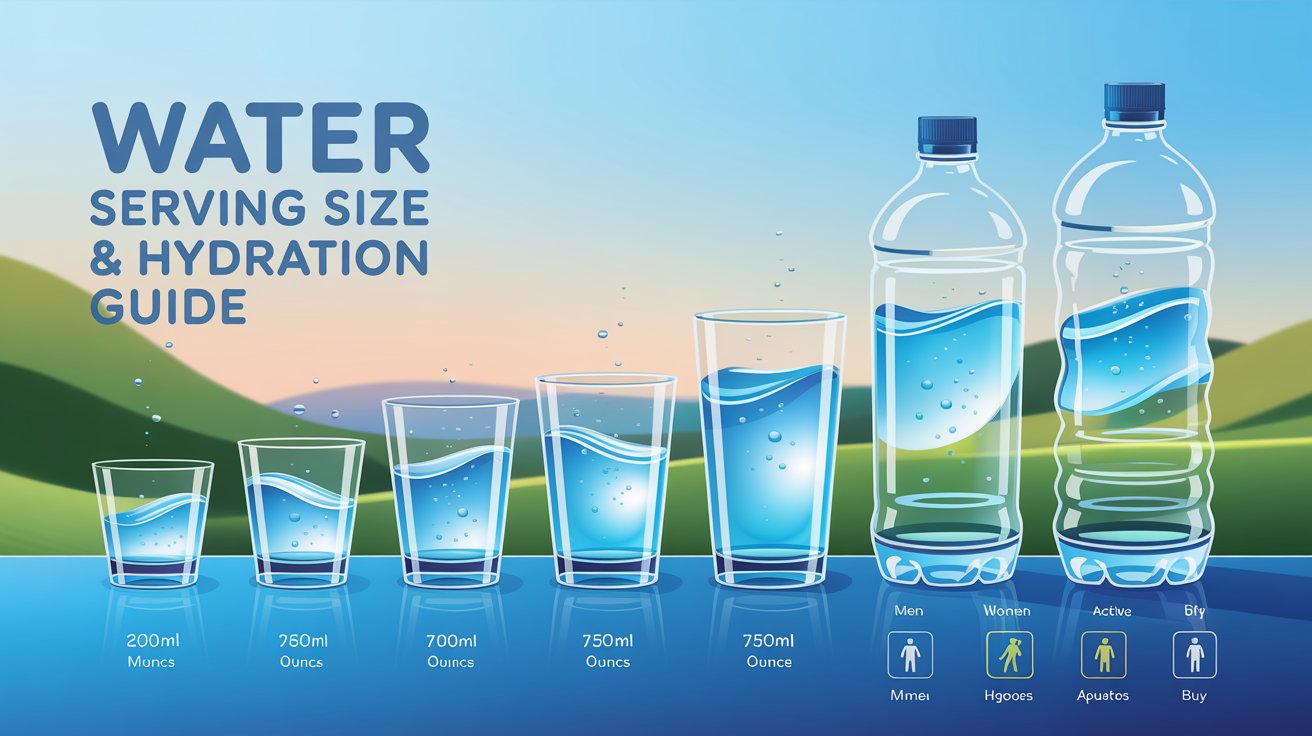
Water Serving Size Chart
| Serving Type | Volume (ml) | Volume (oz) | Best Use |
|---|---|---|---|
| Small Serving | 150–200 ml | 5–7 oz | Quick hydration |
| Standard Serving | 250 ml | 8 oz | Most common (1 glass) |
| Large Serving | 350–500 ml | 12–16 oz | After exercise or meals |
| Extra Large | 750 ml+ | 25 oz+ | Extended hydration (bottle) |
A 250 ml (8 oz) glass is considered the standard serving size in most guidelines.
Choosing The Right Water Serving Size
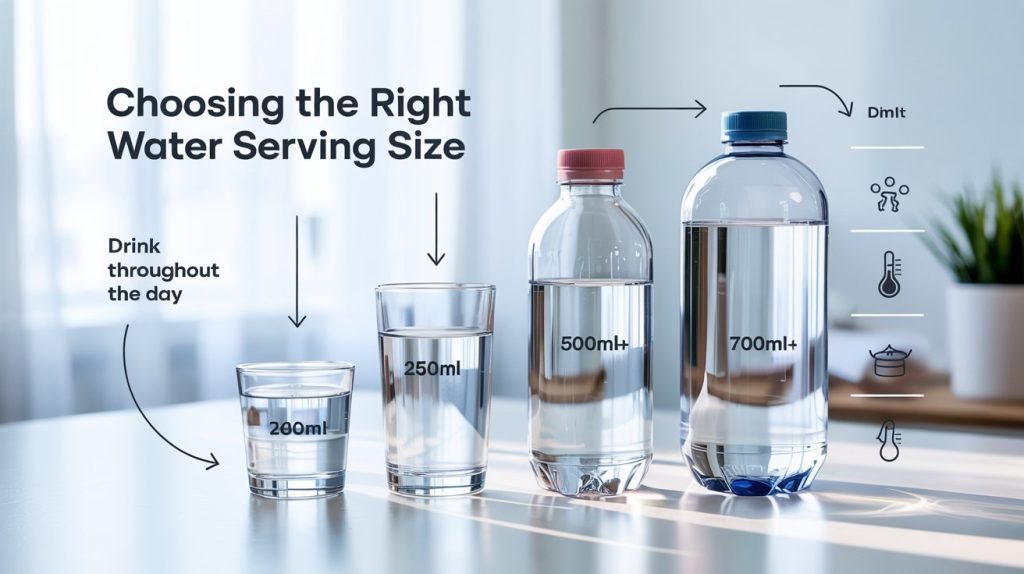
The right amount depends on your activity level and environment:
- Small servings: Ideal for frequent sipping throughout the day
- Standard servings: Best for regular hydration (every 1–2 hours)
- Large servings: Useful after workouts or in hot weather
- Extra large servings: Convenient when using water bottles, but should be consumed gradually
Instead of drinking large amounts at once, it’s better to spread your intake evenly.
Daily Water Intake Recommendations
While serving size matters, total daily intake is equally important.
Daily Water Intake Guide
| Group | Recommended Intake (Approx.) |
|---|---|
| Adult Men | 3–3.7 liters/day |
| Adult Women | 2–2.7 liters/day |
| Children | 1.5–2 liters/day |
| Active Individuals | 3.5–5 liters/day |
These values include water from beverages and food. Individual needs may vary based on climate and activity level.
Water Serving Size And Hydration
Your body absorbs water best when consumed in moderate amounts over time. Drinking a standard glass (250 ml) every hour or two is often more effective than drinking large amounts infrequently.
Signs you’re well hydrated include:
- Clear or light-colored urine
- Steady energy levels
- No feelings of thirst
Visual Guide: Water Serving Size
Here’s a simple way to understand portions:
| Serving Size | Best Use | Tip |
|---|---|---|
| 200 ml | Quick sip | Drink frequently |
| 250 ml | Standard glass | Every 1–2 hours |
| 500 ml | Bottle serving | Sip gradually |
| 750 ml+ | Large bottle | Spread over time |
Tips For Managing Water Intake
- Carry a water bottle: Helps track how much you drink
- Drink regularly: Don’t wait until you’re very thirsty
- Use reminders: Set alerts if you forget to drink
- Adjust for weather: Drink more in hot or humid conditions
- Listen to your body: Thirst is a natural signal
Consistency is more important than drinking large amounts at once.
Common Mistakes When Drinking Water
- Drinking too little: Leads to dehydration
- Drinking too much at once: Can cause discomfort
- Ignoring activity level: Not adjusting intake for exercise
- Relying only on thirst: You may already be dehydrated
Avoiding these mistakes helps maintain proper hydration.
How Water Serving Size Affects Your Body
The way you drink water impacts how your body uses it. Smaller, consistent servings help maintain hydration levels, while large, infrequent intakes may not be as effective.
Proper hydration supports:
- Brain function
- Digestion
- Temperature regulation
- Overall health
The Importance Of Hydration In Daily Life
Water plays a role in nearly every bodily function. From improving skin health to supporting physical performance, staying hydrated is essential for both short-term and long-term well-being.
Making water a regular part of your routine ensures your body functions at its best.
Frequently Asked Questions
What Is A Standard Serving Of Water?
A standard serving is about 250 ml (8 oz), which equals one glass.
How Many Glasses Of Water Should I Drink Daily?
Typically 6–8 glasses, but it depends on your body and activity level.
Is Drinking 1 Liter Of Water At Once Safe?
It’s better to spread water intake throughout the day rather than drinking large amounts at once.
Can I Drink Too Much Water?
Yes, excessive water intake can lead to discomfort or imbalance, though it’s rare.
Does Tea Or Coffee Count As Water Intake?
Yes, they contribute to hydration, but water is still the best choice.
Water serving size may seem simple, but it plays a crucial role in hydration, energy, and overall health. By understanding how much to drink and when, you can keep your body properly hydrated and functioning at its best every day.
