
Salmon is one of the most popular and nutritious fish choices—rich in protein, healthy fats, and essential nutrients. But when it comes to portioning, many people aren’t sure how much cooked salmon counts as one serving. Understanding the serving size of cooked salmon helps you build balanced meals, manage calories, and enjoy its health benefits without overdoing it.
Why Serving Size of Cooked Salmon Matters
Salmon is nutrient-dense, especially because it contains omega-3 fatty acids, which are higher than in many other fish. While this makes it very healthy, it also means calories can add up if portions are too large.
Proper serving sizes help:
- Control calorie intake
- Provide enough protein for muscle health
- Balance fats in your diet
- Support heart and brain health
Even small portions of salmon can deliver powerful nutrition.
Standard Serving Size of Cooked Salmon
Cooked salmon is usually measured by weight (grams or ounces).
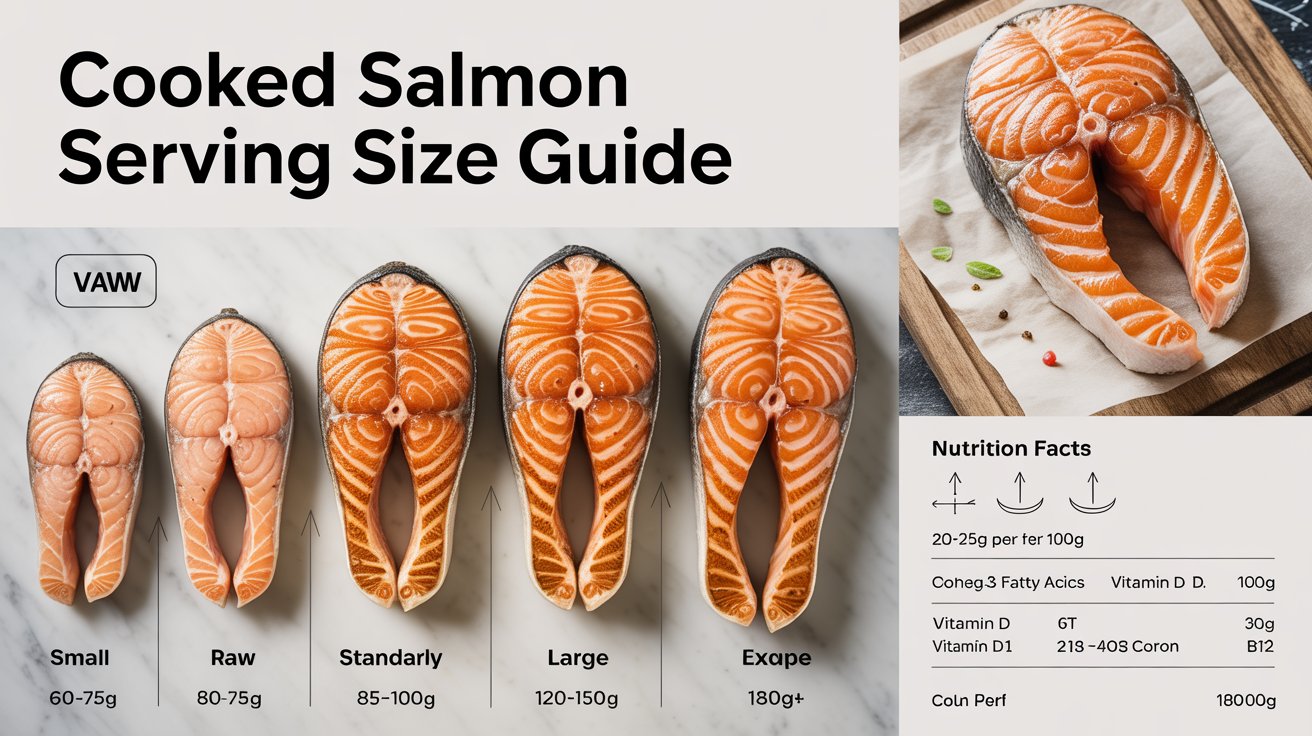
Cooked Salmon Serving Size Chart
| Serving Type | Weight (Cooked) | Ounces (Approx.) | Calories (Approx.) |
|---|---|---|---|
| Small Serving | 60–75g | 2–2.5 oz | 120–150 kcal |
| Standard Serving | 85–100g | 3–3.5 oz | 170–220 kcal |
| Large Serving | 120–150g | 4–5 oz | 240–320 kcal |
| Extra Large | 180g+ | 6 oz+ | 350–450 kcal |
A standard serving is about 85–100g (3–3.5 oz) of cooked salmon.
Choosing The Right Serving Size
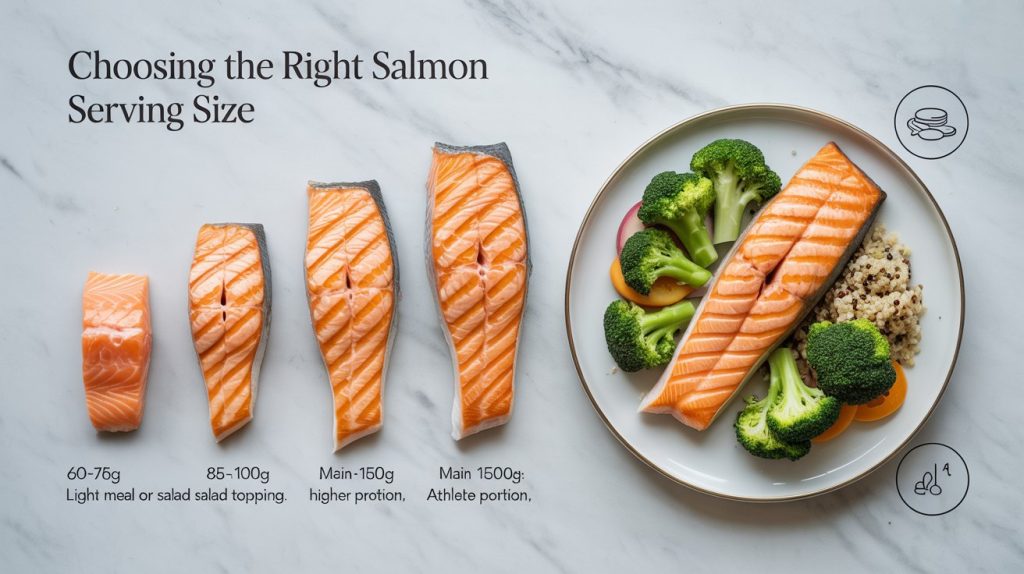
The best portion depends on your dietary needs:
- 60–75g (small): Light meal or salad topping
- 85–100g (standard): Balanced portion for most meals
- 120–150g (large): Higher protein needs or main dish
- 180g+ (extra large): For athletes or larger appetites
Pair salmon with vegetables and whole grains for a complete, balanced plate.
Cooked Salmon Vs. Raw Portion
Salmon loses some weight during cooking due to water loss—usually about 20–25%.
Salmon Conversion Chart
| Raw Salmon | Cooked Salmon |
|---|---|
| 100g | ~75–80g |
| 120g | ~90–100g |
| 150g | ~110–120g |
So if you want a standard cooked portion, start with a slightly larger raw piece.
Cooked Salmon Serving Size And Nutrition
Salmon is highly nutritious and offers many health benefits:
- High in protein (~20–25g per 100g)
- Rich in omega-3 fatty acids
- Contains vitamin D and B12
- Supports heart, brain, and joint health
For example:
- 100g cooked salmon: ~200 calories, healthy fats included
Because of its fat content, salmon is more filling than lean fish.
Visual Guide: Cooked Salmon Serving Size
Here’s an easy way to estimate portions:
| Serving Size | Visual Comparison | Best Use |
|---|---|---|
| 85–100g | Palm of your hand | Standard meal |
| 120–150g | Large palm | Main dish |
| 180g+ | Two palms | High-protein meal |
Using your hand is a quick and practical method when you don’t have a scale.
Tips For Measuring Cooked Salmon
- Use a kitchen scale: Most accurate method
- Check portion before cooking: Easier to control size
- Cook evenly sized fillets: Ensures consistent portions
- Avoid heavy sauces: They add extra calories
- Plan portions ahead: Helps with meal prep
Consistency makes it easier to maintain healthy eating habits.
Common Mistakes When Serving Salmon
- Serving oversized portions: Salmon is calorie-dense
- Ignoring cooking shrinkage: Leads to smaller-than-expected portions
- Adding high-calorie toppings: Butter or creamy sauces increase calories
- Not balancing meals: Missing vegetables or grains
Being mindful helps you enjoy salmon in a healthier way.
How Salmon Serving Size Affects Meals
The portion of salmon can change your entire meal. Too much can make the dish heavy, while too little may not provide enough protein.
A balanced meal includes:
- A standard portion of salmon
- Plenty of vegetables
- A moderate portion of carbohydrates
This combination supports both nutrition and satisfaction.
The Role Of Salmon In Healthy Diets
Salmon is widely recommended in healthy eating plans:
- Heart-healthy diets: Rich in omega-3
- Weight management: Filling and nutrient-dense
- Athlete diets: Supports muscle recovery
- Balanced diets: High-quality protein source
Experts often recommend eating salmon or other fatty fish 2–3 times per week.
Frequently Asked Questions
What Is A Standard Serving Size Of Cooked Salmon?
About 85–100g (3–3.5 ounces).
Is 200g Of Salmon Too Much?
It can be a large portion unless you have higher calorie or protein needs.
How Much Raw Salmon Equals One Serving Cooked?
About 120–130g raw equals roughly 100g cooked.
Is Salmon High In Calories?
It has moderate calories due to healthy fats but is very nutritious.
Can I Eat Salmon Every Day?
Yes, in moderation and with variety in your diet.
The serving size of cooked salmon may seem like a small detail, but it plays a big role in nutrition, portion control, and meal balance. By understanding the right portion, you can enjoy this healthy fish in a satisfying and balanced way every time.
