
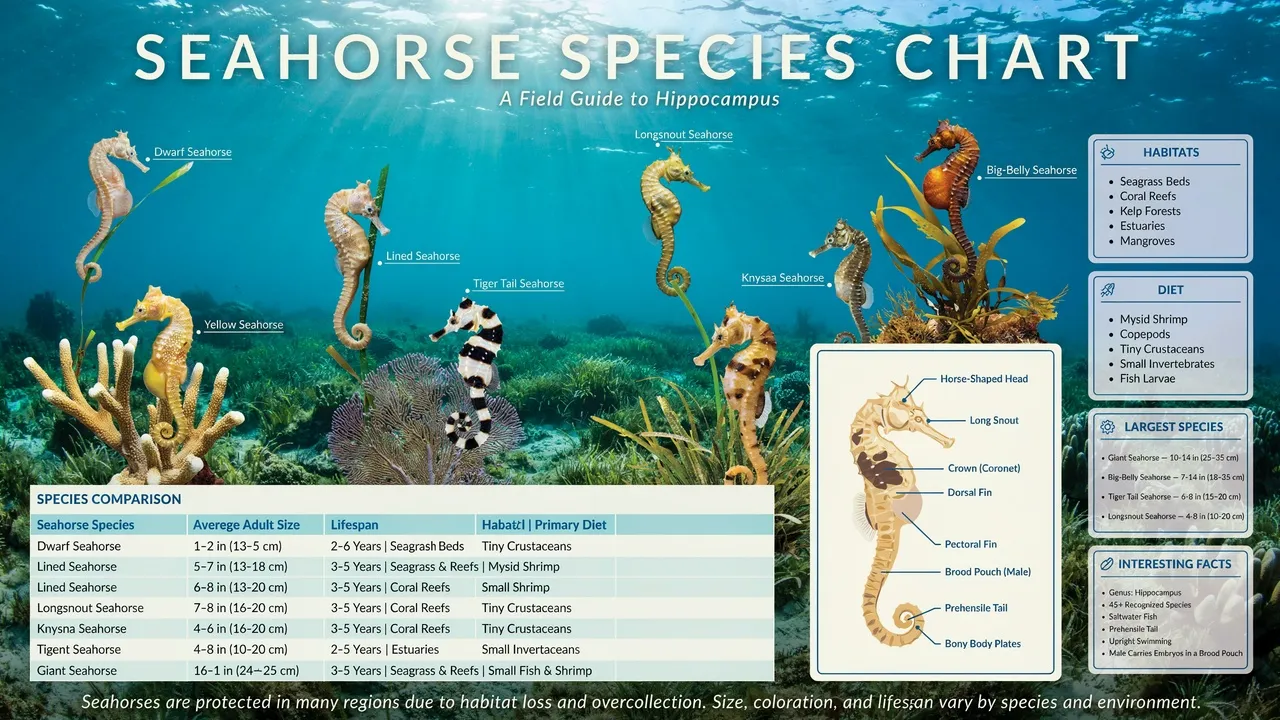
Seahorses are unique marine fish belonging to the genus Hippocampus. Known for their horse-like heads, curled prehensile tails, and the unusual fact that males carry and give birth to the young, seahorses inhabit seagrass beds, mangroves, coral reefs, and estuaries around the world. A seahorse chart helps compare common species by size, habitat, lifespan, and diet.
Whether you’re an aquarium hobbyist, diver, student, or marine life enthusiast, this chart provides a quick reference to the world’s most popular seahorse species.
Why Learn About Seahorses?
Understanding seahorses helps you:
- Identify common species
- Compare sizes and habitats
- Learn feeding habits
- Understand marine ecosystems
- Appreciate their unique reproduction
Seahorse Chart
| Seahorse Species | Average Adult Size | Lifespan | Habitat | Primary Diet |
|---|---|---|---|---|
| Dwarf Seahorse | 1–2 in (2.5–5 cm) | 1–2 years | Seagrass beds | Tiny crustaceans |
| Lined Seahorse | 5–7 in (13–18 cm) | 3–5 years | Seagrass, reefs | Mysid shrimp |
| Longsnout Seahorse | 4–8 in (10–20 cm) | 3–5 years | Coral reefs | Small shrimp |
| Big-Belly Seahorse | 7–14 in (18–35 cm) | 3–6 years | Kelp forests | Small crustaceans |
| Yellow Seahorse | 5–7 in (13–18 cm) | 3–5 years | Coral reefs | Copepods, shrimp |
| Tiger Tail Seahorse | 6–8 in (15–20 cm) | 3–5 years | Coral reefs | Tiny crustaceans |
| Knysna Seahorse | 4–5 in (10–12 cm) | 2–4 years | Estuaries | Small invertebrates |
| Giant Seahorse | 10–14 in (25–35 cm) | 3–5 years | Seagrass, reefs | Small fish, shrimp |
Seahorses by Habitat
| Habitat | Common Species |
|---|---|
| Seagrass Beds | Dwarf, Lined, Giant Seahorse |
| Coral Reefs | Longsnout, Yellow, Tiger Tail |
| Kelp Forests | Big-Belly Seahorse |
| Estuaries | Knysna Seahorse |
| Mangroves | Lined, Longsnout Seahorse |
Seahorse Diet Chart
| Food Type | Species Examples |
|---|---|
| Mysid Shrimp | Lined, Longsnout |
| Copepods | Dwarf, Yellow |
| Tiny Crustaceans | Tiger Tail, Big-Belly |
| Small Invertebrates | Knysna |
| Small Fish Larvae | Giant Seahorse |
Seahorses have no stomach, so they must eat frequently throughout the day.
Largest Seahorse Species
| Species | Average Size |
|---|---|
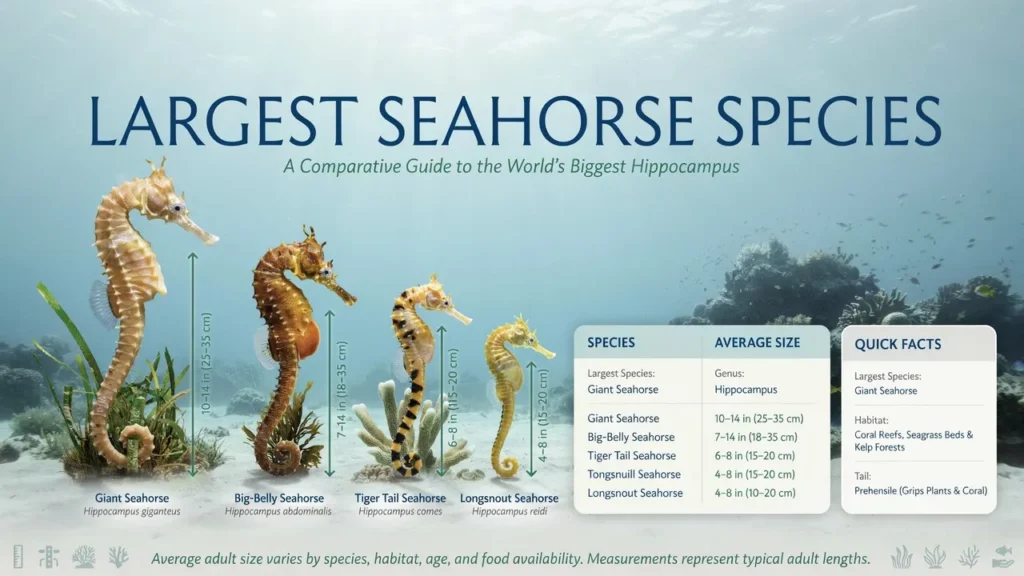
| Giant Seahorse | 10–14 in (25–35 cm) |
| Big-Belly Seahorse | 7–14 in (18–35 cm) |
| Tiger Tail Seahorse | 6–8 in (15–20 cm) |
| Longsnout Seahorse | 4–8 in (10–20 cm) |
Interesting Seahorse Facts
| Feature | Details |
|---|---|
| Scientific Genus | Hippocampus |
| Number of Species | 45+ |
| Water Type | Saltwater |
| Tail | Prehensile (used to grip plants and coral) |
| Swimming Style | Upright |
| Reproduction | Males carry embryos in a brood pouch |
Tips for Identifying Seahorses
- Horse-shaped head with a long snout.
- Curled prehensile tail used to anchor to seagrass or coral.
- Swim upright using a small dorsal fin.
- Excellent camouflage, changing color to blend into surroundings.
- Body covered with bony plates instead of scales.
Frequently Asked Questions
How many species of seahorses are there?
There are more than 45 recognized seahorse species worldwide.
Which seahorse is the largest?
The Giant Seahorse and Big-Belly Seahorse are among the largest, reaching up to 14 inches (35 cm).
What do seahorses eat?
Seahorses feed mainly on mysid shrimp, copepods, tiny crustaceans, and other small marine invertebrates.
Where do seahorses live?
They inhabit coral reefs, seagrass meadows, mangroves, estuaries, and kelp forests in tropical and temperate oceans.
Do male seahorses give birth?
Yes. Male seahorses carry fertilized eggs in a brood pouch and give birth to fully formed young.
Conclusion
A seahorse chart provides an easy way to compare common seahorse species by size, lifespan, habitat, and diet. From the tiny Dwarf Seahorse to the impressive Giant Seahorse, these fascinating fish are among the most unique animals in the ocean and play an important role in healthy coastal ecosystems.
