
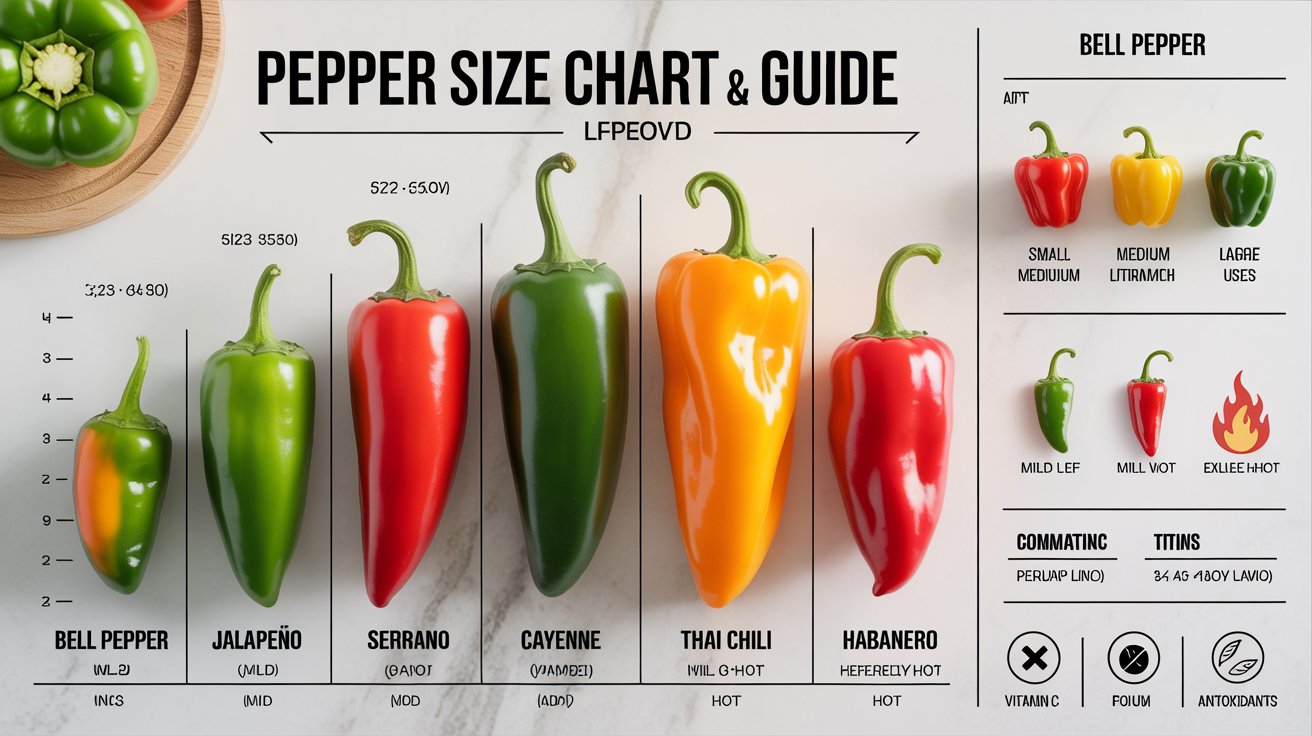
Peppers come in many shapes, sizes, and heat levels—from sweet bell peppers to spicy chili varieties. Whether you’re cooking, meal prepping, or tracking nutrition, understanding a pepper size chart helps you choose the right portion and use the right type for your dish.
Why Pepper Size Matters
Pepper size affects:
- Flavor intensity
- Heat level (for chili peppers)
- Cooking time
- Portion size in recipes
Larger peppers are often milder (like bell peppers), while smaller ones can be much hotter (like chilies).
Standard Pepper Size Chart
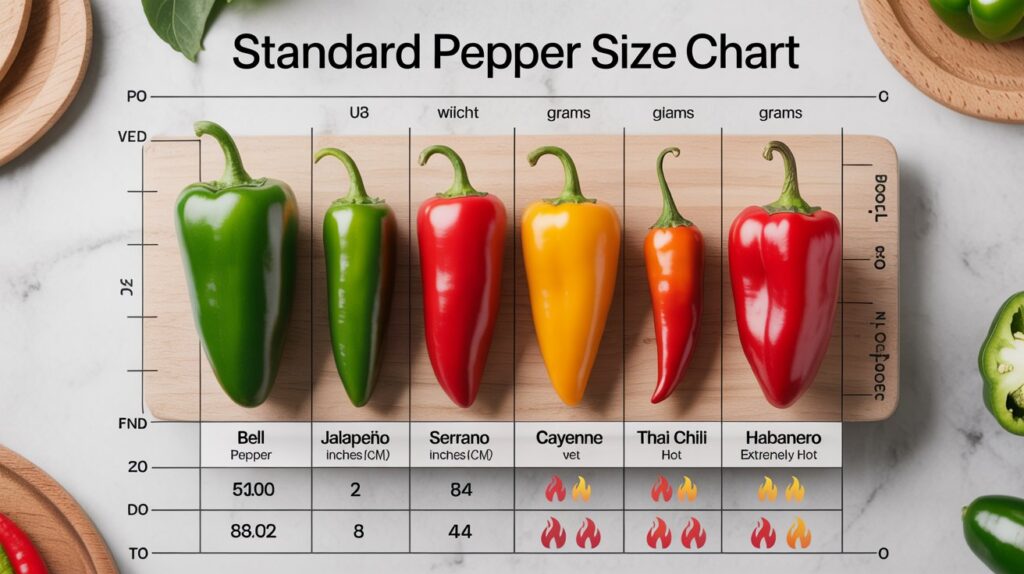
Peppers are usually measured by length (inches/cm) and weight (grams).
Pepper Size Chart (Common Types)
| Pepper Type | Size (Length) | Weight (Approx.) | Heat Level |
|---|---|---|---|
| Bell Pepper | 3–5 inches | 120–200g | Sweet (0 heat) |
| Jalapeño | 2–3 inches | 15–25g | Mild–medium |
| Serrano | 1.5–2.5 inches | 10–20g | Medium–hot |
| Cayenne | 3–6 inches | 5–10g | Hot |
| Thai Chili | 1–2 inches | 3–5g | Very hot |
| Habanero | 1–2 inches | 5–10g | Extremely hot |
Different sizes and types are suited for different dishes.
Bell Pepper Size Breakdown
Bell peppers are the most commonly used sweet peppers.
Bell Pepper Size Chart
| Size | Diameter (Approx.) | Weight | Typical Use |
|---|---|---|---|
| Small | 2–3 inches | 100g | Snacks, salads |
| Medium | 3–4 inches | 120–150g | Cooking, stuffing |
| Large | 4–5 inches | 150–200g | Main dishes, roasting |
A medium bell pepper is the most commonly used size in recipes.
Choosing The Right Pepper Size
The best pepper depends on your dish:
- Large peppers (bell): Stuffing, roasting, salads
- Medium peppers (jalapeño): Salsas, toppings
- Small peppers (chili): Spice and heat
Always consider both size and heat level.
Pepper Size And Cooking
Pepper size affects cooking:
- Large peppers: Take longer to cook
- Small peppers: Cook quickly and add strong flavor
- Uniform size: Ensures even cooking
Cutting peppers into similar sizes helps consistency.
Pepper Size And Nutrition
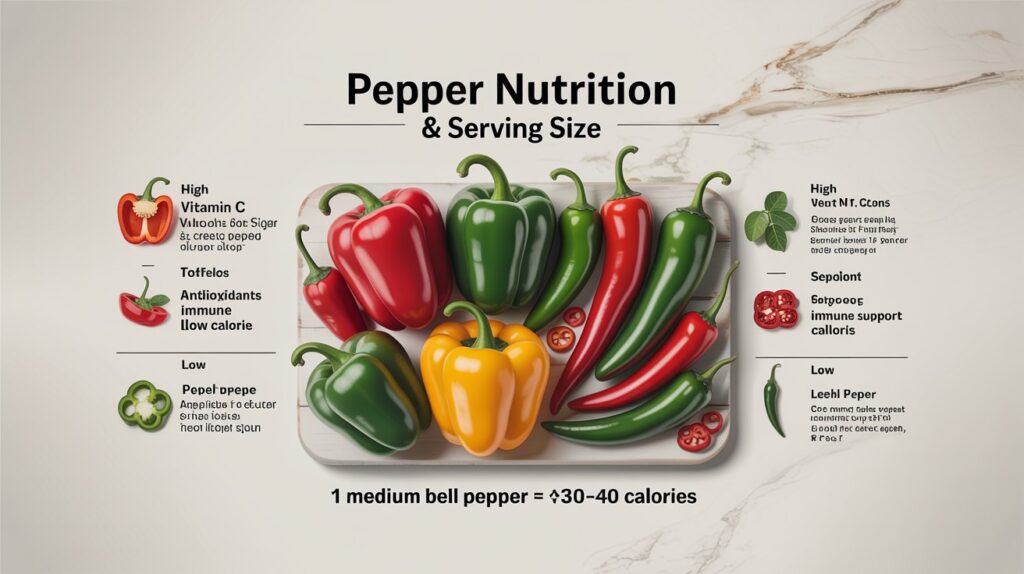
Peppers are low in calories but rich in nutrients:
- High in vitamin C
- Contain antioxidants
- Support immune health
- Low in calories
For example:
- 1 medium bell pepper: ~30–40 calories
They’re a great addition to healthy meals.
Tips For Using Peppers
- Choose firm, bright peppers
- Cut evenly for cooking
- Remove seeds for less heat
- Store in the fridge
- Mix different types for flavor
Fresh peppers enhance both taste and nutrition.
Common Mistakes When Using Peppers
- Ignoring heat level: Some peppers are very spicy
- Using too much chili: Can overpower dishes
- Uneven cutting: Leads to uneven cooking
- Not removing seeds: Increases heat
Being careful helps improve your cooking.
How Pepper Size Affects Flavor
- Larger peppers: Sweeter, milder
- Smaller peppers: Stronger, spicier
Balancing size and type helps achieve the right flavor.
Frequently Asked Questions
What Is The Most Common Pepper Size?
Medium-sized bell peppers (3–4 inches) are most common.
Are Smaller Peppers Hotter?
Often yes, especially chili varieties.
How Much Does A Bell Pepper Weigh?
Usually 120–200 grams depending on size.
Can I Substitute One Pepper For Another?
Yes, but consider heat and flavor differences.
Do Pepper Sizes Affect Cooking Time?
Yes, larger peppers take longer to cook.
A pepper size chart helps you understand the differences between varieties and choose the right one for your dish. By knowing sizes, weights, and heat levels, you can cook with confidence and create perfectly balanced meals every time.
