
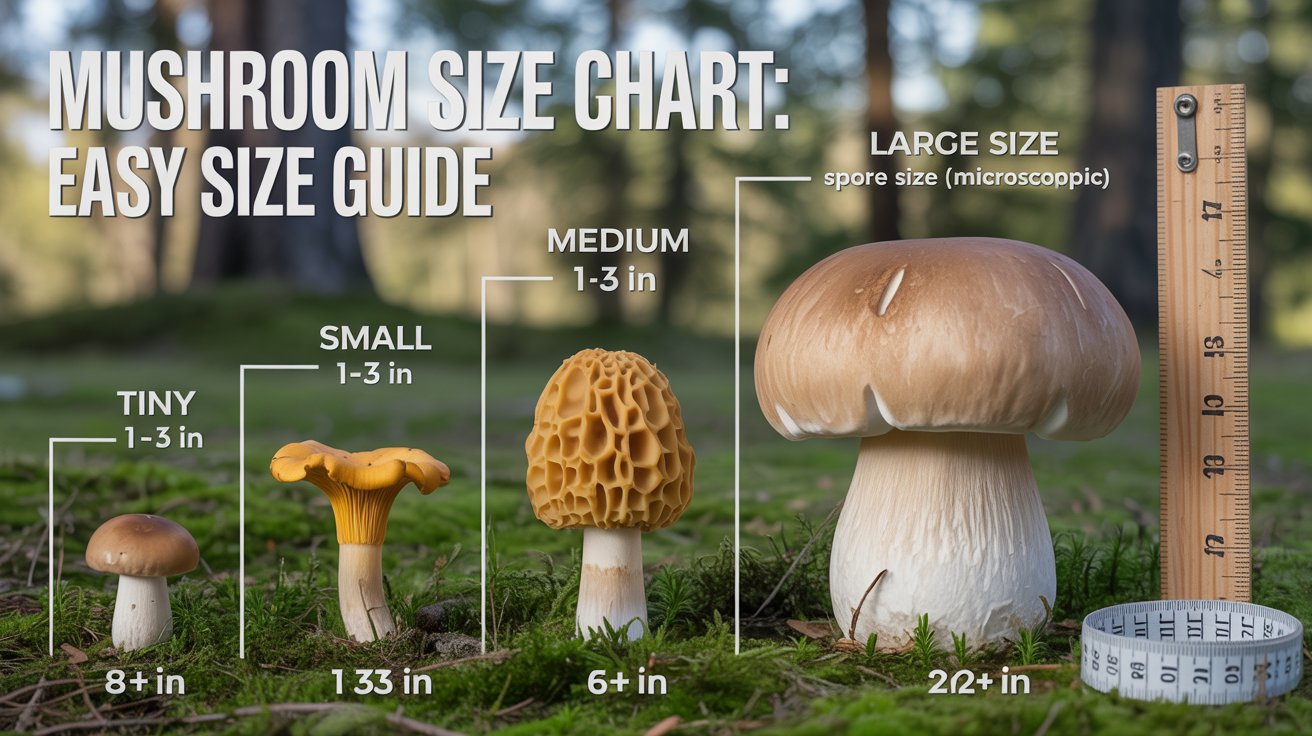
Are you curious about the different sizes of mushrooms and how to identify them easily? Whether you’re a cook, a forager, or just a mushroom fan, knowing the size of mushrooms can help you pick the right ones for your needs.
This Mushroom Size Chart will give you clear, simple details that make it easy to compare and understand mushroom sizes at a glance. Keep reading to discover helpful tips that will make your next mushroom choice smarter and more confident.
Mushroom Size Basics
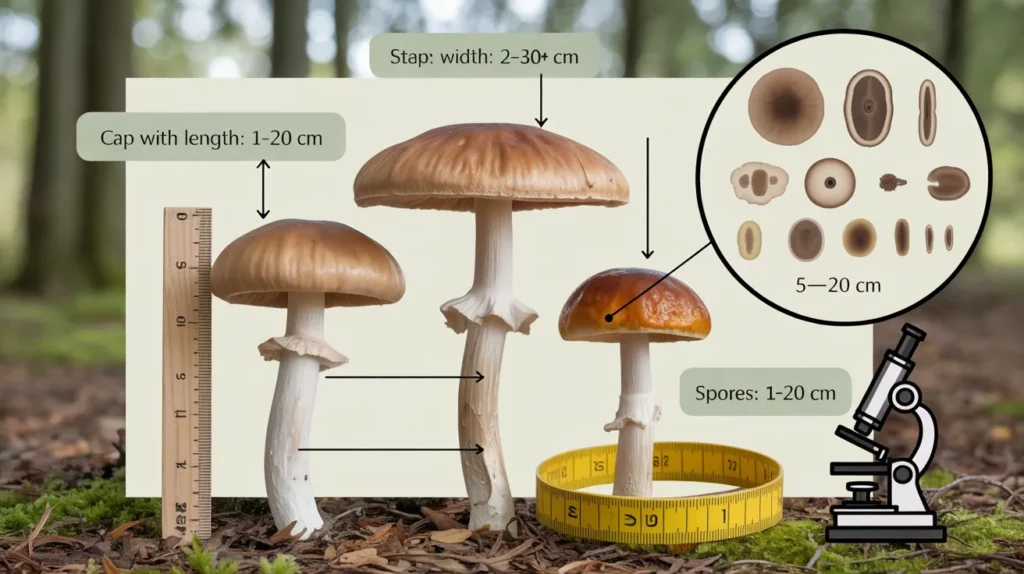
Mushroom size varies widely among species. Understanding basic size details helps with identification. Size includes the cap, stem, and spores. These parts have unique measurements important to study.
Knowing mushroom size basics aids in recognizing types. It also helps avoid toxic varieties. Size details give clues about the mushroom’s age and environment.
Cap Dimensions
The cap is the top part of a mushroom. Its width and shape vary by species. Caps can be small, just a few centimeters wide, or large, over 30 cm. The cap’s surface may be smooth, rough, or scaly. Measuring cap size helps identify the mushroom type.
Stem Length And Thickness
The stem supports the cap and raises it above the ground. Stem length ranges from 1 cm to over 20 cm. Thickness also varies, from thin and delicate to thick and sturdy. Some stems are hollow, others solid. Stem size helps distinguish between similar mushrooms.
Spore Size And Shape
Spores are tiny reproductive cells released from the mushroom. They differ in size from 5 to 20 micrometers. Shape varies too—round, oval, or elliptical. Spore size and shape are visible under a microscope. These features are key to accurate mushroom identification.
Common Mushroom Size Categories
Mushrooms come in many sizes. Understanding their size helps in cooking and identification. Sizes vary from tiny caps to giant fungi. This section explains common mushroom size categories.
? Mushroom Size Chart
| Size Category | Cap Diameter | Stem Height | Typical Use / Note |
|---|---|---|---|
| Tiny | < 1 inch ( < 2.5 cm ) | < 1 inch ( < 2.5 cm ) | Very delicate, often wild, used as garnish or in decorative plating |
| Small | 1 – 2 inches (2.5 – 5 cm) | 1 – 2 inches (2.5 – 5 cm) | Common for salads, stir-fries, and light sautés |
| Medium | 2 – 5 inches (5 – 12 cm) | 2 – 4 inches (5 – 10 cm) | Most common cooking size; good for soups, pasta, and pan-frying |
| Large | 5 – 8 inches (12 – 20 cm) | 3 – 6 inches (8 – 15 cm) | Great for grilling, stuffing, or “mushroom steaks” |
| Giant | 8+ inches (20+ cm) | 4+ inches (10+ cm) | Eye-catching, often used whole for roasting or slicing into thick pieces |
Tiny Mushrooms
Tiny mushrooms are usually less than one inch wide. They often grow in clusters on logs or soil. These mushrooms have delicate caps and thin stems. Their small size makes them perfect for garnishing dishes.
Small To Medium Mushrooms
Small to medium mushrooms range from one to three inches across. They are the most common size found in markets. These mushrooms have firm stems and fuller caps. They are easy to cook and add flavor to meals.
Large And Giant Mushrooms
Large mushrooms measure over three inches wide. Giant mushrooms can reach sizes above six inches. These types often have thick stems and broad caps. They are great for stuffing or making mushroom steaks.
Size And Mushroom Identification
Size plays an important role in identifying mushrooms. Many species have typical size ranges that help tell them apart. Observing size alongside other features improves accuracy. Size can also change due to environment and season. Understanding these changes aids in correct mushroom identification.
Matching Size To Species
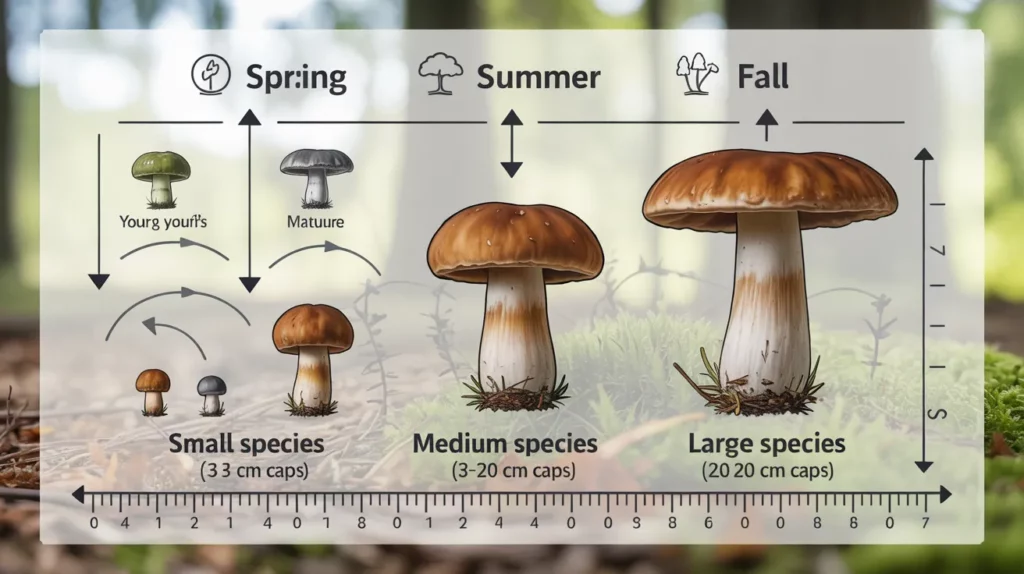
Each mushroom species usually grows within a certain size range. For example, some mushrooms have small caps under 3 cm. Others may have large caps over 20 cm wide. Comparing a mushroom’s size to known species sizes helps narrow options. Size clues reduce confusion between similar-looking mushrooms.
Size Variations Within Species
Mushrooms of the same species do not always have the same size. Young mushrooms tend to be smaller. Older ones grow larger but keep the same shape. Different growing spots can cause size differences too. Soil, moisture, and light all affect mushroom growth size.
Seasonal Size Changes
Mushroom sizes vary with the seasons. Early in the season, mushrooms are often smaller. Later, they grow bigger as conditions improve. Some species produce larger mushrooms in wet weather. Dry seasons may lead to smaller, slower growth. Noticing size changes over time helps confirm species identity.
Popular Mushrooms By Size
Mushrooms come in many sizes, shapes, and types. Knowing their size helps identify them easily. This guide breaks down popular mushrooms by size. It shows small, medium, and large mushrooms to recognize.
Small Edible Mushrooms
Small mushrooms often grow in clusters. They are great for cooking and salads. Examples include button mushrooms and enoki. Button mushrooms measure about 1 to 2 inches wide. Enoki mushrooms have thin, long stems and tiny caps. These small mushrooms have mild flavors. They add texture without overpowering dishes.
Medium-sized Wild Varieties
Medium mushrooms range from 2 to 5 inches wide. They grow in forests and fields. Chanterelles and morels fit this group. Chanterelles have a trumpet shape and bright yellow color. Morels look like honeycombs with their netted caps. These mushrooms have richer flavors. They are popular in gourmet recipes and soups.
Large Mushrooms To Recognize
Large mushrooms can measure over 5 inches. Some grow as wide as a plate. Portobello mushrooms are the most common large edible type. They have thick caps and firm texture. Giant puffballs can reach over a foot in diameter. Large mushrooms often have stronger tastes. They work well in grilling and stuffing.
Measuring Techniques For Mushrooms
Measuring mushrooms accurately is important for many reasons. It helps in identifying species, tracking growth, and comparing sizes. Using the right methods makes the process simple and reliable. This section explains how to measure mushrooms correctly.
Tools To Use
Use a ruler or measuring tape for size. A caliper gives precise width and height readings. A scale helps measure weight if needed. Always choose clean tools to avoid contamination.
Accurate Measurement Tips
Measure the cap diameter at its widest point. For height, measure from the base to the top of the cap. Avoid pressing down on soft mushrooms. Take multiple readings to ensure accuracy.
Recording And Comparing Sizes
Write down measurements immediately after taking them. Use a notebook or digital app for records. Compare sizes by noting differences in diameter and height. Track changes over days to see growth patterns.
Size-related Safety Tips
Understanding mushroom sizes helps in picking safe mushrooms. Size can hint at the species but is not the only clue. Knowing size-related safety tips protects you from harmful mushrooms. This section covers important size details to keep in mind.
Avoiding Toxic Lookalikes
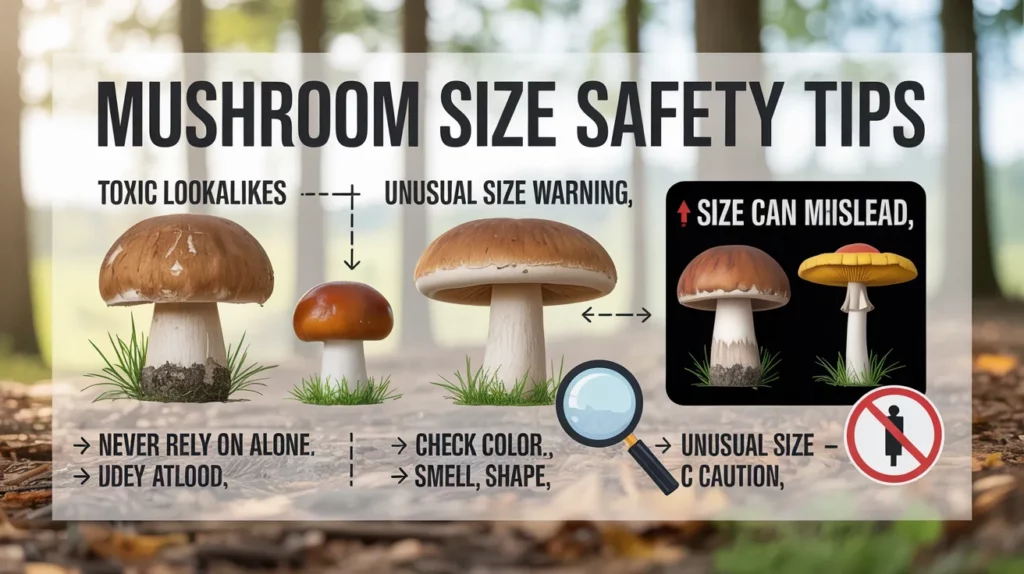
Many toxic mushrooms look like safe ones but differ in size. Some poisonous types are larger or smaller than edible varieties. Use size as one of the factors to tell them apart. Never rely on size alone to identify mushrooms.
Size Indicators Of Toxicity
Some toxic mushrooms grow very fast and get unusually big. Others stay very small but have strong toxins. Size can sometimes warn you about danger. Watch for odd size patterns compared to common edible mushrooms.
When Size Can Mislead
Mushroom size changes with environment and age. A small mushroom might be young and safe or immature and toxic. Large mushrooms may be old and less toxic or just a big species. Check other signs like color, smell, and shape.
Frequently Asked Questions
What Are The Common Mushroom Sizes And Their Measurements?
Mushroom sizes range from small (1-2 inches) to large (6+ inches). Size varies by species and growth conditions. Knowing size helps in cooking and identification. A size chart categorizes mushrooms for easy comparison and selection. This aids chefs and foragers alike.
How Does Mushroom Size Affect Cooking Time?
Larger mushrooms take longer to cook due to thicker flesh. Smaller mushrooms cook quickly and evenly. Size impacts texture and flavor absorption. Adjust cooking times based on mushroom diameter for best results. Using a size chart ensures consistent cooking outcomes.
Why Is A Mushroom Size Chart Important For Foragers?
A size chart helps identify edible mushrooms safely. It distinguishes young from mature specimens, critical for species identification. Size can indicate mushroom age and potential toxicity. Foragers rely on size charts to avoid harmful varieties. It improves harvesting accuracy and safety.
Can Mushroom Size Indicate Freshness Or Quality?
Yes, size combined with firmness signals freshness. Fresh mushrooms are firm and consistent in size. Shrinking or overly large mushrooms may be old or overripe. Size charts help buyers choose optimal mushrooms. Proper size selection ensures better taste and texture.
Conclusion
Understanding mushroom sizes helps in identifying different types easily. This chart gives clear and simple size ranges to follow. It makes picking the right mushroom faster and safer. Use this guide when cooking or exploring nature. Size matters, but always check other features too.
Keep this chart handy for quick mushroom size reference. Learning step by step makes mushroom knowledge grow. Enjoy discovering mushrooms with confidence and care.
