Make absinthe at home with a simple, traditional recipe. Discover the fascinating history and the surprisingly accessible process to craft this iconic spirit, demystifying its preparation for curious home enthusiasts.
Have you ever wondered about the mystique surrounding absinthe? Many people think making this historic spirit is incredibly complicated, perhaps even impossible at home. It’s easy to feel a bit intimidated by tales of its potent effects and unique preparation rituals. But what if we told you that with the right guidance, you can create your own absinthe, experiencing its fascinating journey from garden to glass? It’s more approachable than you might think! We’re here to guide you through a time-honored recipe, breaking down each step so you can confidently craft your own absinthe. Get ready to unlock a truly unique kitchen adventure!
The Enchanting World of Absinthe: A Beginner’s Guide
Absinthe, often called “La Fée Verte” (The Green Fairy), has a rich and often misunderstood history. Once a favorite among artists and writers in late 19th-century Paris, it was banned in many countries for decades due to widespread myths about its hallucinogenic properties. Modern science has debunked these claims; the psychoactive effects were largely due to adulteration and excessive consumption. Today, absinthe is legal and enjoyed worldwide for its complex herbal flavors and unique preparation ritual, the “louche.”
This guide is designed for the curious home cook and spirit enthusiast. We’ll focus on a traditional, accessible method that respects the spirit’s heritage while ensuring safety and clarity for beginners. Think of it as a fascinating kitchen project that yields a truly special result.
Understanding the Key Ingredients for Your Absinthe Recipe
The magic of absinthe lies in its carefully selected botanicals. While the exact recipes vary, a core set of ingredients forms the foundation of this complex spirit. Understanding these components is your first step to a successful batch.
The Holy Trinity of Absinthe Botanicals:
Grande Wormwood (Artemisia absinthium): This is the star ingredient, providing the characteristic bitter flavor and the spirit’s name. It contains thujone, a compound that, in the quantities found in traditional absinthe, is not harmful but contributes to its unique profile.
Anise (Pimpinella anisum): This provides the strong, licorice-like flavor and aroma. It’s crucial for the sweet, aromatic notes that balance the wormwood’s bitterness.
Fennel (Foeniculum vulgare): Similar to anise, fennel contributes a sweet, aromatic, and slightly woody flavor, deepening the overall complexity and complementing the anise notes.
Supporting Botanicals for Depth and Nuance:
Beyond the core trio, other herbs are often added to create a more rounded and nuanced flavor profile. These can include:
Hyssop (Hyssopus officinalis): Adds a slightly bitter, minty, and floral note.
Lemon Balm (Melissa officinalis): Contributes a bright, citrusy aroma and flavor.
Star Anise (Illicium verum): While distinct from green anise, star anise offers a more intense, pungent licorice flavor and beautiful visual appeal.
Angelica Root (Angelica archangelica): Adds earthy, slightly bitter, and complex notes that help bind the other flavors together.
Coriander (Coriandrum sativum): Provides a citrusy, spicy, and slightly floral undertone.
Peppermint (Mentha piperita): Can add a refreshing, cooling menthol note, though used sparingly.
The Base Spirit:
High-Proof Neutral Grain Spirit: This is essential for extracting the essential oils from the botanicals. A spirit with at least 80% alcohol by volume (ABV) is recommended. Many home distillers use a high-proof vodka or a purchased neutral spirit. Note: Distillation of alcohol at home is illegal in many jurisdictions without proper licensing. This guide focuses on the maceration and infusion process, which is legal and accessible for most.
The Traditional Absinthe Making Process: A Step-by-Step Journey
Making absinthe involves two primary stages: maceration (steeping the herbs in alcohol) and distillation (though for home use, we often focus on a simpler infusion and coloring process). We will focus on the maceration and coloring stages, which are perfectly achievable for home enthusiasts.
Stage 1: Maceration – Extracting the Essence
This is where the spirit gets its foundational flavor and character.
What You’ll Need (Tools & Ingredients):
Glass Jars or Containers: Clean, airtight glass jars for maceration.
High-Proof Neutral Grain Spirit: (e.g., 190-proof grain alcohol or high-proof vodka).
Dried Botanicals: Grande Wormwood, Anise, Fennel, and any other chosen herbs. Ensure they are high quality and dried.
Cheesecloth or Fine-Mesh Strainer: For separating the solids from the liquid.
Distilled Water: For diluting the final spirit.
Optional: Measuring Cups and Spoons: For precise botanical measurements.
The Maceration Steps:
1. Prepare Your Botanicals: Weigh or measure your dried botanicals according to your chosen recipe. A common starting point is a ratio that emphasizes wormwood, anise, and fennel.
Example Ratio (by weight): 1 part Grande Wormwood, 2 parts Anise, 2 parts Fennel. Adjustments can be made for personal preference.
2. Combine Botanicals and Spirit: Place the measured botanicals into a clean glass jar. Pour the high-proof neutral spirit over the herbs, ensuring they are fully submerged.
3. Seal and Steep: Seal the jar tightly. Store it in a cool, dark place.
4. Maceration Time: Allow the mixture to macerate for a period, typically between 12 to 48 hours. The longer it steeps, the more intense the flavors will become. It’s advisable to check the flavor periodically by carefully drawing a small amount. Be cautious not to over-macerate the wormwood, as it can lead to an overly bitter and unpleasant taste.
5. Strain the Infusion: Once you are satisfied with the flavor, carefully strain the liquid through a fine-mesh sieve lined with cheesecloth into another clean glass jar. Squeeze out as much liquid as possible from the herbs. Discard the spent botanicals. You should now have a clear, potent herbal infusion.
Stage 2: The Louche – The Magical Transformation
The “louche” is the cloudy, opalescent effect that occurs when water is added to absinthe. This happens because the essential oils of anise and fennel, which are soluble in alcohol but not in water, precipitate out and form tiny droplets.
How to Achieve the Louche:
1. Dilution: Slowly add ice-cold distilled water to the absinthe infusion. The ratio of water to absinthe can vary greatly depending on the strength of your infusion and personal preference, but a common starting point is 3:1 or 4:1 ratio of water to absinthe.
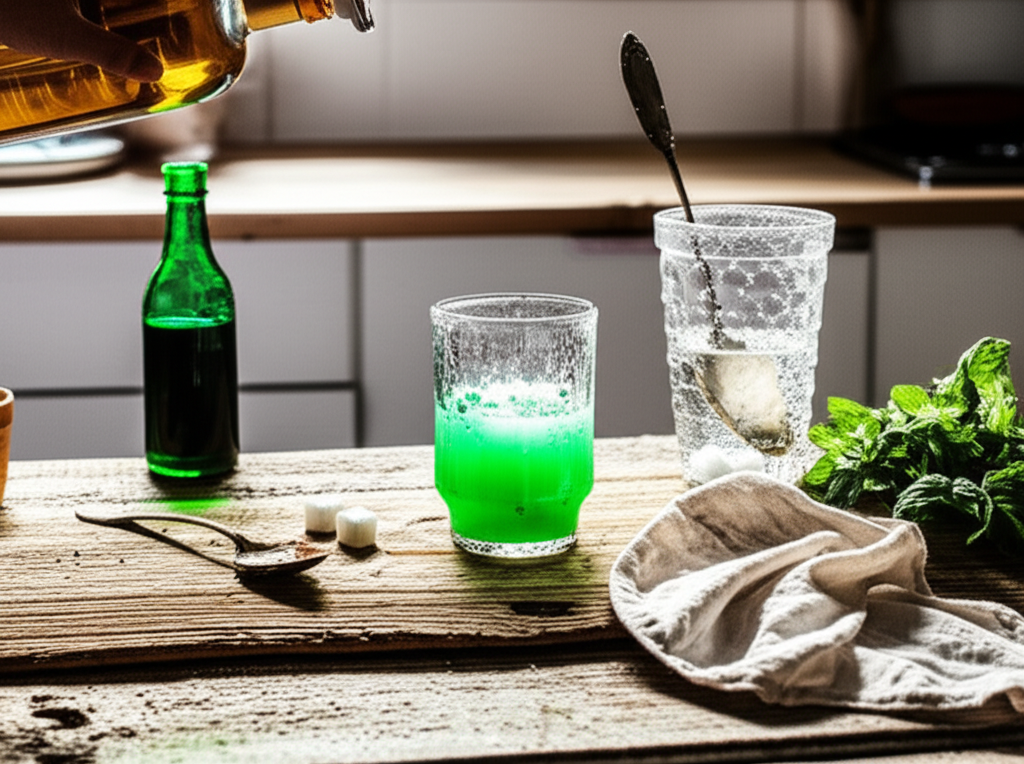
2. Observe the Change: As you add water, you will see the spirit begin to turn cloudy and milky, often forming beautiful swirling patterns. This is the louche. Continue adding water until the desired consistency and flavor are achieved.
3. Chill and Serve: Absinthe is traditionally served chilled. You can chill the prepared absinthe in the refrigerator or by using ice during the serving ritual.
A Classic Absinthe Recipe for Home Enthusiasts
This recipe is a starting point, encouraging experimentation while adhering to traditional flavor profiles. Remember, the quality of your botanicals significantly impacts the final product. Sourcing high-quality, organic dried herbs is highly recommended.
Essential Ingredients (for approximately 1 Liter):
700 ml High-Proof Neutral Grain Spirit (at least 80% ABV)
35 grams Grande Wormwood (Artemisia absinthium)
70 grams Green Anise (Pimpinella anisum)
70 grams Fennel Seed (Foeniculum vulgare)
5 grams Hyssop (optional, for added complexity)
5 grams Lemon Balm (optional, for brightness)
10-15 grams Star Anise (optional, for a stronger licorice note)
Distilled Water, for dilution
Equipment Checklist:
1.5 Liter Glass Jar with Airtight Lid
Fine-Mesh Strainer
Cheesecloth
Bottles for Storage
Step-by-Step Preparation:
Fine-Mesh Strainer
Cheesecloth
Bottles for Storage
1. Combine Botanicals: In your clean 1.5-liter glass jar, combine the Grande Wormwood, Green Anise, Fennel Seed, and any optional herbs you are using.
2. Add the Spirit: Pour the high-proof neutral grain spirit over the herbs in the jar. Ensure all botanicals are completely submerged.
3. Seal and Macerate: Seal the jar tightly and store it in a cool, dark place for 24 to 48 hours. Shake the jar gently once or twice a day.
4. Taste Test: After 24 hours, carefully open the jar and taste a tiny amount (diluted with a little water). If you desire a stronger flavor, continue macerating, tasting every 12 hours.
5. Strain the Infusion: Once satisfied with the flavor, line your fine-mesh strainer with a double layer of cheesecloth. Carefully pour the macerated liquid through the strainer into a clean bowl or jar. Gently squeeze the cheesecloth to extract as much liquid as possible. Discard the spent herbs.
6. Dilute to Taste: Begin diluting the strained absinthe with ice-cold distilled water. Add the water very slowly, stirring gently. The spirit will begin to louche. Continue adding water until you achieve your desired strength and flavor balance. A typical final ABV for homemade absinthe might range from 50% to 70%.
7. Bottle and Age (Optional): Pour your finished absinthe into clean glass bottles. While not strictly necessary, allowing the absinthe to age for a few weeks in the bottle can help the flavors meld and mature. Store in a cool, dark place.
The Traditional Absinthe Serving Ritual: More Than Just a Drink
The way absinthe is prepared and consumed is as iconic as its flavor. This ritual, known as the “absinthe drip” or “verte,” enhances the experience and showcases the beautiful louche.
What You’ll Need for the Ritual:
Absinthe Glass: A traditional slotted spoon glass or a simple rocks glass.
Absinthe Spoon: A slotted spoon designed to hold a sugar cube.
Sugar Cubes: Preferably raw or unrefined sugar.
Ice Water: Very cold water, preferably distilled.
Water Fountain or Pitcher: For a slow, controlled pour.
The Steps to the Perfect Serve:
1. Measure and Pour: Pour about 1 to 1.5 ounces (30-45 ml) of your homemade absinthe into the glass.
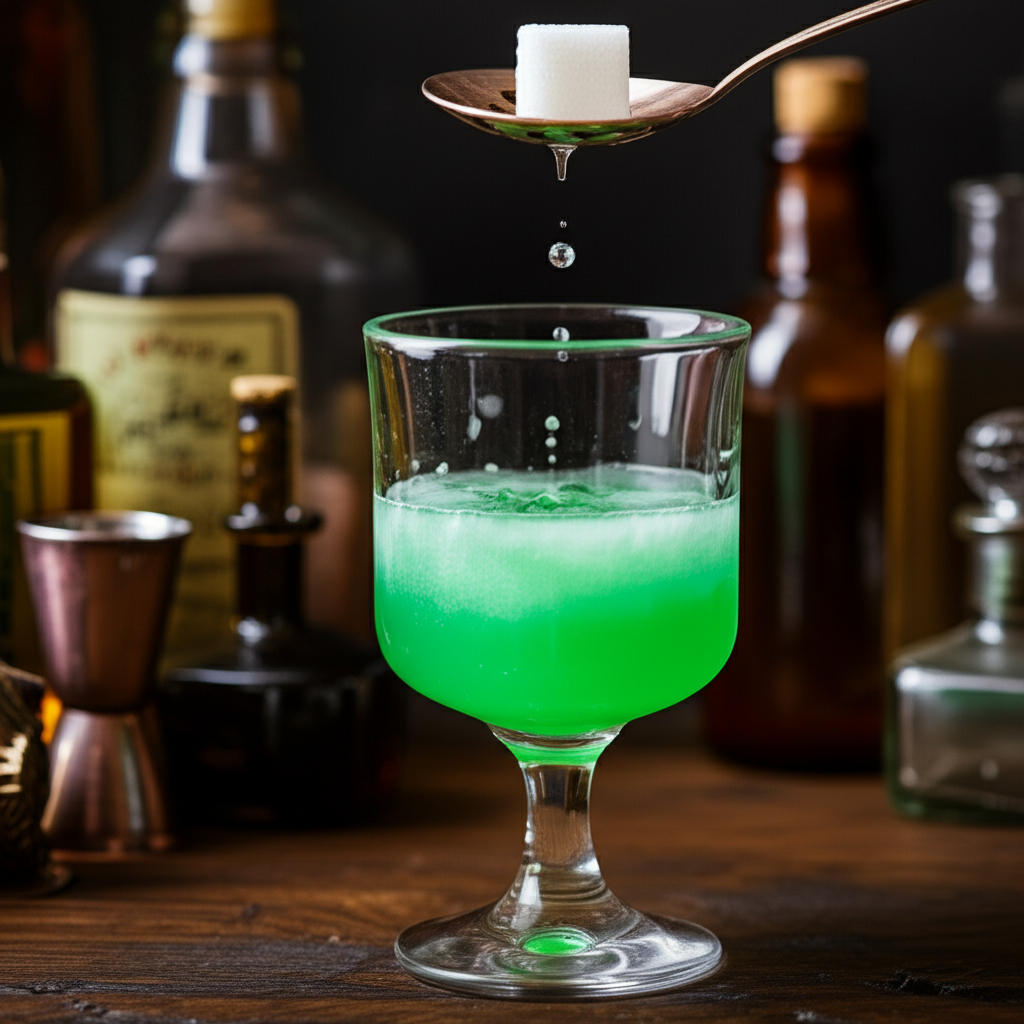
2. Place the Sugar Cube: Rest an absinthe spoon across the rim of the glass and place a sugar cube on top of the spoon.
3. The Drip: Slowly drip ice water over the sugar cube, allowing it to dissolve and sweeten the absinthe. The rate of dripping is key – aim for a slow, steady stream.
4. The Louche: As the sweetened water mixes with the absinthe, the louche will form, creating beautiful cloudy patterns. Continue adding water until the absinthe is diluted to your preferred taste and the louche is well-developed.
5. Stir and Enjoy: Once the desired dilution and louche are achieved, stir gently with the spoon to fully integrate the flavors. Sip and savor the complex herbal notes.
Important Considerations for Home Absinthe Making
Safety and quality are paramount when creating any spirit at home. Here are a few key points to keep in mind.
Botanical Quality: Always use high-quality, food-grade dried herbs. Poor quality herbs can lead to off-flavors or even be unsafe. Reputable herb suppliers are your best friend here.
Alcohol Strength: Working with high-proof alcohol requires caution. Ensure good ventilation, avoid open flames, and store it safely away from children and pets.
Thujone Levels: While the “hallucinogenic” effects of absinthe are largely myth, thujone is a naturally occurring compound in wormwood. The levels in traditional absinthe are generally considered safe when consumed responsibly. Over-macerating wormwood can increase thujone, but the primary concern with over-maceration is bitterness.
Legality: While making absinthe through maceration and infusion is legal in most places, home distillation of alcohol is often restricted or illegal without proper permits. Always be aware of your local laws regarding alcohol production. For information on alcohol regulations, the Alcohol and Tobacco Tax and Trade Bureau (TTB) offers extensive resources on their website (https://www.ttb.gov/).
Hygiene: Maintain strict hygiene throughout the process to prevent contamination. Ensure all your equipment is thoroughly cleaned and sterilized.
Troubleshooting Common Absinthe Making Issues
Even with the best intentions, you might encounter a few hiccups. Here are some common problems and how to solve them.
Too Bitter:
Cause: Over-maceration of wormwood, or using too much wormwood relative to other botanicals.
Solution: Reduce maceration time or the amount of wormwood in your next batch. You can try adding a bit more anise and fennel to balance the bitterness, or slightly more sugar during serving.
No Louche or Weak Louche:
Cause: Insufficient anise and/or fennel, or the oils haven’t been properly extracted.
Solution: Increase the proportion of anise and fennel in your recipe. Ensure your botanicals are fresh and properly dried. Consider a slightly longer maceration period.
Cloudy but Unpleasant Color:
Cause: Sometimes other botanicals can contribute to a less appealing color.
Solution: Experiment with omitting or reducing certain herbs like hyssop if you notice this. Focus on the quality of your wormwood, anise, and fennel for a classic green hue.
Harsh Alcohol Taste:
Cause: Not enough dilution, or the base spirit was not high enough quality.
* Solution: Dilute further with cold distilled water. Let the absinthe rest for a few weeks after making; this can smooth out harsh notes.
Frequently Asked Questions About Making Absinthe
Q1: Is it safe to make absinthe at home?
A1: Yes, making absinthe through maceration and infusion using food-grade botanicals and a neutral spirit is generally considered safe, provided you follow proper hygiene and handle alcohol responsibly. It’s crucial to be aware of local laws regarding alcohol preparation.
Q2: What is the “green fairy” effect?
A2: The “green fairy” effect, or “louche,” is the opalescent cloudiness that appears when water is added to absinthe. This is caused by the essential oils of anise and fennel, which are soluble in alcohol but not in water, creating tiny suspended droplets.
Q3: How long should I macerate the herbs?
A3: Maceration time typically ranges from 24 to 48 hours. It’s best to taste the infusion periodically after 24 hours to avoid over-extracting the wormwood, which can lead to excessive bitterness.
Q4: Can I use fresh herbs instead of dried?
A4: While possible, dried herbs are generally preferred for absinthe making. They have a more concentrated flavor and aroma, and their moisture content is lower, which is better for extraction with high-proof alcohol.
Q5: What kind of alcohol should I use as a base?
A5: A high-proof neutral grain spirit (at least 80% ABV) is ideal. High-proof vodka can also be used, but a dedicated neutral spirit will yield better results for flavor extraction.
Q6: How much sugar should I use when serving?
A6: The amount of sugar is entirely to personal preference. Start with one sugar cube per serving and adjust as needed. Some prefer their absinthe with no sugar at all to fully appreciate the herbal complexity.
Q7: Can I distill my absinthe at home?
A7: Home distillation of alcohol is subject to strict legal regulations in most countries and is often illegal without proper licensing. This guide focuses on the maceration and infusion process, which is a legal and accessible way to create absinthe at home.
The “Shocking Results”: Beyond the Hype
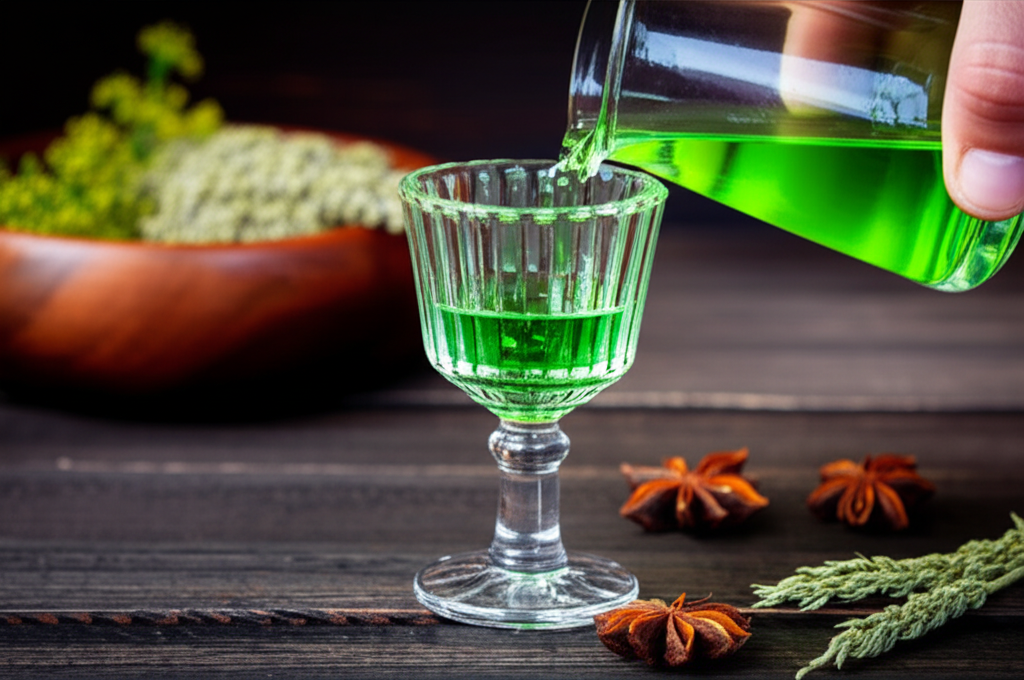
The true “shocking results” of making your own absinthe aren’t about hallucinogenic experiences, but rather the profound satisfaction of crafting a complex, historically significant spirit yourself. It’s about the journey of understanding ancient herbalism, the delicate balance of flavors, and the rewarding transformation of simple ingredients into something extraordinary.
The process demystifies absinthe, replacing myths with tangible knowledge. You’ll discover the nuanced interplay of wormwood’s bitterness, anise’s sweetness, and fennel’s aromatic depth. The visual spectacle of the louche is undeniably captivating, a moment of pure alchemical wonder in your own kitchen.
Beyond the sensory delight, there’s a deeper reward: a connection to a rich cultural history. You’re not just making a drink; you’re participating in a tradition that has inspired artists, writers, and connoisseurs for centuries. The confidence gained from mastering this seemingly complex process is itself a significant and positive outcome.
Embracing the Absinthe Adventure
Creating absinthe at home is an accessible yet deeply rewarding endeavor for any kitchen enthusiast. It’s a project that engages your senses, educates you about botanicals and history, and results in a truly unique and potent spirit. Remember to approach it with patience, respect for the ingredients, and a spirit of experimentation.
From the careful selection of herbs to the mesmerizing ritual of the louche, each step offers a chance to learn and appreciate. You’ll find that the “shocking results” are not in exaggerated tales, but in the genuine pleasure of creation and the complex, captivating flavors you’ve unlocked. So gather your botanicals, prepare your spirit, and embark on this enchanting journey. The Green Fairy awaits your personal touch!