
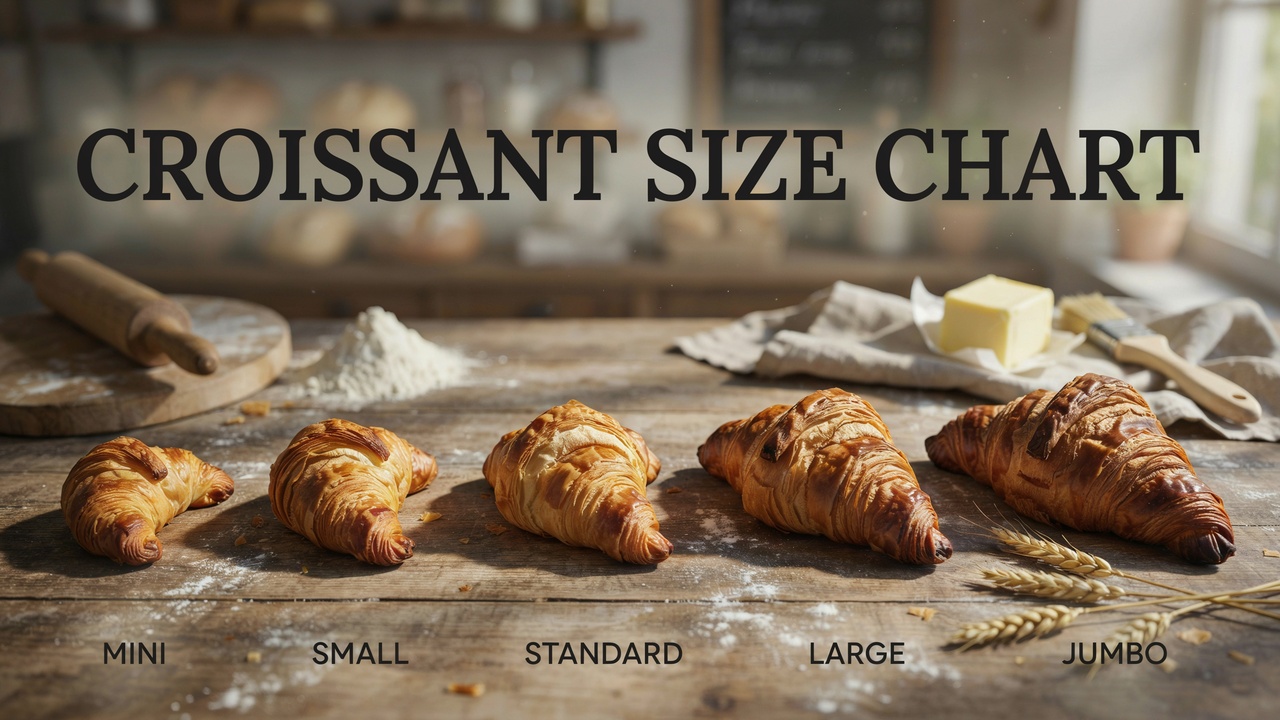
Croissants are famous for their flaky layers, buttery flavor, and light, airy texture. From small mini croissants served at breakfast buffets to large bakery croissants used for sandwiches, their dimensions and weights can vary significantly. Understanding a croissant size chart helps home bakers, bakery owners, and shoppers choose the right portion, estimate dough requirements, and plan servings for breakfast, brunch, parties, or catering.
The final size of a croissant depends on dough weight, triangle dimensions, proofing, shaping, and baking. Because laminated dough expands considerably during proofing and baking, even relatively small pieces of dough can produce generously sized pastries.
Why Croissant Size Matters
Croissant size affects more than appearance. It influences:
- Dough portion per pastry
- Baking time
- Serving size
- Filling quantity
- Calories per croissant
- Number of pastries produced per batch
- Presentation and packaging
Smaller croissants are ideal for buffets and parties, while standard and large croissants work better as individual breakfast portions or sandwiches.
Standard Croissant Size Chart
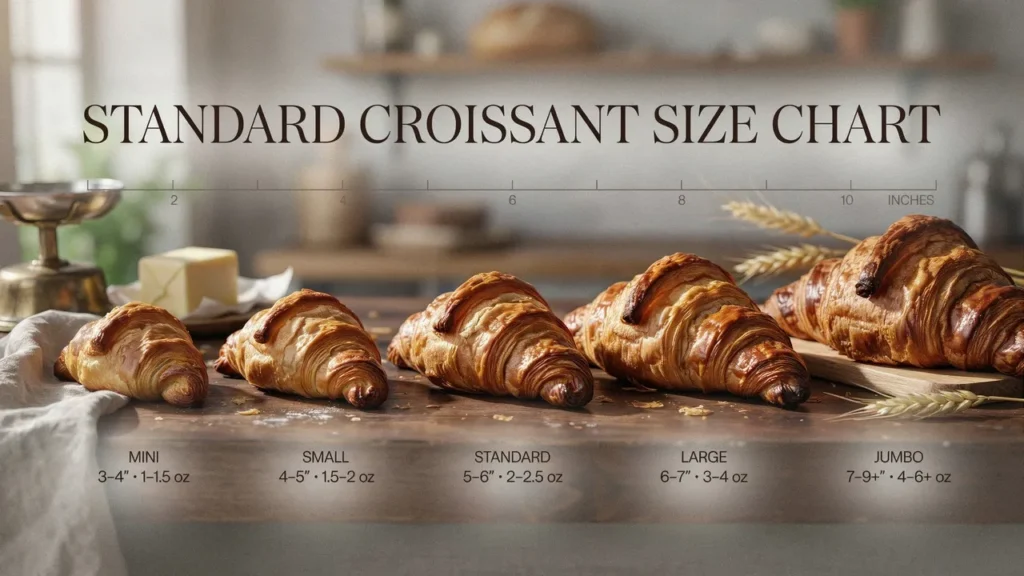
Croissants are commonly grouped into mini, standard, large, and jumbo bakery sizes.
| Croissant Size | Approx. Baked Length | Typical Weight | Typical Serving | Best For |
|---|---|---|---|---|
| Mini | 3–4 in | 1–1.5 oz (28–43g) | 2–3 | Parties, buffets |
| Small | 4–5 in | 1.5–2 oz (43–57g) | 1–2 | Light breakfast |
| Standard | 5–6 in | 2–2.5 oz (57–71g) | 1 | Breakfast |
| Large | 6–7 in | 3–4 oz (85–113g) | 1 | Café meals |
| Jumbo | 7–9+ in | 4–6+ oz (113–170g) | ½–1 | Sandwiches, sharing |
Exact dimensions vary between bakeries and recipes.
Croissant Dough Weight Chart
One of the easiest ways to produce consistently sized croissants is to portion the dough by weight before shaping.
| Croissant Size | Approx. Dough Weight | Typical Use |
|---|---|---|
| Mini | 25–40g | Appetizers and buffets |
| Small | 40–55g | Light breakfast |
| Standard | 55–75g | Everyday pastry |
| Large | 80–110g | Bakery or café |
| Jumbo | 110–160g+ | Sandwich croissants |
The finished weight can differ depending on butter content, moisture loss, fillings, and baking time.
Mini vs Standard vs Jumbo Croissants
The main differences are portion size, dough quantity, baking time, and intended use.
| Feature | Mini | Standard | Jumbo |
|---|---|---|---|
| Baked Length | 3–4 in | 5–6 in | 7–9+ in |
| Typical Weight | 1–1.5 oz | 2–2.5 oz | 4–6+ oz |
| Serving | 2–3 | 1 | ½–1 |
| Baking Time | Shorter | Moderate | Longer |
| Best Use | Parties | Breakfast | Sandwiches |
Mini croissants are particularly useful for large gatherings because guests can take smaller portions.
Croissant Serving Size Chart
Serving size depends on the size of the pastry and what else is being served.
| Croissant Type | Suggested Serving | Best For |
|---|---|---|
| Mini Croissant | 2–3 | Snack or buffet |
| Small Croissant | 1–2 | Light breakfast |
| Standard Croissant | 1 | Breakfast or brunch |
| Large Croissant | 1 | Filling breakfast |
| Jumbo Croissant | ½–1 | Large meal |
Filled croissants may be more filling than plain versions, so smaller portions can sometimes be appropriate.
Croissant Size by Type
Different styles of croissants can vary in weight because of their fillings and toppings.
Croissant Type Comparison
| Croissant Type | Typical Weight | Common Use |
|---|---|---|
| Plain Butter Croissant | 55–75g | Breakfast |
| Chocolate Croissant | 65–90g | Breakfast or dessert |
| Almond Croissant | 90–130g | Dessert or café pastry |
| Ham & Cheese Croissant | 100–150g | Breakfast or lunch |
| Sandwich Croissant | 110–170g+ | Lunch |
Almond and filled croissants are usually heavier because of additional ingredients.
Croissant Triangle Size Guide
Before rolling, traditional croissants begin as triangular pieces of laminated dough.
| Finished Croissant | Triangle Base | Triangle Length |
|---|---|---|
| Mini | 2.5–3 in | 5–6 in |
| Standard | 3.5–4 in | 7–9 in |
| Large | 4–5 in | 9–11 in |
| Jumbo | 5+ in | 11–13+ in |
These measurements are approximate because croissant shaping methods vary among recipes and bakeries.
Croissant Baking Time by Size

Larger croissants generally require more baking time than mini versions.
| Croissant Size | Approx. Baking Time |
|---|---|
| Mini | 10–15 minutes |
| Small | 14–18 minutes |
| Standard | 16–22 minutes |
| Large | 20–25 minutes |
| Jumbo | 22–30 minutes |
Actual baking time depends on oven temperature, dough temperature, filling, and recipe.
The croissants should develop a deeply golden exterior with fully baked interior layers.
How Many Croissants Per Person?
When planning a breakfast buffet or brunch, consider both pastry size and the other foods available.
Croissant Party Serving Chart
| Guests | Mini Croissants | Standard Croissants |
|---|---|---|
| 5 | 10–15 | 5 |
| 10 | 20–30 | 10 |
| 15 | 30–45 | 15 |
| 20 | 40–60 | 20 |
| 25 | 50–75 | 25 |
When croissants are only one part of a large breakfast spread, quantities can be reduced.
Tips for Making Consistent Croissant Sizes
Weighing dough is one of the easiest ways to maintain consistency. Similar-sized croissants proof and bake more evenly.
For better results:
- Roll dough to an even thickness.
- Cut triangles to consistent dimensions.
- Weigh portions when accuracy matters.
- Avoid stretching some triangles significantly more than others.
- Leave enough space between croissants for proofing.
- Bake similar-sized croissants together.
Consistency is particularly important when producing pastries for bakeries, cafés, or events.
Common Croissant Size Mistakes
One common mistake is cutting triangles without measuring them. Uneven pieces produce croissants that proof and bake at different rates.
Another mistake is placing croissants too close together. Laminated dough expands significantly during proofing and baking.
Finally, don’t judge final size entirely by the unproofed dough. Properly laminated croissants can expand substantially before and during baking.
How Croissant Size Affects Nutrition
A larger croissant naturally contains more butter, flour, and calories than a smaller one.
A standard plain croissant weighing around 55–70 grams commonly contains roughly 230–300 calories, although recipes vary significantly.
Filled varieties such as almond, chocolate, or ham-and-cheese croissants can contain considerably more calories.
Frequently Asked Questions
What Is the Standard Size of a Croissant?
A standard croissant is commonly around 5–6 inches long and weighs approximately 2–2.5 ounces (57–71g).
How Big Is a Mini Croissant?
Mini croissants are generally around 3–4 inches long and weigh approximately 1–1.5 ounces.
How Much Dough Is Needed for One Croissant?
A standard croissant commonly starts with approximately 55–75 grams of dough, depending on the recipe and desired finished size.
How Many Mini Croissants Equal One Standard Croissant?
Approximately 2–3 mini croissants can equal one standard serving, depending on their individual weights.
How Big Is a Jumbo Croissant?
Jumbo bakery croissants can measure approximately 7–9 inches or more and weigh 4–6 ounces or more.
What Size Croissant Is Best for Sandwiches?
Large or jumbo croissants measuring approximately 6–9 inches work particularly well for breakfast and lunch sandwiches.
Conclusion
A croissant size chart makes it easier to portion dough, plan servings, adjust baking times, and produce consistent pastries. Mini croissants typically measure around 3–4 inches, standard croissants around 5–6 inches, and jumbo bakery croissants can reach 7–9 inches or more. Whether you’re baking for breakfast, running a café, or planning a brunch buffet, choosing the correct croissant size helps create better portions and more consistent results.
