
Are you curious about how to pick the perfect carrot for your recipe or garden? Understanding carrot sizes can make a big difference in your cooking, planting, and even storage.
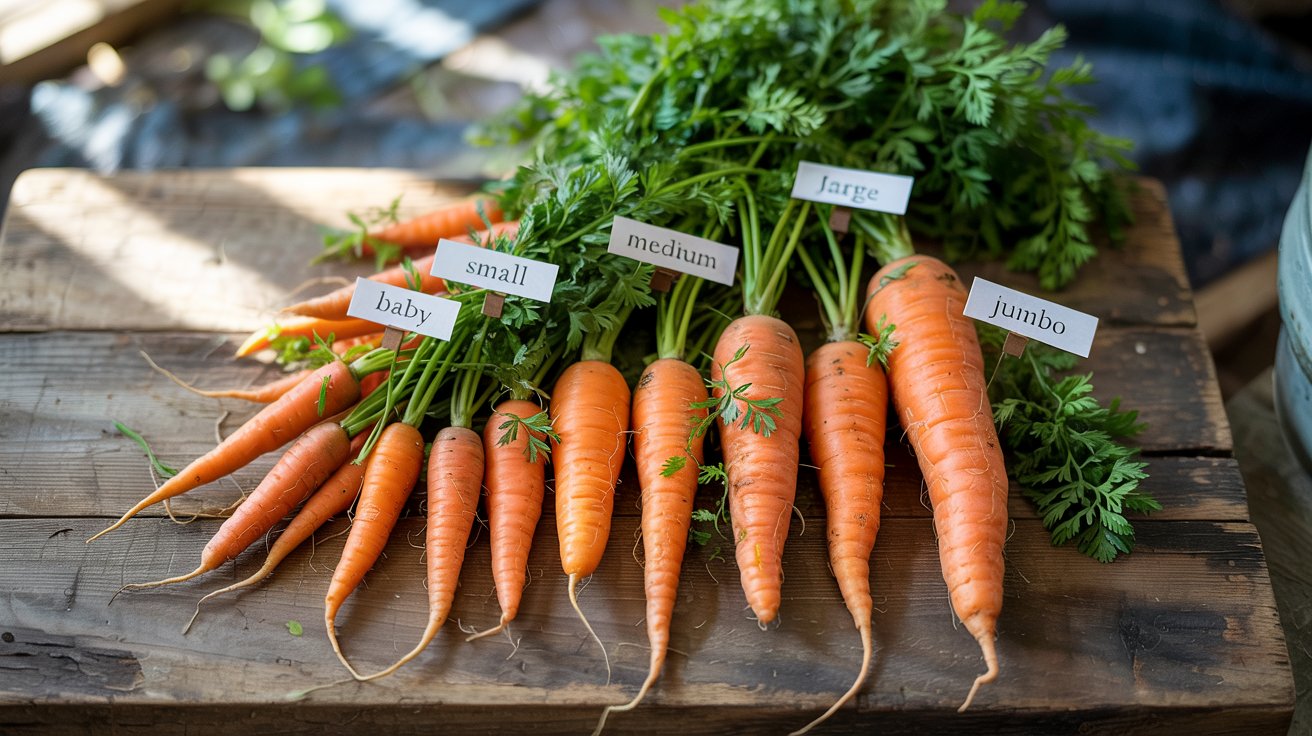
This Carrot Size Chart will help you quickly identify the right carrot size for your needs. Whether you’re a home cook, gardener, or just love fresh veggies, knowing the size details will save you time and improve your results. Keep reading, and you’ll soon master the simple secrets behind carrot sizes that many people overlook.
Carrot Size Categories
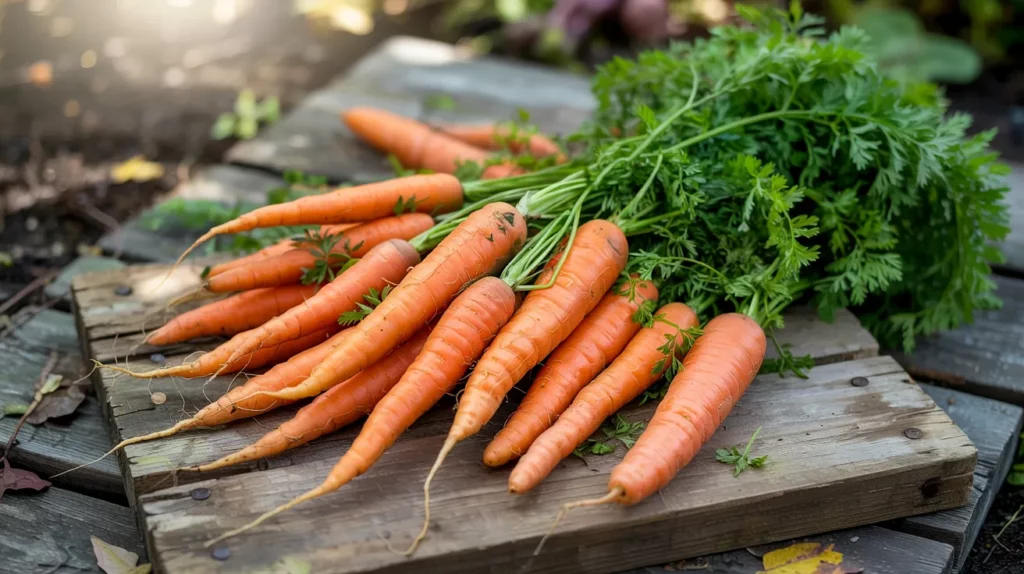
Carrots come in different sizes. Each size fits a different use in cooking and snacking. Knowing the size categories helps choose the right carrot for your dish. The size also affects texture and flavor. Below are the common carrot size categories.
Carrot Size Chart
| Carrot Size | Length (inches) | Diameter (cm) | Typical Weight | Best Uses |
|---|---|---|---|---|
| Baby | 2–3 in | 1–1.5 cm | ~25–40 g | Snacking, salads, roasting whole |
| Small | 3–5 in | 1.5–2 cm | ~40–60 g | Steaming, boiling, quick sautés |
| Medium | 6–8 in | 2–3 cm | ~60–80 g | Soups, stews, stir-fries, slicing |
| Large | 9–12 in | 3–4 cm | ~80–120 g | Juicing, roasting, grating |
| Jumbo | 12+ in | 4+ cm | 120 g+ | Purees, baking, large-batch cooking |
Baby Carrots
Baby carrots are small and tender. They usually measure about 2 to 3 inches long. These carrots are sweet and easy to eat raw. They are perfect for snacks and salads. Baby carrots often come pre-washed and peeled.
Small Carrots
Small carrots are a bit longer than baby carrots. They range from 3 to 5 inches in length. These carrots have a firm texture and a mild flavor. Small carrots work well for roasting and boiling. They keep their shape nicely in recipes.
Medium Carrots
Medium carrots are the most common size found in stores. They usually measure 6 to 8 inches long. These carrots are versatile and great for many dishes. Their taste is balanced between sweet and earthy. Medium carrots are good for slicing, dicing, and cooking.
Large Carrots
Large carrots measure 9 to 12 inches or more. They have a stronger flavor than smaller carrots. Large carrots are ideal for juicing and grating. Their size makes them perfect for hearty stews and soups. They can also be cut into thick sticks for dipping.
Jumbo Carrots
Jumbo carrots are the biggest carrots available. They can grow over 12 inches long and be very thick. These carrots have a bold taste and firm texture. Jumbo carrots work best for cooking in large batches. They are also good for making carrot puree and large slices.
Measuring Carrot Length
Measuring carrot length is important for many reasons. It helps farmers sort carrots by size. It guides cooks in choosing the right carrot for recipes. It also helps sellers set fair prices. Accurate measurement ensures consistency and quality in carrot products.
Tools For Accurate Measurement
Using the right tools makes measuring carrot length easy. A simple ruler can work for small carrots. Tape measures are good for longer carrots. Digital calipers offer precise measurements. Use a flat surface to lay the carrot straight. Measure from the top to the tip of the carrot. Avoid bending or curving the carrot during measurement.
Standard Length Ranges
Carrots come in different sizes. Baby carrots usually measure 2 to 4 inches long. Medium carrots range from 5 to 7 inches. Large carrots can be 8 inches or longer. Knowing these ranges helps sort carrots quickly. Size can affect cooking time and presentation. Stick to standard lengths for better results.
Carrot Diameter And Thickness
Carrot diameter and thickness play a big role in cooking and presentation. These measurements help you pick the right carrot for your recipe. Smaller carrots are thin and cook faster. Larger carrots have more thickness and take longer to cook. Understanding these sizes helps in choosing the best carrot for salads, soups, or roasting.
Average Diameter By Size
Baby carrots usually have a diameter of 1 to 1.5 centimeters. Medium carrots range from 2 to 3 centimeters in diameter. Large carrots are thicker, often 3 to 4 centimeters or more. These sizes affect how the carrot looks and feels in dishes. Size also influences the cooking time and texture.
Impact On Cooking And Texture
Thinner carrots cook quickly and become soft fast. Thick carrots take more time and stay firm longer. Thin carrots are great for steaming or quick stir-fries. Thick carrots work well for roasting or slow cooking. Texture changes with size, affecting taste and mouthfeel. Choosing the right thickness ensures the best cooking result.
Weight And Volume Metrics
Understanding the weight and volume of carrots helps in cooking and shopping. Carrots come in different sizes, which means their weight and volume vary. Knowing these metrics makes it easier to follow recipes and buy the right amount. This section explains the typical weight per carrot size and how to convert carrot sizes to volume.
Typical Weight Per Size
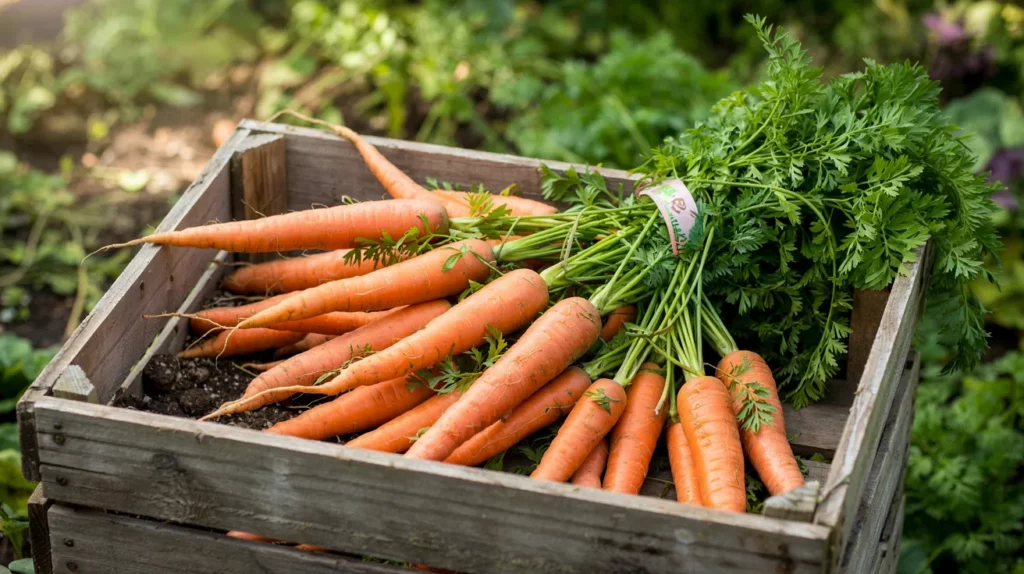
Small carrots usually weigh around 50 grams each. Medium carrots weigh about 75 grams. Large carrots can weigh up to 100 grams or more. These weights help estimate how many carrots you need for a recipe. Using weight is more precise than counting carrots alone.
Converting Carrot Sizes To Volume
Carrots can also be measured by volume, especially when chopped or grated. One medium carrot equals roughly 1 cup chopped. Two small carrots make about 1 cup chopped. One large carrot can give you about 1.5 cups chopped. Volume measurements help in recipes that require a certain amount of carrot pieces.
Carrot Size And Culinary Uses
Carrot size affects how you use them in cooking. Different sizes bring out unique flavors and textures. Choosing the right carrot size enhances your dishes. Understanding carrot sizes helps you prepare meals better.
Best Uses For Baby And Small Carrots
Baby and small carrots are sweet and tender. They work well in salads and snacks. Roasting small carrots keeps their natural sweetness. Use them whole or sliced for quick cooking. Their size makes them great for dipping sauces.
Medium And Large Carrots In Recipes
Medium and large carrots suit soups and stews. They hold shape well when cooked longer. Chop or dice them for casseroles and stir-fries. Their flavor deepens with slow cooking methods. These carrots add color and texture to many dishes.
When To Choose Jumbo Carrots
Jumbo carrots are best for juicing and purees. Their size means more juice and rich flavor. Use them for carrot cakes and large batches of soup. Slice thick pieces for roasting or grilling. Jumbo carrots work well when you need more volume.
Selecting Carrots For Different Needs
Selecting the right carrot size depends on how you plan to use it. Different sizes suit different needs. Choosing the correct size can improve taste and texture. It also helps in cooking or storage. Here is a guide to pick carrots for various uses.
Fresh Eating Vs Cooking
Small to medium carrots work best for fresh eating. They are sweet and tender. Big carrots may be tough and less sweet. For cooking, larger carrots hold up well. They keep their shape in soups and stews. Size affects flavor and texture in each use.
Carrot Size For Juicing
Medium to large carrots are ideal for juicing. They provide more juice and sweetness. Smaller carrots yield less juice and can taste bitter. Choose carrots without cracks or spots. Freshness matters most for good juice flavor.
Storage Considerations By Size
Smaller carrots dry out faster in storage. Keep them in a cool, moist place. Large carrots last longer and store well. Remove green tops before storing. Proper storage keeps carrots fresh and crisp.
Common Carrot Size Standards Worldwide
Carrots vary in size across the world. Different countries use unique systems to classify carrot sizes. These standards help farmers, sellers, and buyers understand carrot quality and price. Knowing common size standards makes it easier to compare carrots globally.
Each region has its own method to measure and grade carrots. These methods focus on length, diameter, and weight. Let’s explore the main carrot size standards worldwide.
Us Grading System
The United States uses a clear grading system for carrots. It sorts carrots by diameter and length. Common grades include Jumbo, Medium, and Small. Jumbo carrots are thick and long, while Small carrots are thin and short. This system helps grocery stores and markets sell carrots by size.
European Size Classifications
Europe uses size classes based on carrot diameter. Classes often range from Class 1 to Class 3. Class 1 carrots are the largest, with a diameter above 25 mm. Class 3 carrots are the smallest, usually below 15 mm. Length is less important than diameter in Europe. This system supports quality control and trade rules.
Other Regional Standards
Many countries have their own carrot size rules. In Asia, size standards may focus more on weight. Some African countries use local measurements for carrot sizes. These regional standards suit local markets and consumer preferences. Understanding these helps traders work smoothly across borders.
Frequently Asked Questions
What Are The Common Carrot Sizes In The Market?
Carrots typically come in small, medium, and large sizes. Small carrots are about 4-6 inches long. Medium carrots range from 6-8 inches, while large carrots exceed 8 inches. Size impacts cooking time and texture.
How To Measure Carrot Size Accurately At Home?
Measure carrot length from tip to top using a ruler. For diameter, use a caliper or estimate thickness by hand. Consistent measurement helps in cooking and selecting the right size for recipes.
Why Does Carrot Size Affect Cooking Time?
Larger carrots take longer to cook due to their density. Smaller carrots cook faster and are often sweeter. Knowing the size ensures proper cooking time and desired texture.
Are Baby Carrots Considered A Specific Size Category?
Baby carrots are small, usually 2-3 inches long. They are either immature carrots or cut and shaped from larger carrots. They are sweeter and ideal for snacking.
Conclusion
Understanding the carrot size chart helps in choosing the right carrot. Different sizes suit different recipes and uses. Small carrots work well in salads and snacks. Medium and large carrots are great for cooking and juicing. Knowing carrot sizes saves time and reduces waste.
Use this chart to pick carrots that fit your needs. Enjoy fresh, tasty carrots every time you shop. Keep this guide handy for easy reference. Simple and clear – that’s the best way to shop.
