
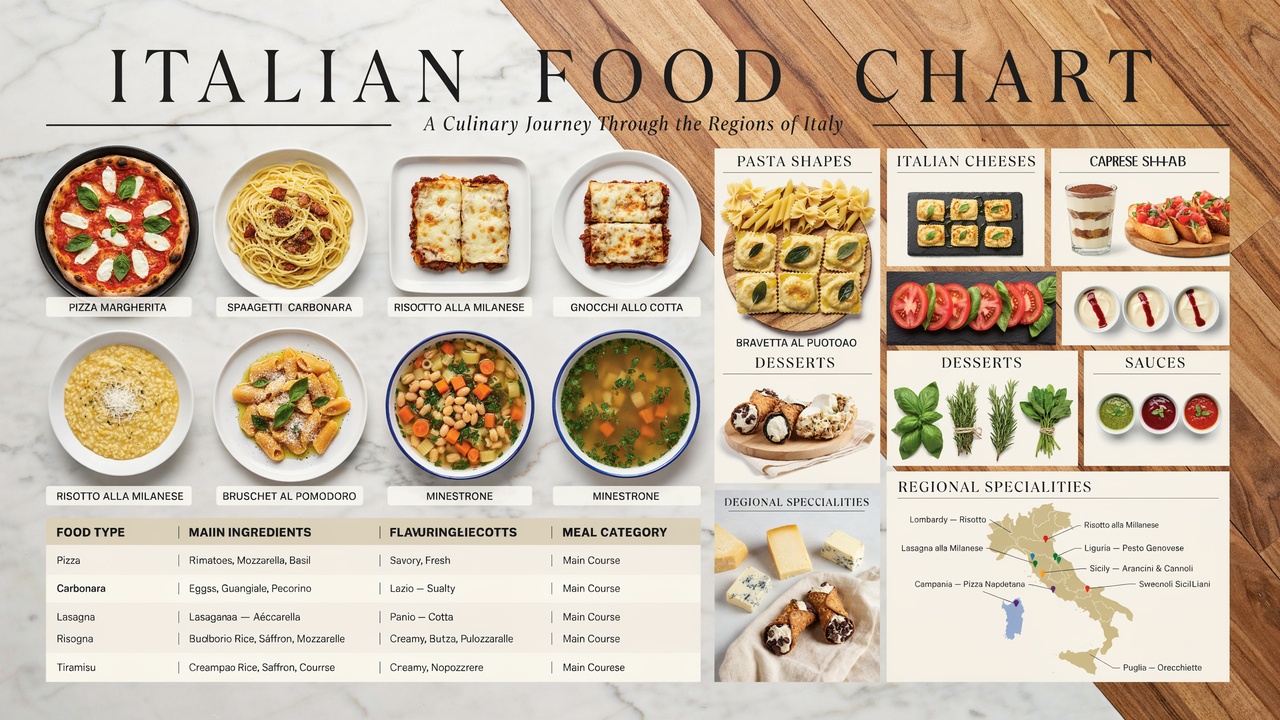
Italian food is famous around the world for its simple ingredients, comforting flavors, and incredible variety. From handmade pasta and wood-fired pizza to creamy risotto, fresh salads, seafood, cheese, and classic desserts, Italian cuisine offers dishes for almost every taste. Understanding the Italian food chart makes it easier to compare popular foods, ingredients, cooking styles, and regional specialties.
Why Italian Food Matters
Italian cuisine is built around a few important ideas: quality ingredients, simple preparation, and balanced flavors. Tomatoes, olive oil, garlic, herbs, cheese, wheat, seafood, and fresh vegetables appear in countless traditional dishes.
Italian food also changes dramatically from one region to another. Northern Italy is known for foods such as risotto and polenta, while central and southern regions are famous for pasta, pizza, tomatoes, seafood, and olive oil.
Standard Italian Food Chart
Here are some of the most popular Italian foods and what makes them unique.
Italian Food Chart
| Italian Food | Main Ingredients | Flavor | Meal Type |
|---|---|---|---|
| Pizza Margherita | Tomato, mozzarella, basil | Fresh & savory | Main |
| Spaghetti Carbonara | Pasta, egg, cheese, pork | Rich & savory | Main |
| Lasagna | Pasta, meat, tomato, cheese | Rich & hearty | Main |
| Risotto | Rice, broth, cheese | Creamy & savory | Main |
| Gnocchi | Potato, flour | Soft & mild | Main |
| Ravioli | Pasta, filling | Savory & rich | Main |
| Fettuccine Alfredo | Pasta, butter, cheese | Creamy & rich | Main |
| Caprese Salad | Tomato, mozzarella, basil | Fresh & light | Side |
| Bruschetta | Bread, tomato, olive oil | Fresh & crisp | Appetizer |
| Minestrone | Vegetables, beans, broth | Hearty & savory | Soup |
| Tiramisu | Coffee, mascarpone, cocoa | Sweet & creamy | Dessert |
| Panna Cotta | Cream, sugar | Sweet & creamy | Dessert |
| Cannoli | Pastry, ricotta filling | Sweet & rich | Dessert |
Recipes and ingredients can vary significantly between regions and restaurants.
Choosing The Right Italian Food
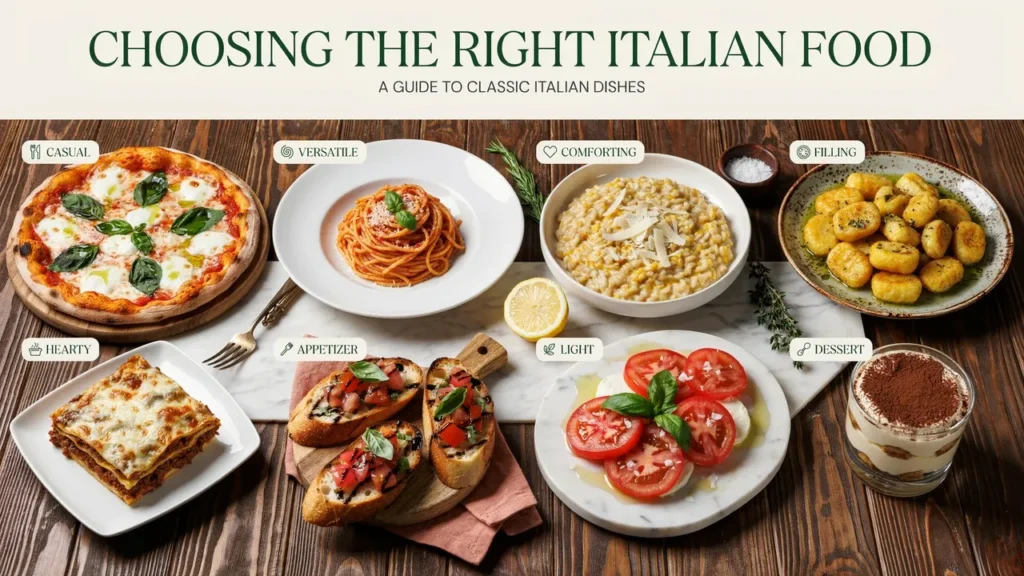
The best Italian dish depends on what type of meal you want.
Pizza: Great for a casual, shareable meal with endless topping combinations.
Pasta: One of the most versatile options, with shapes and sauces matched in countless ways.
Risotto: Ideal when you want something creamy and comforting.
Gnocchi: A soft and filling alternative to traditional pasta.
Lasagna: Perfect for a hearty meal with layers of pasta, sauce, cheese, and other fillings.
Bruschetta: A simple appetizer featuring toasted bread and fresh toppings.
Caprese Salad: A light choice combining tomato, mozzarella, basil, and olive oil.
Tiramisu: A classic dessert for coffee and cream lovers.
Italian Pasta Chart
Pasta is one of the most recognizable parts of Italian cuisine.
| Pasta Type | Shape | Best Sauce |
|---|---|---|
| Spaghetti | Long & round | Tomato, meat, seafood |
| Linguine | Long & flat | Seafood, pesto |
| Fettuccine | Wide & flat | Creamy sauces |
| Tagliatelle | Long & ribbon-like | Meat sauces |
| Pappardelle | Very wide | Rich meat sauces |
| Penne | Short tubes | Tomato, cream |
| Rigatoni | Large tubes | Hearty sauces |
| Farfalle | Bow-shaped | Cream, vegetables |
| Fusilli | Twisted | Pesto, tomato |
| Macaroni | Small curved tubes | Cheese sauces |
| Lasagna | Wide sheets | Meat, tomato, cheese |
| Ravioli | Filled pasta | Butter, cheese, tomato |
| Tortellini | Ring-shaped filled pasta | Broth, cream |
The shape of pasta affects how sauce clings to it, making pasta selection an important part of Italian cooking.
Italian Pizza Chart
Italian pizza comes in many styles and regional variations.
| Pizza Type | Main Toppings | General Style |
|---|---|---|
| Margherita | Tomato, mozzarella, basil | Simple & fresh |
| Marinara | Tomato, garlic, oregano | Light & savory |
| Quattro Formaggi | Four cheeses | Rich & creamy |
| Prosciutto | Prosciutto, cheese | Savory & salty |
| Diavola | Tomato, mozzarella, spicy salami | Spicy |
| Capricciosa | Ham, mushrooms, artichokes | Rich & varied |
| Quattro Stagioni | Mixed toppings | Variety |
| Funghi | Mushrooms, cheese | Earthy |
| Vegetariana | Mixed vegetables | Fresh & savory |
| Frutti di Mare | Seafood | Briny & fresh |
Pizza toppings can vary by region and individual recipe.
Italian Food By Meal
Italian cuisine includes foods for every part of the day.
| Meal | Popular Italian Foods |
|---|---|
| Breakfast | Cornetto, espresso, cappuccino |
| Appetizer | Bruschetta, olives, antipasti |
| First Course | Pasta, risotto, soup |
| Main Course | Chicken, beef, fish, seafood |
| Side Dish | Vegetables, salad, potatoes |
| Dessert | Tiramisu, panna cotta, cannoli |
| Snack | Focaccia, arancini, small pastries |
Traditional Italian meals can include several courses, with pasta or risotto often served as a first course rather than the main protein course.
Italian Appetizer Chart
Italian appetizers are often called antipasti.
| Appetizer | Main Ingredients | Flavor |
|---|---|---|
| Bruschetta | Bread, tomato, basil | Fresh |
| Caprese | Tomato, mozzarella, basil | Light & creamy |
| Arancini | Rice, cheese, filling | Crispy & savory |
| Prosciutto & Melon | Prosciutto, melon | Sweet & salty |
| Crostini | Toasted bread, toppings | Crisp & savory |
| Olives | Olives, herbs | Salty & briny |
| Fried Calamari | Squid, breading | Crispy & savory |
Antipasti are usually served before the main meal and can range from very simple to elaborate.
Italian Soup Chart
Italian soups often combine vegetables, beans, grains, pasta, and broth.
| Soup | Main Ingredients | Texture |
|---|---|---|
| Minestrone | Vegetables, beans, pasta | Hearty |
| Ribollita | Bread, beans, vegetables | Thick |
| Stracciatella | Egg, cheese, broth | Light |
| Pasta e Fagioli | Pasta, beans | Thick & hearty |
| Italian Wedding Soup | Meatballs, greens, broth | Hearty |
| Tuscan Bean Soup | Beans, vegetables | Thick |
Soup recipes vary considerably between Italian regions.
Italian Cheese Chart
Cheese plays an important role in Italian cooking.
| Cheese | Texture | Common Uses |
|---|---|---|
| Mozzarella | Soft & stretchy | Pizza, salads |
| Parmesan | Hard & crumbly | Pasta, risotto |
| Pecorino Romano | Hard & salty | Pasta sauces |
| Gorgonzola | Soft & creamy | Sauces, cheese boards |
| Ricotta | Soft & creamy | Ravioli, desserts |
| Mascarpone | Very creamy | Tiramisu |
| Provolone | Semi-firm | Sandwiches, baking |
| Taleggio | Soft & creamy | Risotto, cheese boards |
Each cheese contributes a different combination of saltiness, creaminess, sharpness, or richness.
Italian Herb Chart
Herbs help create the characteristic aroma of many Italian dishes.
| Herb | Flavor | Best Uses |
|---|---|---|
| Basil | Sweet & fresh | Pizza, pasta, salads |
| Oregano | Earthy & aromatic | Pizza, tomato sauces |
| Rosemary | Woody & pine-like | Meat, potatoes |
| Thyme | Earthy & herbal | Soups, meat |
| Sage | Earthy & slightly peppery | Pasta, butter sauces |
| Parsley | Fresh & mild | Seafood, pasta |
| Marjoram | Sweet & herbal | Meat, vegetables |
Fresh herbs can provide a brighter flavor, while dried herbs are convenient for sauces and longer cooking.
Italian Food Ingredient Chart
Italian cooking relies on a relatively simple group of staple ingredients.
| Ingredient | Common Uses |
|---|---|
| Olive Oil | Cooking, dressings |
| Tomatoes | Sauces, pizza |
| Garlic | Sauces, vegetables |
| Basil | Pasta, pizza |
| Parmesan | Pasta, risotto |
| Mozzarella | Pizza, salads |
| Pasta | Main dishes |
| Rice | Risotto |
| Bread | Bruschetta, sandwiches |
| Beans | Soups, stews |
| Eggplant | Pasta, side dishes |
| Zucchini | Pasta, vegetables |
| Seafood | Pasta, main courses |
The quality and freshness of ingredients can have a major effect on the final dish.
Italian Sauce Chart
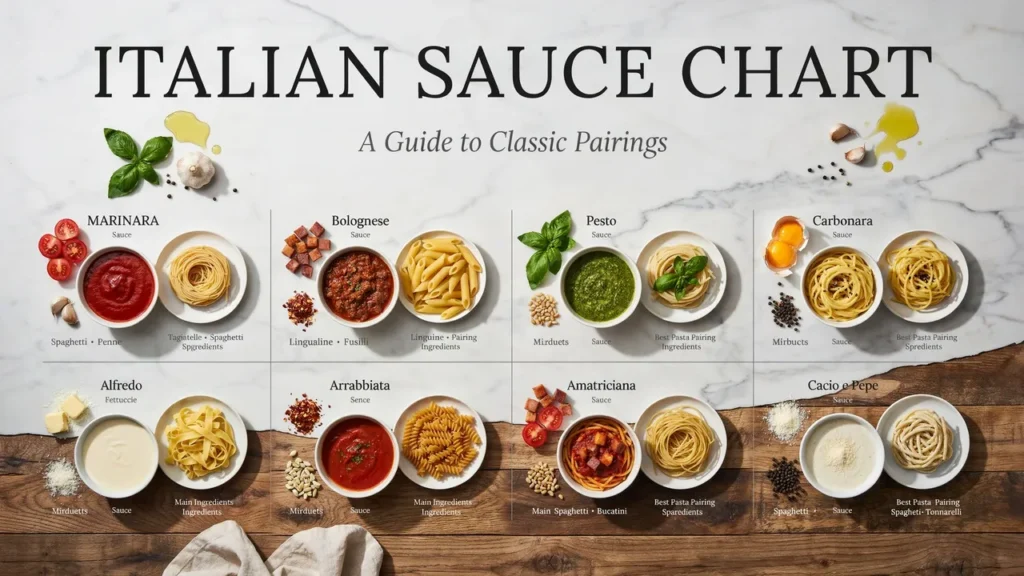
Different pasta shapes work particularly well with different sauces.
| Sauce | Main Ingredients | Best With |
|---|---|---|
| Marinara | Tomato, garlic, herbs | Spaghetti, penne |
| Bolognese | Meat, tomato | Tagliatelle, spaghetti |
| Pesto | Basil, nuts, cheese, oil | Linguine, fusilli |
| Carbonara | Egg, cheese, pork | Spaghetti |
| Alfredo | Butter, cheese | Fettuccine |
| Arrabbiata | Tomato, chili, garlic | Penne |
| Amatriciana | Tomato, pork, cheese | Spaghetti, bucatini |
| Cacio e Pepe | Cheese, black pepper | Spaghetti, tonnarelli |
Sauce selection can change the texture, richness, and overall character of a pasta dish.
Italian Food By Region
Italian cuisine is highly regional.
| Region | Famous Foods |
|---|---|
| Lombardy | Risotto, osso buco |
| Emilia-Romagna | Lasagna, tagliatelle, tortellini |
| Tuscany | Ribollita, bistecca |
| Lazio | Carbonara, cacio e pepe |
| Campania | Pizza, pasta dishes |
| Sicily | Arancini, cannoli |
| Liguria | Pesto, focaccia |
| Veneto | Risotto, tiramisu |
| Piedmont | Truffles, rich sauces |
| Puglia | Orecchiette, vegetable dishes |
Italian cuisine is not one uniform style; each region has its own ingredients, traditions, and specialties.
Italian Dessert Chart
Italian desserts range from creamy and rich to light and crisp.
| Dessert | Main Ingredients | Flavor |
|---|---|---|
| Tiramisu | Mascarpone, coffee, cocoa | Rich & coffee-like |
| Panna Cotta | Cream, sugar | Creamy & mild |
| Cannoli | Pastry, ricotta | Sweet & creamy |
| Gelato | Milk/cream, flavorings | Creamy |
| Zabaglione | Egg yolks, sugar | Rich & custardy |
| Biscotti | Flour, sugar, nuts | Crisp & sweet |
| Sfogliatella | Pastry, sweet filling | Crisp & rich |
| Panettone | Sweet bread, fruit | Sweet & fruity |
Italian Food And Flavor Chart
Different ingredients contribute different flavor profiles.
| Flavor | Common Italian Ingredients |
|---|---|
| Fresh | Basil, tomato, parsley |
| Creamy | Mascarpone, ricotta, cream |
| Salty | Parmesan, Pecorino, olives |
| Sweet | Balsamic glaze, fruit |
| Earthy | Mushrooms, rosemary |
| Spicy | Chili, pepper |
| Tangy | Tomato, vinegar |
| Savory | Garlic, Parmesan, meat |
A combination of these flavors creates the balance found in many Italian dishes.
Italian Food Protein Chart
Italian cuisine includes both plant and animal protein sources.
| Food | Main Protein Source | General Protein Level |
|---|---|---|
| Pasta | Wheat | Moderate |
| Lentils | Legumes | Moderate-high |
| Beans | Legumes | Moderate-high |
| Chicken | Poultry | High |
| Beef | Meat | High |
| Fish | Seafood | High |
| Shrimp | Seafood | High |
| Eggs | Egg | Moderate |
| Ricotta | Dairy | Moderate |
| Parmesan | Dairy | Moderate-high |
Protein content varies according to portion size and recipe.
Italian Food Serving Size Chart
Serving sizes vary by recipe and whether a food is served as a first course, main dish, or side.
| Food | Typical Serving |
|---|---|
| Dry Pasta | 75–100 g |
| Risotto Rice | 70–90 g dry |
| Pizza | 2–4 slices |
| Lasagna | 1 medium portion |
| Gnocchi | 150–200 g |
| Soup | 1–2 cups |
| Salad | 1–2 cups |
| Garlic Bread | 1–3 pieces |
| Gelato | ½–1 cup |
| Tiramisu | 1 slice/portion |
These are general serving guidelines and can vary considerably by recipe and restaurant.
Italian Food Cooking Methods
Italian cuisine uses many different cooking techniques.
| Method | Popular Foods |
|---|---|
| Baking | Pizza, lasagna |
| Boiling | Pasta, gnocchi |
| Simmering | Tomato sauces, soups |
| Grilling | Meat, vegetables |
| Roasting | Chicken, potatoes |
| Sautéing | Vegetables, seafood |
| Frying | Arancini, calamari |
| Slow Cooking | Meat sauces, stews |
Cooking methods influence texture, aroma, and flavor.
Vegetarian Italian Food Chart
Italian cuisine has many naturally vegetarian dishes.
| Dish | Main Ingredients |
|---|---|
| Margherita Pizza | Tomato, mozzarella, basil |
| Caprese Salad | Tomato, mozzarella, basil |
| Eggplant Pasta | Eggplant, tomato, pasta |
| Vegetable Risotto | Rice, vegetables, cheese |
| Pesto Pasta | Basil, pasta, cheese |
| Gnocchi | Potato, flour |
| Bruschetta | Bread, tomato, basil |
| Vegetable Lasagna | Pasta, vegetables, cheese |
Vegetarian Italian dishes can be both simple and very filling.
Seafood Italian Food Chart
Italy’s long coastline makes seafood an important part of many regional cuisines.
| Seafood Dish | Main Ingredients | Flavor |
|---|---|---|
| Seafood Pasta | Pasta, mixed seafood | Briny & savory |
| Frutti di Mare | Seafood, tomato/pasta | Rich & fresh |
| Linguine With Clams | Linguine, clams | Briny |
| Grilled Fish | Fish, herbs, olive oil | Light & savory |
| Fried Calamari | Squid, breading | Crispy |
| Shrimp Pasta | Shrimp, pasta | Mild & savory |
Seafood dishes are particularly common in coastal regions.
Common Mistakes When Choosing Italian Food
Assuming all pasta is the same: Different shapes are designed to work with different sauces.
Using too much sauce: Traditional Italian dishes often aim for a balance between pasta and sauce.
Ignoring ingredient quality: Simple recipes depend heavily on the quality of their ingredients.
Overcooking pasta: Pasta is often served al dente, meaning it retains some firmness when bitten.
Confusing regional dishes: Italian food varies greatly from one region to another.
Adding too many toppings: Some Italian dishes are intentionally simple so individual ingredients can stand out.
Tips For Enjoying Italian Food
Match pasta with sauce: Wide pasta works well with rich sauces, while smaller shapes are excellent with lighter or chunky sauces.
Use fresh herbs: Basil and parsley can add freshness at the end of cooking.
Don’t overlook vegetables: Eggplant, zucchini, tomatoes, peppers, mushrooms, and greens are important parts of Italian cuisine.
Balance rich foods: Pair creamy or cheesy dishes with fresh salads or vegetables.
Try regional dishes: Exploring food by region is one of the best ways to understand Italian cuisine.
Keep simple dishes simple: Many classic Italian recipes depend on a small number of well-balanced ingredients.
The History Behind Italian Food
Italian cuisine developed over centuries and was strongly influenced by geography, agriculture, trade, and regional traditions. Before Italy became a unified country, its regions had their own distinct food cultures.
Pasta became an important part of Italian cuisine, while tomatoes eventually became central to many southern Italian dishes after arriving in Europe from the Americas. Regional ingredients such as olive oil, rice, seafood, cheeses, cured meats, and vegetables helped shape the diverse cuisine enjoyed today.
Italian food later spread around the world through migration, restaurants, and global food culture. Today, pizza and pasta are among the most recognizable foods internationally.
Frequently Asked Questions
What Is The Most Popular Italian Food?
Pizza and pasta are among the most internationally popular Italian foods, but Italy has hundreds of regional dishes beyond these two categories.
What Are The Main Types Of Italian Food?
Major categories include pasta, pizza, risotto, soups, seafood, meat dishes, salads, cheeses, breads, appetizers, and desserts.
What Is A Traditional Italian Breakfast?
A traditional Italian breakfast is often simple and may include coffee, cappuccino, pastries, or a cornetto.
What Is The Most Popular Italian Pasta?
Spaghetti is one of the most recognizable Italian pasta shapes, although many other varieties such as penne, tagliatelle, rigatoni, and ravioli are also widely enjoyed.
What Is The Difference Between Pasta And Risotto?
Pasta is made from a dough that is shaped into different forms, while risotto is made from short-grain rice that is gradually cooked with liquid to create a creamy texture.
What Cheese Is Most Commonly Used In Italian Food?
Mozzarella, Parmesan, Pecorino Romano, ricotta, mascarpone, and Gorgonzola are among the best-known Italian cheeses.
What Herbs Are Commonly Used In Italian Cooking?
Basil, oregano, rosemary, thyme, sage, and parsley are commonly used to add aroma and flavor.
What Are Some Popular Italian Desserts?
Popular choices include tiramisu, panna cotta, cannoli, gelato, biscotti, and panettone.
What Is A Typical Italian Pasta Serving?
A common dry pasta serving is around 75–100 grams per person, although serving sizes vary by dish and appetite.
Which Italian Food Is Best For Vegetarians?
Vegetarian options include Margherita pizza, Caprese salad, vegetable risotto, pesto pasta, gnocchi, bruschetta, and vegetable lasagna.
Italian cuisine offers an incredible variety of pasta, pizza, seafood, meats, vegetables, cheeses, breads, appetizers, and desserts. Understanding the Italian food chart makes it easier to compare popular dishes, ingredients, flavors, serving sizes, and regional specialties. Whether you prefer a simple Margherita pizza, creamy risotto, fresh Caprese salad, handmade pasta, or classic tiramisu, Italian food has something for almost every taste.
