
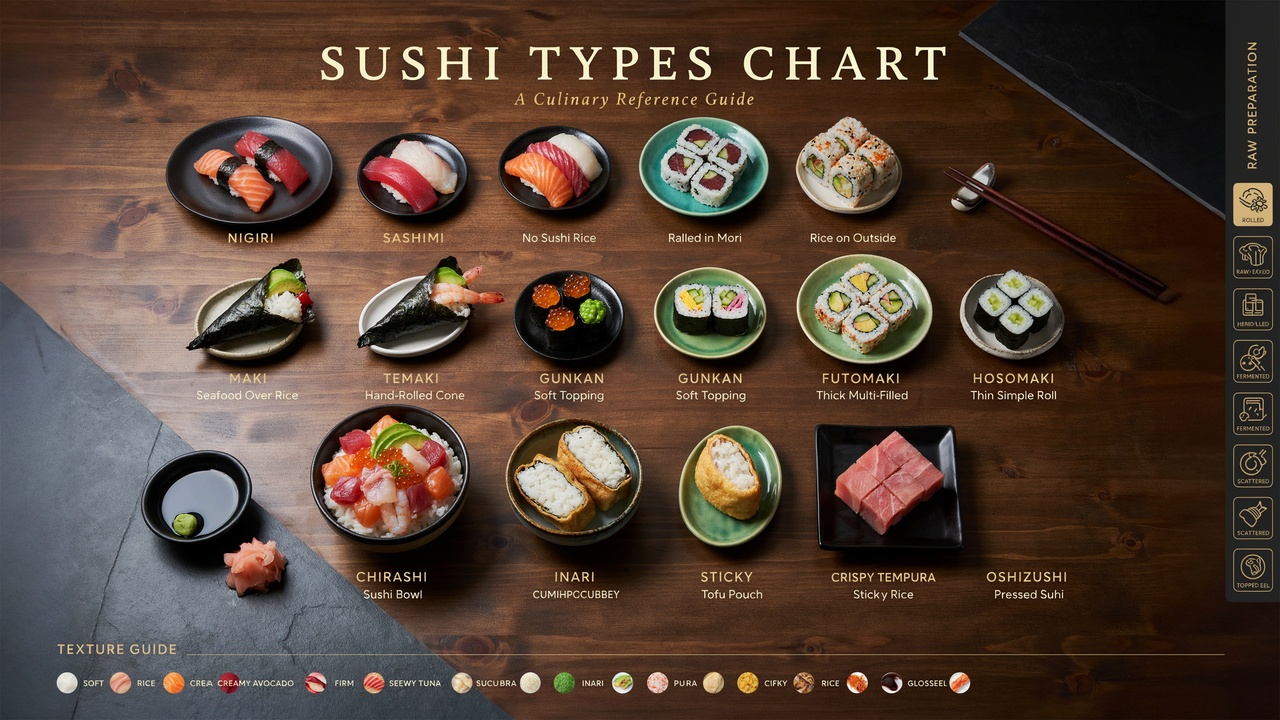
Sushi is much more than just raw fish and rice. Japanese cuisine includes many different types of sushi, each with its own shape, preparation method, ingredients, and serving style. Some sushi is wrapped in seaweed, some has rice on the outside, while others are served as individual pieces without a traditional roll. Understanding the sushi types chart makes it easier to recognize the major varieties and choose the right style for your meal.
Why Sushi Types Matter
Different sushi styles offer completely different eating experiences. A thin maki roll can provide a simple combination of rice, nori, and one filling, while a specialty uramaki can contain several ingredients and sauces.
Nigiri focuses on a piece of seafood placed over rice, while sashimi highlights sliced seafood without sushi rice. Hand rolls provide a larger, cone-shaped serving that is usually eaten by hand.
Knowing these differences can make ordering sushi much easier, especially if you’re trying Japanese food for the first time.
Standard Sushi Types Chart
There are several major types of sushi, each with its own traditional characteristics.
Sushi Types Chart
| Sushi Type | Main Characteristics | Typical Ingredients | Shape |
|---|---|---|---|
| Nigiri | Seafood over rice | Fish, rice | Oval |
| Sashimi | Sliced seafood without rice | Fish, seafood | Sliced |
| Maki | Rice and filling wrapped in nori | Rice, seafood, vegetables | Roll |
| Uramaki | Rice on outside, nori inside | Rice, nori, fillings | Roll |
| Temaki | Hand-rolled cone | Rice, nori, fillings | Cone |
| Gunkan | Rice wrapped with nori | Rice, nori, roe | Oval |
| Futomaki | Thick multi-filled roll | Rice, nori, vegetables | Thick roll |
| Hosomaki | Thin roll with simple filling | Rice, nori, one filling | Thin roll |
| Chirashi | Sushi ingredients over rice | Rice, seafood, vegetables | Bowl |
| Inari | Rice inside fried tofu pouch | Sushi rice, tofu | Pouch |
| Oshizushi | Pressed sushi | Rice, seafood | Rectangular |
| Narezushi | Fermented fish and rice | Fish, rice | Traditional |
Names and ingredients can vary depending on region and restaurant.
Choosing The Right Sushi Type
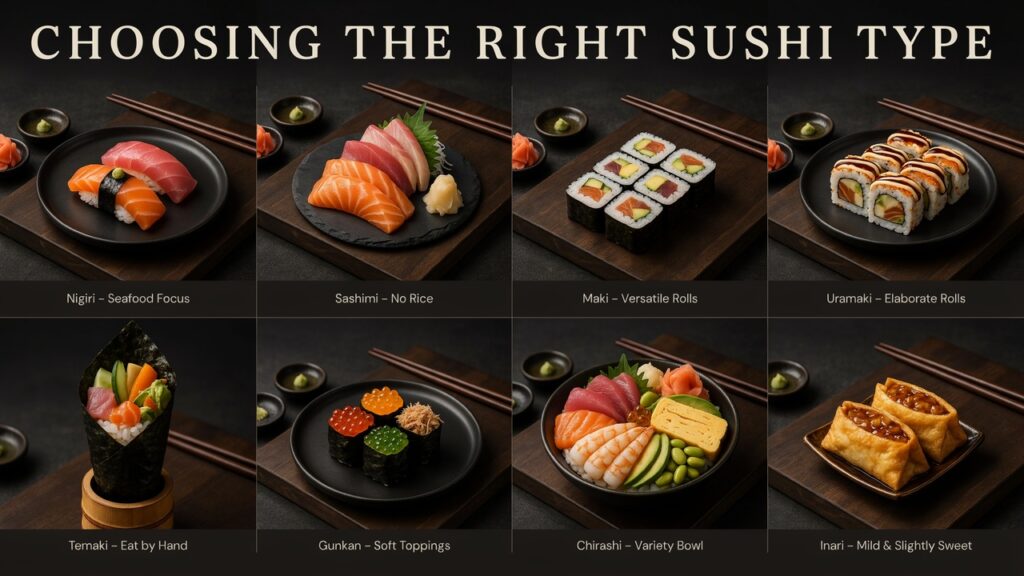
The best sushi type depends on what you prefer.
Nigiri: Great if you want to focus on the flavor of the seafood with a small amount of rice.
Sashimi: Best for seafood lovers who want to enjoy fish without rice.
Maki: A versatile choice with many possible fillings.
Uramaki: Ideal if you enjoy more elaborate rolls with several ingredients.
Temaki: Fun and casual, especially when you want to eat sushi by hand.
Gunkan: Excellent for soft toppings such as fish roe or other finely chopped ingredients.
Chirashi: Good when you want several different sushi ingredients served together in one bowl.
Inari: A mild and slightly sweet option featuring seasoned fried tofu.
Nigiri Sushi Chart
Nigiri is one of the most recognizable forms of sushi. It consists of a small portion of sushi rice topped with seafood or another ingredient.
| Nigiri Type | Typical Topping | Flavor |
|---|---|---|
| Salmon Nigiri | Salmon | Rich & buttery |
| Tuna Nigiri | Tuna | Mild & savory |
| Shrimp Nigiri | Shrimp | Sweet & delicate |
| Eel Nigiri | Grilled eel | Sweet & savory |
| Yellowtail Nigiri | Yellowtail | Rich & mild |
| Scallop Nigiri | Scallop | Sweet & delicate |
| Squid Nigiri | Squid | Mild & slightly chewy |
| Mackerel Nigiri | Mackerel | Rich & savory |
Nigiri is often served as individual pieces rather than a large roll.
Sashimi Chart
Sashimi is sliced seafood served without sushi rice. It highlights the natural texture and flavor of the ingredient.
| Sashimi Type | Main Ingredient | Typical Flavor |
|---|---|---|
| Salmon | Salmon | Rich & buttery |
| Tuna | Tuna | Clean & meaty |
| Yellowtail | Yellowtail | Rich & delicate |
| Mackerel | Mackerel | Strong & savory |
| Scallop | Scallop | Sweet & delicate |
| Squid | Squid | Mild & chewy |
| Octopus | Octopus | Firm & savory |
| Sea Bream | Sea bream | Mild & delicate |
Preparation and availability depend on the restaurant.
Maki Sushi Chart
Maki is a broad category of rolled sushi. Rice and fillings are commonly wrapped with nori.
| Maki Type | Size | Typical Filling |
|---|---|---|
| Hosomaki | Thin | Cucumber, tuna |
| Chumaki | Medium | Seafood, vegetables |
| Futomaki | Thick | Multiple fillings |
| Uramaki | Inside-out | Seafood, avocado |
| Temaki | Cone-shaped | Seafood, vegetables |
Maki can contain raw seafood, cooked seafood, vegetables, or combinations of ingredients.
Hosomaki Vs Futomaki
The main difference is size and the number of fillings.
| Feature | Hosomaki | Futomaki |
|---|---|---|
| Size | Thin | Thick |
| Fillings | Usually simple | Multiple |
| Ingredients | Often one main filling | Several fillings |
| Pieces | Usually smaller | Larger |
| Flavor | Simple | More complex |
Hosomaki is useful when you want to enjoy one main ingredient, while futomaki provides a wider combination of flavors and textures.
Uramaki Sushi Chart
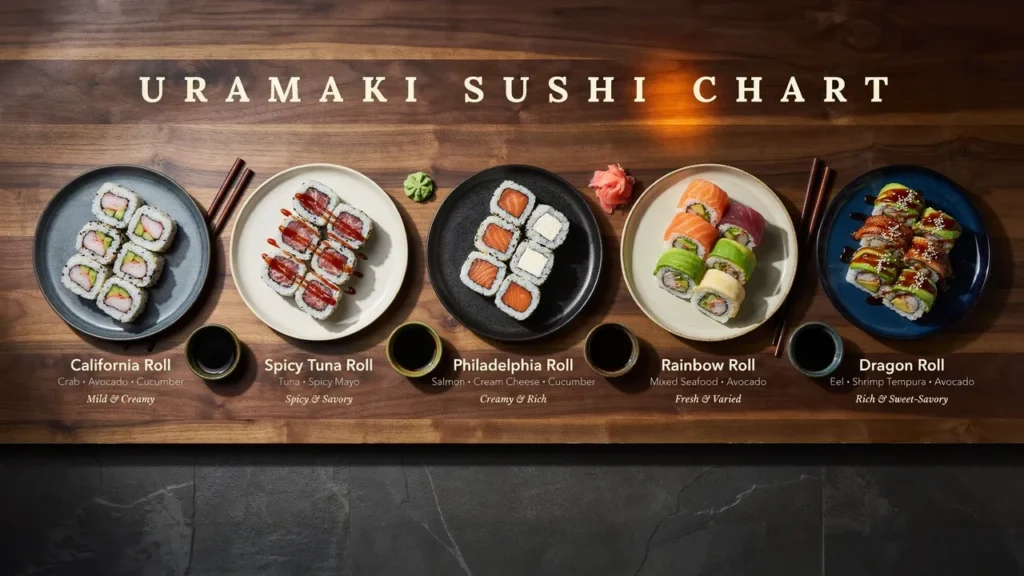
Uramaki is commonly described as an inside-out roll because the rice is on the outside and the nori surrounds the filling.
| Uramaki Example | Main Ingredients | Flavor |
|---|---|---|
| California Roll | Crab, avocado, cucumber | Mild & creamy |
| Spicy Tuna Roll | Tuna, spicy sauce | Spicy & savory |
| Philadelphia Roll | Salmon, cream cheese, cucumber | Creamy & rich |
| Rainbow Roll | Mixed seafood, avocado | Fresh & varied |
| Dragon Roll | Eel or shrimp, avocado | Rich & sweet-savory |
Uramaki is particularly common in modern sushi restaurants outside Japan.
Temaki Sushi Chart
Temaki is hand-rolled sushi shaped like a cone. It is generally designed to be eaten with the hands.
| Temaki Filling | Main Ingredients | Flavor |
|---|---|---|
| Salmon Temaki | Salmon, cucumber | Rich & fresh |
| Tuna Temaki | Tuna, green onion | Savory |
| Spicy Tuna Temaki | Tuna, spicy sauce | Spicy |
| California Temaki | Crab, avocado, cucumber | Mild & creamy |
| Vegetable Temaki | Cucumber, avocado, carrot | Fresh & crisp |
| Eel Temaki | Eel, cucumber | Sweet & savory |
Because temaki is made for immediate eating, the nori can remain crisp and crunchy.
Gunkan Sushi Chart
Gunkan is a small mound of sushi rice wrapped with nori around the sides, creating a space for soft toppings.
| Gunkan Type | Common Topping | Flavor |
|---|---|---|
| Ikura Gunkan | Salmon roe | Salty & briny |
| Tobiko Gunkan | Flying fish roe | Salty & crunchy |
| Uni Gunkan | Sea urchin | Rich & creamy |
| Negitoro Gunkan | Chopped tuna, green onion | Rich & savory |
| Seaweed Gunkan | Seaweed mixture | Savory & fresh |
Gunkan is especially useful for toppings that would be difficult to place neatly on ordinary nigiri.
Chirashi Sushi Chart
Chirashi means that sushi ingredients are scattered over a bowl of sushi rice rather than rolled.
| Chirashi Style | Common Ingredients | Serving Style |
|---|---|---|
| Seafood Chirashi | Salmon, tuna, shrimp | Bowl |
| Vegetable Chirashi | Vegetables, egg | Bowl |
| Mixed Chirashi | Seafood, vegetables, egg | Bowl |
| Seasonal Chirashi | Seasonal seafood & vegetables | Bowl |
It provides a convenient way to enjoy several sushi ingredients in one serving.
Inari Sushi Chart
Inari sushi consists of sushi rice placed inside a pouch made from seasoned fried tofu.
| Inari Type | Filling | Flavor |
|---|---|---|
| Plain Inari | Sushi rice | Sweet & savory |
| Sesame Inari | Rice, sesame | Nutty |
| Vegetable Inari | Rice, vegetables | Fresh & savory |
| Mixed Inari | Rice, vegetables, seasonings | Sweet & savory |
Inari is generally mild and can be a good option for people who don’t want raw seafood.
Sushi By Main Ingredient
Sushi can also be categorized by its main filling or topping.
| Main Ingredient | Popular Sushi Types |
|---|---|
| Salmon | Nigiri, maki, sashimi |
| Tuna | Nigiri, maki, sashimi |
| Shrimp | Nigiri, maki, tempura rolls |
| Eel | Nigiri, uramaki |
| Crab | Uramaki, maki |
| Scallop | Nigiri, sashimi |
| Mackerel | Nigiri, sashimi |
| Egg | Tamago nigiri, maki |
| Cucumber | Hosomaki, uramaki |
| Avocado | Maki, uramaki |
| Tofu | Inari |
The same ingredient can taste quite different depending on how it is prepared.
Sushi Types By Preparation
Different sushi styles use different preparation methods.
| Preparation | Sushi Examples |
|---|---|
| Raw Seafood | Sashimi, nigiri |
| Rolled | Maki, uramaki |
| Hand-Rolled | Temaki |
| Pressed | Oshizushi |
| Fermented | Narezushi |
| Stuffed | Inari |
| Scattered | Chirashi |
| Topped Rice | Nigiri |
Sushi Texture Chart
Texture is an important part of the sushi experience.
| Texture | Examples |
|---|---|
| Soft | Sushi rice, avocado |
| Creamy | Avocado, uni |
| Firm | Tuna, salmon |
| Chewy | Squid, octopus |
| Crunchy | Cucumber, tobiko |
| Crispy | Tempura fillings |
| Tender | Cooked shrimp, eel |
| Sticky | Sushi rice |
A combination of different textures can make a sushi meal more interesting.
Sushi Flavor Chart
| Flavor Profile | Popular Sushi Types |
|---|---|
| Mild | Cucumber roll, avocado roll |
| Fresh | Salmon nigiri, sashimi |
| Rich | Eel sushi, salmon |
| Creamy | California roll, Philadelphia roll |
| Spicy | Spicy tuna, spicy salmon |
| Sweet & Savory | Eel roll, teriyaki-style rolls |
| Salty & Briny | Roe gunkan |
| Nutty | Sesame-topped rolls |
Sushi Types For Beginners
If you’re trying sushi for the first time, some styles are easier to approach than others.
California Roll: Mild and creamy, with cooked or imitation crab commonly used.
Avocado Roll: Simple, creamy, and seafood-free.
Cucumber Roll: Fresh and crunchy.
Shrimp Tempura Roll: Cooked shrimp with a crispy texture.
Inari: Sweet-savory tofu pouch filled with rice.
Chicken or Teriyaki Roll: A cooked option found at some modern sushi restaurants.
These choices can help beginners become familiar with sushi rice and nori before trying raw seafood.
Sushi Types For Seafood Lovers
Seafood lovers have many options.
| Sushi Type | Seafood | Style |
|---|---|---|
| Salmon Nigiri | Salmon | Raw |
| Tuna Nigiri | Tuna | Raw |
| Salmon Sashimi | Salmon | Raw |
| Tuna Sashimi | Tuna | Raw |
| Eel Nigiri | Eel | Cooked |
| Shrimp Nigiri | Shrimp | Cooked |
| Mackerel Sushi | Mackerel | Cured/cooked depending on preparation |
| Scallop Nigiri | Scallop | Raw or prepared depending on restaurant |
Always check the menu or ask the restaurant about preparation if you need to know whether seafood is raw, cooked, or cured.
Sushi Types Without Raw Fish
Sushi does not always require raw seafood.
| Sushi Type | Main Ingredients | Seafood |
|---|---|---|
| Cucumber Maki | Cucumber, rice, nori | None |
| Avocado Maki | Avocado, rice, nori | None |
| Vegetable Maki | Mixed vegetables | None |
| Inari | Seasoned tofu, rice | None |
| Tamago Nigiri | Sweet egg, rice | None |
| Sweet Potato Roll | Sweet potato, rice | None |
| Tempura Vegetable Roll | Vegetables, rice, nori | None |
Some sauces or broths may contain seafood ingredients, so labels should be checked for strict dietary requirements.
Sushi Serving Size Chart
Sushi portions vary depending on the type and restaurant.
| Sushi Type | Typical Serving |
|---|---|
| Nigiri | 1–2 pieces |
| Sashimi | 3–6 slices |
| Hosomaki | 6–8 pieces |
| Uramaki | 6–8 pieces |
| Futomaki | 4–8 pieces |
| Temaki | 1 cone |
| Gunkan | 1–2 pieces |
| Chirashi | 1 bowl |
| Inari | 2–4 pieces |
These are general serving suggestions, not fixed restaurant standards.
Sushi Condiment Chart
Traditional sushi is often served with a few familiar accompaniments.
| Condiment | Flavor | Common Use |
|---|---|---|
| Soy Sauce | Salty & umami | Dipping |
| Wasabi | Sharp & spicy | Sushi, sashimi |
| Pickled Ginger | Sweet & tangy | Between bites |
| Ponzu | Citrus & savory | Seafood |
| Spicy Mayo | Creamy & spicy | Specialty rolls |
| Eel Sauce | Sweet & savory | Eel and specialty rolls |
Using a small amount of condiment can help preserve the delicate flavor of the sushi itself.
Sushi And Sake Pairings
Sushi can be paired with a range of beverages, including sake and non-alcoholic options.
| Sushi Style | General Pairing |
|---|---|
| Delicate Sashimi | Light, clean beverage |
| Salmon Sushi | Crisp beverage |
| Tuna Sushi | Medium-bodied beverage |
| Tempura Rolls | Refreshing beverage |
| Eel Sushi | Richer beverage |
| Spicy Rolls | Cooling beverage |
The best pairing ultimately depends on personal preference and the specific ingredients.
Traditional Vs Modern Sushi
Modern sushi restaurants often serve combinations that differ from traditional Japanese styles.
| Traditional-Style | Modern-Style |
|---|---|
| Nigiri | Specialty rolls |
| Hosomaki | Uramaki |
| Sashimi | Tempura rolls |
| Gunkan | Saucy rolls |
| Chirashi | Fusion rolls |
| Inari | Cream cheese rolls |
Modern sushi has developed many new combinations to appeal to different tastes around the world.
How To Choose Sushi
Decide on raw or cooked seafood: This is one of the biggest differences when ordering.
Choose a style: Pick nigiri for simple seafood and rice, maki for rolls, or sashimi for seafood without rice.
Think about texture: Try crunchy cucumber, creamy avocado, or crispy tempura.
Start mild: California, avocado, and cucumber rolls are approachable options.
Try variety: Combining nigiri, rolls, and sashimi can provide a broader experience.
Use sauces carefully: Strong sauces can overpower delicate fish.
Common Mistakes When Choosing Sushi
Assuming all sushi contains raw fish: Many sushi types use cooked seafood, vegetables, or egg.
Confusing sushi with sashimi: Sashimi is sliced seafood without sushi rice.
Ordering only rich rolls: Fried and creamy specialty rolls can become heavy when eaten together.
Using too much soy sauce: Excessive soy sauce can overwhelm subtle flavors.
Adding too much wasabi: Wasabi has a powerful heat and aroma.
Ignoring portion size: Sushi pieces and rolls vary considerably between restaurants.
Tips For Serving Sushi
Serve fresh: Sushi is generally best shortly after preparation.
Keep rice at the right texture: Sushi rice should be cohesive but not overly mushy.
Add condiments separately: This allows diners to control flavor.
Serve different textures: Combine soft, crunchy, creamy, and firm ingredients.
Use pickled ginger between different varieties: Its bright flavor can refresh the palate.
Avoid overwhelming delicate sushi: Simple nigiri often needs little more than good-quality fish and rice.
The History Behind Sushi Types
Sushi developed from ancient methods of preserving fish with fermented rice. Over centuries, the preparation changed, particularly in Japan, where sushi eventually evolved into fresh preparations involving vinegared rice and seafood.
Different forms developed over time, including nigiri, maki, gunkan, and pressed sushi. Modern international sushi has also introduced new styles, ingredients, and combinations.
Today, sushi includes both traditional forms and modern creations, making it one of the world’s most recognizable Japanese cuisines.
Frequently Asked Questions
What Are The Main Types Of Sushi?
The major sushi styles include nigiri, sashimi, maki, uramaki, temaki, gunkan, chirashi, inari, and oshizushi.
What Is The Difference Between Sushi And Sashimi?
Sushi includes vinegared rice, while sashimi is sliced seafood served without sushi rice.
What Is Nigiri Sushi?
Nigiri consists of a small portion of sushi rice topped with seafood or another ingredient.
What Is Maki Sushi?
Maki is rolled sushi where rice and fillings are commonly wrapped in nori.
What Is Uramaki?
Uramaki is an inside-out roll where the rice is on the outside and nori surrounds the filling.
What Is Temaki?
Temaki is hand-rolled sushi shaped like a cone and is usually eaten by hand.
What Is Gunkan Sushi?
Gunkan is sushi rice wrapped with a strip of nori around the sides, creating a small container for soft toppings such as fish roe.
What Is Chirashi Sushi?
Chirashi is sushi rice served in a bowl with seafood, vegetables, egg, and other toppings scattered over the top.
What Is Inari Sushi?
Inari is sushi rice stuffed inside a pouch made from seasoned fried tofu.
What Is The Best Sushi For Beginners?
California rolls, cucumber rolls, avocado rolls, shrimp tempura rolls, and inari sushi are often approachable options for beginners.
Which Sushi Types Contain Raw Fish?
Common examples include sashimi, salmon nigiri, tuna nigiri, salmon rolls, tuna rolls, and some specialty rolls.
What Sushi Has No Fish?
Options such as cucumber maki, avocado maki, vegetable rolls, inari, and tamago nigiri can be made without fish.
Sushi offers an incredible range of styles, from the simple elegance of nigiri and sashimi to the variety of maki, uramaki, temaki, gunkan, chirashi, and inari. Understanding the sushi types chart makes it easier to recognize different forms, compare ingredients, choose raw or cooked options, and find the perfect sushi style for your next meal.
