
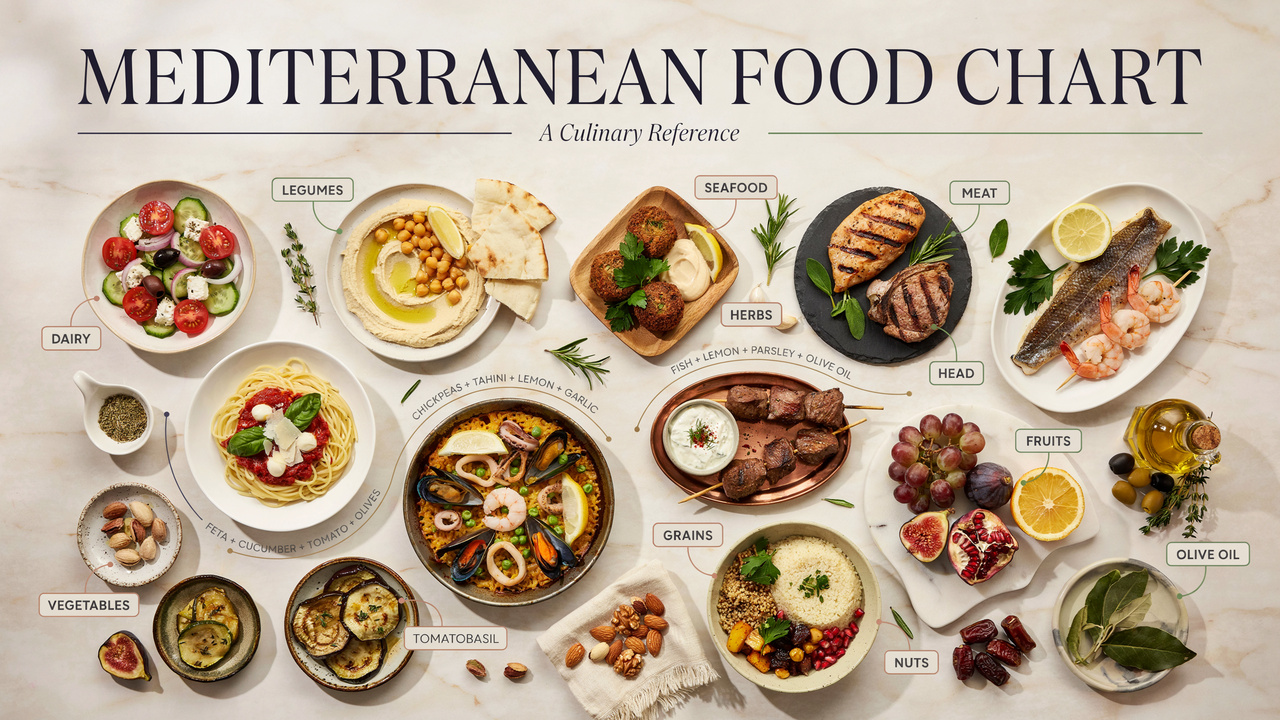
Mediterranean food is known for its fresh ingredients, colorful vegetables, whole grains, legumes, seafood, herbs, and flavorful oils. But Mediterranean cuisine is much more than just salads and olive oil. From Greek souvlaki and hummus to Italian pasta, Spanish paella, and Turkish grilled meats, the Mediterranean region offers an incredible variety of foods and flavors. Understanding the Mediterranean food chart makes it easier to explore popular dishes, ingredients, food pairings, and traditional meal ideas.
Why Mediterranean Food Matters
Mediterranean cuisine is built around fresh and flavorful ingredients. Vegetables, fruits, legumes, grains, herbs, nuts, seafood, and olive oil appear frequently across many Mediterranean food traditions.
Food varies considerably from country to country. Greek cuisine may feature feta, olives, yogurt, and lemon, while Italian cooking is famous for tomatoes, pasta, basil, and cheese. Spanish dishes often include rice, seafood, peppers, and saffron, while Turkish cuisine includes grilled meats, yogurt, eggplant, legumes, and fresh herbs.
Because of this regional diversity, there is no single Mediterranean food menu. Instead, there are many culinary traditions connected by overlapping ingredients and cooking styles.
Standard Mediterranean Food Chart
Mediterranean food includes everything from fresh vegetables and grains to seafood, meats, dips, breads, and desserts.
Mediterranean Food Chart
| Food Category | Popular Foods | Common Uses |
|---|---|---|
| Vegetables | Tomato, cucumber, eggplant, peppers | Salads, sides & stews |
| Fruits | Grapes, figs, olives, citrus | Snacks, salads & desserts |
| Grains | Wheat, rice, couscous, bulgur | Breads, bowls & main dishes |
| Legumes | Chickpeas, lentils, beans | Soups, dips & salads |
| Seafood | Sardines, tuna, shrimp, octopus | Grilled & baked dishes |
| Meat | Chicken, lamb, beef | Grilled dishes & stews |
| Dairy | Yogurt, feta, halloumi | Dips, salads & sides |
| Nuts | Almonds, walnuts, pistachios | Snacks & desserts |
| Herbs | Basil, oregano, parsley, mint | Seasoning & sauces |
| Oils | Olive oil | Cooking & dressings |
| Bread | Pita, flatbread, crusty bread | Dips, sandwiches & meals |
The exact foods vary by country and region, but these ingredients appear frequently throughout Mediterranean cuisine.
Choosing The Right Mediterranean Food
The best Mediterranean food depends on the type of meal you’re preparing.
Fresh Salads: Tomato, cucumber, olives, feta, herbs, and olive oil create simple and flavorful salads.
Grilled Foods: Chicken, lamb, seafood, and vegetables are commonly grilled and seasoned with herbs, garlic, lemon, and spices.
Dips: Hummus, baba ganoush, tzatziki, and other spreads work well with pita and fresh vegetables.
Grain Dishes: Rice, bulgur, couscous, and other grains can be served with vegetables, meat, seafood, or legumes.
Legume-Based Foods: Chickpeas, lentils, and beans are useful in soups, salads, stews, and dips.
Fruit And Nuts: Figs, grapes, citrus fruits, almonds, walnuts, and pistachios can be served as snacks or incorporated into desserts.
Mediterranean Vegetable Chart
Vegetables are an important part of many Mediterranean cuisines and can be prepared in countless ways.
| Vegetable | Common Mediterranean Pairings | Popular Uses |
|---|---|---|
| Tomato | Basil, olive oil, feta | Salads & sauces |
| Cucumber | Yogurt, mint, lemon | Salads & dips |
| Eggplant | Garlic, tomato, tahini | Grilled dishes & dips |
| Bell Pepper | Tomato, onion, olive oil | Roasted dishes |
| Zucchini | Garlic, herbs, lemon | Grilled & sautéed |
| Spinach | Feta, eggs, garlic | Pies & sides |
| Onion | Tomato, herbs, olive oil | Salads & cooked dishes |
| Artichoke | Lemon, garlic, herbs | Appetizers & sides |
| Carrot | Herbs, yogurt, lemon | Salads & sides |
| Potato | Rosemary, garlic, olive oil | Roasted dishes |
Mediterranean cooking often uses simple preparation methods that allow the natural flavor of vegetables to remain noticeable.
Mediterranean Fruit Chart
Fresh and dried fruits are commonly used in Mediterranean food traditions.
| Fruit | Common Pairings | Popular Uses |
|---|---|---|
| Grapes | Cheese, nuts | Snacks & desserts |
| Figs | Honey, cheese, walnuts | Desserts & appetizers |
| Orange | Cinnamon, yogurt | Desserts & salads |
| Lemon | Fish, chicken, herbs | Sauces & dressings |
| Pomegranate | Yogurt, salads, grains | Toppings & sauces |
| Dates | Nuts, tahini | Snacks & desserts |
| Apricot | Almonds, yogurt | Desserts & snacks |
| Melon | Feta, mint | Salads & appetizers |
| Cherries | Yogurt, nuts | Desserts |
| Olives | Cheese, tomato, herbs | Salads & appetizers |
Fruit can add natural sweetness and acidity to otherwise savory dishes.
Mediterranean Protein Chart
Seafood, poultry, and other meats are used in many Mediterranean cuisines, although the specific ingredients vary by region.
| Protein | Common Pairings | Cooking Method |
|---|---|---|
| Chicken | Lemon, garlic, oregano | Grilled & roasted |
| Lamb | Mint, rosemary, garlic | Grilled & roasted |
| Beef | Onion, tomato, herbs | Grilled & stewed |
| Sardines | Lemon, parsley, olive oil | Grilled & baked |
| Tuna | Lemon, olive oil, herbs | Grilled & salads |
| Shrimp | Garlic, tomato, lemon | Grilled & sautéed |
| Octopus | Lemon, herbs, olive oil | Grilled & boiled |
| Eggs | Tomato, spinach, herbs | Baked & cooked |
Mediterranean seafood dishes often rely on simple seasonings such as lemon, garlic, olive oil, parsley, and herbs.
Mediterranean Grain Chart
Grains are an important part of many Mediterranean meals.
| Grain | Texture | Common Uses |
|---|---|---|
| Rice | Soft & fluffy | Pilaf & seafood dishes |
| Bulgur | Firm & chewy | Salads & pilaf |
| Couscous | Light & fluffy | Vegetable & meat dishes |
| Wheat | Chewy | Bread & grain dishes |
| Farro | Firm & chewy | Salads & bowls |
| Barley | Chewy | Soups & salads |
| Polenta | Soft & creamy | Sides & main dishes |
Grain choices depend heavily on the country’s culinary traditions and the specific dish being prepared.
Mediterranean Legume Chart
Legumes are especially useful in Mediterranean-style meals because they can be used in everything from dips to soups.
| Legume | Popular Dish | Common Pairings |
|---|---|---|
| Chickpeas | Hummus | Tahini, lemon, garlic |
| Lentils | Lentil soup | Tomato, onion, herbs |
| White Beans | Bean salads & stews | Tomato, herbs, olive oil |
| Fava Beans | Fava dishes | Lemon, olive oil |
| Green Lentils | Salads | Onion, parsley, lemon |
| Split Peas | Pea purées | Olive oil, lemon |
Legumes can provide a hearty texture and work especially well with vegetables, grains, and herbs.
Mediterranean Food Pairing Chart
One of the easiest ways to understand Mediterranean cuisine is to look at common ingredient combinations.
| Main Ingredient | Best Pairings | Flavor Profile |
|---|---|---|
| Tomato | Basil, olive oil, mozzarella | Fresh & savory |
| Feta | Tomato, cucumber, olive | Salty & fresh |
| Chickpeas | Tahini, lemon, garlic | Creamy & savory |
| Eggplant | Tomato, garlic, tahini | Rich & earthy |
| Fish | Lemon, parsley, olive oil | Fresh & bright |
| Lamb | Mint, garlic, rosemary | Rich & aromatic |
| Yogurt | Cucumber, mint, garlic | Cool & tangy |
| Pita | Hummus, falafel, grilled meat | Savory & hearty |
| Couscous | Vegetables, chickpeas, herbs | Light & aromatic |
| Rice | Seafood, vegetables, herbs | Mild & savory |
These combinations can be mixed and matched to create simple Mediterranean-inspired meals.
Popular Mediterranean Dishes
Mediterranean cuisine includes hundreds of traditional dishes. Some have become especially popular internationally.
Mediterranean Dish Chart
| Dish | Main Ingredients | Cuisine Association |
|---|---|---|
| Hummus | Chickpeas, tahini, lemon, garlic | Levantine |
| Falafel | Chickpeas or fava beans, herbs | Middle Eastern |
| Greek Salad | Tomato, cucumber, feta, olives | Greek |
| Tzatziki | Yogurt, cucumber, garlic | Greek |
| Moussaka | Eggplant, meat, béchamel | Greek |
| Souvlaki | Grilled meat, herbs | Greek |
| Ratatouille | Eggplant, zucchini, tomato | French Mediterranean |
| Paella | Rice, seafood or meat, saffron | Spanish |
| Gazpacho | Tomato, cucumber, peppers | Spanish |
| Caprese Salad | Tomato, mozzarella, basil | Italian |
| Baba Ganoush | Eggplant, tahini, lemon | Levantine |
| Shakshuka | Eggs, tomato, peppers | North African/Mediterranean |
| Tabbouleh | Bulgur, parsley, tomato | Levantine |
Many of these dishes have regional variations, so recipes can differ significantly between households and countries.
Mediterranean Breakfast Food Chart
Mediterranean breakfasts can range from simple bread and cheese to eggs, yogurt, vegetables, and fruit.
| Breakfast Food | Common Pairings |
|---|---|
| Greek Yogurt | Honey, berries, nuts |
| Eggs | Tomato, spinach, herbs |
| Pita | Hummus, eggs, vegetables |
| Olives | Cheese, bread, vegetables |
| Feta | Tomato, cucumber, bread |
| Fresh Fruit | Yogurt, nuts, honey |
| Flatbread | Cheese, olives, vegetables |
| Shakshuka | Bread, herbs, yogurt |
Breakfast traditions vary widely across Mediterranean countries.
Mediterranean Lunch Chart
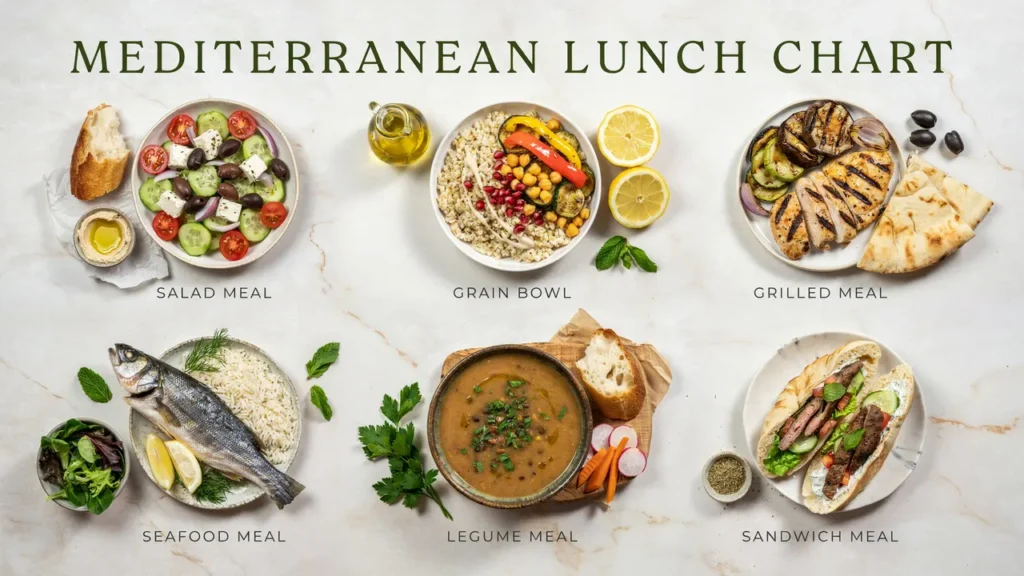
Lunch often combines vegetables, grains, legumes, proteins, and flavorful sauces.
| Lunch Type | Example Foods |
|---|---|
| Salad Meal | Greek salad, bread, hummus |
| Grain Bowl | Bulgur, vegetables, chickpeas |
| Grilled Meal | Chicken, vegetables, pita |
| Seafood Meal | Grilled fish, salad, rice |
| Legume Meal | Lentil soup, bread, vegetables |
| Sandwich Meal | Pita, grilled meat, vegetables |
A Mediterranean-style lunch can be simple without requiring many ingredients.
Mediterranean Snack Chart
Many Mediterranean snacks are based on simple whole ingredients.
| Snack | Main Ingredients |
|---|---|
| Hummus & Pita | Chickpeas, tahini, bread |
| Olives | Olives, herbs |
| Nuts | Almonds, walnuts, pistachios |
| Fresh Fruit | Seasonal fruit |
| Yogurt | Yogurt, honey, fruit |
| Feta & Vegetables | Feta, tomato, cucumber |
| Roasted Chickpeas | Chickpeas, spices |
| Dates & Nuts | Dates, almonds or walnuts |
These foods can be served individually or combined into a small mezze-style plate.
Mediterranean Mezze Chart
Mezze refers to a collection of small dishes commonly served as appetizers or shared foods in parts of the Mediterranean and Middle East.
| Mezze Food | Main Ingredient | Common Pairing |
|---|---|---|
| Hummus | Chickpeas | Pita |
| Baba Ganoush | Eggplant | Pita |
| Tzatziki | Yogurt | Bread & vegetables |
| Falafel | Chickpeas/fava beans | Tahini & salad |
| Olives | Olives | Cheese & bread |
| Feta | Sheep/goat milk cheese | Tomato & cucumber |
| Stuffed Grape Leaves | Grape leaves & rice | Yogurt |
| Muhammara | Peppers & walnuts | Bread |
A mezze spread allows several flavors and textures to be enjoyed together.
Mediterranean Bread Chart
Bread is an important part of many Mediterranean meals.
| Bread | Common Cuisine Association | Popular Use |
|---|---|---|
| Pita | Greek & Middle Eastern | Dips & sandwiches |
| Focaccia | Italian | Side & sandwiches |
| Ciabatta | Italian | Sandwiches |
| Lavash | Eastern Mediterranean | Wraps |
| Flatbread | Various regions | Dips & grilled foods |
| Crusty Wheat Bread | Southern Europe | Soups & meals |
Bread is often served with dips, cheese, vegetables, grilled meats, or olive oil.
Mediterranean Cheese Chart
Cheese adds saltiness and creaminess to many Mediterranean dishes.
| Cheese | Common Cuisine Association | Best Pairings |
|---|---|---|
| Feta | Greek | Tomato, cucumber, olives |
| Halloumi | Cyprus | Tomato, herbs, lemon |
| Mozzarella | Italian | Tomato, basil |
| Parmesan | Italian | Pasta, vegetables |
| Ricotta | Italian | Pasta, fruit, herbs |
| Goat Cheese | Mediterranean regions | Honey, fruit, nuts |
| Pecorino | Italian | Pasta, vegetables |
Cheese can be used in salads, appetizers, pasta dishes, sandwiches, and desserts.
Mediterranean Herbs And Spices
Herbs and spices are essential for creating the distinctive flavors associated with Mediterranean cooking.
| Herb/Spice | Common Pairings |
|---|---|
| Oregano | Tomato, chicken, fish |
| Basil | Tomato, mozzarella, pasta |
| Rosemary | Potato, lamb, chicken |
| Thyme | Vegetables, chicken, fish |
| Parsley | Seafood, salads, grains |
| Mint | Yogurt, lamb, cucumber |
| Dill | Fish, yogurt, cucumber |
| Garlic | Meat, vegetables, seafood |
| Cumin | Chickpeas, lentils, meat |
| Paprika | Chicken, vegetables, rice |
| Saffron | Rice, seafood, chicken |
Fresh herbs are often added near the end of cooking to preserve their aroma.
Mediterranean Food And Olive Oil
Olive oil is one of the most recognizable ingredients associated with Mediterranean cooking. It can be used for cooking, dressings, marinades, dips, and finishing dishes.
Olive Oil Pairing Chart
| Food | Olive Oil Pairing |
|---|---|
| Tomato | Olive oil + basil |
| Bread | Olive oil + herbs |
| Fish | Olive oil + lemon |
| Salad | Olive oil + vinegar |
| Vegetables | Olive oil + garlic |
| Hummus | Olive oil + paprika |
| Potatoes | Olive oil + rosemary |
| Beans | Olive oil + herbs |
The flavor of olive oil can vary considerably depending on the type, region, harvest, and processing.
Mediterranean Food By Country
Mediterranean cuisine is not one single cuisine. Different countries have their own ingredients and culinary traditions.
| Country | Popular Foods | Common Ingredients |
|---|---|---|
| Greece | Moussaka, souvlaki, Greek salad | Feta, olives, yogurt |
| Italy | Pasta, risotto, caprese | Tomato, basil, cheese |
| Spain | Paella, gazpacho, tapas | Rice, seafood, peppers |
| Turkey | Kebab, meze, pide | Yogurt, eggplant, herbs |
| Lebanon | Hummus, tabbouleh, falafel | Chickpeas, tahini, parsley |
| Morocco | Tagine, couscous | Spices, vegetables, dried fruit |
| Egypt | Ful medames, koshari | Beans, lentils, rice |
| Cyprus | Halloumi, mezze | Cheese, herbs, vegetables |
| Croatia | Grilled seafood, stews | Fish, olive oil, herbs |
Not every country listed is entirely Mediterranean in geography or cuisine, but each has important culinary traditions connected to the broader Mediterranean region.
Mediterranean Food Vs Mediterranean Diet
Mediterranean food and the Mediterranean dietary pattern are related but are not exactly the same thing.
Mediterranean cuisines include everything from vegetables and legumes to bread, cheese, pasta, seafood, meats, pastries, and desserts.
The Mediterranean dietary pattern generally emphasizes vegetables, fruits, whole grains, legumes, nuts, seeds, and olive oil, with seafood and poultry included regularly and red meat and highly processed foods used more sparingly.
This distinction is important because a single Mediterranean dish does not automatically represent the entire dietary pattern.
Tips For Creating A Mediterranean Meal
Start with vegetables: Build the meal around tomatoes, cucumber, peppers, greens, eggplant, or other vegetables.
Add a protein: Choose seafood, chicken, beans, lentils, or another suitable protein.
Include a grain: Rice, bulgur, couscous, or whole-grain bread can make the meal more filling.
Use fresh herbs: Parsley, basil, oregano, dill, or mint can add freshness.
Add healthy fats: Olive oil, nuts, seeds, olives, or avocado can provide richness.
Finish with acidity: Lemon juice or vinegar can brighten the entire dish.
Common Mistakes When Choosing Mediterranean Foods
Assuming all Mediterranean cuisines are the same: Food traditions vary significantly between countries.
Using too many strong flavors: Garlic, spices, herbs, and acidic ingredients should complement rather than overpower one another.
Ignoring texture: Combine creamy dips with crunchy vegetables or crisp bread for contrast.
Using only salads: Mediterranean cuisine includes grains, legumes, seafood, meat, bread, pasta, and many cooked dishes.
Confusing Mediterranean food with one specific diet: Mediterranean cuisines are diverse and include many different foods.
Overcomplicating simple dishes: Many traditional recipes rely on a small number of high-quality ingredients.
Mediterranean Food Pairing Ideas
Here are some simple combinations that work well for everyday meals:
Tomato + mozzarella + basil + olive oil: A simple Italian-inspired combination.
Cucumber + yogurt + garlic + mint: A refreshing yogurt-based pairing.
Chickpeas + tahini + lemon + garlic: A classic combination for hummus.
Feta + tomato + cucumber + olives: A fresh Mediterranean-style salad combination.
Fish + lemon + parsley + olive oil: A simple seafood pairing.
Eggplant + tomato + garlic: A classic combination used in many Mediterranean dishes.
Lamb + rosemary + garlic: A rich and aromatic combination.
Greek yogurt + honey + walnuts: A simple sweet snack or dessert.
The History Behind Mediterranean Food
Mediterranean cuisine has developed over thousands of years through trade, agriculture, migration, and cultural exchange. The Mediterranean Sea connected many different civilizations, allowing ingredients, cooking methods, and food traditions to travel between regions.
Ancient agricultural products such as wheat, grapes, olives, legumes, and various fruits became important parts of regional diets. Later influences introduced additional spices, vegetables, cooking techniques, and dishes.
This long history explains why Mediterranean cuisine is so diverse while still sharing several common ingredients and cooking traditions.
Frequently Asked Questions
What Is Mediterranean Food?
Mediterranean food refers to the diverse cuisines of countries and regions surrounding the Mediterranean Sea. Common ingredients include vegetables, fruits, grains, legumes, olive oil, herbs, seafood, dairy products, and meats.
What Are The Most Popular Mediterranean Foods?
Popular Mediterranean foods include hummus, falafel, Greek salad, tzatziki, grilled seafood, souvlaki, moussaka, paella, pasta, couscous, and various mezze dishes.
What Vegetables Are Common In Mediterranean Food?
Tomatoes, cucumbers, eggplant, zucchini, peppers, spinach, onions, potatoes, artichokes, and leafy greens are commonly used.
What Is A Typical Mediterranean Breakfast?
Breakfast varies by country but can include eggs, yogurt, fresh fruit, olives, cheese, bread, vegetables, hummus, and other simple foods.
What Grains Are Used In Mediterranean Cuisine?
Common grains and grain-based foods include wheat, rice, bulgur, couscous, barley, farro, and various types of bread.
What Protein Is Common In Mediterranean Food?
Seafood, chicken, lamb, eggs, legumes, and dairy products are all common protein sources, although their importance varies by country and regional cuisine.
What Are Popular Mediterranean Dips?
Popular dips include hummus, baba ganoush, tzatziki, and various bean or vegetable-based spreads.
What Herbs Are Used In Mediterranean Cooking?
Common herbs include basil, oregano, rosemary, thyme, parsley, mint, and dill. Garlic and spices such as cumin and paprika are also widely used.
Is Pasta Mediterranean Food?
Yes. Pasta is strongly associated with Italian cuisine, which is one of the major culinary traditions of the Mediterranean region.
What Makes Mediterranean Food Different?
Mediterranean cuisine is diverse, but many regional dishes emphasize fresh vegetables, grains, legumes, herbs, olive oil, seafood, and simple cooking methods. Each country adds its own unique ingredients and traditions.
Mediterranean food is incredibly diverse, combining fresh vegetables, aromatic herbs, grains, legumes, seafood, meats, cheeses, fruits, nuts, and olive oil in countless ways. From Greek salads and hummus to Italian pasta, Spanish paella, Turkish kebabs, and North African couscous, each region brings its own identity to the table. Understanding the Mediterranean food chart makes it easier to discover traditional ingredients, choose complementary foods, and build flavorful meals inspired by the many cuisines of the Mediterranean.
