
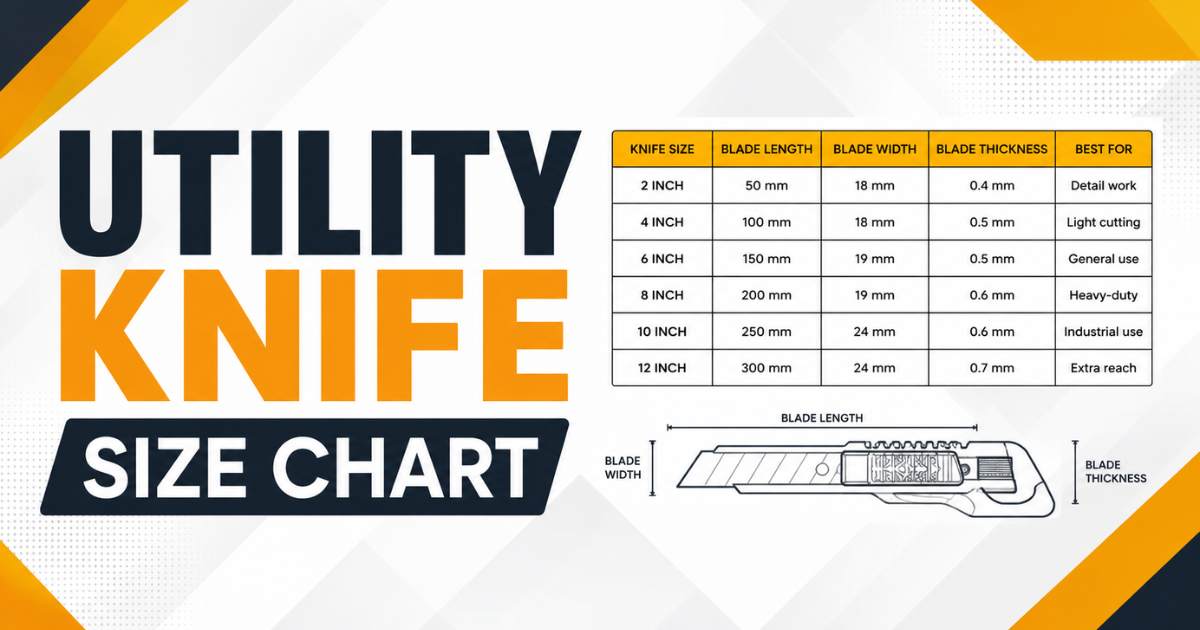
A utility knife is one of the most versatile tools in the kitchen, bridging the gap between a small paring knife and a large chef’s knife. Its medium-sized blade makes it ideal for slicing fruits, cutting sandwiches, trimming vegetables, and handling many everyday food preparation tasks.
Understanding utility knife sizes helps you choose a knife that offers the perfect balance of control, comfort, and cutting performance. Whether you’re upgrading your kitchen tools or buying your first utility knife, this guide explains the most common blade lengths, dimensions, and practical uses.
Standard Utility Knife Size Chart
The table below shows the most common utility knife dimensions found in home and professional kitchens.
| Blade Length | Overall Length | Best For |
|---|---|---|
| 4.5 in (11 cm) | 8.5 in | Small fruits and vegetables |
| 5 in (13 cm) | 9 in | Everyday kitchen tasks |
| 5.5 in (14 cm) | 9.5 in | Sandwiches and cheese |
| 6 in (15 cm) | 10 in | Meat, vegetables, and slicing |
| 7 in (18 cm) | 11 in | Larger food preparation |
Most utility knives range between 5 and 6 inches, making them one of the most practical knives for daily cooking.
Utility Knife Blade Length Guide
Choosing the right blade length depends on how you cook.
| Blade Length | Recommended Use |
|---|---|
| 4.5 inches | Precision cutting |
| 5 inches | Everyday meal preparation |
| 5.5 inches | Fruits, vegetables, cheese |
| 6 inches | General-purpose slicing |
| 7 inches | Large vegetables and meat |
A 5-inch utility knife is the most popular choice because it provides excellent control while remaining versatile.
What Is a Utility Knife Used For?
A utility knife is designed for jobs that are too large for a paring knife but too small for a chef’s knife.
It works well for:
- Slicing tomatoes
- Cutting cucumbers
- Trimming vegetables
- Preparing sandwiches
- Cutting cheese
- Slicing cooked meat
- Portioning fruit
- Small meal preparation
Its medium blade gives better precision than larger kitchen knives.
Utility Knife vs Chef’s Knife
Many people wonder whether they really need a utility knife if they already own a chef’s knife.
| Utility Knife | Chef’s Knife | Best For |
|---|---|---|
| 5–6 in Blade | 8–10 in Blade | Daily kitchen prep |
A utility knife is lighter, easier to control, and perfect for smaller cutting jobs, while a chef’s knife is better suited for heavy chopping and larger ingredients.
Utility Knife vs Paring Knife
A utility knife is often described as the middle ground between a chef’s knife and a paring knife.
| Paring Knife | Utility Knife | Main Purpose |
|---|---|---|
| 3–4 in Blade | 5–6 in Blade | Precision vs General Use |
If you frequently prepare fruits, vegetables, and sandwiches, a utility knife offers more versatility than a paring knife.
How to Choose the Right Utility Knife Size
When selecting a utility knife, consider several important factors.
Choose based on:
- Hand size
- Cooking style
- Blade weight
- Cutting tasks
- Handle comfort
For most households, a 5-inch utility knife provides the ideal combination of comfort and performance.
Utility Knife Dimensions by Kitchen Task
Different kitchen tasks require slightly different blade lengths.
| Kitchen Task | Recommended Size |
|---|---|
| Peeling Fruit | 4.5 inches |
| Slicing Tomatoes | 5 inches |
| Cutting Cheese | 5 inches |
| Preparing Sandwiches | 5.5 inches |
| Trimming Meat | 6 inches |
| Everyday Food Prep | 5–6 inches |
Using the right blade size improves cutting accuracy and reduces hand fatigue.
Should You Buy a 5-Inch or 6-Inch Utility Knife?
Both sizes are excellent choices, but each serves a slightly different purpose.
A 5-inch utility knife offers greater precision for smaller ingredients and everyday kitchen work.
A 6-inch utility knife provides additional cutting length, making it better for slicing larger vegetables, meats, and fruits.
If you’re buying only one utility knife, the 5-inch size is generally the best option for most home cooks.
Common Utility Knife Buying Mistakes
Avoid these common mistakes when purchasing a utility knife:
- Choosing a blade that’s too long for daily use.
- Ignoring handle comfort.
- Buying based only on price.
- Using a utility knife for heavy chopping.
- Neglecting regular sharpening.
A properly sharpened utility knife performs better and is safer to use than a dull blade.
Tips for Maintaining a Utility Knife
Proper maintenance helps your knife stay sharp and last for years.
Follow these simple tips:
- Wash by hand whenever possible.
- Dry the blade immediately after cleaning.
- Store the knife in a knife block or magnetic strip.
- Sharpen the blade regularly.
- Use wooden or plastic cutting boards instead of glass or stone.
These habits help protect the blade and maintain cutting performance.
Frequently Asked Questions
What is the standard utility knife size?
Most kitchen utility knives have a blade length between 5 and 6 inches, making them ideal for everyday food preparation.
Is a utility knife necessary if I have a chef’s knife?
Yes. A utility knife provides better control for medium-sized cutting tasks that don’t require a larger chef’s knife.
What foods are best cut with a utility knife?
Utility knives work well for fruits, vegetables, cheese, sandwiches, cooked meats, and many everyday kitchen tasks.
Should beginners buy a utility knife?
Absolutely. A quality 5-inch utility knife is easy to handle and complements a chef’s knife and paring knife in any kitchen.
Final Thoughts
A utility knife is one of the most practical and versatile tools in any kitchen. While blade sizes range from 4.5 to 7 inches, the 5-inch utility knife remains the most popular choice for home cooks because it offers an excellent balance of precision, comfort, and versatility. When paired with an 8-inch chef’s knife and a 3.5-inch paring knife, a utility knife completes a well-rounded kitchen knife collection capable of handling almost every food preparation task efficiently and safely.
