
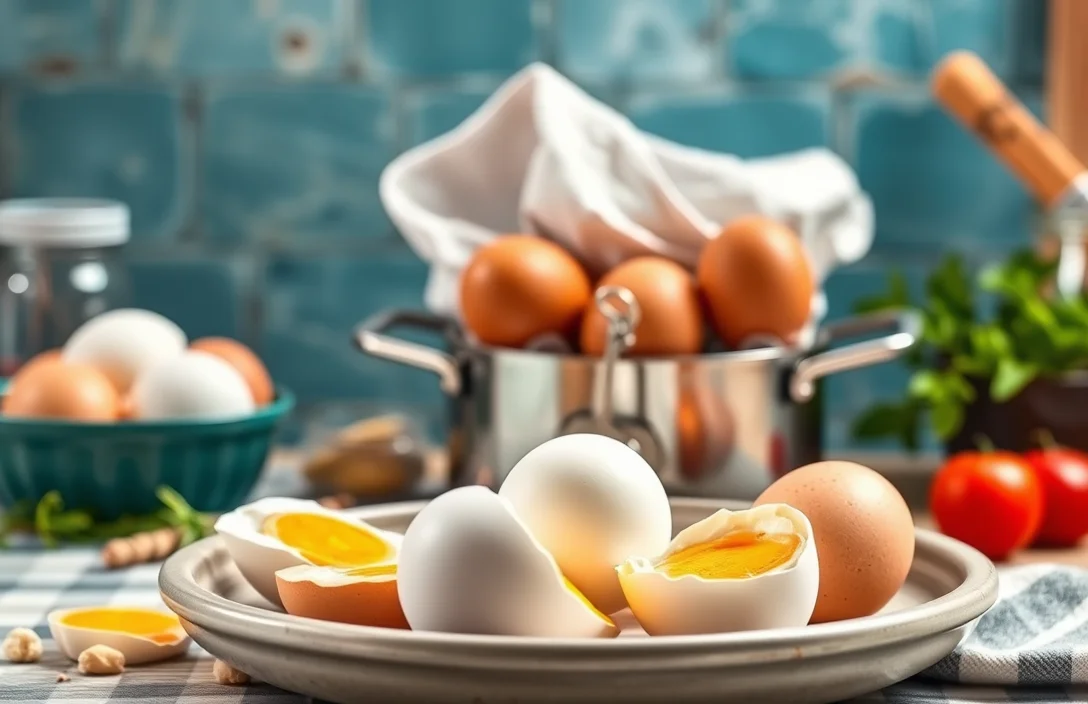
Seventy percent of people struggle with boiling eggs perfectly, often ending up with overcooked yolks or rubbery whites. Mastering this simple technique can elevate your breakfast game and impress anyone who enjoys this versatile food. Precision is key to achieving the ideal texture and flavor.
Start with fresh eggs, use cold water, and maintain a gentle simmer for optimal results. Timing is crucial; aim for 6-12 minutes depending on desired doneness. Finally, cool eggs quickly in ice water to stop cooking.
Choosing the Right Eggs for Boiling
Selecting the best eggs begins with prioritizing freshness. Fresh eggs are easier to peel after boiling compared to older ones. Check the packaging date; eggs typically remain fresh for about three to five weeks after purchase. Always opt for eggs with the latest sell-by or expiration date.
- Inspect the shell for cracks. Damaged eggs can harbor bacteria and spoil quickly. Choose eggs with intact, clean shells to ensure safety.
- Consider the color of the shells. While it doesn’t affect taste, some people prefer white or brown based on personal preferences. Choose based on your aesthetic or cooking style.
- Check for large-size eggs. Size impacts cooking time and texture; larger eggs generally yield better results for boiling. Aim for large or extra-large eggs for consistent outcomes.
- Purchase eggs from reputable sources. Buying from trusted grocery stores or farmers ensures quality. Organic or free-range options may provide superior flavor and texture.
- Store eggs properly before boiling. Keep them in the refrigerator to maintain freshness. Avoid leaving them out at room temperature, as this can diminish quality.
Understanding Egg Size and Freshness
Egg size significantly impacts boiling outcomes. Large eggs typically require longer cooking times than medium or small ones. If you use extra-large eggs, add a minute or two to ensure ideal doneness. Always check the egg carton for size specifications to avoid confusion while boiling.
Freshness plays a crucial role in boiling results. Fresher eggs are more challenging to peel after boiling due to the lower pH level of the egg white. Slightly older eggs, ideally around a week old, are easier to peel and yield a smoother appearance. Consider purchasing eggs a few days before boiling for optimal peeling.
Temperature impacts the boiling process. Cold eggs taken directly from the refrigerator can crack when placed in boiling water. Allow eggs to sit at room temperature for about 15 minutes before boiling to reduce the risk of cracking and achieve a more consistent texture.
Eggshell color does not influence taste or cooking times. White and brown eggs are nutritionally similar; the color difference stems from the hen’s breed. Focus on egg size and freshness for best boiling results rather than shell color.
Setting the Boiling Water Temperature
Optimal water temperature for boiling eggs is crucial. Aim for a rolling boil at 212°F (100°C) for perfect results. This temperature ensures the eggs cook evenly, preventing rubbery textures. Using a thermometer can help achieve precise temperatures, especially if you’re experimenting with different cooking methods.
Maintaining consistent heat is essential. Once the water reaches boiling, avoid adding cold eggs directly. Instead, lower the eggs gently into the pot using a spoon to prevent cracking. If eggs are cold from the refrigerator, consider letting them sit at room temperature for about 10-15 minutes before boiling.
Adjusting boiling conditions can enhance outcomes. For example, if you’re aiming for softer yolks, bring water to a gentle simmer instead of a full boil. This method allows for more control over cooking time and results in creamier textures.
Monitoring the boiling process is vital. After placing the eggs in boiling water, cover the pot with a lid to maintain heat. Keep an eye on the water to ensure it remains at a steady temperature throughout the cooking period.
Timing for Soft Boiled Eggs
Start timing as eggs hit simmering water: 4–5 minutes for very runny yolks (small eggs 3½–4½ minutes), 6 minutes for large eggs with runny yolk and set whites, 7 minutes for jammy yolks, 8 minutes for mostly set creamy yolks. Add or subtract 30 seconds per size shift; increase time slightly at high altitude.
Follow these times to achieve predictable results; if eggs are straight from the fridge add 30–45 seconds to each listed time, and if eggs are room temperature reduce times by about 30 seconds. Practice with one test egg to dial in exact timing for your stove and pot; that’s the fastest route to mastering how to boil eggs perfectly.
Cooling Eggs Quickly Post-Cooking
Rapidly cooling eggs prevents overcooking and enhances texture. Immediately after boiling, transfer the eggs to an ice water bath. Fill a bowl with cold water and ice, ensuring sufficient ice to lower the temperature quickly. Submerge the eggs in this mixture for at least 5-10 minutes.
Chilling eggs in ice water stops the cooking process effectively. This method not only halts any further heat absorption but also makes peeling easier later on. As the eggs cool, the shock of cold water helps to contract the egg whites, reducing the chances of sticking to the shell.
Monitor the cooling time closely. Leaving eggs in the ice bath for too long can lead to waterlogged whites or a rubbery texture. Aim for a balance; once they are sufficiently cooled, remove them from the bath.
Cracking the shells gently before placing them in the ice bath can also help. Doing so allows water to seep in slightly, making peeling easier afterward. Implement this technique for perfectly boiled eggs that are quick to cool and easy to handle.
Peeling Techniques for Easy Removal
Cracking the shell correctly simplifies peeling boiled eggs. Start by gently tapping the egg on a hard surface, such as a countertop. Roll it back and forth to create multiple small cracks. This method loosens the shell, making it easier to remove without damaging the egg white.
Cooling the eggs immediately after boiling influences peeling ease. Transfer them to an ice-water bath for at least five minutes. Rapid cooling causes the egg to contract slightly within the shell, aiding in the separation of the membrane from the egg white.
- Fresh eggs tend to stick more. Using older eggs improves peeling efficiency.
- Adding a teaspoon of baking soda to the boiling water raises the pH level, which helps in loosening the shell.
- Peeling under running water can help remove stubborn bits of shell by allowing water to flow between the egg and the shell.
Testing for freshness can also affect the peeling process. Submerge eggs in water; fresh eggs will sink, while older eggs will float. Opt for those that sink for better results.
Quick Summary
- Start with eggs that are at room temperature for even cooking.
- Use a pot with enough water to cover the eggs by at least an inch.
- Bring the water to a rolling boil before adding the eggs.
- Boil for 9-12 minutes depending on desired doneness (9 for soft, 12 for hard).
- Immediately transfer eggs to an ice bath after boiling to stop cooking.
- Peel eggs under running water for easier shell removal.
- Store any leftover boiled eggs in the refrigerator for up to one week.
Frequently Asked Questions
How long should I boil my eggs for perfect results?
For soft-boiled eggs, cook them for about 4-6 minutes. For medium-boiled, aim for 7-9 minutes, and for hard-boiled, 10-12 minutes. Adjust the time slightly based on your stove and altitude.
Should I start with cold or hot water?
It’s best to start with cold water when boiling eggs. Place the eggs in a pot, cover them with cold water, and then bring the water to a boil. This helps prevent cracking and ensures even cooking.
What is the best way to prevent eggs from cracking while boiling?
To prevent cracking, ensure your eggs are at room temperature before boiling. Additionally, adding a teaspoon of vinegar or salt to the water can help minimize cracking.
How can I tell when my eggs are done boiling?
You can tell if your eggs are done by using a timer or by spinning them on a flat surface. If they spin easily and are stable, they are likely hard-boiled; if they wobble, they might still be soft inside.
What is the best method for peeling boiled eggs?
To make peeling easier, cool the eggs in an ice bath immediately after boiling. Tap the egg gently to crack the shell and peel under running water for a smoother process.
