
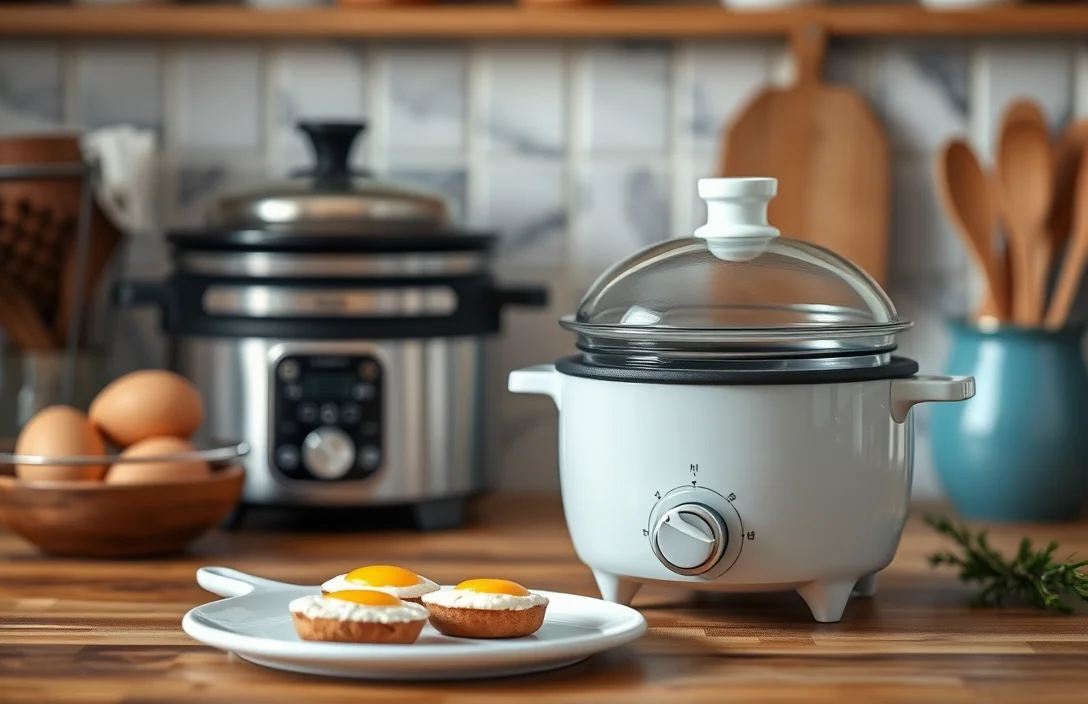
Egg cookers can cook eggs perfectly in under 10 minutes, making them a popular kitchen appliance. With their growing popularity, many wonder if they genuinely deliver on their promise of convenience and consistency, especially for busy individuals seeking quick meal solutions.
Experts agree that egg cookers are efficient and user-friendly, often producing eggs with desired textures. Many models offer multiple cooking options, from hard to soft-boiled, catering to various preferences.
Types of Egg Cookers Available
Electric models dominate the egg cooker market, offering consistent results with minimal effort. These appliances typically feature an automatic shut-off function, ensuring safety and convenience. Users appreciate the ability to prepare multiple eggs at once, with some models accommodating up to a dozen eggs. Their compact size makes them suitable for any kitchen counter.
Stovetop versions rely on boiling water to cook eggs, providing a traditional approach. These cookers often come with steam trays that allow for easy removal of eggs once cooked. Many find stovetop models simpler to use, as they do not require electricity and can be used in various cooking environments.
Microwave egg cookers offer a quick solution for busy individuals. Designed specifically for microwave use, these tools can cook eggs in minutes. Many models include features for poaching, scrambling, or steaming, making them versatile kitchen gadgets for egg lovers.
Specialized cookers target specific egg dishes. Poachers, for example, focus exclusively on creating perfectly poached eggs with minimal fuss. Omelet makers allow users to whip up fluffy omelets in a matter of minutes, catering to those who enjoy breakfast variety.
Multi-functional egg cookers combine various cooking methods. These appliances often include settings for soft, medium, or hard-boiled eggs, along with poaching and steaming options. Versatility appeals to many, as they can prepare different egg dishes in one unit, enhancing kitchen efficiency.
Cooking Methods Used by Egg Cookers
Steam cooking dominates egg cookers. This method uses a heating element to create steam, cooking eggs evenly and efficiently. Different models may include adjustable settings for soft, medium, or hard-boiled eggs, allowing for precise control over the cooking process. The result is consistently tender eggs with desired firmness, making it a preferred choice for many home cooks.
Pressure cooking offers another effective technique. By increasing the pressure inside the cooker, eggs are cooked faster while retaining moisture. This method can significantly reduce cooking time, ideal for busy individuals. Additionally, pressure cooking can help achieve unique textures, providing a distinct flavor to the eggs.
Boiling water is also used in some egg cookers. This straightforward method involves submerging eggs in hot water until they reach the desired doneness. While simple, attention is needed to ensure eggs do not overcook. Some models include timers to alert users when cooking is complete, enhancing convenience.
Microwave cooking represents a quick alternative. Egg cookers designed for microwave use can prepare eggs rapidly, often in under five minutes. This method is excellent for those seeking speed without sacrificing quality. Special containers are typically included to ensure even cooking and prevent spills.
Electric cooking provides consistent results. Many egg cookers come equipped with temperature controls and timers, allowing for precise cooking. This technology removes guesswork, leading to perfectly cooked eggs every time. With various methods available, egg cookers cater to different preferences and cooking styles effectively.
User Reviews and Experiences
Feedback from users highlights consistent success with egg cookers. Many report achieving perfectly cooked eggs without constant monitoring. These devices simplify breakfast routines, allowing for multitasking while cooking. Users appreciate the convenience, especially those with busy schedules or large families.
Reviews frequently cite ease of use as a key benefit. Most models feature straightforward settings, making them accessible for beginners. Clear instructions typically accompany each product, enabling users to replicate desired results effortlessly. This user-friendly design encourages experimentation with different egg types and cooking styles.
Performance consistency is another recurring theme in testimonials. Users often mention how these cookers maintain temperature well, producing evenly cooked eggs every time. Many express satisfaction with the ability to prepare multiple eggs simultaneously, saving time during meal prep. This reliability enhances the overall cooking experience.
Complaints occasionally arise regarding specific models. Some users report issues with overcooking or undercooking if settings are not followed precisely. Others mention that the size of the cooker may limit egg capacity for larger families. Despite these concerns, most feedback remains overwhelmingly positive regarding the overall functionality of egg cookers.
Optimal Cooking Times and Settings
Perfectly cooked eggs require precise timing. Egg cookers typically include settings for soft-boiled, medium-boiled, and hard-boiled eggs. For soft-boiled eggs, set the cooker for 6-7 minutes. Medium-boiled eggs need about 8-9 minutes, while hard-boiled eggs require approximately 10-12 minutes. Adjust times based on your preference for doneness.
Temperature control plays a vital role in achieving desired results. Most egg cookers operate at a consistent temperature, ensuring even cooking. Make sure to add the correct amount of water as indicated in the user manual, as this affects cooking times. Too much or too little water can alter the final texture significantly.
Specific models may offer additional settings for poached or scrambled eggs. Follow the manufacturer’s instructions closely for these options. If your cooker includes a steaming tray, utilize it for poaching eggs, as this method yields fluffy, tender results without direct contact with boiling water.
Adjustments may be necessary based on egg size. Large eggs typically follow standard cooking times, while extra-large or jumbo eggs might need an extra minute or two. Experimenting will help you discover the ideal settings for your personal taste, leading to consistently satisfying outcomes.
Comparative Analysis with Traditional Methods
Egg cookers consistently outperform traditional boiling techniques, especially in precision and convenience. Users can program the desired doneness level, from soft to hard-boiled, ensuring perfect results every time without constant monitoring. Unlike boiling, where timing can be tricky, these devices simplify the process significantly.
Temperature control remains a crucial factor. Egg cookers maintain consistent heat, resulting in even cooking without the risk of overcooking, which often happens on the stovetop. This controlled environment allows for repeatable outcomes, making it easier to achieve personal preferences.
Time efficiency offers another advantage. Most egg cookers can cook multiple eggs simultaneously, while traditional methods may require batch cooking or multiple pots on the stove. This capability streamlines breakfast preparation, particularly for families or meal prep enthusiasts.
Cleanup becomes simpler with dedicated appliances. Many egg cookers feature non-stick surfaces and removable parts that are dishwasher safe, contrasting with the often messy process of boiling eggs. This ease of maintenance appeals to busy individuals who prioritize convenience in their cooking routines.
Ultimately, comparing these methods reveals that egg cookers provide a reliable solution for achieving perfectly cooked eggs with minimal fuss. While traditional methods can work, they lack the automated efficiency and precision that these modern devices offer.
Maintenance and Cleaning Tips
Cleaning your egg cooker regularly ensures optimal performance. After each use, unplug the device and allow it to cool. Use a damp cloth to wipe down the exterior. For the interior, soak any removable parts in warm, soapy water for easy cleaning. Avoid abrasive materials that could scratch surfaces.
Inspect the steam tray and piercing pin for clogs. If there are any remnants of egg or mineral buildup, soak them in vinegar to dissolve deposits. Rinse thoroughly before reassembling the cooker. Regular maintenance prevents issues and prolongs the lifespan of the appliance.
Storing the egg cooker properly is equally important. Ensure all parts are dry before putting it away to avoid mold growth. Keep it in a cool, dry place, away from direct sunlight or heat sources. Proper storage preserves the integrity of this tool and keeps it ready for your next cooking session.
Replacing worn components enhances efficiency. Check the steam tray and lid for any signs of wear. If they appear damaged, consider purchasing replacements to maintain cooking quality. Upkeeping these parts ensures that the egg cooker operates effectively for years.
Following these maintenance tips confirms that your egg cooker delivers perfectly cooked eggs consistently. Regular cleaning, proper storage, and timely replacements keep the appliance functioning at its best, ensuring you get the results you desire every time.
Quick Summary
- Egg cookers simplify the process of boiling eggs, ensuring consistent results.
- Most models can cook multiple eggs at once, saving time for larger families.
- Many egg cookers feature automatic shut-off and timer functions for convenience.
- They can be used for soft, medium, or hard-boiled eggs, depending on user preference.
- Some egg cookers also offer the ability to poach eggs or make omelets.
- Results may vary based on egg size and cooker model, so experimentation is often needed.
- Overall, egg cookers are generally well-regarded for their efficiency and ease of use.
Frequently Asked Questions
Do egg cookers really work?
Yes, egg cookers are designed to simplify the cooking process by consistently producing perfectly cooked eggs. They use steam or boiling water to cook eggs to your desired level of doneness.
How do I use an egg cooker?
Using an egg cooker is generally straightforward. You add water to the base according to the instructions, place the eggs in the cooking tray, and turn it on; the cooker will notify you when the eggs are done.
Can I cook other foods in an egg cooker?
While egg cookers are primarily designed for eggs, some models allow you to steam vegetables or seafood. Always check the manufacturer’s guidelines to see what additional foods can be prepared safely.
Are egg cookers energy-efficient?
Yes, egg cookers typically use less energy than boiling water on a stove. They heat up quickly and cook multiple eggs at once, making them a convenient and energy-saving option for egg lovers.
What are the benefits of using an egg cooker?
Egg cookers provide consistent results and can save time in the kitchen. They also eliminate the guesswork of cooking eggs, allowing you to achieve soft, medium, or hard-boiled eggs with ease.
