
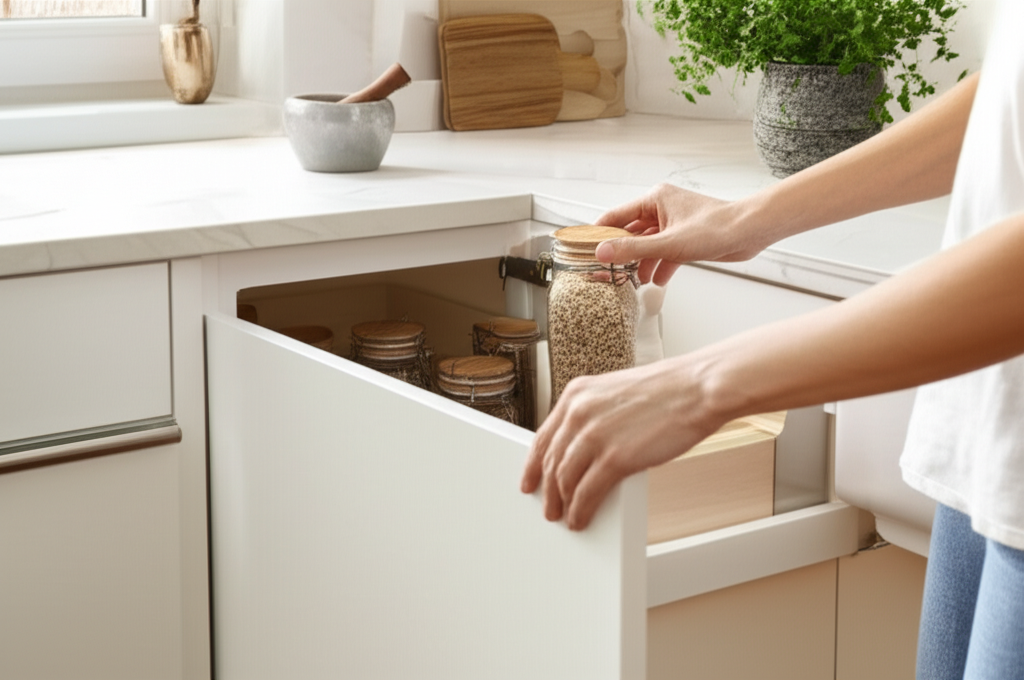
A kitchen witch is someone who practices folk magic and uses the kitchen as their sacred space to nurture themselves and others, often incorporating herbs, cooking, and homekeeping into their spiritual path.
Do you ever feel a special kind of magic when you bake a comforting loaf of bread or simmer a fragrant stew? That warm, cozy feeling, the sense of bringing nourishment and love into your home through your cooking – that’s a hint of what being a kitchen witch is all about! It might sound mystical, but it’s a wonderfully down-to-earth practice that connects us to the heart of our homes. Many people feel a pull towards this path, seeking a way to infuse everyday tasks with intention and a touch of the extraordinary. If you’ve ever wondered if this delightful approach to life is for you, you’re in the right place! We’ll explore what a kitchen witch truly is, how this tradition has evolved, and how you can begin to cultivate your own kitchen magic.
What Exactly is a Kitchen Witch? Unveiling the Heart of Home Magic
At its core, a kitchen witch is someone who finds their spiritual connection and expresses their magic within the domestic sphere, particularly the kitchen. It’s about recognizing the sacredness in everyday acts of cooking, cleaning, and caring for one’s home and loved ones. This isn’t about elaborate rituals or expensive supplies; it’s about intention, mindfulness, and a deep appreciation for the simple yet powerful act of nurturing.
Think of the kitchen as the alchemist’s laboratory and the hearth as the altar. The ingredients you use – herbs, spices, fresh produce – are your potent elements. The process of transforming them into delicious meals is your spellwork. The love and care you pour into each dish are the magical energies you’re weaving.
A Look Back: The Roots of Kitchen Witchcraft
The concept of kitchen witchcraft isn’t entirely new, though the modern term is a recent revival. Historically, many cultures had wise women or healers who worked with food, herbs, and home remedies. These women were often the keepers of household knowledge, using their skills to heal, comfort, and protect their families.
Folk Traditions: Across Europe, in particular, women played vital roles in preserving family health and well-being through culinary arts and herbalism. They understood the medicinal properties of plants and how to use them in cooking and teas.
Hearth and Home: The hearth was the center of the home, symbolizing warmth, life, and protection. Cooking and baking were not just chores but acts of creation and sustenance.
Modern Revival: Today, kitchen witchcraft is experiencing a resurgence as people seek more grounded and meaningful ways to connect with their food, their homes, and themselves. It’s about reclaiming these ancient practices in a contemporary context, finding joy and purpose in domestic life.
The Kitchen Witch’s Toolkit: More Than Just Utensils
A kitchen witch’s tools are often the very things you’ll find in any well-loved kitchen. The difference lies in the intention and awareness with which they are used. While you don’t need special items to start, some may enhance your practice.
Essential Tools for the Aspiring Kitchen Witch
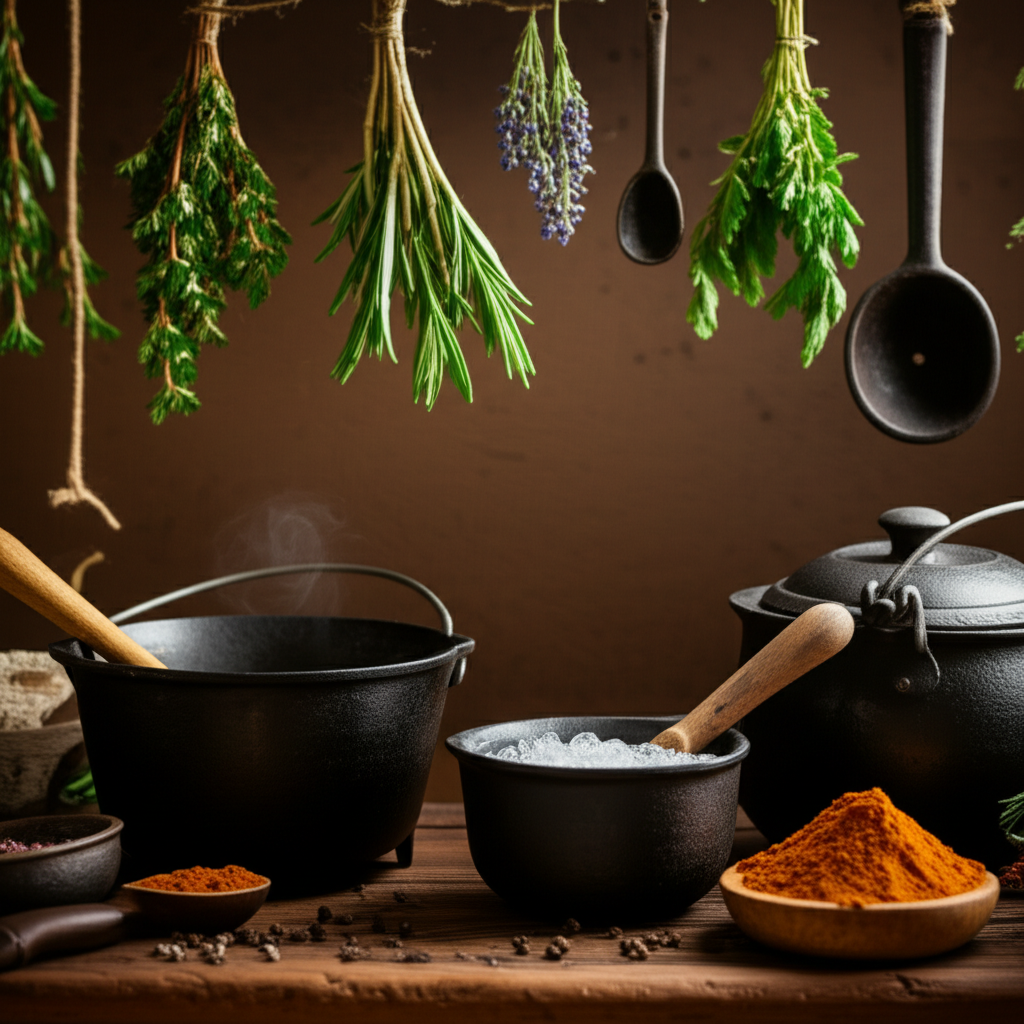
Your Hands: The most powerful tools! Used for kneading dough, chopping vegetables, stirring pots, and imbuing food with your energy.
Cooking Vessels: Pots, pans, baking dishes. Each can be seen as a vessel for transformation.
Knives: For preparing ingredients, symbolizing precision and the cutting away of what’s no longer needed.
Wooden Spoons & Utensils: Often associated with natural energy and the elements.
Herbs & Spices: These are the potent “ingredients” of magic, each carrying unique properties and energies.
Oven & Stove: The hearth where transformation truly happens.
A Clean & Organized Space: A clear workspace allows for clear intention.
A Journal: To record recipes, intentions, and observations.
Optional Enhancements
Mortar and Pestle: For grinding herbs and spices, a classic tool for releasing their essences.
Crystals: Placed near your workspace or in food (ensure they are food-safe and non-toxic!) to add specific energies.
Candles: To create a sacred atmosphere or focus intention.
Incense: To purify the space and set a spiritual tone.
A Dedicated Altar Space: This could be a shelf in your kitchen, a corner of your counter, or a small table dedicated to your practice.
Bringing Magic into Your Kitchen: Practical Steps for Beginners
Embarking on your kitchen witch journey is about infusing everyday actions with mindfulness and intention. You don’t need to overhaul your kitchen or learn complex spells. Start small, with simple shifts in perspective.
Step 1: Cultivate Mindfulness in Your Cooking
The most fundamental aspect of kitchen witchcraft is being present. Instead of rushing through meal prep while distracted, try to engage your senses.
Focus on the task: Feel the texture of the ingredients, smell the aromas, listen to the sounds of cooking.
Set an intention: Before you start cooking, think about what you want the food to bring – nourishment, comfort, energy, healing. You can silently state this intention. For example, as you stir a soup, you might think, “May this soup bring warmth and comfort to all who eat it.”
Be grateful: Appreciate the ingredients, the source of your food, and the ability to cook.
Step 2: Explore the Energetic Properties of Food and Herbs
Every ingredient carries its own energy and symbolism. Learning about these can deepen your connection to your cooking.
Herbs: Basil for love and prosperity, rosemary for remembrance and protection, mint for clarity and healing.
Spices: Cinnamon for warmth and abundance, chili for passion and protection, ginger for energy and healing.
Fruits & Vegetables: Apples for love and immortality, lemons for purification and cleansing, garlic for protection.
Here’s a small guide to common kitchen ingredients and their energetic associations:
| Ingredient | Symbolic Meanings |
| :————– | :————————————————— |
| Rosemary | Remembrance, love, protection, purification |
| Basil | Love, prosperity, protection, good fortune |
| Mint | Clarity, healing, prosperity, purification |
| Cinnamon | Warmth, success, love, abundance, healing |
| Garlic | Protection, warding off negativity, strength |
| Chili Pepper| Passion, energy, protection, breaking hexes |
| Lemon | Purification, cleansing, healing, brightening mood |
| Apple | Love, immortality, healing, knowledge, abundance |
| Honey | Love, sweetness, healing, fertility, abundance |
A great resource for learning more about herbs is the U.S. Department of Agriculture’s Agricultural Research Service, which often publishes information on plant properties.
Step 3: Infuse Your Cooking with Intentionality
As you cook, consciously imbue your food with your desired energies.
Stirring: When stirring clockwise, you are often seen as drawing energy in (e.g., drawing in love or prosperity). Stirring counter-clockwise can be seen as banishing or releasing (e.g., releasing illness or negativity).
Adding Ingredients: As you add each ingredient, think about its purpose. “I add this rosemary for protection,” or “I add this honey for sweetness and love.”
Taste and Adjust: Tasting your food is also a way to connect with its energy. Does it need more “sweetness” (love), more “spice” (passion), or more “salt” (grounding)?
Step 4: Create Sacred Space in Your Kitchen
Even a small, dedicated corner can become a sacred space.
Cleanliness: A clean kitchen is essential for clear energy. Regularly tidy up and clean your workspace.
Nature: Bring in elements of nature – a small plant, a bowl of stones, fresh flowers.
Candles or Lights: Soft lighting can create a more serene atmosphere. Always practice fire safety!
Personal Touches: Display items that are meaningful to you – a favorite mug, a special spice jar, a picture.
Step 5: Embrace Kitchen Blessings and Rituals
You can create simple blessings or rituals for common kitchen tasks.
Blessing Your Food: Before eating, you can offer a moment of gratitude or a short blessing for the nourishment the food provides.
Baking Bread Ritual: The process of baking bread is often seen as magical – the rising of the dough, the transformation in the oven. You can turn this into a ritual by focusing on your intentions as you knead and bake.
Cleansing Your Kitchen: You can use smoke cleansing (like with sage or palo santo, ensuring good ventilation), or simply open windows to let in fresh air and light to clear stagnant energy.
The Kitchen Witch and Homekeeping: A Sacred Duty
For many kitchen witches, the practice extends beyond cooking to encompass all aspects of homekeeping. This is about tending to the physical space as a way of nurturing the energy within it.
Cleaning as a Sacred Act
Mindful Cleaning: Approach cleaning not as a chore, but as an act of purification and care for your home.
Energy Clearing: As you wipe down surfaces or sweep floors, visualize yourself clearing away negativity and inviting in positive energy.
Organization: An organized kitchen supports clear energy and focused intention. Take time to declutter and arrange your space purposefully.
Nurturing the Hearth
The hearth, or the central gathering place of your home, is often seen as the heart of a kitchen witch’s practice.
Keeping it Warm and Welcoming: This can be literal – ensuring the kitchen is a cozy place – or energetic, by maintaining a positive and loving atmosphere.
Family Meals: Sharing meals together is a powerful way to connect and share energy.
Kitchen Witchery and Wellbeing: Nourishing Body and Soul
The beauty of kitchen witchcraft lies in its holistic approach to wellbeing. It’s about nourishing yourself and others on multiple levels.
Physical Nourishment
Healthy Eating: Many kitchen witches gravitate towards wholesome, natural foods. The focus is on creating food that truly nourishes the body.
Herbal Remedies: Utilizing herbs for teas, tinctures, and culinary additions can support physical health.
Emotional and Spiritual Nourishment
Comfort and Care: The act of preparing food for loved ones is a profound expression of care and love.
Stress Relief: For many, the rhythmic and mindful practice of cooking can be a powerful stress reliever.
Connection: It fosters a deeper connection to the food you eat, the earth it comes from, and the people you share it with.
Common Questions for the Curious Kitchen Witch
Here are some frequently asked questions about kitchen witchcraft:
What if I’m not a great cook?
You don’t need to be a gourmet chef to be a kitchen witch! The focus is on intention and care, not perfection. Start with simple recipes and focus on being present. Even making a cup of tea with intention can be a magical act.
Do I need special equipment or ingredients?
No, you can start with what you already have! Your hands, your basic kitchen tools, and common pantry staples are perfectly fine. As you explore, you might choose to incorporate specific herbs or tools, but it’s not a requirement to begin.
Is kitchen witchcraft religious?
Kitchen witchcraft is a spiritual practice, but it’s not tied to any specific religion. It draws from various traditions and focuses on personal connection to the earth, nature, and the energies within your home. You can adapt it to your own beliefs or non-belief.
How can I make my kitchen feel more sacred?
Start by decluttering and cleaning your space. Add natural elements like plants or stones. You can also create a small altar with items that hold personal meaning for you. Soft lighting and gentle music can also enhance the atmosphere.
Can children participate in kitchen witchcraft?
Absolutely! Children are natural energy workers and can greatly benefit from learning about the magic in everyday tasks. Involving them in simple activities like stirring, adding ingredients, and setting intentions can be a wonderful bonding experience. Always supervise children closely in the kitchen, especially around heat and sharp objects.
What are some simple kitchen witch spells or rituals?
“Worry Dough”: Knead dough while focusing on a worry, then bake it. The act of shaping and baking can help release the stress.
“Protection Jar”: Fill a small jar with protective herbs like rosemary, garlic cloves, and bay leaves. Place it in your kitchen.
* “Cleansing Sweep”: As you sweep your kitchen floor, visualize yourself sweeping away negativity and inviting in fresh, positive energy.
How do I learn more about the properties of herbs and spices?
Many reputable sources can help you learn. The U.S. Food and Drug Administration (FDA) provides information on food safety and ingredients. Botanical gardens and university extension offices often have resources on herbs and their uses. Online encyclopedias and reputable herbology websites are also excellent places to start your research.
Embracing Your Inner Kitchen Witch: A Journey of Nourishment
Becoming a kitchen witch is a gentle, evolving process. It’s about finding joy, purpose, and a touch of magic in the everyday acts of caring for yourself and your home. It’s a practice that nourishes the body, calms the mind, and uplifts the spirit.
You don’t need to be perfect or have all the answers. Start by bringing a little more awareness and intention into your kitchen. Notice the subtle energies around you, experiment with simple practices, and trust your intuition. Your kitchen is a powerful space, a place of creation and transformation, and you already possess the most important tools: your hands, your heart, and your intention. So, the next time you find yourself in your kitchen, whether you’re whipping up a quick breakfast or preparing a feast, remember the magic that resides there. You are a vital part of that magic, a kitchen witch in the making, ready to stir up a little wonder in your world.
