
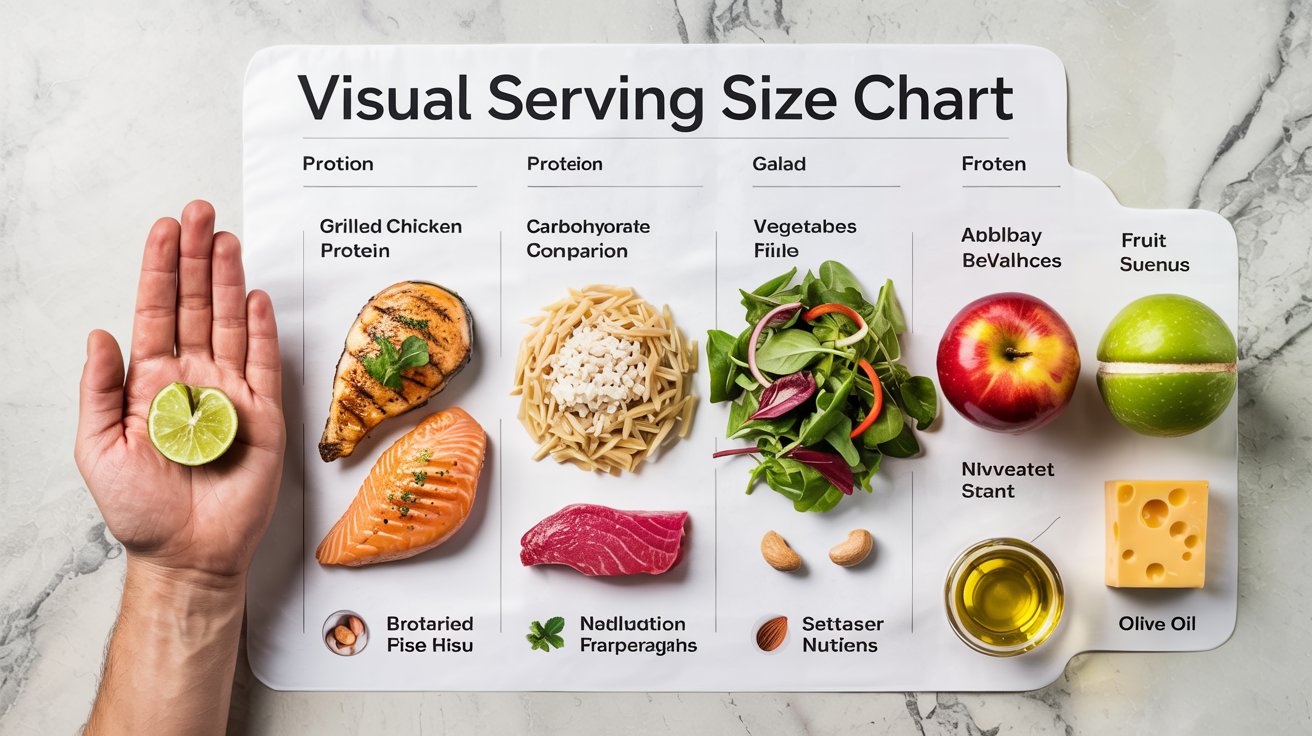
Understanding serving sizes can feel confusing—cups, grams, ounces… it’s a lot to remember. That’s where a visual serving size chart makes things easier. Instead of measuring everything, you can use simple visual cues like your hand or common objects to estimate portions quickly. This method helps you eat balanced meals without needing scales or measuring cups every time.
Why Visual Serving Sizes Matter
Not everyone wants to measure food for every meal. Visual portion control is a practical way to stay consistent without overthinking.
Using visual guides helps:
- Control portions easily
- Prevent overeating
- Maintain balanced nutrition
- Make healthy eating more convenient
It’s especially useful when eating out, traveling, or cooking quickly at home.
Standard Serving Size Visual Chart
Here’s a simple chart using everyday visual comparisons:
Serving Size Visual Chart
| Food Type | Serving Size | Visual Comparison |
|---|---|---|
| Protein | 75–100g | Palm of your hand |
| Carbohydrates | 1/2–1 cup cooked | Cupped hand |
| Vegetables | 1–2 cups | Two handfuls |
| Fruits | 1 medium | Tennis ball |
| Fats | 1–2 tbsp | Thumb |
| Cheese | 30g | Matchbox |
| Nuts | Small handful | Golf ball |
These comparisons make it easier to estimate portions without tools.
Choosing The Right Portion Visually
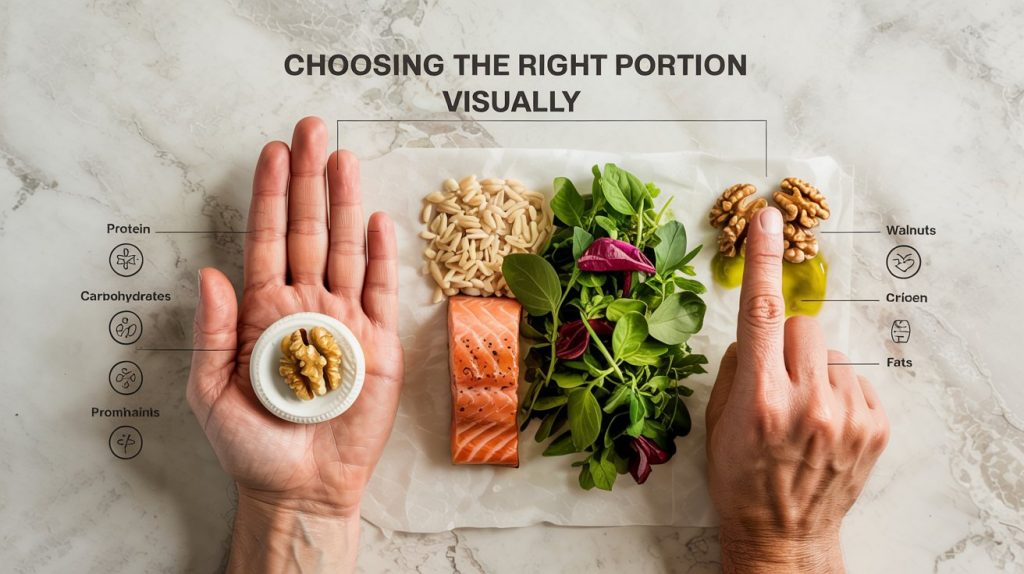
The right portion depends on your needs, but these general tips can help:
- Protein (palm size): Keeps meals satisfying and supports muscle health
- Carbs (cupped hand): Provides energy without overloading
- Vegetables (two handfuls): Fill most of your plate for better nutrition
- Fats (thumb size): Small amounts go a long way
Using these visuals ensures a balanced meal without strict measuring.
The Plate Method (Visual Approach)
A simple visual method for portioning your meals:
- Half plate: Vegetables and fruits
- One-quarter: Protein
- One-quarter: Carbohydrates
This is one of the easiest ways to apply serving size control daily.
Serving Size Visual Chart And Nutrition
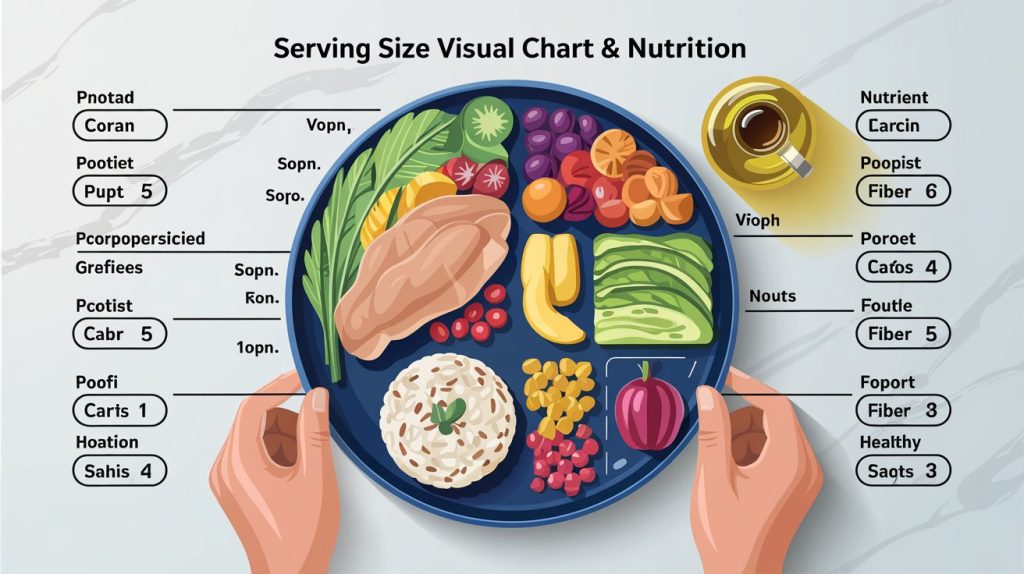
Visual portions help balance nutrients naturally:
- Proteins: Build and repair muscles
- Carbs: Provide energy
- Fats: Support brain and hormone health
- Vegetables & fruits: Supply fiber, vitamins, and minerals
When portions are balanced visually, your nutrition often follows automatically.
Visual Guide: Quick Portion Reference
Here’s a quick cheat sheet:
| Food Group | Visual Size | Easy Tip |
|---|---|---|
| Protein | Palm | One per meal |
| Carbs | Cupped hand | Adjust based on activity |
| Vegetables | Two handfuls | Fill half your plate |
| Fats | Thumb | Keep portions small |
Tips For Using Visual Portion Control
- Use your hand as a guide: It scales with your body size
- Stick to simple rules: Don’t overcomplicate portions
- Balance your plate: Include all food groups
- Adjust as needed: Based on hunger and activity
- Practice regularly: It becomes second nature over time
Consistency is key to making this method effective.
Common Mistakes With Visual Serving Sizes
- Underestimating portions: Especially with calorie-dense foods
- Ignoring hidden calories: Oils, sauces, and snacks
- Skipping vegetables: Missing out on key nutrients
- Overloading carbs: Too much rice, pasta, or bread
Being aware of these mistakes helps improve portion control.
How Visual Serving Sizes Help Daily Life
Visual portioning makes healthy eating easier in real-life situations:
- Dining out without measuring tools
- Packing lunches quickly
- Managing portions while traveling
- Teaching kids healthy eating habits
It removes complexity and makes healthy choices more practical.
The Simplicity Of Visual Eating
The biggest advantage of a serving size visual chart is simplicity. You don’t need apps, scales, or strict tracking—just a basic understanding of proportions.
Over time, this method helps build intuitive eating habits, where you naturally choose the right portions without thinking too much.
Frequently Asked Questions
What Is A Visual Serving Size?
It’s a way to estimate food portions using your hand or common objects instead of measuring tools.
Is The Hand Method Accurate?
Yes, it provides a practical and consistent estimate for everyday use.
Can I Use Visual Portions For Weight Loss?
Yes, it helps control portions and reduce overeating.
Do Visual Serving Sizes Work For All Foods?
They work best for general portion control but may need adjustment for specific diets.
Why Is This Method Popular?
Because it’s simple, quick, and doesn’t require special tools.
A serving size visual chart turns complicated measurements into easy, everyday habits. By using simple visual cues, you can manage portions, eat balanced meals, and maintain a healthier lifestyle—without the stress of constant measuring.
