
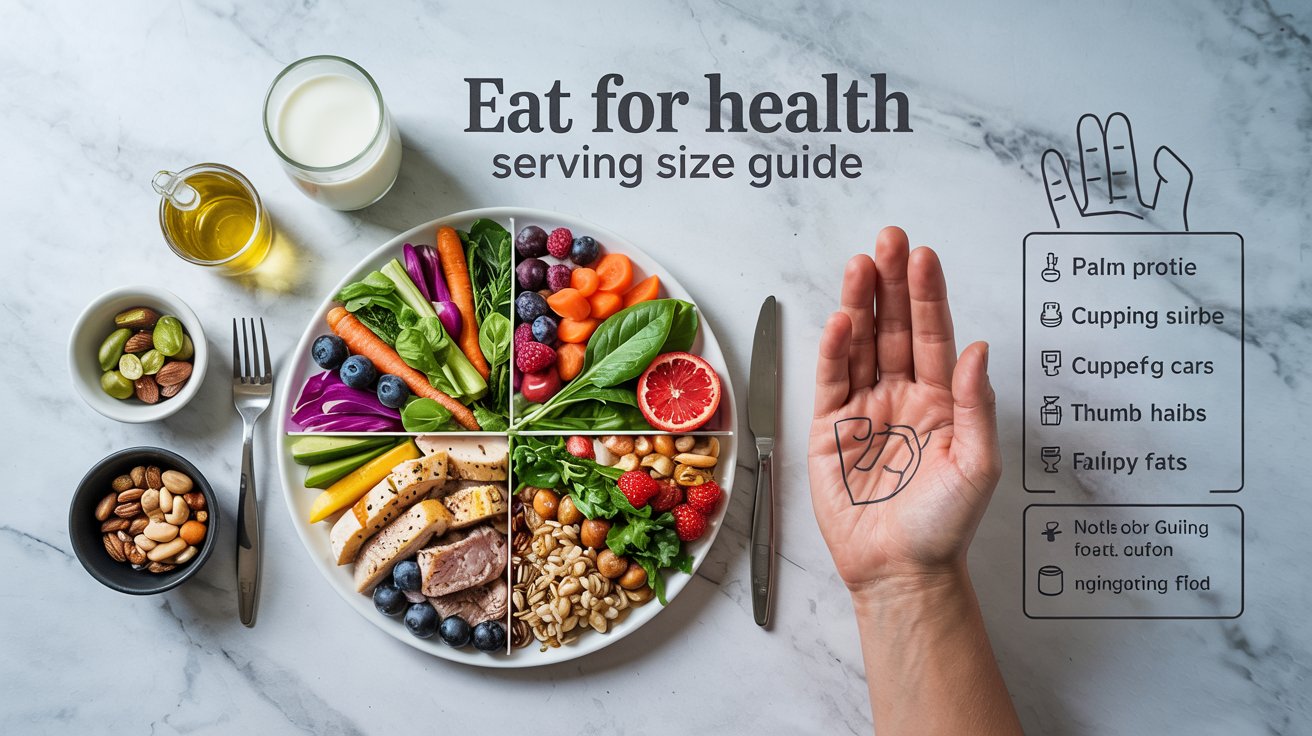
Eating for health isn’t about strict dieting—it’s about choosing the right foods in the right amounts. The concept of “eat for health” focuses on balanced nutrition, where serving sizes play a key role in supporting energy, weight management, and overall well-being. Understanding proper serving sizes helps you build meals that nourish your body without over- or under-eating.
Why Eat for Health Serving Sizes Matter
Healthy eating is not just about what you eat, but how much you eat. Even nutrient-rich foods can lead to excess calorie intake if portions are too large.
Following proper serving sizes helps:
- Maintain a healthy weight
- Support balanced nutrition
- Improve digestion and energy
- Reduce the risk of chronic diseases
Portion control ensures your body gets what it needs—without unnecessary excess.
Standard Eat for Health Serving Sizes
Serving sizes vary across food groups. Here’s a general guideline based on healthy eating principles:
Eat for Health Serving Size Chart
| Food Group | Serving Size | Examples |
|---|---|---|
| Vegetables | 1 cup raw / 1/2 cup cooked | Spinach, carrots, broccoli |
| Fruits | 1 medium piece / 1 cup | Apple, banana, berries |
| Whole Grains | 1/2 cup cooked | Brown rice, oats, quinoa |
| Protein | 75–100g cooked | Chicken, fish, beans, tofu |
| Dairy | 1 cup (250 ml) | Milk, yogurt |
| Healthy Fats | 1–2 tablespoons | Nuts, seeds, olive oil |
These portions help create a balanced and nutritious daily diet.
Choosing The Right Serving Sizes
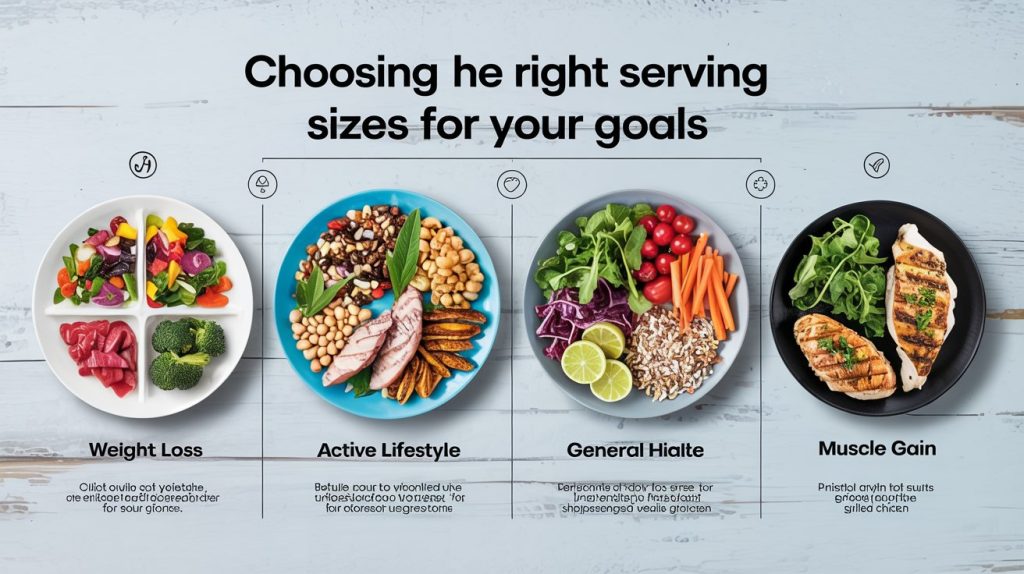
Your ideal portion depends on your lifestyle and health goals:
- For weight loss: Smaller portions, especially of carbs and fats
- For active individuals: Slightly larger servings for energy
- For general health: Balanced portions from all food groups
- For muscle gain: Increased protein intake
The key is adjusting portions based on your personal needs.
The Balanced Plate Approach
A simple way to follow “eat for health” guidelines is by using the plate method:
- Half your plate: Vegetables and fruits
- One-quarter: Lean protein
- One-quarter: Whole grains
This method helps you maintain proper serving sizes without measuring everything.
Eat for Health Serving Sizes And Nutrition
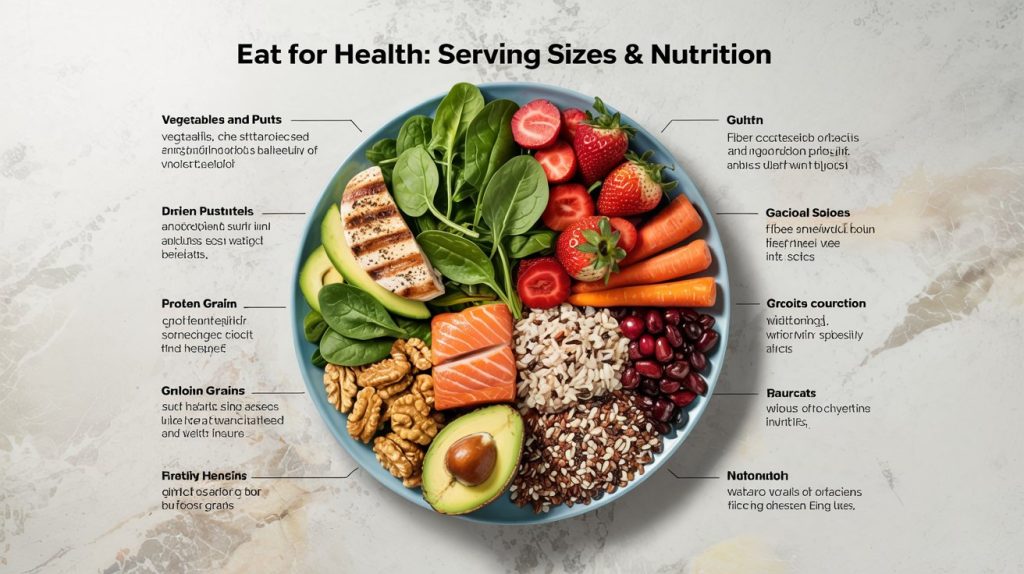
Each food group contributes essential nutrients:
- Vegetables & fruits: Fiber, vitamins, antioxidants
- Proteins: Muscle repair and growth
- Whole grains: Long-lasting energy
- Fats: Brain function and hormone balance
Eating the right portions ensures your body gets a complete range of nutrients.
Visual Guide: Eat for Health Serving Sizes
Use your hand as a quick portion guide:
| Food Type | Portion Guide |
|---|---|
| Protein | Palm of your hand |
| Carbohydrates | Cupped hand |
| Fats | Thumb |
| Vegetables | Two handfuls |
This makes portion control easy, even without measuring tools.
Tips For Following Healthy Serving Sizes
- Plan your meals: Helps control portions ahead of time
- Use smaller plates: Reduces overeating
- Eat slowly: Allows your body to recognize fullness
- Check labels: Understand recommended servings
- Stay consistent: Build long-term habits
Simple changes can make a big difference in your eating habits.
Common Mistakes In Portion Control
- Oversized servings: Especially with calorie-dense foods
- Skipping meals: Leads to overeating later
- Ignoring snacks: Extra calories can add up
- Not balancing meals: Too much of one food group
Avoiding these mistakes helps maintain a healthier diet.
How Serving Sizes Affect Your Health
Consistently following proper serving sizes can:
- Improve weight management
- Stabilize blood sugar levels
- Boost energy and focus
- Support long-term health
On the other hand, poor portion control can lead to weight gain and nutritional imbalances.
Eat for Health In Everyday Life
Healthy serving sizes can be applied in daily routines:
- At home: Measure portions and plan meals
- At restaurants: Choose smaller portions or share meals
- At work: Pack balanced lunches
- During snacks: Keep portions controlled
Making small adjustments leads to lasting results.
Frequently Asked Questions
What Does “Eat for Health” Mean?
It means choosing balanced foods in the right portions to support overall well-being.
Are Serving Sizes The Same For Everyone?
No, they vary based on age, activity level, and health goals.
How Can I Control Portions Without Measuring?
Use your hand as a simple guide for estimating serving sizes.
Can I Eat More Vegetables Than Recommended?
Yes, vegetables are low in calories and can be eaten in larger amounts.
Why Is Portion Control Important?
It helps prevent overeating and ensures balanced nutrition.
Eat for health serving sizes may seem like a small detail, but they are essential for building a balanced and sustainable diet. By understanding and applying proper portions, you can improve your health, maintain energy, and enjoy your meals every day without worry.
