
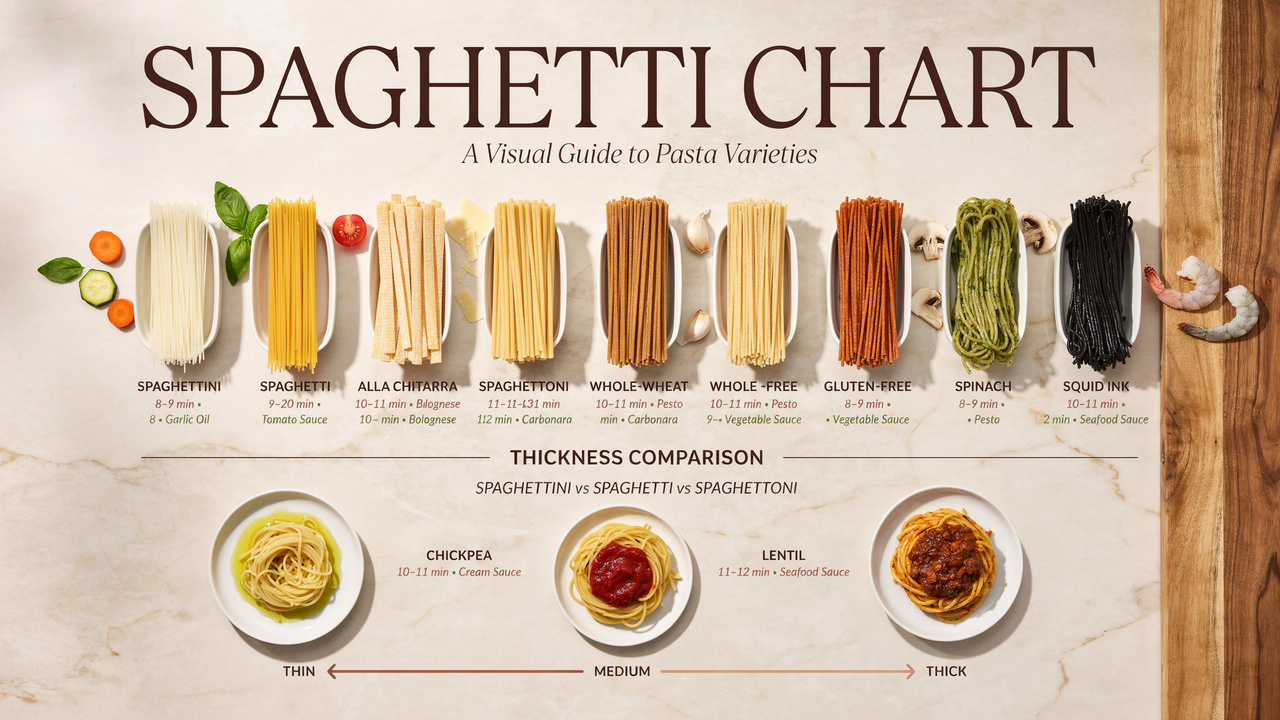
Spaghetti is one of the world’s most recognizable pasta varieties, but not all spaghetti is exactly the same. Different types can vary in thickness, shape, texture, cooking time, and the sauces they work best with. From classic spaghetti and thin spaghetti to whole-wheat and gluten-free varieties, understanding the spaghetti chart makes it easier to choose the right pasta for every meal.
Why Spaghetti Type Matters
The thickness of spaghetti affects more than just appearance. Thicker pasta generally has a heartier bite and can stand up to rich sauces, while thinner varieties cook faster and work well with lighter sauces.
The ingredients used to make spaghetti also influence its texture and flavor. Traditional durum-wheat pasta has a firm, chewy bite, while whole-wheat varieties have a nuttier flavor. Gluten-free spaghetti can have a slightly different texture depending on the ingredients used.
Choosing the right spaghetti can make a noticeable difference in how well the pasta and sauce work together.
Standard Spaghetti Types Chart
| Spaghetti Type | Thickness | Texture | Best For |
|---|---|---|---|
| Spaghetti | Standard | Firm & chewy | Tomato sauces |
| Spaghettini | Thin | Delicate & tender | Light sauces |
| Spaghetti alla Chitarra | Medium-Thick | Firm & slightly rough | Rich sauces |
| Spaghettoni | Thick | Hearty & chewy | Meat sauces |
| Whole-Wheat Spaghetti | Standard | Firm & nutty | Vegetable sauces |
| Gluten-Free Spaghetti | Standard | Varies by brand | Gluten-free dishes |
| Chickpea Spaghetti | Standard | Firm & hearty | Protein-rich meals |
| Lentil Spaghetti | Standard | Dense & firm | Vegetable sauces |
| Spinach Spaghetti | Standard | Tender & slightly earthy | Cream or vegetable sauces |
| Squid Ink Spaghetti | Standard | Firm & savory | Seafood dishes |
Exact thickness and cooking time vary by brand.
Spaghetti Thickness Chart
Thickness is one of the most important differences between spaghetti varieties.
| Pasta Type | General Thickness | Cooking Character |
|---|---|---|
| Spaghettini | Very Thin | Cooks quickly |
| Thin Spaghetti | Thin | Light & delicate |
| Spaghetti | Medium | Balanced |
| Spaghetti alla Chitarra | Medium-Thick | Firm & substantial |
| Spaghettoni | Thick | Hearty & chewy |
Thicker spaghetti usually needs a little more cooking time than thinner varieties.
Spaghetti Cooking Time Chart
Cooking times depend on the brand, ingredients, and desired texture.
| Spaghetti Type | Approx. Cooking Time |
|---|---|
| Spaghettini | 5–7 minutes |
| Thin Spaghetti | 6–8 minutes |
| Standard Spaghetti | 8–11 minutes |
| Spaghetti alla Chitarra | 9–12 minutes |
| Spaghettoni | 10–13 minutes |
| Whole-Wheat Spaghetti | 8–12 minutes |
| Gluten-Free Spaghetti | 7–12 minutes |
| Chickpea Spaghetti | 7–10 minutes |
Always follow the package instructions for the most accurate cooking time.
Spaghetti Sauce Pairing Chart
Different spaghetti varieties work especially well with different sauces.
| Spaghetti Type | Best Sauce Pairings |
|---|---|
| Standard Spaghetti | Marinara, tomato, meat sauce |
| Spaghettini | Garlic oil, light tomato sauce |
| Spaghetti alla Chitarra | Bolognese, rich meat sauces |
| Spaghettoni | Carbonara, ragù |
| Whole-Wheat Spaghetti | Pesto, vegetables, tomato |
| Gluten-Free Spaghetti | Tomato, pesto, cream sauces |
| Chickpea Spaghetti | Tomato, vegetables, pesto |
| Lentil Spaghetti | Tomato, roasted vegetables |
| Spinach Spaghetti | Cream, pesto, vegetables |
| Squid Ink Spaghetti | Seafood, garlic, olive oil |
The sauce should complement the pasta rather than completely overpower it.
Spaghetti Sauce Chart
| Sauce | Flavor | Best Spaghetti Pairing |
|---|---|---|
| Marinara | Tomato & herb | Standard spaghetti |
| Bolognese | Rich & meaty | Thick spaghetti |
| Carbonara | Creamy & savory | Spaghettoni |
| Pesto | Fresh & herby | Standard or whole-wheat |
| Aglio e Olio | Garlicky & light | Spaghettini |
| Arrabbiata | Spicy & tomato-based | Standard spaghetti |
| Alfredo | Rich & creamy | Thick spaghetti |
| Seafood Sauce | Savory & briny | Squid ink or standard |
| Tomato Basil | Fresh & bright | Standard spaghetti |
| Mushroom Sauce | Earthy & rich | Whole-wheat spaghetti |
Spaghetti Shape Comparison
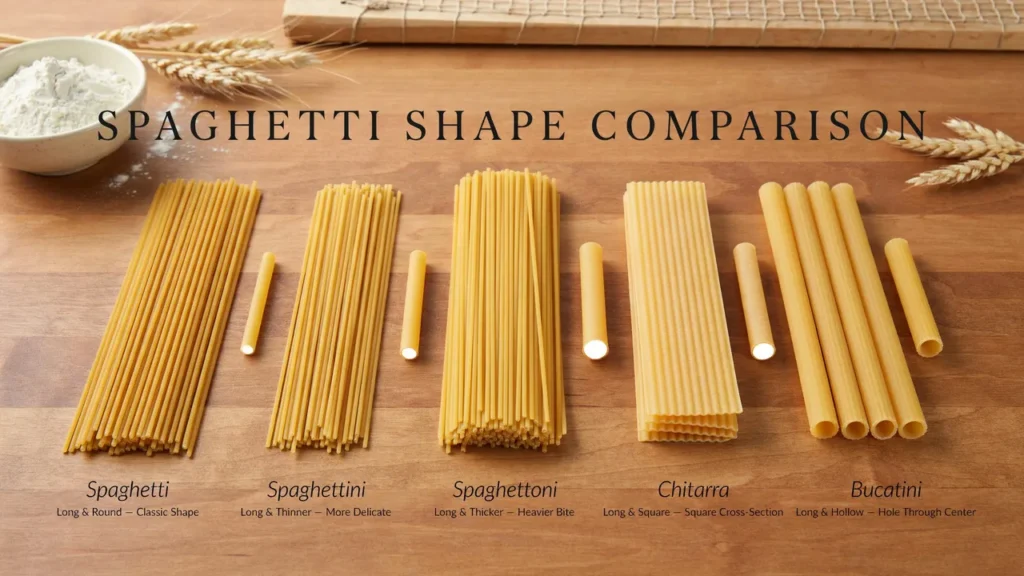
Although spaghetti is generally a long, round pasta, several related varieties have different shapes.
| Type | Shape | Main Difference |
|---|---|---|
| Spaghetti | Long & round | Classic shape |
| Spaghettini | Long & thinner | More delicate |
| Spaghettoni | Long & thicker | Heavier bite |
| Chitarra | Long & square | Square cross-section |
| Bucatini | Long & hollow | Hole through center |
Bucatini is technically different from spaghetti, but it is often compared with spaghetti because of its long shape.
Spaghetti Vs Spaghettini Vs Spaghettoni
| Feature | Spaghettini | Spaghetti | Spaghettoni |
|---|---|---|---|
| Thickness | Thin | Medium | Thick |
| Texture | Delicate | Firm | Hearty |
| Cooking Time | Shorter | Moderate | Longer |
| Best Sauces | Light | Medium | Rich |
| Best For | Seafood, garlic | Everyday meals | Ragù, carbonara |
This simple comparison makes it easier to choose the right thickness for your recipe.
Whole-Wheat Spaghetti Chart
Whole-wheat spaghetti is made with whole-grain wheat and generally has a darker color and nuttier flavor.
| Feature | Whole-Wheat Spaghetti |
|---|---|
| Color | Brownish |
| Flavor | Nutty & earthy |
| Texture | Firm |
| Best Sauces | Pesto, tomato, vegetables |
| Cooking Time | Usually moderate |
| Best For | Hearty pasta dishes |
It can be a good choice when you prefer the flavor and texture of whole grains.
Gluten-Free Spaghetti Chart
Gluten-free spaghetti can be made from several different ingredients.
| Type | Main Ingredient | General Texture |
|---|---|---|
| Rice Spaghetti | Rice | Light & tender |
| Corn Spaghetti | Corn | Firm & slightly sweet |
| Corn-Rice Blend | Corn & rice | Balanced |
| Chickpea Spaghetti | Chickpeas | Dense & hearty |
| Lentil Spaghetti | Lentils | Firm & earthy |
| Quinoa Blend | Quinoa & other grains | Nutty |
Different brands can have significantly different textures and cooking behavior.
Spaghetti Serving Size Chart
Serving sizes depend on appetite and whether pasta is being served as a main dish or side.
| Serving | Dry Spaghetti | Typical Use |
|---|---|---|
| Small | 50–60 g | Light meal or side |
| Standard | 75–85 g | Main meal |
| Large | 90–115 g | Hearty meal |
| Extra Large | 120 g+ | Very large serving |
A kitchen scale provides the most consistent portion size.
Spaghetti Portion Guide
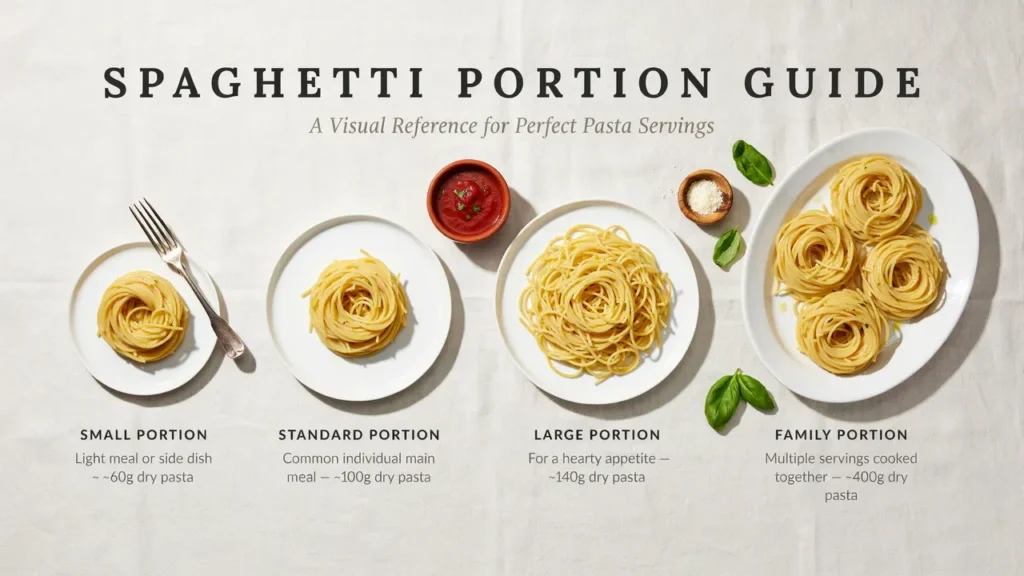
A simple visual method can also help estimate portions.
Small portion: Suitable for a light meal or side dish.
Standard portion: A common amount for an individual main meal.
Large portion: Better suited for people with larger appetites.
Family portion: Multiple individual servings cooked together.
The amount of sauce and toppings should also be considered when planning a meal.
Spaghetti Nutrition Chart
Nutrition varies according to ingredients and brand.
| Spaghetti Type | General Nutrition Character |
|---|---|
| Regular Wheat | Mostly carbohydrate |
| Whole-Wheat | More fiber than refined wheat pasta |
| Chickpea | Higher protein and fiber |
| Lentil | Higher protein and fiber |
| Rice-Based | Gluten-free carbohydrate source |
| Corn-Based | Gluten-free carbohydrate source |
| Spinach Pasta | Pasta with added spinach ingredients |
For exact calories, protein, carbohydrates, fiber, and serving sizes, use the package nutrition label.
Spaghetti Cooking Texture Chart
The same spaghetti can have different textures depending on how long it is cooked.
| Cooking Stage | Texture |
|---|---|
| Undercooked | Very firm |
| Al Dente | Firm with slight resistance |
| Medium | Tender but structured |
| Fully Tender | Soft |
| Overcooked | Very soft and potentially mushy |
Al dente means the pasta is cooked through while retaining a firm bite.
Spaghetti Flavor Pairing Chart
| Flavor | Good Ingredients |
|---|---|
| Tomato | Basil, garlic, olive oil |
| Creamy | Parmesan, mushrooms, garlic |
| Spicy | Chili flakes, garlic, tomato |
| Seafood | Shrimp, mussels, garlic |
| Herb-Based | Basil, parsley, olive oil |
| Meaty | Beef, pork, tomato |
| Vegetable | Zucchini, spinach, peppers |
| Cheese | Parmesan, pecorino, mozzarella |
Spaghetti Protein Pairing Chart
Spaghetti can be combined with many protein sources.
| Protein | Recommended Sauce |
|---|---|
| Ground Beef | Bolognese |
| Meatballs | Tomato sauce |
| Chicken | Cream or tomato |
| Shrimp | Garlic and olive oil |
| Salmon | Cream or lemon sauce |
| Sausage | Tomato or spicy sauce |
| Eggs | Carbonara |
| Tofu | Tomato or vegetable sauce |
Spaghetti Vegetable Pairing Chart
| Vegetable | Good Sauce Pairing |
|---|---|
| Tomato | Basil tomato sauce |
| Spinach | Garlic or cream sauce |
| Mushroom | Cream or garlic sauce |
| Zucchini | Olive oil or tomato |
| Bell Pepper | Tomato sauce |
| Broccoli | Garlic and olive oil |
| Eggplant | Tomato sauce |
| Asparagus | Lemon and olive oil |
Vegetables can add color, texture, and flavor to spaghetti dishes.
Spaghetti Cooking Tips
Use plenty of water: Enough water allows the pasta to cook more evenly.
Salt the cooking water: Salt helps season the pasta.
Stir early: Stirring during the first minute can help prevent strands from sticking together.
Don’t rely only on the timer: Taste the pasta before the package’s maximum cooking time.
Save some pasta water: Starchy pasta water can help loosen and emulsify sauces.
Finish pasta in the sauce: Tossing cooked spaghetti with the sauce can help the sauce coat the strands evenly.
Common Mistakes When Cooking Spaghetti
Overcooking: Soft pasta can lose its pleasant texture.
Using too little water: Crowded pasta can cook unevenly.
Not stirring: Long strands can stick together.
Rinsing hot spaghetti: Rinsing can remove surface starch that helps sauce cling to the pasta.
Adding too much sauce: Excess sauce can overwhelm the pasta.
Breaking the spaghetti: Long strands are traditionally cooked whole rather than broken.
Ignoring the package directions: Different pasta brands and ingredients can have different cooking requirements.
How To Store Dry Spaghetti
Dry spaghetti should be kept in a cool, dry place away from moisture and strong odors.
Once opened, keeping it in a sealed container can help protect it from humidity and pantry pests.
Cooked spaghetti should be refrigerated promptly and stored in a covered container.
Spaghetti Vs Other Long Pasta
| Pasta | Shape | Best Known For |
|---|---|---|
| Spaghetti | Round | Everyday pasta dishes |
| Linguine | Flat | Seafood & light sauces |
| Fettuccine | Wide & flat | Creamy sauces |
| Bucatini | Hollow | Rich sauces |
| Angel Hair | Very Thin | Light sauces |
| Pappardelle | Very Wide | Heavy meat sauces |
Although these pastas look similar because they are long, their different shapes affect how sauces cling to them.
The History Behind Spaghetti
Spaghetti is strongly associated with Italian cuisine and became one of the world’s most popular pasta shapes. Its name comes from the Italian word spaghetto, meaning a thin string or cord.
Over time, spaghetti spread far beyond Italy and became a staple in households and restaurants around the world. Today it appears in countless recipes, from simple tomato sauces and garlic-and-oil preparations to seafood dishes, meat sauces, and modern vegetable-based meals.
Frequently Asked Questions
What Is The Standard Spaghetti Thickness?
Traditional spaghetti is a medium-thickness long, round pasta. Exact diameter can vary between brands.
What Is The Difference Between Spaghetti And Spaghettini?
Spaghettini is thinner than standard spaghetti, so it generally cooks faster and works especially well with lighter sauces.
What Is Spaghettoni?
Spaghettoni is a thicker version of spaghetti with a more substantial and chewy texture. It works well with rich sauces.
How Much Spaghetti Is One Serving?
A common dry-pasta serving is around 75–85 grams, although individual needs and serving styles vary.
How Long Should Spaghetti Cook?
Many standard dried spaghetti varieties take approximately 8–11 minutes, but the package directions are the best guide.
What Sauce Goes Best With Spaghetti?
Classic choices include marinara, tomato basil, Bolognese, pesto, aglio e olio, and arrabbiata.
What Does Al Dente Mean?
Al dente means the pasta is cooked but still has a firm, slightly resistant bite when you chew it.
Is Whole-Wheat Spaghetti Healthier?
Whole-wheat spaghetti generally contains more fiber than refined wheat spaghetti. However, the best choice depends on your overall diet and nutritional needs.
Can You Make Spaghetti Without Gluten?
Yes. Gluten-free spaghetti can be made from ingredients such as rice, corn, chickpeas, lentils, or blends of gluten-free grains and legumes.
Why Does Sauce Stick To Spaghetti?
Surface starch and the shape of the pasta help sauce cling to spaghetti. Tossing the cooked pasta with sauce can improve the coating.
Spaghetti may look simple, but its thickness, ingredients, texture, cooking time, and sauce pairing can create very different eating experiences. From delicate spaghettini to hearty spaghettoni, whole-wheat and gluten-free varieties, there is a spaghetti style for almost every recipe. Understanding the spaghetti chart helps you choose the right pasta, portion, cooking method, and sauce for a delicious meal.
