
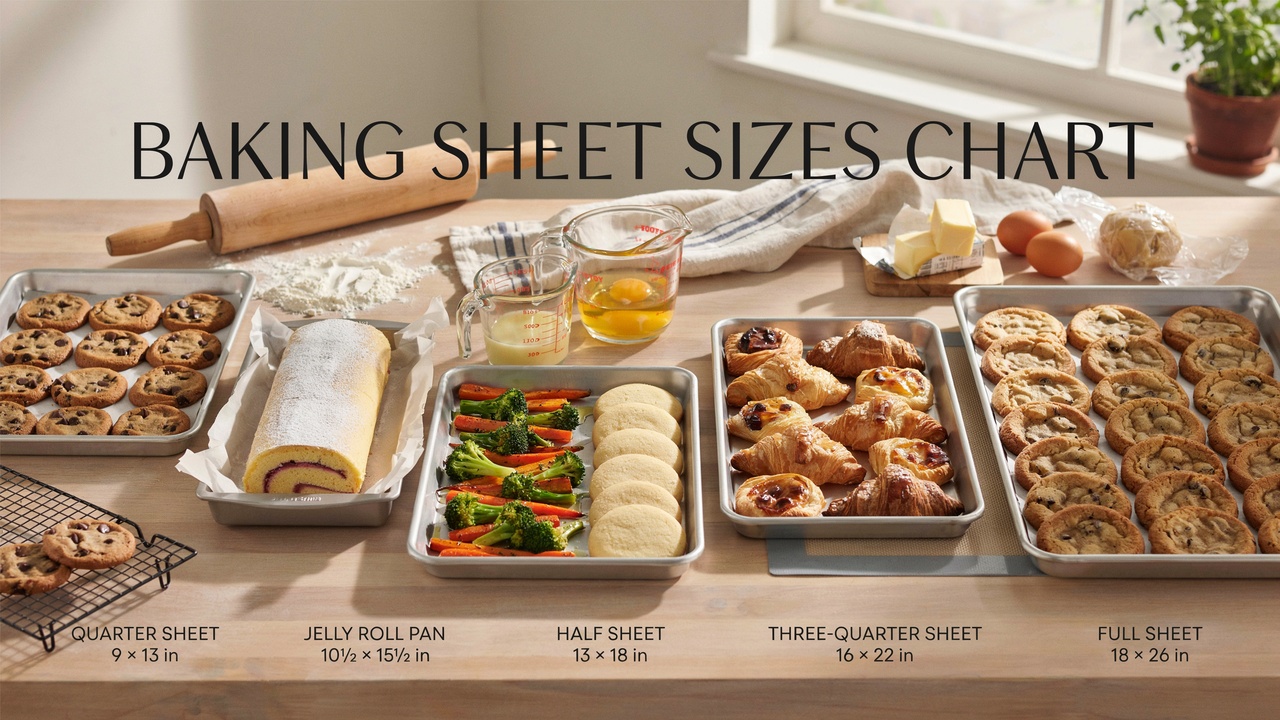
Baking sheets, also called sheet pans or cookie sheets, are essential kitchen tools for baking cookies, roasting vegetables, cooking sheet cakes, and preparing one-pan meals. They come in several standard sizes, with the half sheet pan being the most common for home ovens. Understanding a baking sheet sizes chart helps you choose the right pan, fit it in your oven, and adjust recipes for different pan capacities.
Whether you’re baking cookies, roasting meats, or making pastries, selecting the correct baking sheet ensures even heat distribution and consistent results.
Why Baking Sheet Size Matters
The size of your baking sheet affects:
- Number of cookies per batch
- Roasting capacity
- Air circulation
- Baking time
- Oven fit
- Recipe yield
Using a sheet that’s too small can overcrowd food, while an oversized sheet may not fit properly in your oven.
Standard Baking Sheet Sizes Chart
The following are the most common commercial and home baking sheet sizes.
| Sheet Pan Size | Approx. Dimensions | Surface Area | Best For |
|---|---|---|---|
| Quarter Sheet | 9 × 13 in | 117 sq in | Small batches, toaster ovens |
| Jelly Roll Pan | 10½ × 15½ in | 163 sq in | Swiss rolls, roasting |
| Half Sheet | 13 × 18 in | 234 sq in | Cookies, vegetables, sheet pan meals |
| Three-Quarter Sheet | 16 × 22 in | 352 sq in | Large ovens, catering |
| Full Sheet | 18 × 26 in | 468 sq in | Commercial bakeries |
Full-sheet pans are generally too large for standard home ovens.
Baking Sheet Size Comparison
Each baking sheet has its own advantages.
| Pan Type | Fits Home Oven | Common Uses |
|---|---|---|
| Quarter Sheet | Yes | Small meals, cookies |
| Jelly Roll Pan | Yes | Cake rolls, roasting |
| Half Sheet | Yes | Everyday baking |
| Three-Quarter Sheet | Some large ovens | Catering |
| Full Sheet | No (most home ovens) | Commercial kitchens |
The half sheet pan (13 × 18 inches) is the most versatile choice for home baking.
Cookie Capacity by Baking Sheet Size
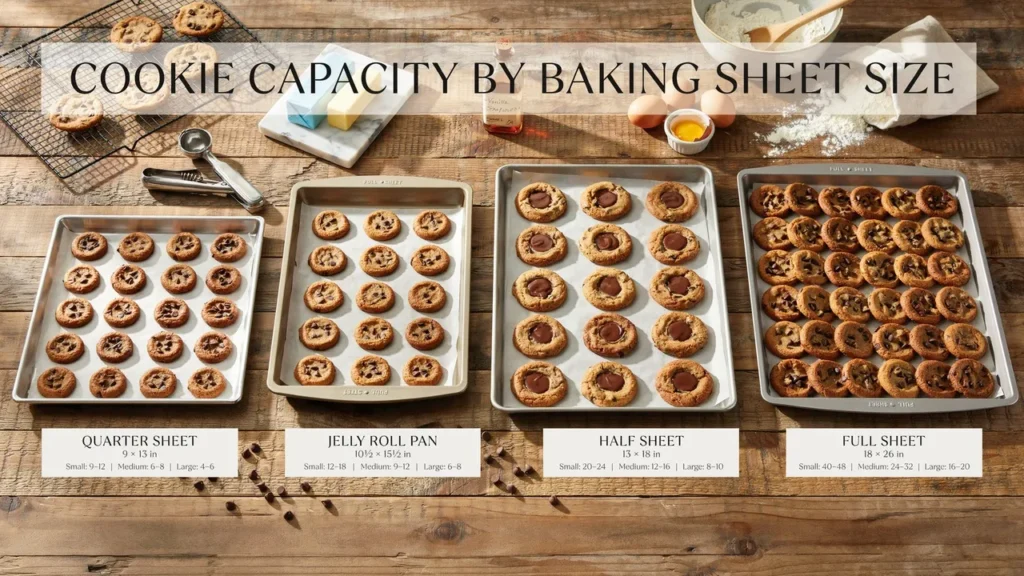
The number of cookies you can bake depends on cookie size and spacing.
| Baking Sheet | Small Cookies | Medium Cookies | Large Cookies |
|---|---|---|---|
| Quarter Sheet | 9–12 | 6–8 | 4–6 |
| Jelly Roll | 12–18 | 9–12 | 6–8 |
| Half Sheet | 20–24 | 12–16 | 8–10 |
| Full Sheet | 40–48 | 24–32 | 16–20 |
Leave adequate space between cookies to allow for spreading.
Baking Sheet Uses
Quarter Sheet (9 × 13 in)
Ideal for:
- Small cookie batches
- Roasted vegetables
- Reheating leftovers
- Toaster ovens
Half Sheet (13 × 18 in)
Perfect for:
- Cookies
- Sheet pan dinners
- Roasted vegetables
- Homemade pizza
- Pastries
Full Sheet (18 × 26 in)
Designed primarily for:
- Commercial bakeries
- Restaurants
- Catering kitchens
Baking Sheet Conversion Guide
| Original Pan | Similar Alternative |
|---|---|
| Quarter Sheet | 9 × 13-inch baking pan |
| Jelly Roll Pan | Slightly smaller half sheet |
| Two Quarter Sheets | One Half Sheet |
| Two Half Sheets | One Full Sheet |
When changing pan sizes, monitor baking time because food thickness may change.
Tips for Choosing a Baking Sheet
- Measure your oven before buying.
- Heavy-gauge aluminum promotes even baking.
- Rimmed sheet pans are more versatile than flat cookie sheets.
- Choose light-colored pans for even browning.
- Use parchment paper or silicone baking mats for easy cleanup.
Common Baking Sheet Mistakes
- Buying a full-sheet pan for a standard home oven.
- Overcrowding cookies or vegetables.
- Using warped or thin pans that bake unevenly.
- Forgetting to rotate pans for even browning.
- Using dark pans without adjusting baking time.
Frequently Asked Questions
What Is the Most Common Baking Sheet Size?
The 13 × 18-inch half sheet pan is the standard baking sheet for most home kitchens.
Will a Full Sheet Pan Fit in a Home Oven?
No. Most standard home ovens are too small for an 18 × 26-inch full sheet pan.
What Is a Quarter Sheet Pan Used For?
Quarter sheet pans are ideal for small batches of cookies, roasting vegetables, and toaster oven cooking.
What’s the Difference Between a Jelly Roll Pan and a Half Sheet Pan?
A jelly roll pan is typically 10½ × 15½ inches, while a half sheet pan measures 13 × 18 inches, providing more cooking space.
Are Cookie Sheets and Sheet Pans the Same?
Not exactly. Cookie sheets often have one or more rimless edges, while sheet pans have raised rims on all four sides, making them suitable for a wider variety of recipes.
Conclusion
A baking sheet sizes chart helps you choose the right pan for cookies, roasted vegetables, sheet cakes, and family meals. From compact quarter sheets (9 × 13 inches) to commercial full sheets (18 × 26 inches), each size serves a different purpose. For most home bakers, the 13 × 18-inch half sheet pan offers the best balance of versatility, capacity, and oven compatibility.
