
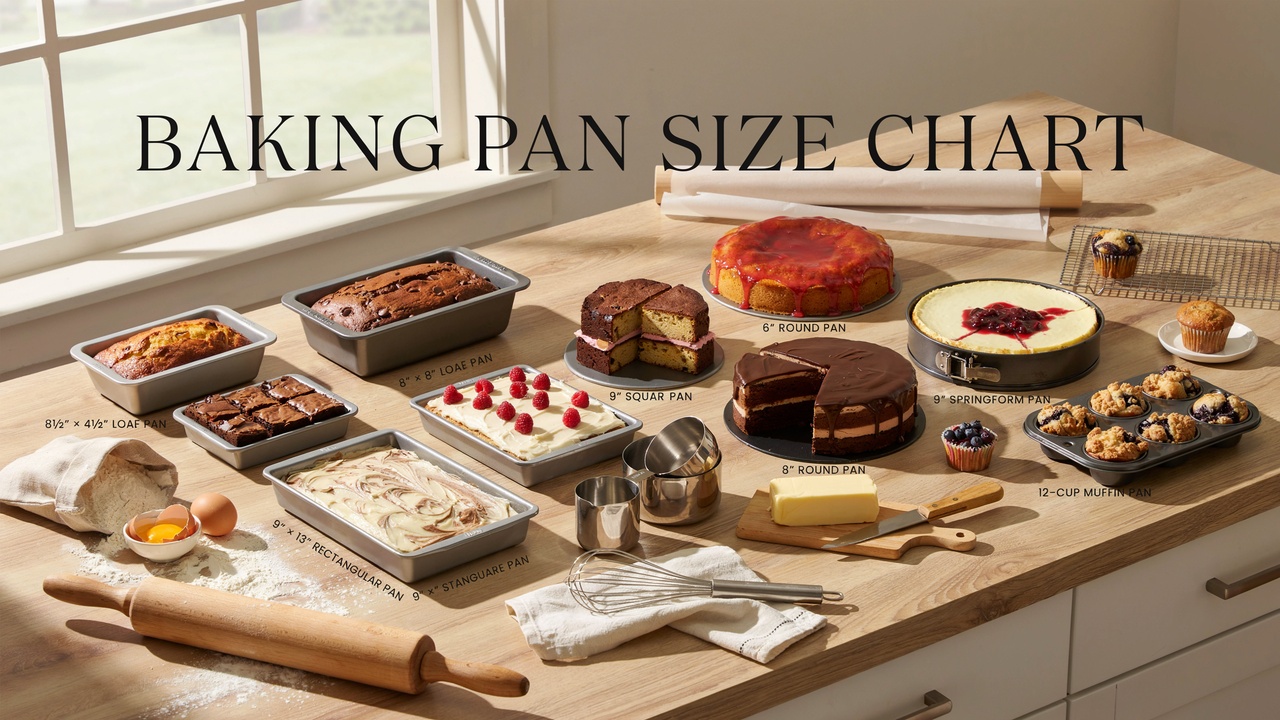
Baking pans come in a variety of shapes and sizes, each designed for specific recipes such as cakes, brownies, cookies, casseroles, breads, and muffins. Choosing the correct pan size helps ensure even baking, proper rise, and accurate cooking times. A baking pan size chart is a valuable reference for home bakers, making it easy to substitute pans and adjust recipes with confidence.
Whether you’re baking a birthday cake, loaf of bread, or a batch of brownies, understanding standard pan dimensions and capacities can help you achieve consistent results every time.
Why Baking Pan Size Matters
The size of a baking pan affects:
- Baking time
- Batter depth
- Cake height
- Browning and texture
- Recipe yield
- Portion sizes
Using a pan that’s too small may cause batter to overflow, while a pan that’s too large can produce thin, dry baked goods.
Standard Baking Pan Size Chart
The following chart includes the most common baking pans used in home kitchens.
| Pan Type | Dimensions | Approx. Capacity | Common Uses |
|---|---|---|---|
| Loaf Pan | 8½ × 4½ in | 6 cups | Bread, pound cake |
| Large Loaf Pan | 9 × 5 in | 8 cups | Banana bread, quick breads |
| Square Pan | 8 × 8 in | 8 cups | Brownies, bars |
| Square Pan | 9 × 9 in | 10 cups | Cakes, brownies |
| Rectangular Pan | 9 × 13 in | 14–15 cups | Sheet cakes, casseroles |
| Round Cake Pan | 6 in | 4 cups | Small layer cakes |
| Round Cake Pan | 8 in | 6 cups | Standard cakes |
| Round Cake Pan | 9 in | 8 cups | Celebration cakes |
| Springform Pan | 9 in | 10 cups | Cheesecakes |
| Muffin Pan | 12 cups | ⅓ cup each | Muffins, cupcakes |
Pan capacities are approximate and may vary slightly by manufacturer.
Round Cake Pan Size Guide
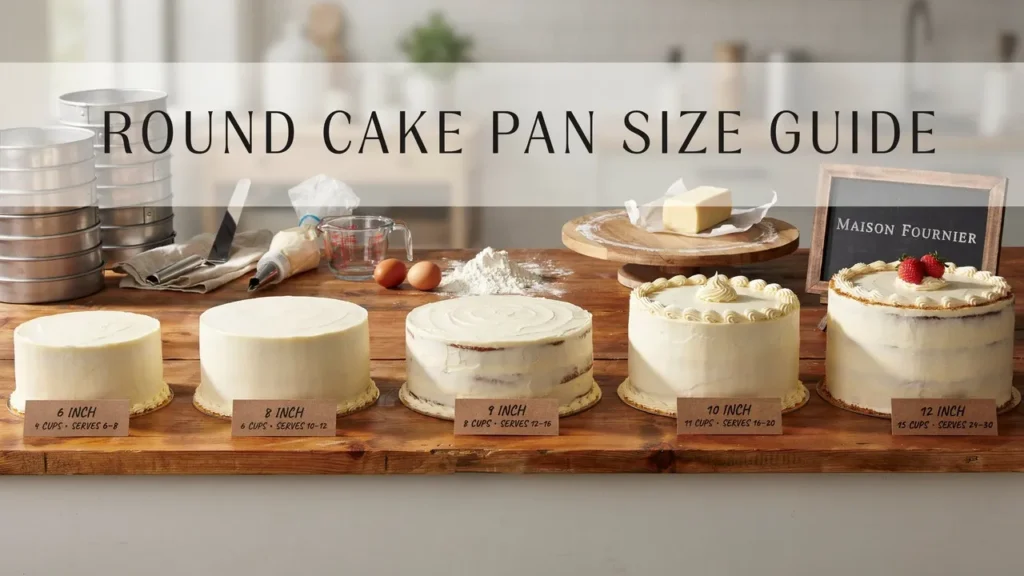
Round cake pans are commonly used for layer cakes.
| Pan Size | Capacity | Typical Servings |
|---|---|---|
| 6-inch | 4 cups | 6–8 |
| 8-inch | 6 cups | 10–12 |
| 9-inch | 8 cups | 12–16 |
| 10-inch | 11 cups | 16–20 |
| 12-inch | 15 cups | 24–30 |
Larger pans require more batter and often slightly longer baking times.
Square & Rectangular Pan Sizes
These pans are ideal for brownies, bars, sheet cakes, and casseroles.
| Pan Size | Capacity | Best For |
|---|---|---|
| 8 × 8 in | 8 cups | Brownies, snack cakes |
| 9 × 9 in | 10 cups | Coffee cakes, bars |
| 9 × 13 in | 14–15 cups | Sheet cakes, casseroles |
| 11 × 15 in | 18–20 cups | Large sheet cakes |
The 9 × 13-inch pan is one of the most versatile baking pans.
Loaf Pan Size Chart
Loaf pans are perfect for breads and loaf cakes.
| Loaf Pan | Capacity | Common Recipes |
|---|---|---|
| 8½ × 4½ in | 6 cups | Sandwich bread |
| 9 × 5 in | 8 cups | Banana bread |
| Mini Loaf | 2 cups | Gift loaves |
A recipe designed for a 9 × 5-inch loaf pan may overflow in a smaller loaf pan.
Muffin & Cupcake Pan Sizes
| Pan Type | Cup Count | Capacity Per Cup |
|---|---|---|
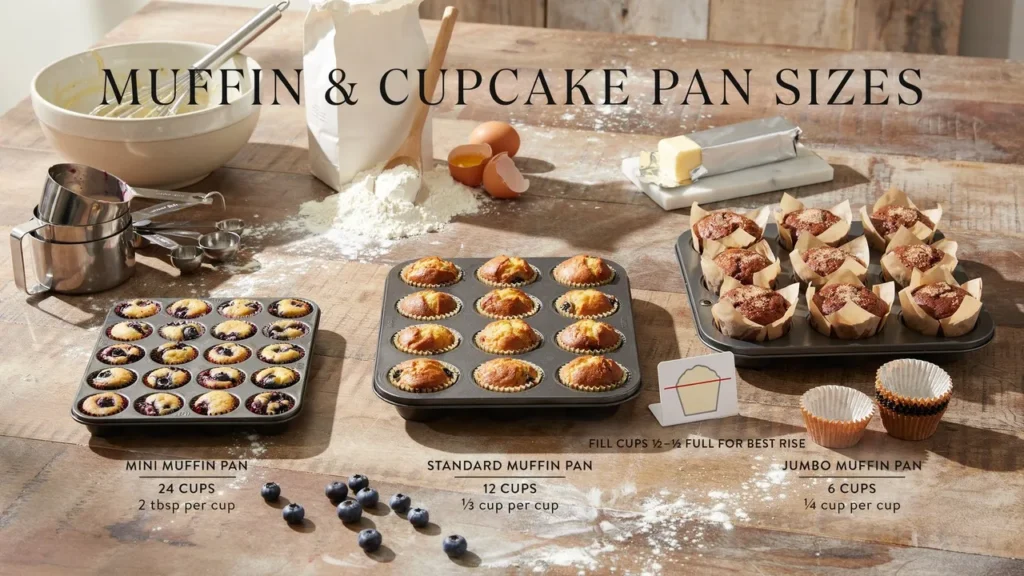
| Mini Muffin | 24 cups | 2 tbsp |
| Standard Muffin | 12 cups | ⅓ cup |
| Jumbo Muffin | 6 cups | ¾ cup |
Fill muffin cups about ⅔–¾ full for the best rise.
Baking Pan Conversion Guide
Many recipes can be adapted using pans with similar capacities.
| Original Pan | Similar Alternative |
|---|---|
| 8 × 8 in Square | 9 in Round |
| 9 × 9 in Square | 10 in Round |
| Two 8 in Rounds | One 9 × 13 in Pan |
| 8½ × 4½ Loaf | 9 × 5 Loaf (slightly shorter loaf) |
Always check for doneness a few minutes earlier when changing pan sizes.
Tips for Choosing the Right Baking Pan
- Measure inside dimensions, not outside edges.
- Use light-colored metal pans for even browning.
- Fill cake pans no more than ⅔ full.
- Adjust baking time when changing pan sizes.
- Grease or line pans with parchment paper when needed.
Common Baking Pan Mistakes
- Using a pan that’s too small, causing batter to overflow.
- Overfilling cake or loaf pans.
- Confusing outside pan measurements with inside dimensions.
- Assuming all 9-inch pans have identical depth.
- Forgetting that glass pans often bake differently than metal pans.
Frequently Asked Questions
What Is the Most Common Baking Pan Size?
The 9 × 13-inch rectangular pan is one of the most commonly used baking pans for cakes, brownies, and casseroles.
Can I Substitute an 8-Inch Round Pan for an 8 × 8 Square Pan?
Yes. These pans have similar capacities and can often be substituted with minor baking time adjustments.
How Full Should I Fill a Cake Pan?
Most cake pans should be filled about two-thirds full to allow room for the batter to rise.
What Size Loaf Pan Do Most Bread Recipes Use?
Most recipes are designed for either an 8½ × 4½-inch or 9 × 5-inch loaf pan.
Do Larger Baking Pans Bake Faster?
Not always. Larger pans create a thinner batter layer, which may bake faster, so begin checking for doneness earlier.
Conclusion
A baking pan size chart is an essential reference for every baker. Knowing the standard dimensions, capacities, and pan conversions helps you choose the right bakeware, avoid baking mistakes, and achieve consistent results. Whether you’re making cakes, breads, brownies, or muffins, selecting the correct pan size ensures even baking and perfect texture every time.
