
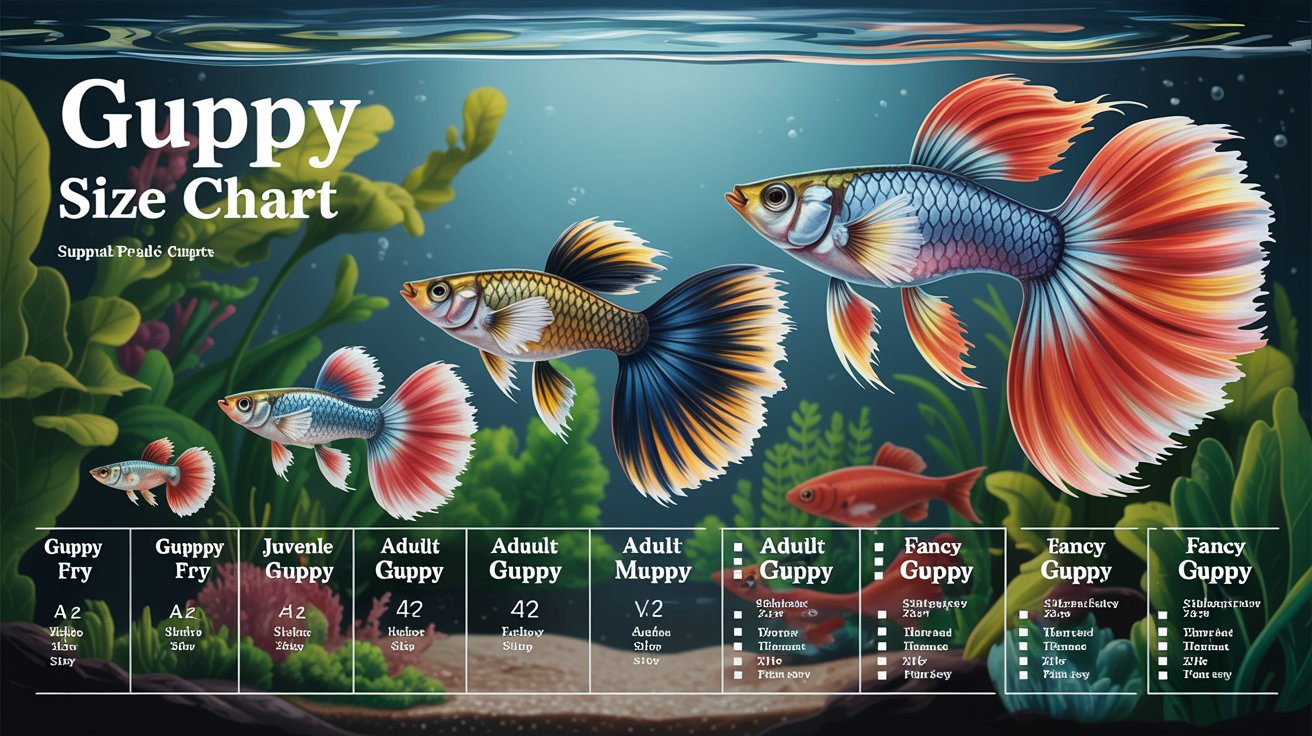
Guppies are one of the most popular freshwater aquarium fish in the world. Known for their bright colors, flowing tails, and easy care, guppies are favorites for both beginner and experienced fish keepers. Although guppies are small fish, their size can vary depending on gender, genetics, diet, and living conditions. Understanding a guppy size chart helps aquarium owners choose the right tank, manage breeding populations, and provide healthier environments for long-term fish care.
Why Guppy Size Matters
Guppy size affects tank space, breeding behavior, filtration needs, and fish compatibility. Male guppies are usually smaller and more colorful, while females grow larger because they carry live fry.
Understanding adult guppy size helps prevent overcrowding and improves aquarium planning. Since guppies breed rapidly, knowing their growth stages is especially important for maintaining balanced tanks.
Proper tank size and water quality also help guppies develop stronger colors and healthier fins.
Standard Guppy Sizes
Guppies are usually measured by total body length from head to tail. Here are the most common guppy size ranges.
Guppy Size Chart
| Guppy Stage | Average Length | Common Description | Recommended Tank Size |
|---|---|---|---|
| Guppy Fry | 0.25–0.5 inches | Newborn baby guppies | Breeding/grow-out tank |
| Juvenile Guppy | 0.5–1 inch | Young growing fish | Small community tank |
| Adult Male Guppy | 1–1.5 inches | Smaller colorful males | 10+ gallons |
| Adult Female Guppy | 1.5–2.5 inches | Larger breeding females | 10–20+ gallons |
| Fancy Show Guppy | 2–3 inches | Long-tail specialty fish | Larger planted tanks |
Actual size varies depending on strain and care conditions.
Choosing The Right Guppy Tank Size
The best tank size depends on how many guppies you keep and whether breeding is expected. Here are some common recommendations:
- Small Guppy Group: 10 gallons minimum.
- Breeding Colonies: 20 gallons or larger.
- Fancy Guppy Tanks: Larger planted aquariums help protect long fins.
- Community Tanks: Extra swimming space reduces stress.
Guppies are active swimmers and reproduce quickly, so larger tanks are often easier to manage.
Guppy Size Comparison: Male Vs. Female
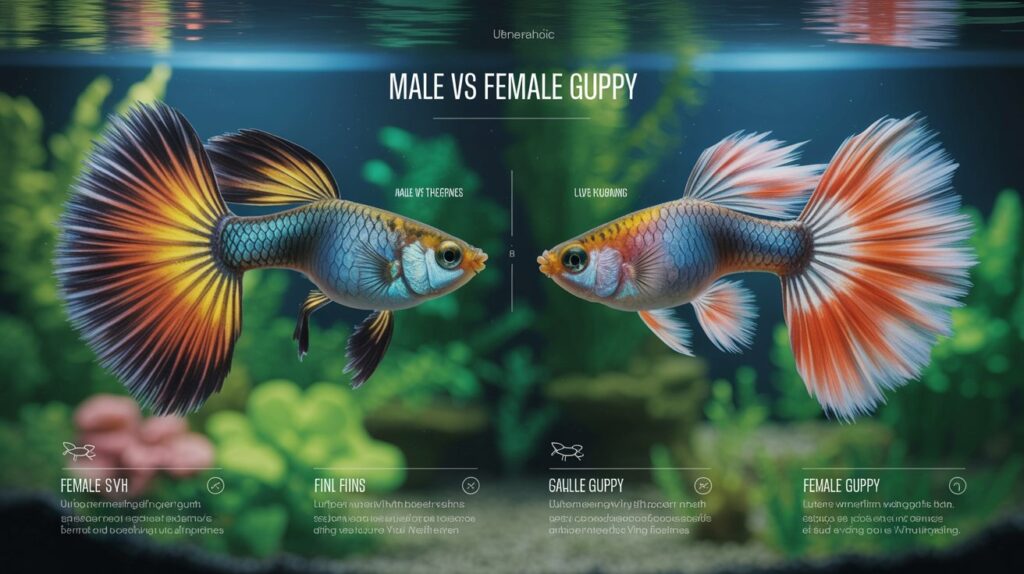
Male and female guppies differ noticeably in size and appearance.
Male vs Female Guppy
| Gender | Typical Size | Appearance |
|---|---|---|
| Male | Smaller | Bright colors, large tails |
| Female | Larger | Less colorful, round body |
Female guppies grow larger because they carry developing fry.
Guppy Size And Breeding
Guppies are livebearers and can reproduce rapidly in home aquariums.
Guppy Growth Stages
| Growth Stage | Approximate Age |
|---|---|
| Fry | Newborn–1 month |
| Juvenile | 1–2 months |
| Young Adult | 2–3 months |
| Fully Mature | 3–6 months |
Healthy guppies can begin breeding at only a few months old.
Visual Guide: Guppy Sizes
Visual comparisons help aquarium owners understand guppy growth more clearly.
Guppy Size Visual Chart
| Guppy Size | Visual Comparison | Typical Setup |
|---|---|---|
| Guppy Fry | Grain of rice length | Breeding tanks |
| Adult Male | Finger joint length | Community aquarium |
| Adult Female | Small spoon length | Breeding groups |
| Fancy Guppy | Palm-width with fins | Decorative planted tank |
Tips For Healthy Guppy Growth
- Maintain warm water: Guppies thrive around 72–82°F.
- Feed varied diets: Quality flakes and live foods improve growth.
- Avoid overcrowding: Too many fish slow development.
- Use proper filtration: Clean water improves health and color.
- Provide plants: Fry use plants for hiding and protection.
Healthy conditions help guppies reach full adult size and vibrant coloration.
Common Mistakes About Guppy Size
- Underestimating breeding rates: Guppy populations grow quickly.
- Keeping guppies in tiny bowls: Small tanks create poor water quality.
- Ignoring female size: Adult females require more space than expected.
- Mixing with aggressive fish: Larger fish may harass or eat guppies.
Understanding guppy growth helps prevent many common aquarium problems.
How Guppy Size Affects Behavior
Male guppies are active and constantly display to females, while larger females are calmer and more dominant during feeding.
Overcrowded tanks may increase stress and fin damage, especially for fancy long-tail varieties.
Tank size and water quality strongly influence guppy activity and lifespan.
The Popularity Of Guppies
Guppies originated in South America and became popular aquarium fish because of their bright colors, hardiness, and easy breeding.
Selective breeding later produced hundreds of guppy strains with unique tail shapes, patterns, and colors.
Today, guppies remain one of the most common freshwater fish in home aquariums worldwide.
Frequently Asked Questions
How Big Do Guppies Get?
Most adult guppies grow between 1–2.5 inches long depending on gender and strain.
Are Female Guppies Bigger Than Males?
Yes, female guppies are usually larger and heavier-bodied.
What Tank Size Is Best For Guppies?
A 10-gallon tank is often considered the minimum for small guppy groups.
How Fast Do Guppies Grow?
Guppies usually reach adulthood within 2–3 months.
Can Guppies Live With Other Fish?
Yes, guppies generally do well with peaceful community fish.
Guppy size charts may seem simple, but they are very useful for aquarium planning, breeding management, and fish care. Whether you keep colorful fancy guppies or simple community fish, understanding guppy sizes helps create healthier and more beautiful aquarium environments.
