
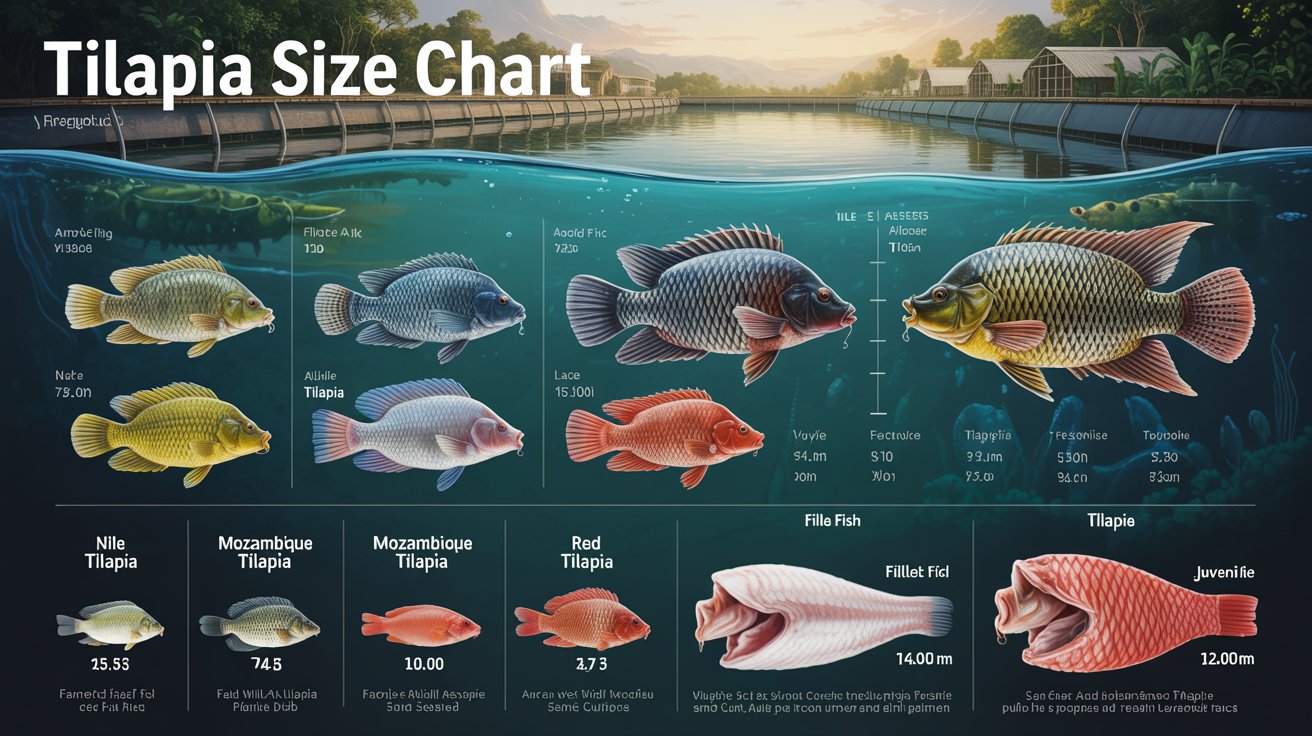
Tilapia are one of the most widely farmed and consumed fish in the world. Known for their mild flavor, fast growth, and adaptability, tilapia are popular in both aquaculture and home cooking. But many people are surprised by how much tilapia sizes can vary depending on species, farming conditions, and habitat. Understanding a tilapia size chart helps fish farmers, anglers, seafood buyers, and aquarium hobbyists compare tilapia lengths, weights, and growth stages more accurately.
Why Tilapia Size Matters
Tilapia size affects farming efficiency, market value, cooking portions, and aquarium requirements. Smaller tilapia are commonly sold whole, while larger fish are processed into fillets for restaurants and grocery stores.
For fish farmers, monitoring tilapia growth is important for feed management and harvest timing. Aquarium keepers also need to understand adult size because some tilapia species quickly outgrow home tanks.
Knowing average tilapia sizes also helps consumers estimate serving portions and cooking methods.
Common Tilapia Species And Sizes
There are several tilapia species used in aquaculture and fisheries worldwide. Here are some of the most common tilapia species and their average sizes.
Tilapia Size Chart
| Tilapia Species | Average Length | Average Weight | Common Use |
|---|---|---|---|
| Nile Tilapia | 12–24 inches | 1–10 lbs | Commercial fish farming |
| Blue Tilapia | 10–18 inches | 1–5 lbs | Aquaculture and ponds |
| Mozambique Tilapia | 10–16 inches | 1–4 lbs | Farming and aquariums |
| Red Tilapia | 12–20 inches | 2–6 lbs | Seafood markets |
| Juvenile Tilapia | 2–6 inches | Under 1 lb | Aquarium or grow-out stage |
Actual size varies depending on water quality, feeding, and farming conditions.
Choosing The Best Tilapia Size
Different tilapia sizes are preferred for different purposes. Here are some common examples:
- Small Tilapia: Often cooked whole in traditional dishes.
- Medium Tilapia: Most common market size for fillets.
- Large Tilapia: Popular in commercial seafood production.
- Juvenile Tilapia: Frequently sold for aquaponics and fish farming systems.
Medium-sized tilapia are usually preferred because of their balanced fillet size and texture.
Tilapia Size Comparison: Farmed Vs. Wild Tilapia
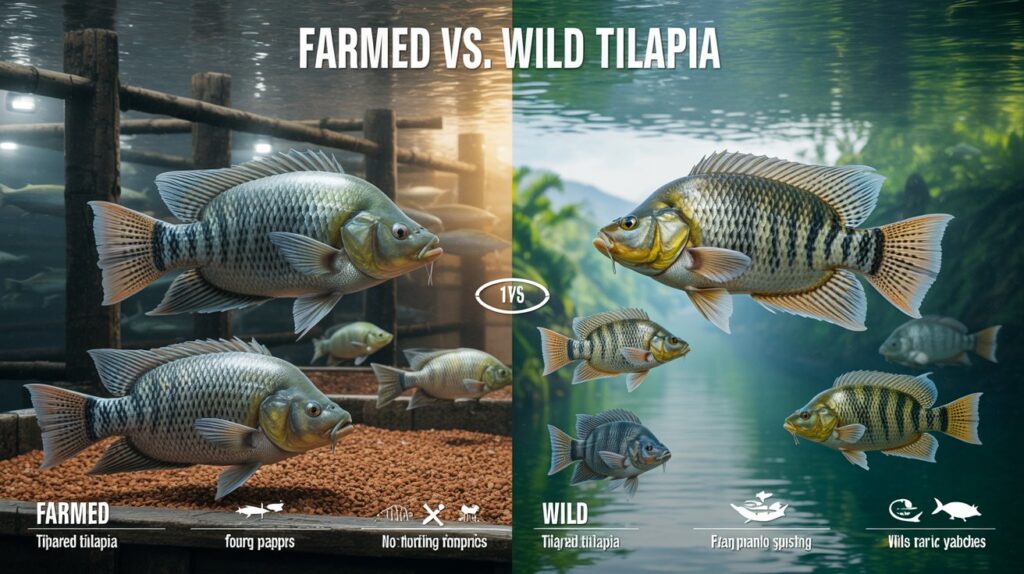
Farmed and wild tilapia often differ in growth rates and size consistency.
Farmed vs Wild Tilapia
| Type | Typical Size | Growth Pattern |
|---|---|---|
| Farmed Tilapia | Larger, uniform | Controlled feeding |
| Wild Tilapia | More variable | Natural food sources |
Farmed tilapia usually grow faster because of optimized diets and controlled environments.
Tilapia Size And Fillet Yield
Larger tilapia provide more usable meat for cooking.
Tilapia Fillet Yield Chart
| Fish Weight | Approximate Fillet Yield |
|---|---|
| 1 lb | 0.3–0.4 lbs |
| 3 lbs | 1–1.2 lbs |
| 5 lbs | 1.8–2 lbs |
| 10 lbs | 4–5 lbs |
Tilapia are valued for their mild white meat and versatility in cooking.
Visual Guide: Tilapia Size Comparison
Visual comparisons help make tilapia sizes easier to understand.
Tilapia Size Visual Chart
| Tilapia Size | Visual Comparison | Typical Use |
|---|---|---|
| 6-inch | Smartphone length | Juvenile fish |
| 12-inch | Forearm length | Standard market fish |
| 20-inch | Baseball bat length | Large mature tilapia |
Tips For Understanding Tilapia Sizes
- Warm water supports growth: Tilapia thrive in tropical and warm climates.
- High-quality feed improves size: Nutrition strongly affects growth rates.
- Crowding limits growth: Overstocked ponds produce smaller fish.
- Large fish require more oxygen: Aeration is important in fish farming.
- Harvest timing affects meat quality: Medium fish are often preferred for texture.
Understanding growth patterns improves aquaculture management.
Common Mistakes When Estimating Tilapia Size
- Overcrowding ponds or tanks: Reduces growth and health.
- Ignoring water quality: Poor conditions slow development.
- Assuming all tilapia stay small: Some species grow surprisingly large.
- Keeping tilapia in undersized aquariums: Adult fish require significant space.
Proper care and habitat planning help tilapia reach healthy adult size.
How Tilapia Size Affects Cooking
Small tilapia are commonly fried or grilled whole, while larger fish are filleted for baking, sautéing, or fish tacos.
Larger tilapia often provide thicker fillets that hold together better during cooking.
Tilapia’s mild flavor makes it one of the most versatile fish for many cuisines worldwide.
The Popularity Of Tilapia Farming
Tilapia farming has grown rapidly because the fish reproduce quickly, adapt well to different environments, and convert feed efficiently.
Today, tilapia are one of the most consumed farmed fish globally and are especially important in aquaculture systems across Asia, Africa, and South America.
Frequently Asked Questions
How Big Do Tilapia Get?
Large tilapia can exceed 20 inches and weigh over 10 pounds.
What Is The Best Market Size For Tilapia?
Medium-sized tilapia between 1–3 pounds are commonly preferred for seafood markets.
Are Farmed Tilapia Larger Than Wild Tilapia?
Farmed tilapia are usually more uniform and grow faster.
Can Tilapia Live In Home Aquariums?
Juvenile tilapia can live in aquariums temporarily, but adults often outgrow standard tanks.
Why Is Tilapia Popular In Fish Farming?
Tilapia grow quickly, adapt well, and are relatively easy to raise.
Tilapia size charts may seem simple, but they provide valuable information for fish farmers, anglers, aquarium owners, and seafood buyers alike. From small juvenile fish to large market tilapia, understanding tilapia sizes helps improve aquaculture management, cooking preparation, and appreciation for this important global seafood species.
