
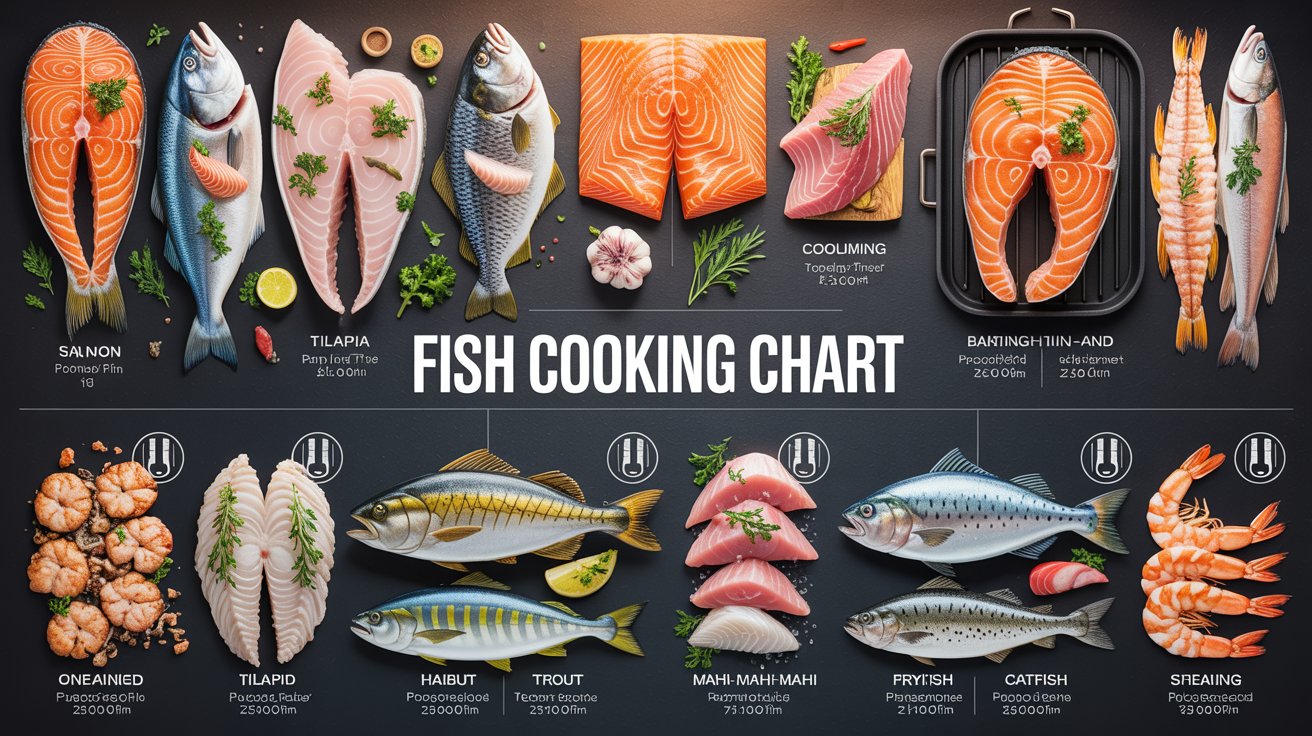
Fish is one of the healthiest and most versatile proteins you can cook. From salmon and cod to tuna and tilapia, seafood can be baked, grilled, fried, steamed, or pan-seared in countless ways. But many people struggle with overcooked or undercooked fish because different species require different cooking times and temperatures. Understanding a fish cooking chart helps home cooks prepare seafood safely while keeping it moist, flavorful, and perfectly textured.
Why Fish Cooking Time Matters
Fish cooks much faster than most meats because of its delicate texture and lower connective tissue content. Even a few extra minutes can dry out fillets and ruin flavor.
Different fish types also cook differently. Lean fish like cod and tilapia become flaky quickly, while fattier fish like salmon remain moist longer.
Cooking fish properly improves:
- Texture
- Flavor
- Moisture retention
- Food safety
Knowing the correct temperature and cooking method helps avoid common seafood mistakes.
Standard Fish Cooking Temperature
The USDA recommends cooking most fish to an internal temperature of 145°F (63°C). At this temperature, fish should appear opaque and flake easily with a fork.
Some sushi-grade fish may be served raw or rare when properly handled, but most home-cooked seafood should reach safe internal temperatures.
Fish Cooking Chart By Type
Here are the most common fish cooking times and temperatures for different seafood varieties.
Fish Cooking Chart
| Fish Type | Best Cooking Method | Cooking Temp | Approximate Time |
|---|---|---|---|
| Salmon | Bake, grill | 375–400°F | 10–15 minutes |
| Cod | Bake, fry | 375°F | 8–12 minutes |
| Tilapia | Bake, sauté | 375°F | 8–10 minutes |
| Tuna Steak | Grill, sear | High heat | 2–4 min per side |
| Halibut | Bake, grill | 400°F | 10–15 minutes |
| Trout | Bake, pan-fry | 375°F | 8–12 minutes |
| Mahi-Mahi | Grill, bake | 400°F | 10–12 minutes |
| Catfish | Fry, bake | 350–375°F | 8–10 minutes |
| Shrimp | Sauté, boil | Medium-high | 2–5 minutes |
Cooking time depends on thickness and cooking method.
Choosing The Best Cooking Method For Fish
Different fish textures work better with different cooking styles.
Best Cooking Methods By Fish Type
| Fish Type | Best Method | Texture Result |
|---|---|---|
| Lean Fish | Baking, steaming | Light and flaky |
| Fatty Fish | Grilling, roasting | Rich and moist |
| Firm Fish | Pan-searing, grilling | Dense and meaty |
Firm fish like tuna and swordfish hold up especially well on grills.
Fish Thickness And Cooking Time
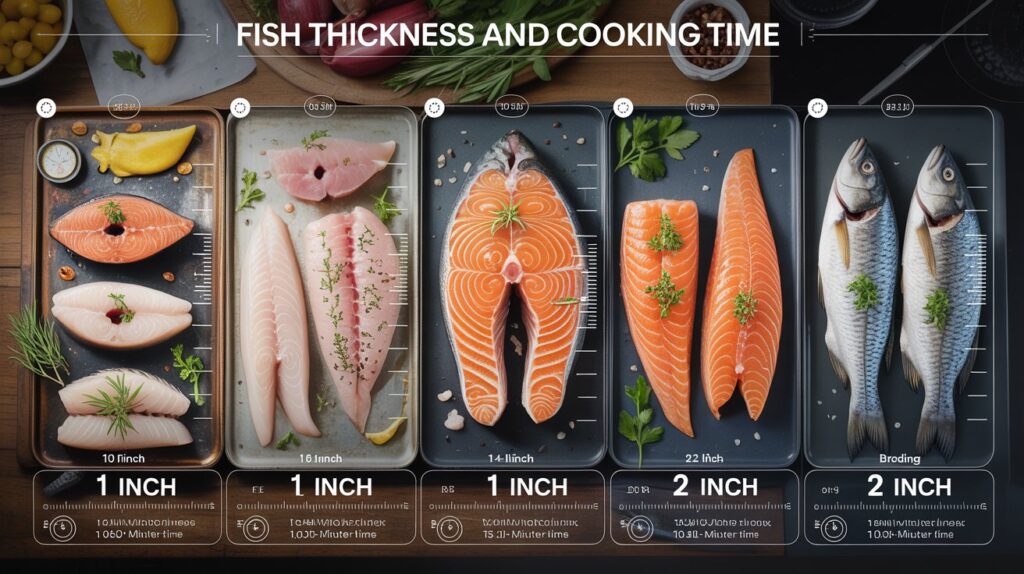
A common cooking rule for fish is the 10-minute rule:
- Cook fish for about 10 minutes per inch of thickness.
This guideline works for baking, grilling, and broiling most fillets.
Fish Thickness Cooking Guide
| Fish Thickness | Approximate Cooking Time |
|---|---|
| 1/2 inch | 4–6 minutes |
| 1 inch | 8–10 minutes |
| 2 inches | 15–20 minutes |
Thicker fish cuts may require flipping halfway through cooking.
Visual Guide: Fish Doneness
Visual signs help determine when fish is fully cooked.
Fish Doneness Chart
| Doneness Level | Appearance | Texture |
|---|---|---|
| Undercooked | Translucent center | Soft, raw texture |
| Properly Cooked | Opaque and flaky | Moist and tender |
| Overcooked | Dry and falling apart | Tough texture |
Properly cooked fish should separate easily with a fork.
Tips For Cooking Fish Perfectly
- Pat fish dry before cooking: Helps improve browning.
- Use a thermometer: Internal temperature should reach 145°F.
- Avoid overcooking: Fish continues cooking slightly after removal from heat.
- Use oil carefully: Prevents sticking during grilling or pan-searing.
- Season lightly: Fish flavors are naturally delicate.
Simple preparation often produces the best seafood results.
Common Mistakes When Cooking Fish
- Overcooking fillets: The most common seafood mistake.
- Using low heat for thick fish: May dry out exterior before center cooks.
- Skipping preheating: Hot pans improve texture and prevent sticking.
- Moving fish too often: Fish can break apart during cooking.
Understanding cooking times improves both texture and flavor.
How Fish Type Affects Cooking
Lean fish like cod and tilapia cook quickly and can dry out easily. Fatty fish like salmon remain moist longer because of higher oil content.
Firm fish such as tuna and swordfish can handle high heat and grilling without falling apart.
Fish thickness also affects moisture retention and cooking speed.
The Popularity Of Seafood Cooking
Fish has been cooked for thousands of years in nearly every culture worldwide. Today, seafood remains popular because of its nutrition, versatility, and quick cooking times.
Modern cooking methods allow fish to be prepared in healthy and flavorful ways ranging from grilling and roasting to steaming and sushi preparation.
Frequently Asked Questions
What Temperature Should Fish Be Cooked To?
Most fish should reach an internal temperature of 145°F (63°C).
How Do I Know When Fish Is Done?
Fish should appear opaque and flake easily with a fork.
What Is The 10-Minute Rule For Fish?
Cook fish for about 10 minutes per inch of thickness.
Which Fish Is Best For Grilling?
Salmon, tuna, mahi-mahi, and swordfish are excellent grilling choices.
Why Does Fish Cook So Quickly?
Fish contains less connective tissue than meat, so it cooks faster.
Fish cooking charts may seem simple, but they can dramatically improve seafood preparation and meal quality. Whether you’re baking salmon, grilling tuna, or frying catfish, understanding fish cooking times and temperatures helps you create perfectly cooked seafood every time.
