
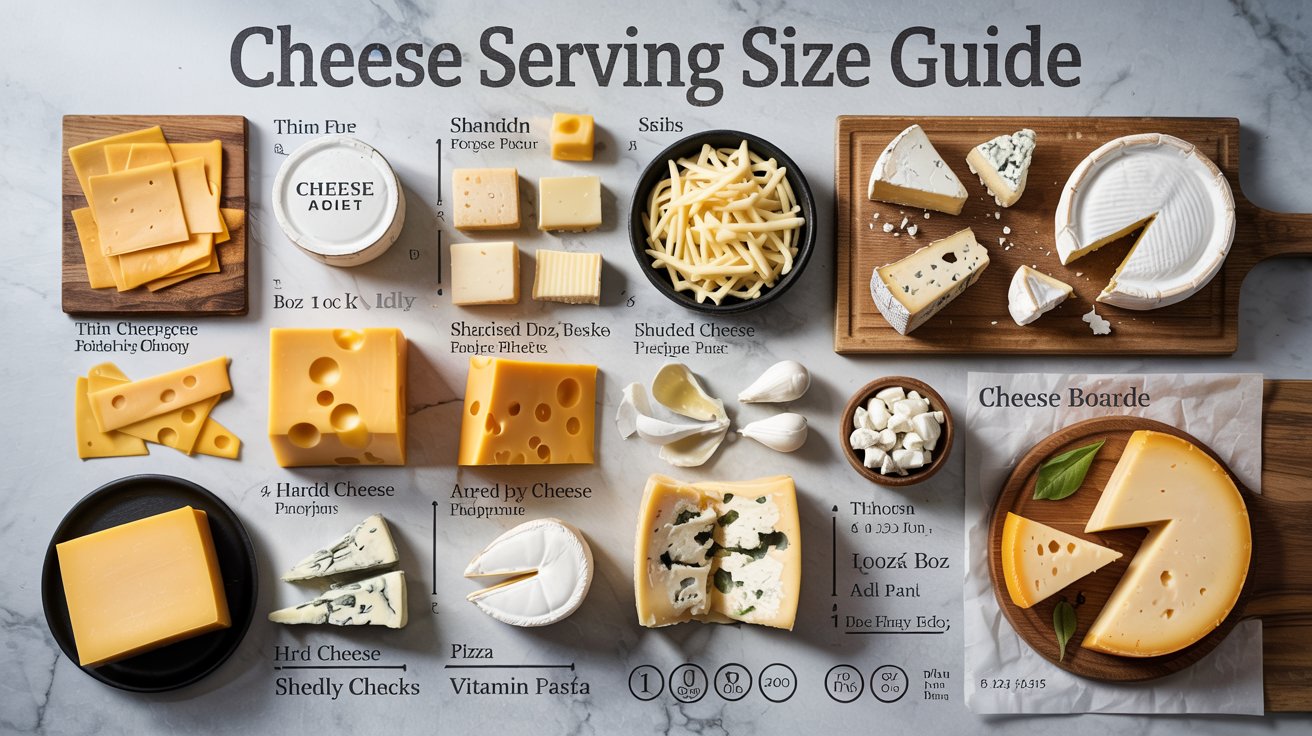
Cheese is one of the most loved foods around the world. It adds flavor, texture, and richness to everything from sandwiches and salads to pasta dishes and snacks. But because cheese is calorie-dense, many people are unsure how much counts as a proper serving size. Some portions are much larger than nutrition guidelines recommend. Understanding cheese serving sizes helps with balanced eating, meal planning, and portion control while still allowing you to enjoy your favorite cheeses.
Why Cheese Serving Size Matters
Cheese contains important nutrients like protein and calcium, but it can also be high in calories, saturated fat, and sodium. Portion size directly affects how much of these nutrients you consume.
A small serving of cheese often provides enough flavor for a meal without adding excessive calories. For people monitoring fat intake or trying to manage weight, understanding standard portions is especially important.
Restaurants and packaged foods frequently serve larger amounts than recommended, making it easy to overeat cheese without noticing. Proper serving sizes help balance taste and nutrition more effectively.
Standard Cheese Serving Sizes
Cheese serving sizes are usually measured by weight, slices, cubes, or shredded amounts. Here are the most common serving sizes used in nutrition guides.
Cheese Serving Size Chart
| Serving Type | Weight (Approx.) | Measurement | Calories (Approx.) |
|---|---|---|---|
| Small Portion | 15g | 1 thin slice | 50–70 |
| Standard Serving | 28–30g | 1 oz | 90–120 |
| Shredded Cheese | 28g | 1/4 cup shredded | 90–120 |
| Large Portion | 50–60g | 2 oz | 180–240 |
Calories vary depending on the cheese type, moisture level, and fat content.
Choosing The Right Cheese Portion
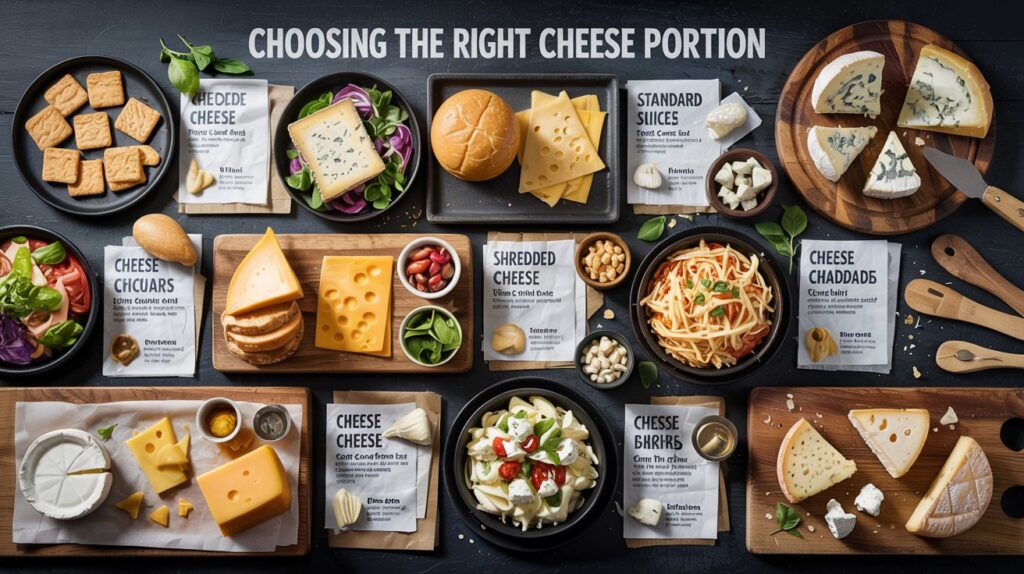
The best serving size depends on how the cheese is being used. Here are some common examples:
- Small Portions: Ideal for crackers, salads, or light snacks.
- Standard Serving: Perfect for sandwiches, burgers, or wraps.
- Shredded Cheese: Common for tacos, pizza, casseroles, and pasta dishes.
- Larger Portions: Often used for cheese boards or comfort foods.
Strong cheeses usually require smaller portions because their flavor is more concentrated.
Cheese Serving Size Comparison: Hard Vs. Soft Cheese
Different cheese textures affect portion appearance and serving sizes.
Hard vs Soft Cheese Portions
| Cheese Type | Typical Serving | Texture | Portion Appearance |
|---|---|---|---|
| Hard Cheese | 1 oz slice | Firm | Smaller-looking |
| Soft Cheese | 1 oz spread | Creamy | Appears larger |
Soft cheeses like brie or cream cheese may seem like bigger portions because they spread more easily.
Cheese And Nutrition
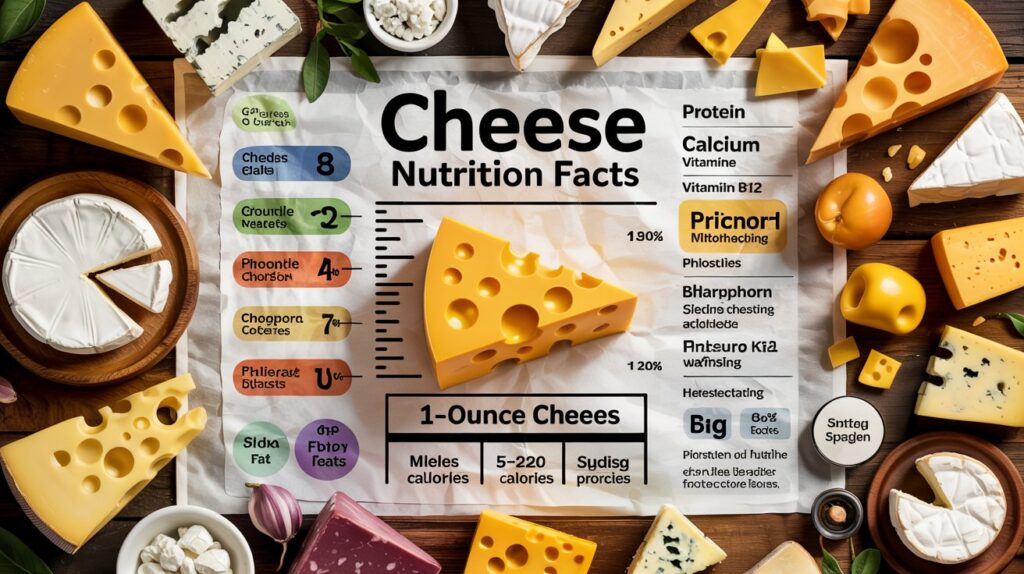
Cheese provides several important nutrients, including:
- Protein
- Calcium
- Vitamin B12
- Phosphorus
- Healthy fats
A standard 1-ounce serving typically contains about 90–120 calories and 5–8g of protein. However, some cheeses contain high levels of sodium and saturated fat, so moderation is important.
Pairing cheese with fruits, vegetables, or whole grains creates more balanced meals and snacks.
Visual Guide: Cheese Serving Sizes
Visual comparisons make portion sizes easier to estimate without measuring.
Cheese Portion Guide
| Serving Size | Best Use | Visual Comparison |
|---|---|---|
| 15g | Snacks or toppings | 2 small dice |
| 28–30g | Standard serving | Size of 4 dice |
| 1/4 Cup Shredded | Pizza or pasta toppings | Small handful |
| 50–60g | Cheese boards | Matchbox size |
Tips For Measuring Cheese Portions
- Use a kitchen scale: Cheese portions are easy to underestimate.
- Pre-slice servings: Helps avoid overeating.
- Shred cheese yourself: Freshly shredded cheese allows better portion control.
- Pair with healthy foods: Combine cheese with fruits or vegetables for balance.
- Store properly: Wrap cheese tightly to maintain freshness and flavor.
Small amounts of cheese can still provide rich flavor and satisfaction.
Common Mistakes When Serving Cheese
- Oversized portions: Cheese calories add up quickly.
- Too much shredded cheese: It’s easy to pour more than intended.
- Ignoring nutrition labels: Different cheeses vary greatly in calories and sodium.
- Using cheese as the main food: Large cheese-heavy meals may feel overly rich.
Proper portions improve both nutrition and overall meal balance.
How Cheese Serving Size Affects Meals
Cheese can completely change the texture and flavor of a dish. Small portions add creaminess and richness, while larger portions create heavier, more calorie-dense meals.
Too much cheese may overpower other ingredients, while too little may not provide enough flavor. Finding the right balance creates more enjoyable and satisfying dishes.
The History Of Cheese Portions
Cheese has been eaten for thousands of years and was traditionally served in moderate portions alongside bread, fruits, and vegetables. As processed foods and restaurant portions became larger, cheese servings increased significantly.
Today, cheese remains a staple ingredient in cuisines worldwide, from European cheese boards to American comfort foods.
Frequently Asked Questions
What Is A Standard Serving Size Of Cheese?
A standard serving is about 28–30g, or 1 ounce.
How Many Calories Are In Cheese?
Most cheeses contain around 90–120 calories per standard serving.
Is Shredded Cheese Different From Block Cheese?
By weight, they are similar, but shredded cheese may appear larger because of air space.
Can Cheese Be Part Of A Healthy Diet?
Yes, cheese can be included in a balanced diet when eaten in moderation.
How Much Cheese Should I Use On Sandwiches?
One slice or about 1 ounce is a common serving for sandwiches and burgers.
Cheese serving size may seem like a small detail, but it has a big impact on nutrition, flavor, and portion control. Whether you’re preparing snacks, sandwiches, or family meals, understanding cheese serving sizes helps you enjoy cheese in a balanced and satisfying way.
