
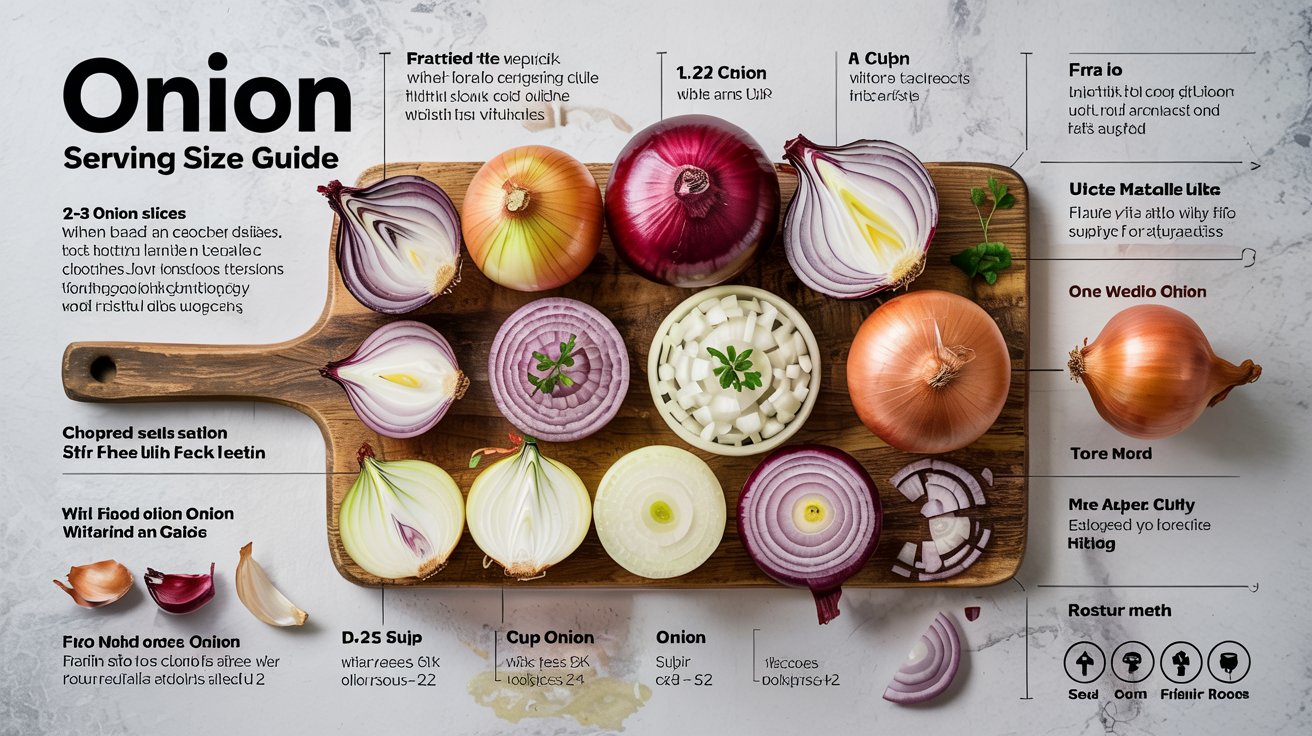
Onions are one of the most commonly used ingredients in kitchens around the world. They add flavor, aroma, and texture to countless dishes, from soups and salads to burgers and stir-fries. But have you ever wondered what counts as a proper onion serving size? Since onions are usually used as part of a recipe rather than eaten alone, portion sizes can be confusing. Understanding onion serving sizes helps with cooking accuracy, nutrition tracking, and meal balance. Let’s explore the different onion portions, their nutritional value, and how much onion you should use for various meals.
Why Onion Serving Size Matters
Onion serving size affects both flavor and nutrition. Too little onion may leave dishes tasting bland, while too much can overpower other ingredients. Proper portions help create balanced flavors in cooking.
For people tracking calories or carbohydrates, onions also contribute more nutrition than many realize. Although onions are low in calories, large amounts can increase carbohydrate and sugar intake slightly. In recipes, consistent onion portions improve texture and cooking results.
Understanding serving sizes is especially useful for meal prep, recipes, and healthy eating plans.
Standard Onion Serving Sizes
Onions are usually measured by weight, cups, or slices depending on the recipe. Here are the most common serving sizes used in cooking and nutrition guides.
Onion Serving Size Chart
| Serving Type | Weight (Approx.) | Measurement | Calories (Approx.) |
|---|---|---|---|
| Small Portion | 20–30g | 2–3 slices | 8–12 |
| Standard Serving | 50–60g | 1/2 cup chopped | 20–25 |
| Large Serving | 100–120g | 1 cup chopped | 40–50 |
| Whole Medium Onion | 150–170g | 1 onion | 60–70 |
These numbers may vary slightly depending on onion variety and moisture content.
Choosing The Right Onion Portion
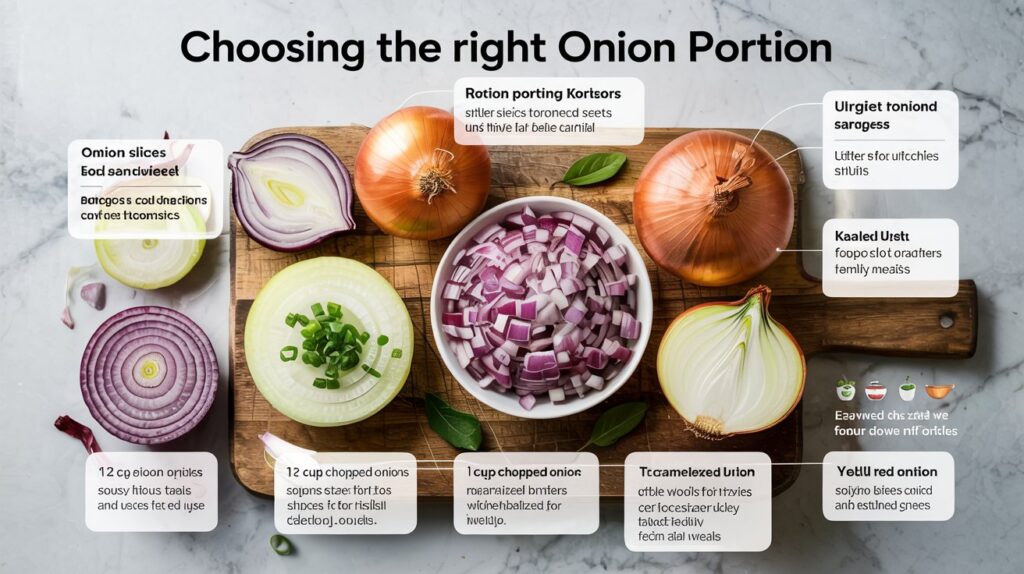
The best onion serving size depends on how it’s being used. Here are some common examples:
- Small Portions: Ideal for burgers, sandwiches, and toppings.
- Standard Serving: Perfect for soups, sauces, and stir-fries.
- Large Serving: Works well for caramelized onions or onion-heavy recipes.
- Whole Onion: Common in roasted dishes or large family recipes.
Different dishes require different onion strengths and textures, so portion size matters for flavor balance.
Onion Serving Size Comparison: Raw Vs. Cooked
Raw and cooked onions differ in both flavor intensity and volume.
Raw vs Cooked Onion Portions
| Type | Typical Serving | Texture | Flavor Strength |
|---|---|---|---|
| Raw Onion | 1/2 cup | Crisp | Stronger |
| Cooked Onion | 1/2 cup cooked | Soft | Sweeter, milder |
Cooking reduces the sharpness of onions and slightly decreases volume as moisture cooks out.
Onion And Nutrition
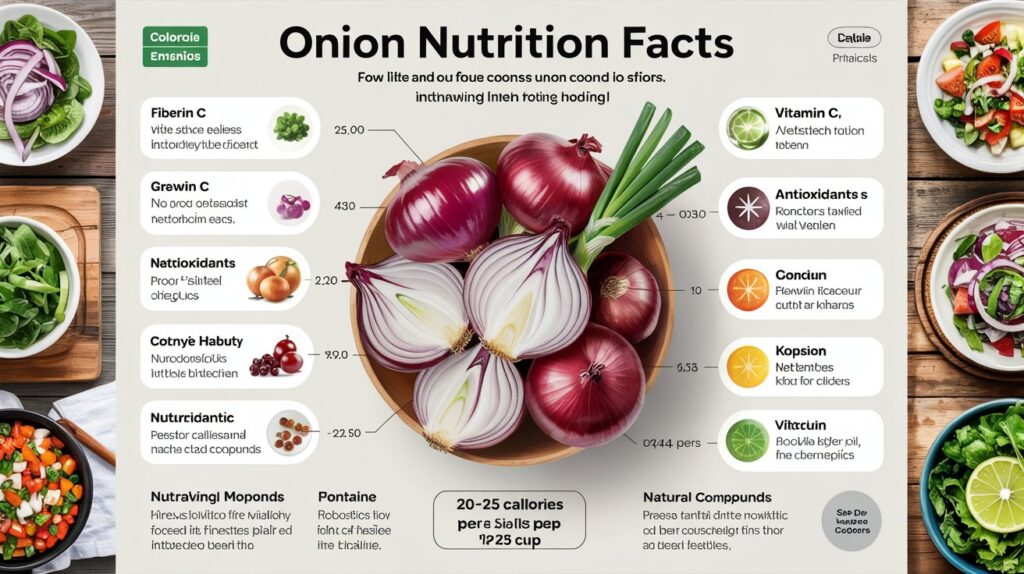
Onions are low in calories but contain useful nutrients and plant compounds. A standard 1/2-cup serving typically provides:
- Fiber
- Vitamin C
- Antioxidants
- Potassium
- Natural plant compounds
Most onion servings contain only about 20–25 calories, making them a flavorful addition to healthy meals.
Onions also add flavor naturally, helping reduce the need for extra salt or sauces in recipes.
Visual Guide: Onion Serving Sizes
Sometimes visual comparisons make portions easier to estimate during cooking.
Onion Portion Guide
| Serving Size | Best Use | Serving Suggestion |
|---|---|---|
| 2–3 Slices | Burgers, sandwiches | Light topping |
| 1/2 Cup Chopped | Soups, stir-fries | Standard recipe amount |
| 1 Cup Chopped | Caramelized dishes | Strong onion flavor |
| Whole Onion | Roasting, family meals | Serves multiple people |
Tips For Measuring And Using Onions
- Chop evenly: Uniform pieces cook more consistently.
- Measure after chopping: Whole onions vary in size.
- Cook slowly for sweetness: Caramelizing reduces sharpness and enhances flavor.
- Use fresh onions: Fresh onions provide better texture and aroma.
- Store properly: Keep onions in a cool, dry place for longer shelf life.
Consistent onion portions improve recipe results and flavor balance.
Common Mistakes When Using Onion Portions
- Using too much raw onion: Can overpower salads or sandwiches.
- Too little in cooked dishes: Small amounts may disappear during cooking.
- Ignoring onion variety: Sweet onions and red onions vary in strength.
- Uneven chopping: Different sizes cook at different speeds.
Choosing the right amount helps dishes taste balanced and enjoyable.
How Onion Serving Size Affects Recipes
Onion portions influence texture, aroma, and flavor depth. Small amounts add subtle background flavor, while larger servings create stronger onion-forward dishes.
Too much onion may dominate delicate recipes, while too little can leave meals tasting flat. Matching the onion amount to the recipe creates better balance overall.
The History Of Onion Use In Cooking
Onions have been used in cooking for thousands of years and remain one of the world’s most important vegetables. Ancient civilizations valued onions for both flavor and nutrition. Over time, onions became essential ingredients in cuisines across Europe, Asia, the Middle East, and the Americas.
Today, onions are available in many varieties, including yellow, white, red, and sweet onions, each suited for different cooking styles.
Frequently Asked Questions
What Is A Standard Serving Size Of Onion?
A standard serving is about 1/2 cup chopped onion, or 50–60g.
How Many Calories Are In Onion?
A 1/2-cup serving usually contains around 20–25 calories.
Is Raw Onion Stronger Than Cooked Onion?
Yes, raw onions have a sharper and more intense flavor than cooked onions.
How Much Onion Should I Use In Cooking?
It depends on the recipe, but 1/2 cup chopped onion is common for many dishes.
Can Onions Be Part Of A Healthy Diet?
Yes, onions are low in calories and contain antioxidants, fiber, and vitamins.
Onion serving size may seem like a minor detail, but it plays a major role in flavor, nutrition, and cooking success. Whether you’re preparing soups, sandwiches, or family meals, understanding onion serving sizes helps you create balanced and delicious dishes every time.
