
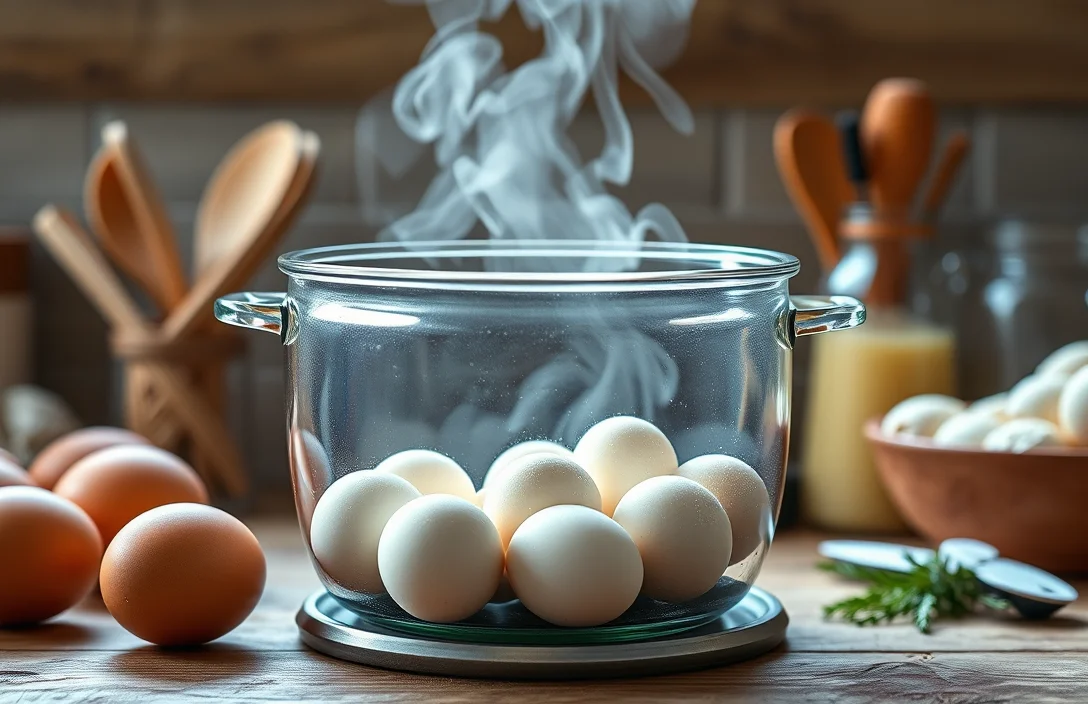
Seventy-five percent of people overcook their eggs, leading to rubbery whites and chalky yolks. Boiling eggs doesn’t have to be intimidating. With a few simple techniques, you can master this basic skill and enjoy perfectly cooked eggs every time.
Follow these key points for success: start with room temperature eggs, use cold water for boiling, and adjust cooking time based on your desired doneness. You’ll be impressing friends and fueling yourself with nutritious snacks in no time!
Choosing the Right Eggs for Boiling
Freshness is key for boiling eggs. Look for eggs with a recent expiration date. Fresh eggs tend to have firmer whites and yolks, making them easier to peel after cooking. Store-bought eggs are typically fine, but local farm eggs can enhance flavor and quality.
Color doesn’t impact the taste. White and brown eggs are nutritionally similar; the shell color depends on the hen’s breed. Focus on freshness instead, as it directly affects your cooking experience.
Grades matter too. U.S. eggs are graded as AA, A, or B. For boiling, choose AA or A for best results. These grades indicate quality based on the condition of the egg white and yolk.
Size can influence cooking times. Large eggs are standard in most recipes, so if using smaller or larger sizes, adjust boiling times slightly to ensure perfect results. Familiarity with egg types will help you master the boiling process.
Essential Equipment for Boiling Eggs
Basic tools simplify boiling eggs. Start with a medium-sized saucepan, large enough to hold the eggs in a single layer. A lid is essential to cover the pot, ensuring even cooking and maintaining heat.
A slotted spoon helps remove eggs from hot water without splashing. Silicone tongs are another option for safely handling hot eggs. For precise timing, keep a kitchen timer or use your phone’s timer function to avoid overcooking.
Quality measuring cups ensure you add the right amount of water. Using cold water helps control the temperature as you begin boiling. Finally, a bowl of ice water is crucial for shocking the eggs after boiling, which stops the cooking process and makes peeling easier.
Stovetop Boiling Method Explained
Start by placing eggs in a single layer in a saucepan. Ensure they fit snugly, but don’t overcrowd them. This method prevents cracking and allows for even cooking. Choose a saucepan that is large enough to hold the desired number of eggs without stacking them on top of each other.
- Add cold water until eggs are submerged by about an inch. Using cold water helps to gradually heat the eggs, minimizing the risk of cracking. Tap water is perfectly fine for this process.
- Bring the water to a rolling boil over medium-high heat. Once you see bubbles vigorously rising to the surface, you’ll know the water is boiling. This step is crucial for cooking the eggs properly.
- Cover the saucepan with a lid, then remove it from heat. Allowing the eggs to sit in the hot water will cook them gently, ensuring they don’t become rubbery. Timing is key here – you’ll want to allow them to sit for the appropriate duration based on your desired doneness.
- Set a timer for your desired doneness. For soft-boiled, aim for 6-7 minutes; for medium, 8-9 minutes; and for hard-boiled, about 10-12 minutes. Adjusting the time will help you master the perfect boiled egg for your preference.
- Prepare an ice bath while the eggs are cooking. Fill a bowl with ice and cold water. This will help stop the cooking process once the eggs are done, ensuring they don’t overcook.
- Transfer the eggs to the ice bath immediately after the timer goes off. Let them sit for at least 5 minutes. This step makes peeling the eggs much easier, as it helps to separate the shells from the egg white.
Instant Pot Boiling Method Simplified
Using an Instant Pot makes boiling eggs simple and quick. This method requires minimal effort, ensuring perfectly cooked eggs every time. Follow these straightforward steps for your next batch of eggs.
- Place the trivet inside the pot. Position the trivet at the bottom to create a stable surface for the eggs.
- Add one cup of water. Pour in the water to create steam, which helps cook the eggs evenly.
- Arrange eggs on the trivet. Gently place the eggs on the trivet, ensuring they do not touch the water.
- Seal the lid tightly. Ensure the lid is locked and the steam release valve is closed for proper pressure cooking.
- Select the manual setting. Set the cooking time to five minutes on high pressure for hard-boiled eggs.
- Quick-release the pressure. Once the timer goes off, carefully perform a quick release to stop the cooking process.
- Transfer eggs to ice bath. Immediately place the eggs in a bowl of ice water for five minutes to cool down quickly.
Follow these steps, and you’ll find this method an easy way to boil eggs, providing you with delicious results every time.
Timing for Perfect Egg Doneness
Achieving the perfect boiled egg depends on timing, which varies based on your desired doneness. Follow these simple guidelines to ensure success with each batch. Soft, medium, and hard-boiled eggs all require different cooking times, so be precise and attentive during the process.
- Soft-boiled eggs need 4-6 minutes. Start the timer when the water reaches a gentle boil. The whites should be set, while the yolk remains runny and creamy.
- Medium-boiled eggs require 7-9 minutes. This timing allows the yolk to thicken but still retain a slight creaminess at the center.
- Hard-boiled eggs take 10-12 minutes. Ensure the yolk is fully cooked through, resulting in a firm texture that’s perfect for slicing or mashing.
Monitoring the cooking time closely ensures you achieve your preferred egg consistency. Adjust based on your stove and pot, as variations can occur. Enjoy experimenting with these timings for a foolproof way to boil eggs!
Cooling and Easy Peeling Techniques
Cooling boiled eggs quickly helps prevent overcooking. After removing them from hot water, transfer the eggs immediately to a bowl filled with ice water. This method stops the cooking process and cools them down, making them easier to handle and peel later.
Peeling starts with tapping the egg gently on a hard surface. Create small cracks all around the shell, which makes it easier to remove. Begin peeling from the wider end, where there’s often an air pocket, allowing the shell to come off smoothly.
Consider rolling the egg gently back and forth to loosen the shell further. This can help separate the membrane from the egg white, making the peeling process even simpler. If you encounter stubborn bits of shell, running the egg under cool water can help rinse them away.
Practice will make you more confident in peeling. Don’t be discouraged by initial difficulties. With time, you’ll master the technique, ensuring you enjoy perfectly boiled eggs without any hassle.
Safe Storage Tips for Boiled Eggs
Store boiled eggs in the refrigerator promptly. Keeping eggs cool prevents bacteria growth and preserves freshness. Place them in a covered container to protect them from absorbing odors from other foods. This simple step ensures your eggs remain safe to eat and delicious for several days.
- Cool eggs completely before storing. Allow them to sit at room temperature for about 10 minutes after boiling.
- Label the container with the date. Knowing how long they’ve been stored helps you keep track of freshness.
- Keep unpeeled eggs in their shells. The shell acts as a protective barrier, helping to retain moisture and flavor.
- Store peeled eggs in water. If you choose to peel them, place the eggs in a bowl of water, covering them completely, and change the water daily.
- Avoid storing boiled eggs in the pantry. Always keep them in the fridge to maintain quality and safety.
Following these tips guarantees that you will have perfectly stored boiled eggs, ready for quick snacks or meal additions. Enjoy your cooking adventures with confidence!
Quick Summary
- Use eggs at room temperature for more even cooking; add 1–2 minutes if cooking straight from the fridge.
- Place eggs in a single layer in a saucepan and cover with cold water about 1 inch (2–3 cm) above the eggs.
- Bring to a gentle boil, then remove from heat and cover—leave to sit: ~4 minutes for soft, 8–10 minutes for medium, 11–14 minutes for hard yolks.
- Transfer immediately to an ice bath for 5–10 minutes to stop cooking and make peeling easier.
- Peel under running water and start at the wider end where the air pocket is for easier removal of the shell.
- Store unpeeled hard-boiled eggs in the refrigerator for up to one week.
Frequently Asked Questions
How long should I boil eggs for soft, medium, and hard yolks?
Put eggs in a single layer in a pot, cover with about 1 inch of cold water, bring to a boil, then turn off the heat and cover the pot. Let sit 4 minutes for soft-runny, 6–7 minutes for jammy/medium, and 9–12 minutes for fully hard yolks, then cool in an ice bath.
Will my eggs crack while boiling and how can I prevent it?
Start eggs in cold water and bring the pot up to a gentle boil to reduce thermal shock; avoid dropping cold eggs into already-boiling water. You can also add a pinch of salt or a splash of vinegar and be careful not to overcrowd or jostle the pot.
What’s the easiest way to peel boiled eggs without a mess?
Cool eggs in an ice bath for at least 5 minutes to shrink the white from the shell, then gently crack and roll them on the counter before peeling under running water. Using eggs that are a few days old also makes peeling much easier than very fresh eggs.
How can I tell if an egg is fully cooked without cutting it open?
Use the spin test: a hard-boiled egg spins smoothly and quickly, while a raw egg wobbles and spins slowly because of the liquid inside. The most reliable way is to use a timer based on the cooking method described earlier.
How should I store boiled eggs and how long do they last?
Keep unpeeled hard-boiled eggs in the refrigerator and eat them within one week. If peeled, store them in a covered container with a damp paper towel or water and use within 3–5 days.
